


What to Eat with Caviar: Food Pairings That Let the Roe Shine

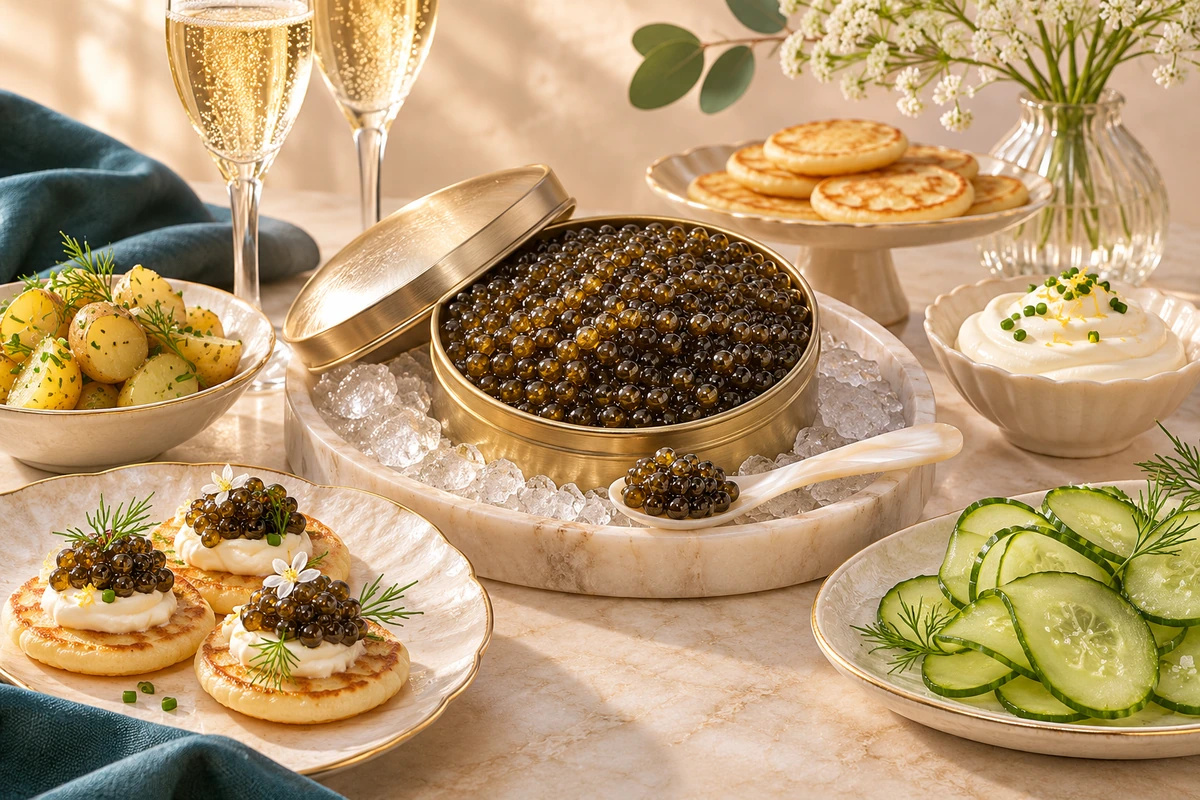
If you’re deciding what to eat with caviar, taste it plain first. Then try it on a blini, an unsalted potato chip or a slice of boiled potato. Add a little crème fraîche only if the bite needs it. For drinks, start with water, dry sparkling wine or chilled vodka. Whatever you serve alongside the roe, keep the first bite simple enough to taste the caviar’s finish.
| What you want | Pairing to try | What to watch for |
|---|---|---|
| A clear first taste | Caviar on its own, then a bite on plain potato | Taste before adding cream, herbs or a drink. |
| A classic canapé | Small blini, a little crème fraîche and caviar | Keep the pancake small and the cream thin. |
| A crisp bite | Plain potato chip or unsalted toast point | Avoid heavily salted or flavored bases. |
| A dairy-free option | Plain potato, cucumber or a cracker with suitable ingredients | Check the full ingredient list and keep utensils separate where needed. |
| A warm dish | Soft eggs or mild pasta with caviar added off the heat | Finish just before serving and keep the roe out of the pan. |
| A drink | Water first, then a dry sparkling drink or chilled vodka if desired | Taste the roe again after a sip. |
| A tasting for several guests | Plain sample, simple canapé and separately offered alternatives | Assemble in batches and keep reserve caviar refrigerated. |
What to Eat with Caviar on the First Bite
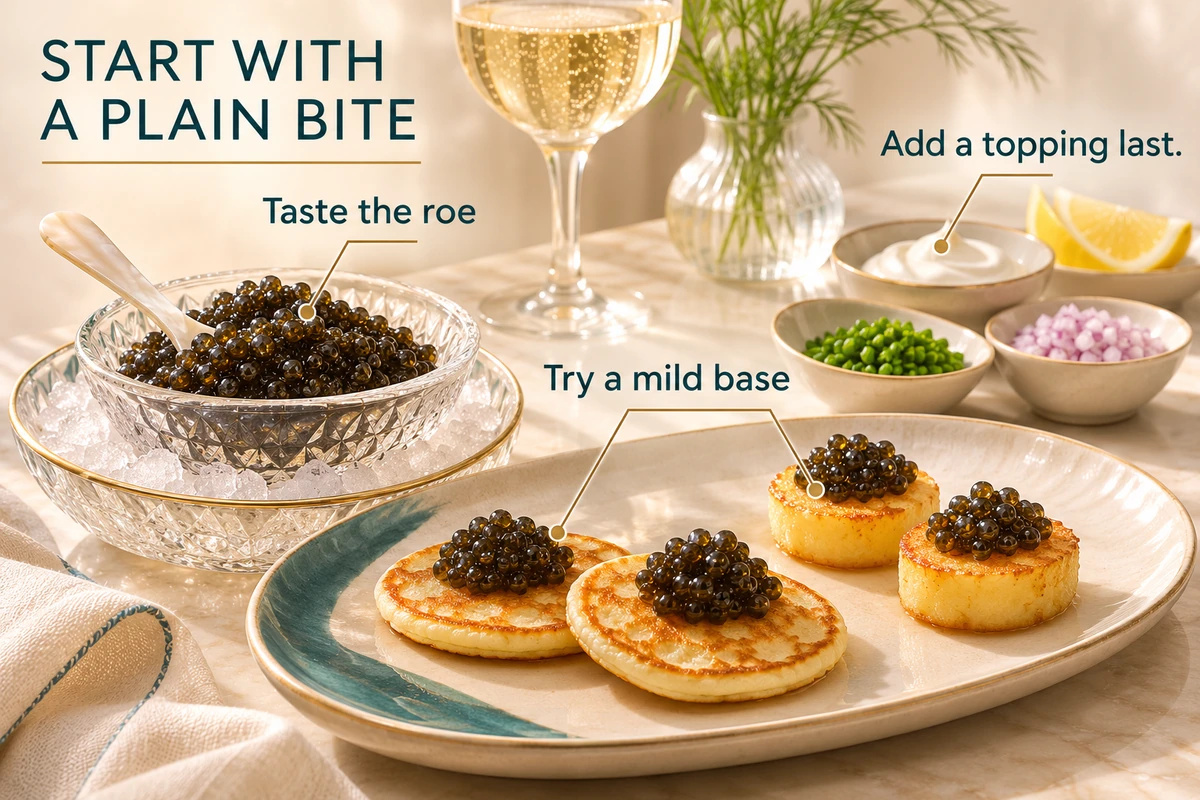
Begin with a small taste on a clean serving spoon. Notice how salty it seems, how the eggs feel and what remains after you swallow. Two tins of the same style can taste different, so use what is actually in front of you. If you start with a heavily dressed canapé, you lose the easiest way to tell which flavors came from the roe.
Now put the same caviar on a small piece of plain cooked potato. Taste the two versions before bringing in a sauce or garnish. If the potato carries the roe comfortably but leaves the finish intact, it is already doing its job. If the potato dominates the mouthful, trim the base or change to a thinner carrier before adding anything else.
Commercial serving guides such as OM Caviar’s food pairing guide recommend mild foods that leave room for the roe. That principle also helps when serving several caviars. Taste each plain first, then try each with the same base. A garnish chosen for a pronounced, briny lot may overwhelm a milder one. A common base gives everyone at the table a fairer comparison.
Choose a Base That Fits the Roe
The base affects what you notice first: a crunch, a soft bite or a fresh note. Choose a small piece that can be eaten comfortably in one mouthful.
Blini or toast for a classic bite
A blini is soft and easy to portion. Serve it at a comfortable temperature and choose a size that allows the guest to taste the whole bite at once. Buckwheat blini can contribute an earthy note. If that note dominates a delicate caviar, try a plainer pancake or cut the base smaller.
Toast points bring more crunch and hold their shape. Keep them thin and lightly toasted. Thick toast can make the bite feel dry, while strongly browned or buttery brioche can take over the finish. When serving a small tasting, offering blini and toast side by side gives guests a useful texture contrast with the same roe.
Potato chips, crackers or boiled potatoes
A plain potato chip makes a crisp carrier for cream and caviar. Taste the chip by itself. If it already tastes quite salty, a salty roe can make the combination less distinct. An unsalted cracker offers similar crunch with less seasoning, provided it is thin enough to bite cleanly.
A cooled piece of boiled potato gives you a softer, quieter option. Dry the cut surface so a spoonful of roe can sit on it. Boiled potato also works when you want a dairy-free route and have checked the other ingredients.
Cucumber for a fresh alternative
Cucumber brings moisture and a fresh crunch. Blot the cut surface and build the bites close to service so the garnish stays in place. If the cucumber tastes especially strong or releases too much water, switch to potato. Use the same roe on both bases to see whether freshness or neutrality gives you the clearer bite.
Build Flavor with One Topping at a Time
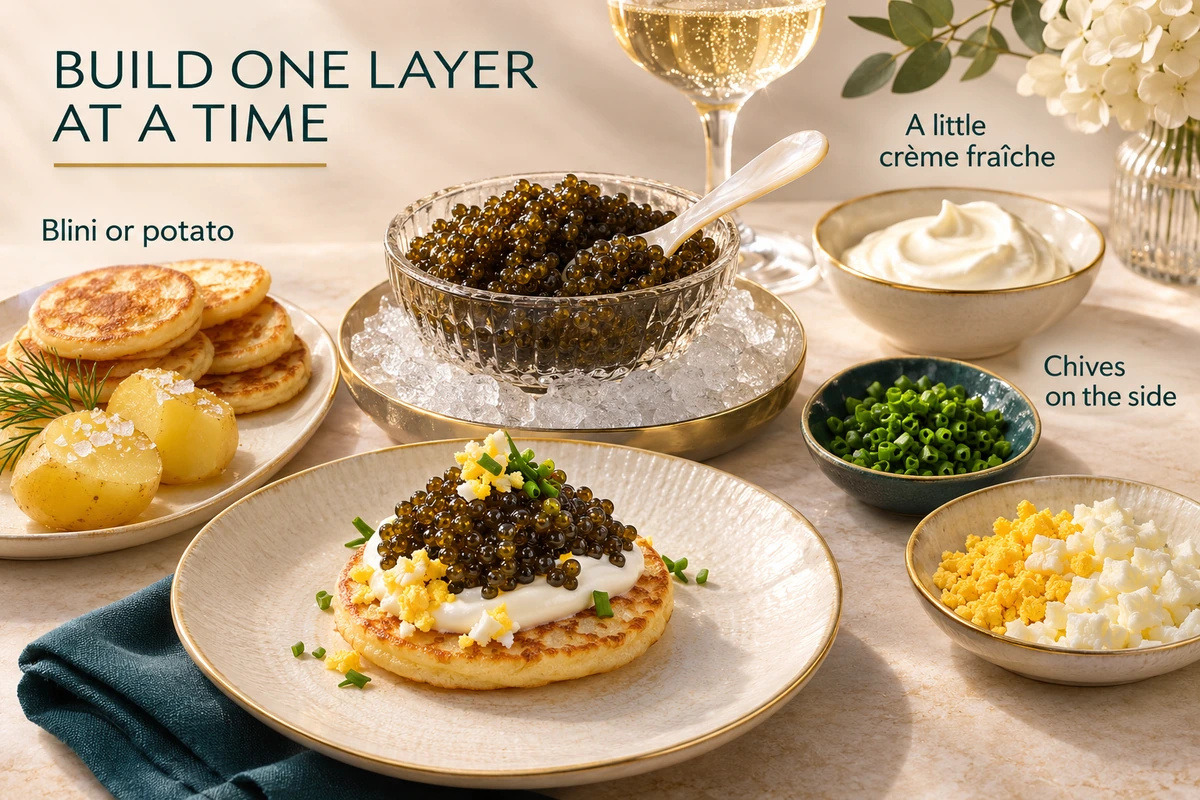
Start with the base and roe, then add one supporting ingredient. This makes it easier to tell whether the topping improves the bite or simply makes it more complex.
- Crème fraîche brings a cool, creamy texture and some tang. Use just enough to anchor the roe. If the cream is what you taste first and last, use less or try the bite plain.
- Unsalted butter suits thin toast. Let it soften enough to spread smoothly, then apply a thin layer. A thick layer can make a small canapé feel greasy.
- Chives add a fresh allium note. Start with a small amount on a test bite. Offer raw shallots separately if guests want the sharper flavor.
- Chopped cooked egg adds substance to a platter. Try egg white and yolk separately before combining them. The yolk changes richness and texture more noticeably.
- Lemon can be pleasant next to richer seafood. Serve it separately or season the dish before adding the roe. A squeeze directly on the finished canapé can dominate the taste.
- Mild sour cream or a soft, plain cream cheese can fill the same role as crème fraîche. Taste the replacement first, since some products bring extra salt or a stronger tang.
- For dairy-free service, build a complete bite around potato or cucumber. Verify the ingredients in the base, especially in prepared blini and crackers.
Pair Caviar with Eggs, Seafood and Warm Dishes
Eggs and seafood can turn a small tasting into a course. Let the finished dish stand on its own before deciding where the caviar belongs.
Soft eggs and potato dishes
Soft scrambled eggs bring a gentle texture. Plate the eggs, let the strongest steam subside and add the caviar just before it goes to the table. Keep seasoning in the eggs light enough that the roe still has a role. Serve the first test without cheese or strong herbs so the kitchen can identify what the caviar contributes.
A warm potato works on the same principle. If you are using a crisp hash brown instead of boiled potato, taste a corner before topping the plate. Salt, dark frying notes and a thick crust can all make the roe harder to pick out. Move the caviar to a smaller, less seasoned piece if necessary.
Oysters, lobster and smoked fish
An oyster already has a marine flavor. Taste it first and try a small topping of caviar before adding a dressing. Lobster offers sweetness, but a strongly flavored sauce can become the main taste. A plain piece of lobster gives the kitchen a useful control.
Smoked fish adds both salt and smoke. Use a thinner piece or a milder fish when you want the caviar to remain distinct. If the two still compete, serve the fish on a separate bite. LeDiamont’s pairing guide provides classic and modern combinations that can be tested this way.
Pasta and other finished plates
Place caviar on a small area of a mildly seasoned dish after cooking. On pasta, a simple butter or cream base gives a clearer comparison than a heavily seasoned sauce. On fried chicken, consider using a separate mild component so guests can taste the roe before trying it with the crust.
Choose a Drink That Keeps the Finish Clear
Water gives you a useful baseline between bites. Still water works particularly well when you are comparing several tins or want to know whether a new pairing changed the finish. If you like sparkling water, try it after the plain sample and see how its bubbles change the experience.
Dry sparkling wine and chilled vodka are traditional choices. A dry sparkling wine brings acidity and bubbles, while vodka leaves a different kind of finish. Taste the caviar both before and after a small sip. If the drink dominates, return to water or select a less assertive drink. Guests can keep the same canapé whether they choose wine, spirits or water.
For a nonalcoholic pairing, offer still water or a dry alcohol-free sparkling drink. Taste the drink separately first, since alcohol-free products can differ considerably in sweetness and fruit intensity. If the drink tastes like the main course, a plain water option will give the roe more room. Keep strong mixers and citrus garnishes away from the reference tasting.
Run a Caviar Tasting from First Sample to Service
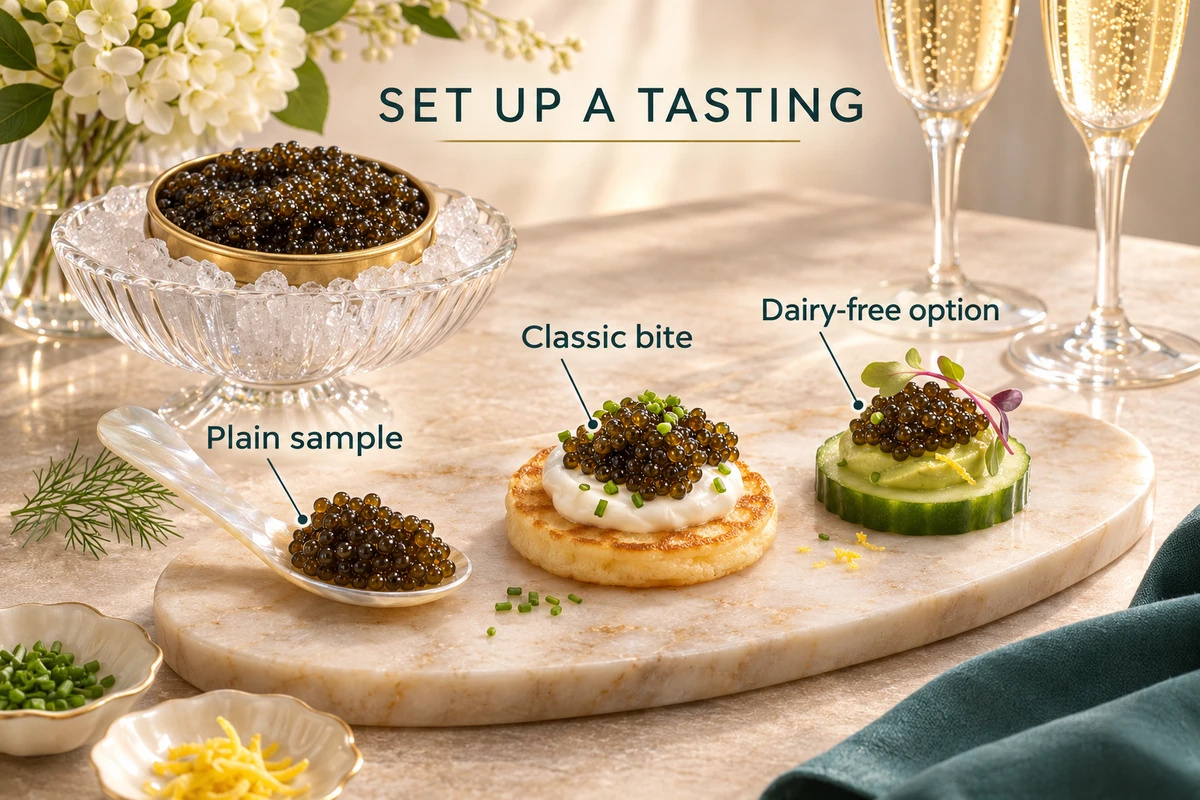
A tasting should give guests a clear starting point and a comfortable way to explore. Here is a worked example for a reception with classic, dairy-free and alcohol-free choices.
Before service: test one variable
Take a sample from the same lot that will be served, following the supplier’s storage and handling instructions. Try it plain, on a piece of potato and on a small blini. Keep the roe portions comparable. If the blini hides the finish even before toppings, reduce the size of the base or use potato. Test crème fraîche only after the base is chosen.
The choice might come down to a crisp chip that is too salty and a softer potato that keeps the flavor clear. Use the potato for the opening bite. If crunch matters later, test a plain, less salty cracker as a second option. This keeps the tasting approachable while giving guests some texture variation.
Set up two routes with the same point of comparison
Offer the first taste plain. Follow it with a classic bite such as blini with a thin layer of crème fraîche. Offer a clearly identified dairy-free bite on potato or cucumber using verified ingredients and separate tools as needed. Ask about other dietary requirements before service and make it clear that caviar is fish roe. A different garnish does not remove the fish allergen.
Water works for all routes. Guests who want a second drink can try a dry sparkling option after their first taste. Set out strong garnishes separately, where they cannot be mistaken for a required part of the bite.
Assemble in batches and watch what guests receive
Follow the package instructions and applicable venue rules. The FDA’s seafood handling guidance recommends keeping chilled seafood refrigerated until serving. For a reception, bring forward only what the team can serve promptly and keep the reserve refrigerated. Use clean, dedicated utensils and replace items as required by the venue’s procedures.
Check the first batch as a guest would eat it. If toast goes soft, assemble closer to handoff. If guests taste cream first, reduce the layer. If the roe seems unusually salty on one base, retest that base plain. The station lead can make these changes without altering the whole menu.
Frequently Asked Questions
These answers cover the choices that often come up when planning a first tasting or reception. Use a plain sample as a reference whenever you are unsure.
Can you eat caviar by itself?
Yes. A plain sample lets you experience the salt, texture and finish before adding other ingredients. It is also a good way to compare caviars. Use a clean utensil and serve the sample according to the product’s handling instructions.
What crackers are best with caviar?
Choose a thin, plain cracker with little or no added salt. Avoid strong seasoning for the first bite. If the cracker breaks into large shards or fills the mouth before the roe is noticeable, try a smaller piece or serve it on soft potato instead.
Do you have to serve crème fraîche?
No. It provides a little richness and helps hold the roe on a base. A plain potato bite works without it. If you want a dairy alternative, check the ingredients and taste it first, since texture and acidity vary.
Should different kinds of caviar get different pairings?
They can. A delicate lot may show better with a quiet base, while another may remain clear alongside a richer accompaniment. Taste each lot plain and test both on the same base before introducing different garnishes.
What can you serve if guests do not drink alcohol?
Still water is useful for tasting. A dry alcohol-free sparkling drink gives guests another option. Keep the same food pairings available and let each guest choose whether to try the sparkling drink before a second bite.
Plan Your Next Caviar Service with Iran Fish
If you are planning a menu or reception, identify the first bite, the number of serving stations and the alternative options before selecting the roe.
Explore Iran Fish’s wholesale caviar selection for your next tasting or food-service program.
Share your intended service format and destination with the supplier so you can discuss available products and the handling requirements for your kitchen.