


How to Open Caviar: Tins, Jars and Vacuum Seals

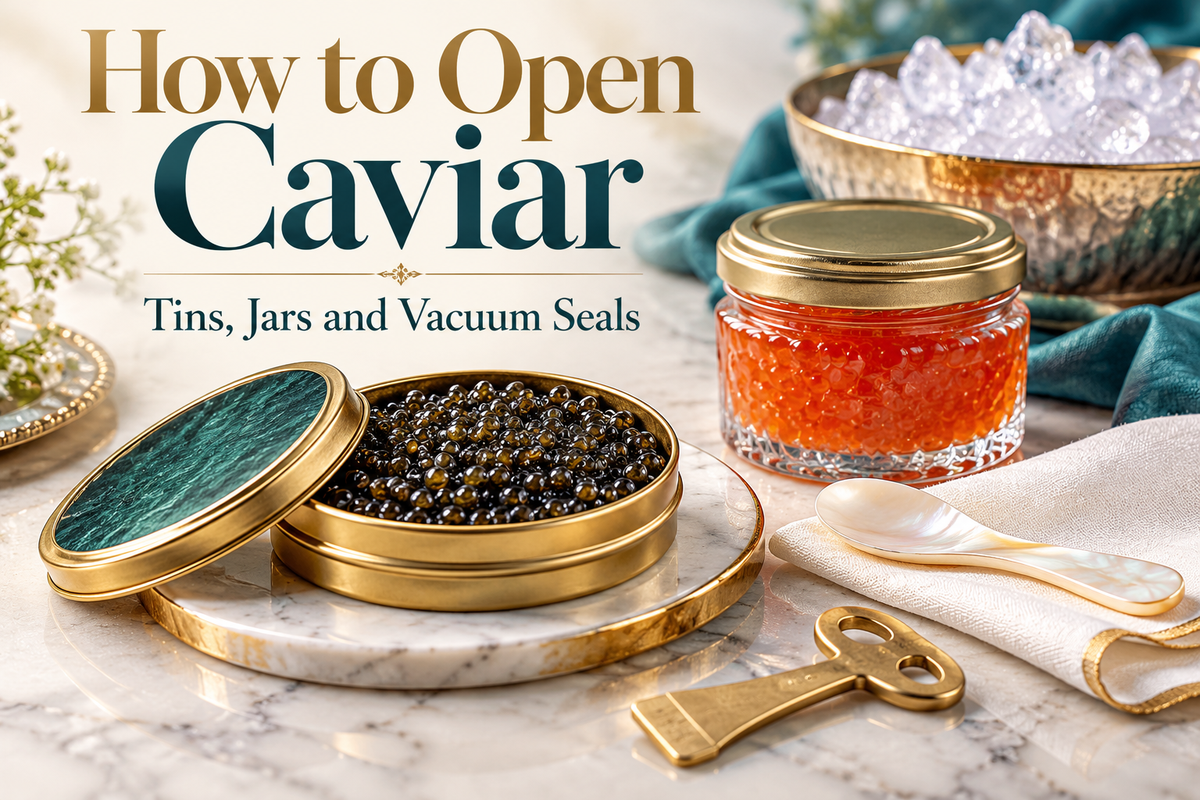
How to open caviar depends on the closure. For a compatible vacuum tin, use a clean caviar key at the lid’s opening point and gently release the seal; a screw-top jar normally opens by turning its lid. Follow the supplier’s instructions, keep the container stable and stop if force damages the pack. Never heat, puncture or open a swollen or leaking container, and keep the roe chilled after opening.
| Container or situation | What to do |
|---|---|
| Vacuum tin designed for a caviar key | Use the specified opening point and gentle leverage to release the seal. |
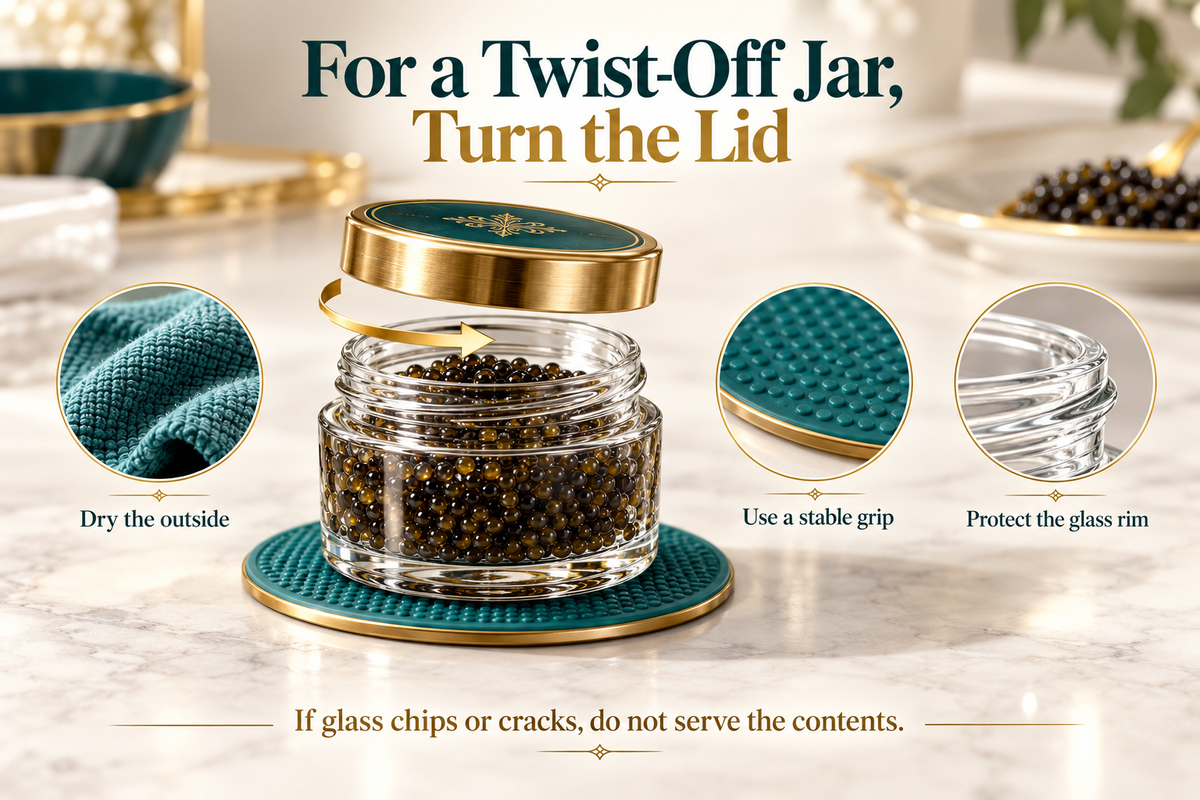
| Screw-top or twist-off glass jar | Hold the jar securely and turn the lid as instructed. |
| Slip-lid or original production tin | Obtain instructions for that particular closure rather than copying a small vacuum-tin method. |
| No caviar key available | Ask which clean, blunt alternative the supplier approves for that container. |
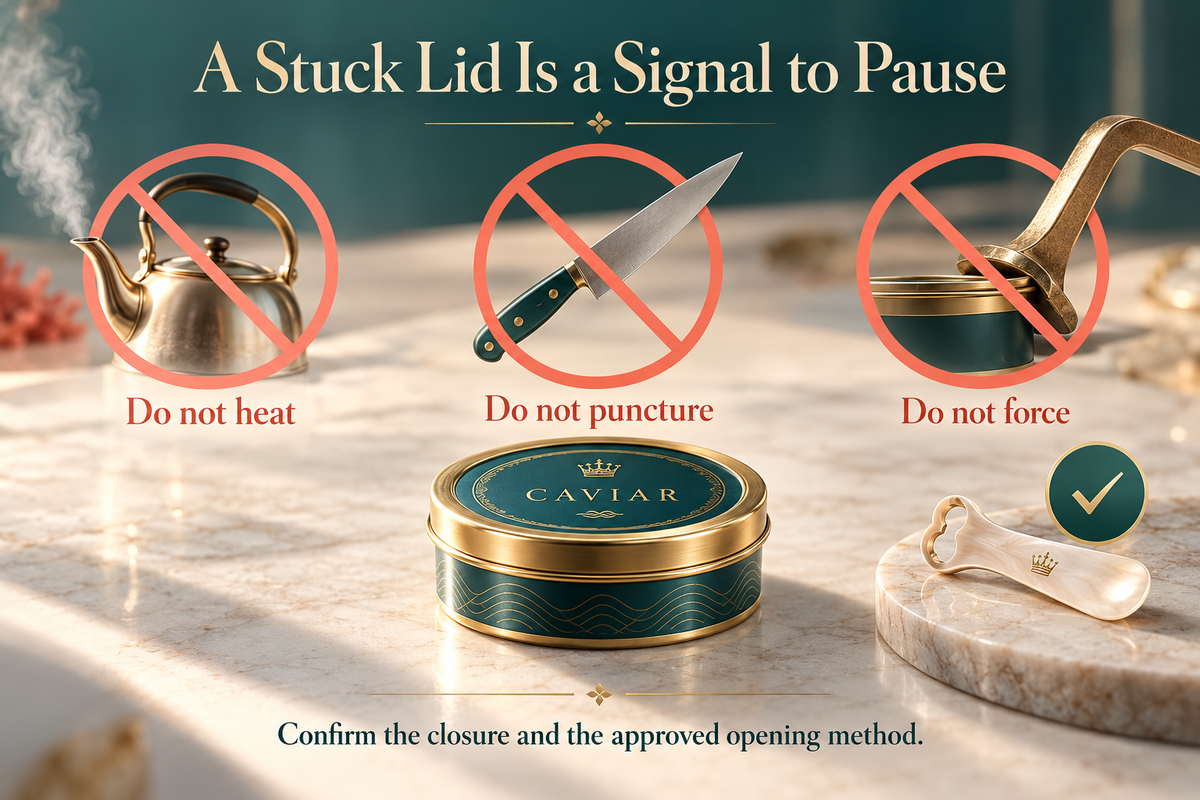
| Strong resistance or a deforming rim | Stop and confirm the closure type and technique. |
| Swelling, leakage, damaged seal or cracked glass | Do not open it for tasting or inspection; arrange rejection or qualified assessment. |
| Container successfully opened | Protect the roe, retain the label and follow the after-opening storage instructions. |
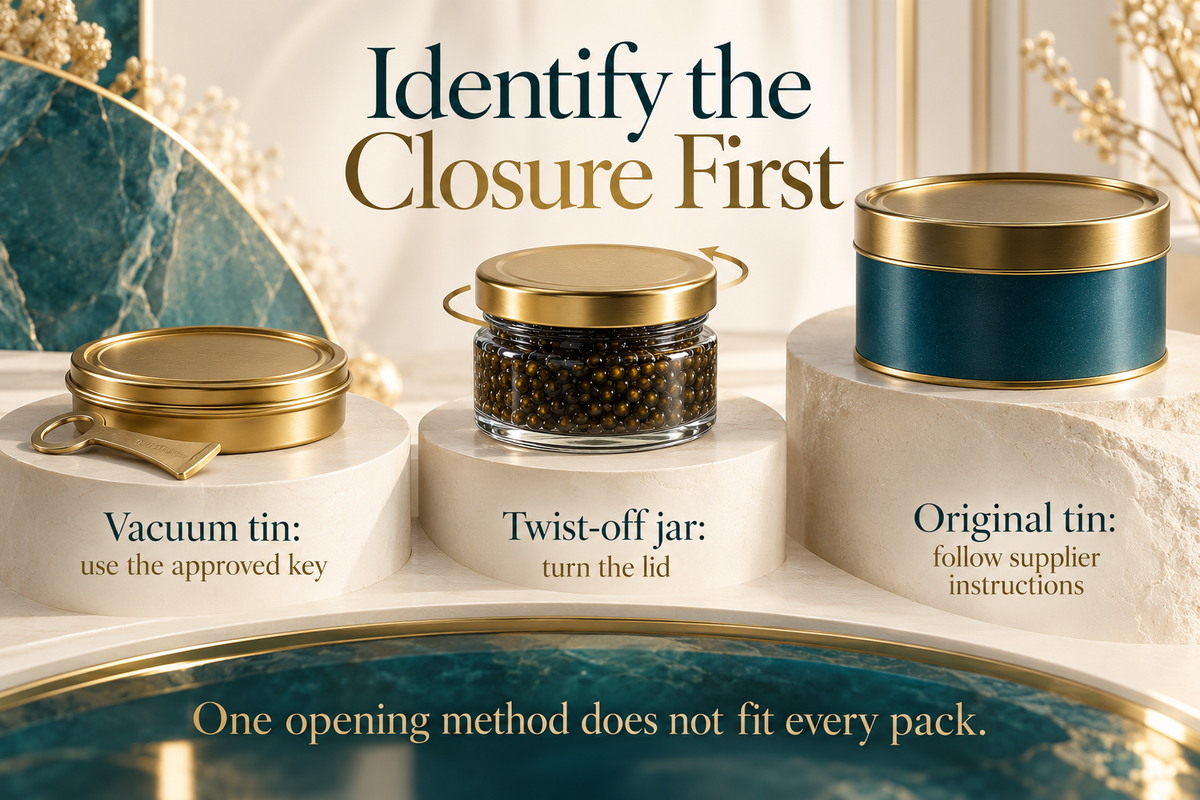
How to Open Caviar Starts With Identifying the Closure
Look at the container before reaching for a tool. A circular caviar tin and a glass jar may both be sealed, but their opening mechanisms are not interchangeable.
Small vacuum tins
Some retail caviar tins are intended to be opened by releasing the seal at the rim with a caviar key. The key is not a cutting tool: its purpose is to create the small separation needed for that closure to release. The exact insertion point and movement should match the manufacturer’s demonstration.
Screw-top and twist-off jars
Glass jars may have lids that turn rather than lift off. Sterling’s jar and tin opening guidance distinguishes its turning jar lids from tins opened with a key. Do not assume a stiff screw-top jar needs a tool driven under the glass rim.
Slip lids and original tins
Large original tins and other specialist packs may use a different closure system. Their shape, lid depth or external band can change the opening method. A video for a small vacuum tin may therefore be the wrong reference.
Ask the supplier to identify an unfamiliar container using its product and pack details. Also check whether an outer band is a tamper-evident label or part of the closure. Preserving a photograph of the label before opening helps retain traceability without guessing how the package works.
Prepare a Clean, Stable Opening Area
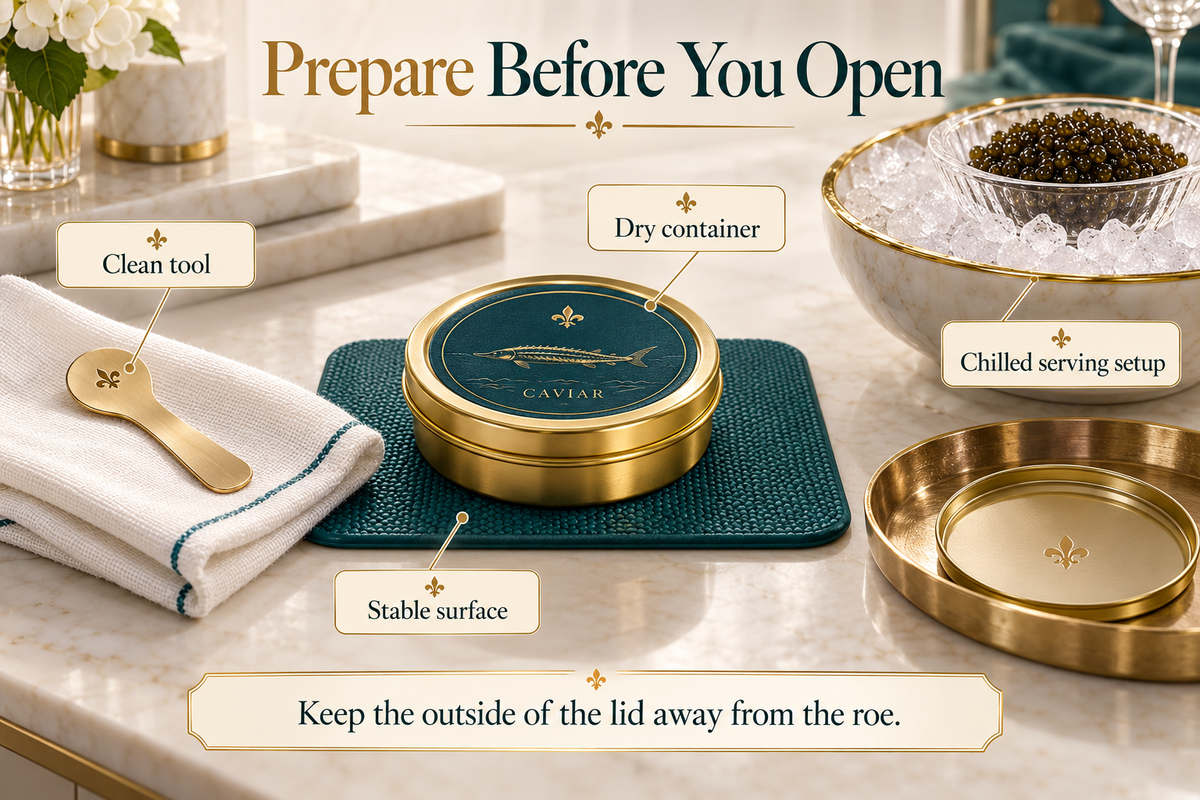
Prepare the serving setup before taking the caviar out of refrigeration. Opening should be a brief, controlled handling task rather than something attempted over a crowded table.
- Read the pack instructions and check its condition before removing any outer label or band.
- Wash hands and use a clean work surface away from raw seafood preparation.
- Clean the container exterior as appropriate and dry it so the grip and opening area are not slippery.
- Place the container on a stable, non-slip surface.
- Have the correct clean tool and a clean place for the lid ready.
- Prepare the chilled holder and serving utensil so the opened product can be protected promptly.
Keep fingers clear of the tool’s path. A cloth can help stabilise an otherwise sound container, but it should not conceal a crack or be used to justify stronger force. If the pack is bulging, leaking or visibly compromised, opening preparation stops there. Appearance and smell checks of the contents cannot rescue the decision to open a suspect container.
Release a Compatible Vacuum Tin With a Caviar Key
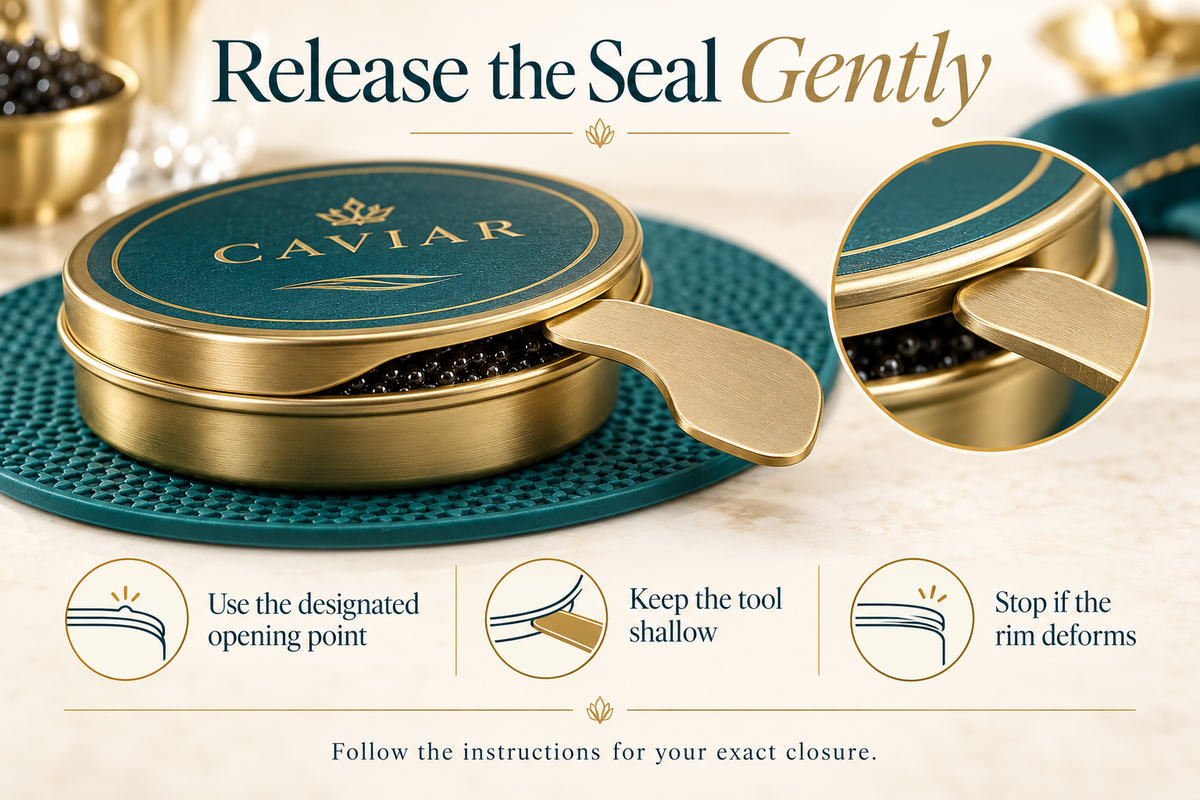
Use this approach only for a tin designed to open by releasing the seal at the rim. Follow the supplier’s illustrated method when its geometry differs from the general description.
Find the designated opening point
Keep the tin stable and identify the small gap or opening point between the lid and the container edge. Position the appropriate end of the key there. It should engage the intended closure area without being driven into the roe or through the metal.
Browne Trading’s caviar-key demonstration shows rim placement followed by a controlled twist to lift the lid. The important principle is gentle separation at the closure, not cutting the lid or pushing the tool deeply into the container.
Release rather than force
Apply a small, controlled movement as the pack instructions show. Imperia’s tin-opening instructions describe placing the tool between the lid and ridge and turning away from the body. Keep the working direction clear of fingers and avoid a sudden levering movement toward anyone nearby.
A release sound may accompany opening, but sound alone does not prove product safety. If the tool slips, the rim bends or increasing force seems necessary, stop. Recheck whether the container is the type the instructions describe.
Lift the released lid carefully
Once the closure has released, lift the lid without scraping it across the roe. Keep the outside of the lid away from the food. Set it on the prepared clean surface if it will be reused as a cover according to the producer’s instructions.
Check the opening area for packaging damage. Suspected metal fragments or other foreign material mean the product should not be served; picking out a visible piece does not establish that nothing remains.
Open a Twist-Off Jar Without Damaging the Glass
For a jar designed to turn open, dry the outside and hold the body securely. Turn the lid in the direction specified by the manufacturer. A clean grip aid can improve control without requiring heat or an improvised sharp tool. Keep the jar on a stable surface and avoid squeezing it against a hard edge.
If the lid does not move, stop before chipping the glass, bending the lid or losing control of the container. Do not tap the rim against a counter, stab the lid or use a sharp knife to prise against the glass. A dedicated seal-release feature, if supplied, should be used only as its instructions describe.
After opening, check that the rim remains intact. If there is a crack, chip or suspected glass contamination, do not serve the contents. Keep packaging details available for a supplier enquiry. Never try to strain or pick glass out of caviar and then present the remainder as acceptable food.
What to Do When the Lid Will Not Move
Resistance can mean the technique or tool does not match the closure. It is not a reason to escalate to destructive methods.
- Confirm that the lid is meant to lift or turn and that any removable outer band has been handled as instructed.
- Recheck the opening point against the supplier’s picture or demonstration.
- Use the correct clean tool; do not replace controlled leverage with a sharp blade.
- Stop if the container deforms, glass is damaged or the tool cannot be controlled.
- Ask the supplier for a pack-specific method before trying again.
Avoid hot water, flames, microwaves and deliberate warming as opening shortcuts. They work against chilled handling and do not solve the underlying question of closure compatibility. Do not puncture a lid to create a vent or use a cutting can opener unless the actual pack is explicitly designed for that method.
A clean coin or blunt utensil appears in some producers’ instructions, but that does not make every household object suitable for every tin. If an alternative is approved, its hygiene, shape and stability still matter. A purpose-made key is the more straightforward option for a compatible closure.
Keep the Roe Protected After Opening
Once opened, the original sealed state has ended. Replacing the lid does not restore the unopened shelf life or create a new vacuum seal. Record opening information and use the producer’s after-opening instructions for that exact product. The caviar storage guide explains why a universal rule for all opened tins is unreliable.
Serve with a clean utensil and keep the product in an appropriate chilled setup. Ensure the container is stable and that ice or meltwater cannot enter it. Leave reserve containers unopened in suitable refrigeration until needed rather than opening several packs for convenience. The label’s instructions remain relevant even when the tin is temporarily displayed at the table.
Do not taste roe to establish whether a compromised pack is safe. If abnormal growth, an unexpected off odour or packaging contamination is noticed, stop use. The FDA’s food-storage advice explains why normal appearance is not proof of safety. Keep questionable product out of service and obtain appropriate instructions for rejection or assessment.
Set Up a Consistent Restaurant Opening Routine
A repeatable routine reduces last-minute improvisation during service. It should cover the pack actually supplied, including changes between batches or suppliers.
- Keep the approved opening tool clean, accessible and separate from serving utensils.
- Provide a short pack-specific instruction where staff prepare caviar.
- Check the product identity, date and packaging condition before opening.
- Retain batch information and record who opened the product and when.
- Transfer the opened container promptly into its approved service or storage setup.
- Define a stop procedure for resistance, foreign material, damaged glass or suspect product condition.
If the supply format changes from a jar to a tin, revise the instructions instead of assuming the old method still works. Include the opening method when discussing caviar supply options with a supplier. This is particularly useful when front-of-house staff open containers at the table and need the same reliable technique as the kitchen.
Frequently Asked Questions
These answers cover common opening problems without assuming every pack uses the same mechanism. Where the closure is unfamiliar, obtain instructions before applying force.
Can a caviar tin be opened without a caviar key?
Some suppliers approve a clean, blunt alternative for a specific tin. Confirm the method and do not use a sharp knife or unstable object. If the approved tool is unavailable, ask the supplier before improvising.
Why is the caviar lid difficult to open?
The closure may be firmly sealed, or the tool and opening technique may not match the package. Difficulty alone neither proves freshness nor indicates spoilage. Stop if the package starts to deform.
Is a hiss or pop proof that the caviar is safe?
No. A sound can accompany pressure equalisation, but it cannot establish an acceptable cold chain or absence of hazards. Damaged, swollen or leaking packs should not be opened to seek that reassurance.
Should the tin be warmed to loosen the lid?
Do not use heat as an opening shortcut. Keep chilled handling under control and use the correct closure-specific method instead. A resistant lid calls for clarification, not hot water or a microwave.
Does closing the lid make the caviar unopened again?
No. Once the original seal has been broken, apply the product’s after-opening instructions. Keep the batch and opening information with the product and do not reset its storage period by replacing the lid.
Confirm Your Caviar Pack and Handling Instructions
Before service, identify the closure, opening tool and after-opening requirements for the product being supplied. The Iran Fish caviar range is a starting point for discussing those details.
For a specific requirement, review the Beluga caviar or trout roe product information.
Use the Iran Fish enquiry page to request confirmation of the pack format and opening instructions before finalising a retail or restaurant handling routine.