




Description

The Indian mackerel (Rastrelliger kanagurta) is a commercially important marine fish in tropical and subtropical waters. People know the Indian mackerel for its sleek, simple body and distinctive dark stripes on its back and widely consume it due to its delicious taste, high nutritional value, and affordable price. It is a pelagic fish that usually swims in large schools near the sea surface.

Habitat and Resources

The Indian mackerel is commonly found in the Indian Ocean, the Arabian Sea, and the Persian Gulf. It thrives in warm, coastal waters and often enters estuaries. Iranian fishermen mainly catch the mackerel in the waters of the Persian Gulf and the Sea of Oman, especially along the coasts of Hormozgan and Bushehr provinces. They usually use nets during the peak fishing season when schools of fish are abundant.

Appearance

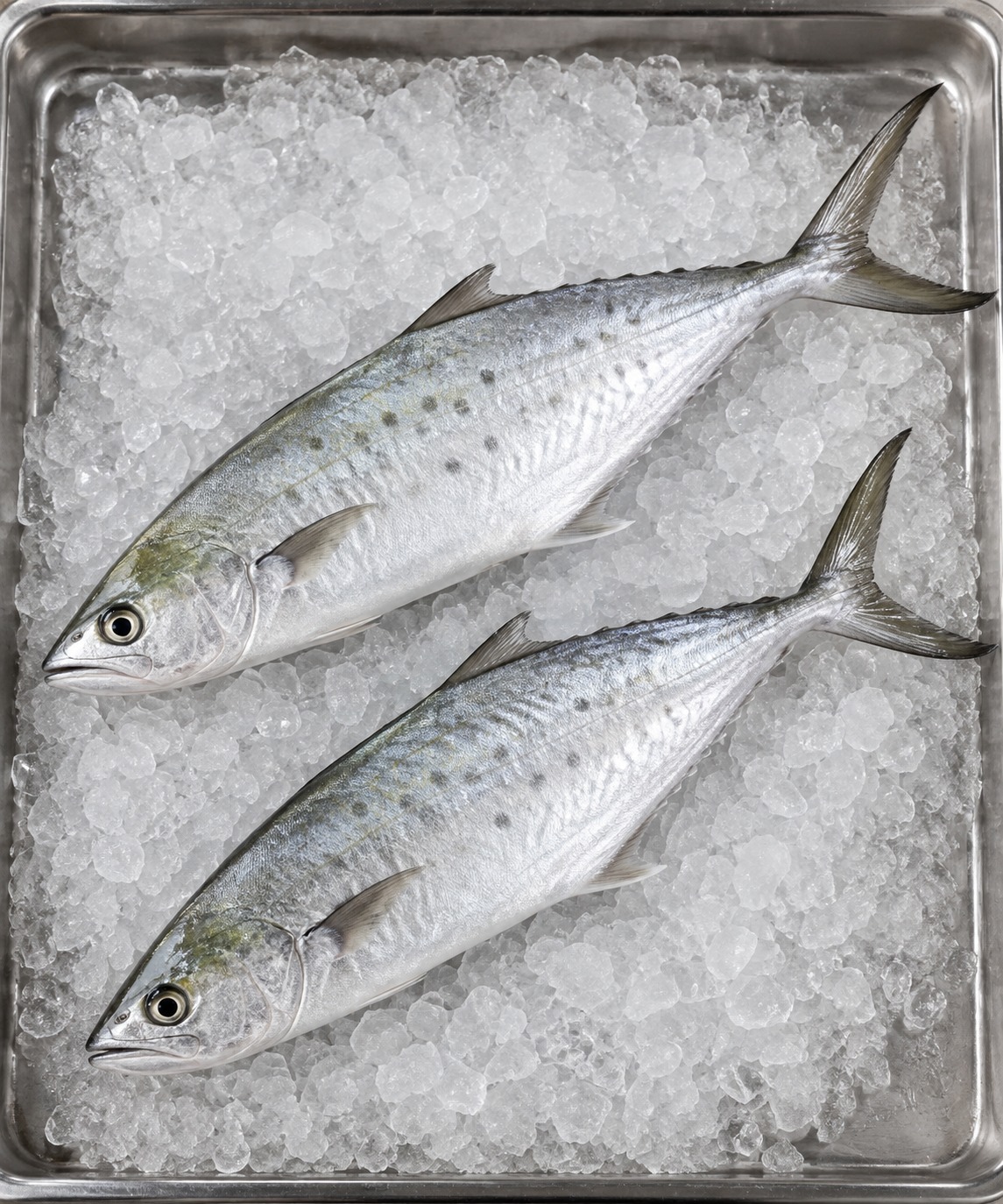
The Indian mackerel is a common ocean fish with a slender body, typically 30-40 cm long. Its scales are shiny silver-blue with a darker back and silver-white belly, and have fine wavy lines on the sides. The fish has large, transparent eyes and smooth, fine scales.

Economic Importance of Indian Mackerel

As one of the most popular species, Indian mackerel plays a vital role in local diets and seafood markets. It is an affordable source of protein, making it a staple food in many Asian and Middle Eastern countries. Its high demand has also made it a valuable export product, contributing significantly to the fishing economy of Iran and other coastal countries.

Indian Mackerel Fish Exporter

Processing and Consumption

People usually consume Indian mackerel fresh, but they can also preserve it by freezing, salting, drying, or canning. Cooks find this fish very versatile and commonly grill, fry, curry, or bake it. Its fatty flesh gives it a rich flavor that pairs well with spices, making it a favorite ingredient in traditional cuisines throughout Asia.

Persian Mackerel

People prize Persian Mackerel for its freshness and quality, and they source it from the clean, nutrient-rich waters of the Persian Gulf and the Sea of Oman. Companies export it to both domestic and international markets. Careful fishing practices and traditional preservation methods help preserve its flavor and nutritional benefits.

Nutritional Values of Indian Mackerel

Indian mackerel is rich in omega-3 fatty acids, which promote heart and brain health. It is also an excellent source of high-quality protein, which supports muscle growth and repair. In addition, it provides vitamins D and B12, along with minerals such as calcium, selenium, and phosphorus. Its low carbohydrate content and nutrient density make it an essential component of a healthy diet.

This fish is rich in protein and provides omega-3 fatty acids. If you want to include more fish in your diet but don't like the strong taste of other types of fish, mackerel can be a good alternative with its mild flavor.

Mackerel Nutritional Table

The USDA data for a 100-gram serving of raw Atlantic mackerel is given in the table below:

Calories

Fat

Sodium

Carbohydrates

Protein

Magnesium

Selenium

205

13.9 grams

90 milligrams

0

19 grams

76 milligrams

44.1 micrograms

Health Benefits

Indian Mackerel, in any form, has many health benefits. Here are the most important health benefits of it:

  • Improves heart health: Polyunsaturated fats (including the omega-3 fatty acids DHA and EPA) can help reduce the incidence and death from cardiovascular disease. Fish oil supplements can also help lower triglycerides without increasing other types of cholesterol.
  • Reduces the risk of dementia: Consuming seafood, especially mackerel, may help prevent age-related dementia, and the presence of EPA and DHA in it helps improve cognitive function in people with very mild Alzheimer's disease. Women who eat dark-fleshed finned fish (including Indian mackerel) at least once a week generally have much better verbal memory.
  • Improves Cardiometabolic Health: People who consume this fish improve their triglyceride and HDL cholesterol levels without negatively affecting blood pressure, heart rate variability, and glucose homeostasis. Consuming this type of oily fish can also help increase children's inventive intelligence.
  • Prevents Anemia: Indian mackerel can provide good sources to prevent anemia caused by nutritional deficiencies. Fatty fish contains iron, vitamin B12, and some folate. Deficiency in any of these micronutrients can lead to certain types of anemia.
  • Reducing the risk of type 2 diabetes: Eating a high amounts of foods containing saturated fat increases the risk of developing type 2 diabetes. On the other hand, high consumption of polyunsaturated fats, which are abundant in this fish, reduces this risk.
Premium Frozen Indian Mackerel

Buying Fresh Indian Mackerel

If you are buying fresh fish, avoid products that have a sour or ammonia-like smell. When choosing fresh mackerel, look for firm flesh with clear eyes and a shiny body. Fresh fish may be frozen, but it should still smell fresh.

Best Mackerel Factory

Iran Fish Mackerel is truly a premium seafood choice. Grown and caught in the waters of the Persian Gulf, these fish have a firm texture and a mild flavor that will tempt your taste buds. Each of our Indian mackerel is carefully selected and processed to ensure its excellent quality. Its rich flavor and tender, juicy texture make it a real treat for seafood lovers.

For more information about our mackerel and other products, please contact us. We look forward to the opportunity to serve you with the best quality seafood.

Reviews (0)

Reviews

There are no reviews yet.

Be the first to review “Indian Mackerel”

Your email address will not be published. Required fields are marked *