

Types of Salmon: A Guide to Commercial Species

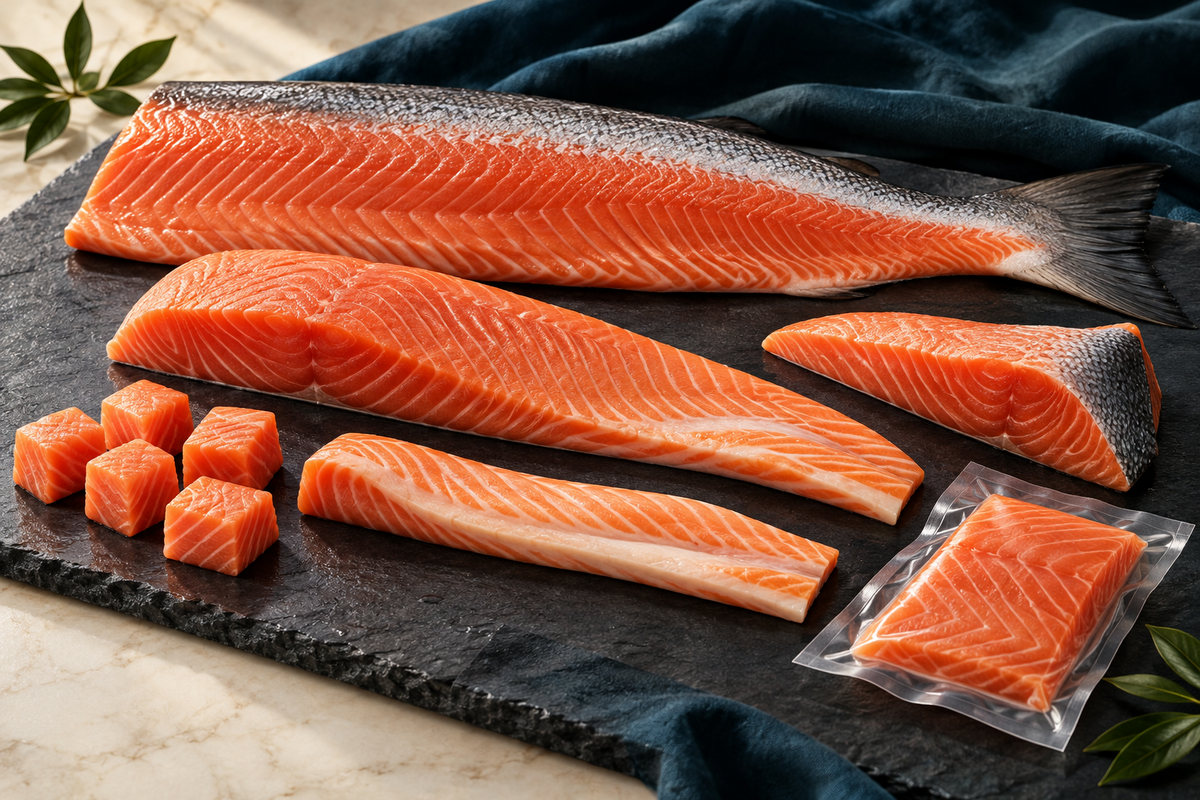
The main types of salmon in international seafood trade are Atlantic, Chinook, sockeye, coho, pink and chum. They differ in flavour, flesh colour, texture and supply patterns; no species is automatically the best for every buyer. Choose by scientific name, intended application, product form and documented quality. Salmon trout and steelhead are trout products, so confirm their identity rather than treating them as Atlantic salmon.
| Product | Scientific name | Typical buying consideration |
|---|---|---|
| Atlantic salmon | Salmo salar | Farmed supply commonly supports regular fillet and portion programmes. |
| Chinook / king | Oncorhynchus tshawytscha | Rich flesh; specify colour because pale-fleshed fish also occur. |
| Sockeye / red | Oncorhynchus nerka | Distinctive red flesh and pronounced flavour. |
| Coho / silver | Oncorhynchus kisutch | Versatile fillets with a comparatively delicate flavour. |
| Pink / humpback | Oncorhynchus gorbuscha | Mild flesh used in canned products and other processing applications. |
| Chum / keta | Oncorhynchus keta | Mild flesh and important roe production; assess harvest condition carefully. |
| Masu / cherry | Oncorhynchus masou | A regional commercial species; confirm availability with the origin supplier. |
| Salmon trout / steelhead | Confirm the species; commonly Oncorhynchus mykiss | A trout product, not a substitute species label for Salmo salar. |
| Every purchase | Species + origin + form + handling records | Agree size, trim, bones, packaging, net weight and intended use separately. |

Types of Salmon: The Commercial Species Compared
A species name tells you which fish you are buying, but it does not describe the entire product. Use these profiles to shortlist candidates, then assess samples and supplier specifications against your own application.
Atlantic salmon
Atlantic salmon is Salmo salar. It belongs to a different genus from the Pacific salmon discussed below, and its name identifies the species rather than the country where it was farmed.
Commercial farmed Atlantic salmon is widely used for whole gutted fish, fillets, portions and smoked products. Regular production can support recurring supply programmes, although the supplier still needs to confirm harvest schedules, available sizes and processing capacity. The NOAA Atlantic salmon seafood profile describes farmed supply in the US market; its market statements should not be expanded into claims about every country.
For buyers, consistency matters more than a generic description of rich flesh. Compare actual fillet thickness, colour distribution, gaping, bone status and thawed texture. A familiar species name is useful, but it cannot replace a written acceptance specification.
Chinook or king salmon
Chinook is Oncorhynchus tshawytscha, often sold as king salmon. It is associated with rich flesh and a substantial eating experience, making it a candidate for applications where the fish itself is the focus.
Colour requires particular attention: the NOAA Chinook seafood profile notes that flesh can range from ivory to red. A pale fillet is therefore not automatically evidence of poor quality. If a retail programme needs a particular appearance, agree that requirement before purchase.
Whole-fish size does not guarantee identical portion geometry. Ask whether the supplied portions come from centre, shoulder or tail sections and whether lots combine these locations. Approve representative samples rather than choosing solely by the king salmon trade name.
Sockeye or red salmon
Sockeye is Oncorhynchus nerka. Its red flesh and pronounced flavour can suit products where colour and recognisable salmon character are important, as described in the NOAA sockeye seafood profile.
The strong visual identity of sockeye can be useful for retail fillets, portions and smoked products. It does not remove the need to assess condition: colour alone cannot show how the fish was handled, frozen or stored.
For processing, test the product in the actual recipe or production method. Compare thawing loss, portion integrity and finished texture under a consistent procedure. Avoid translating a species reputation into an unsupported guarantee about every lot.
Coho or silver salmon
Coho is Oncorhynchus kisutch, also called silver salmon. The NOAA coho seafood profile describes its comparatively mild flavour and orange-red flesh.
Coho can be considered for retail, foodservice and further processing where a less pronounced salmon flavour is preferred. Confirm the supplier’s production method and origin instead of assuming every coho product is wild-caught.
The commercial question is whether the available form fits the operation. A skin-on fillet for downstream portioning and a skinless, individually packed portion are different products even when the species is identical. Establish what processing remains to be done after delivery.
Pink or humpback salmon
Pink salmon is Oncorhynchus gorbuscha. Its relatively light flesh and mild flavour distinguish it from darker-fleshed species; the NOAA pink salmon seafood profile also describes its use in canned products.
Pink salmon can be relevant to canning, flaked products and other recipes where the fish is combined with additional ingredients. Frozen fillets and other forms may also be offered, so do not assume the species is available only in cans.
Evaluate the actual size and processing form before committing to a fillet programme. Smaller fish can produce different fillet dimensions and handling requirements from larger salmon. Ask for measured product dimensions and a representative production sample.
Chum or keta salmon
Chum is Oncorhynchus keta. Keta is a common commercial name, while the NOAA chum seafood profile describes mild flesh and the commercial importance of its roe.
The harvest condition and finished product specification deserve close attention. A supplier should describe the flesh, external condition and intended processing application clearly; a species name or appealing trade label is insufficient.
Assess fillets against the same agreed criteria used for other species: texture, gaping, discolouration, bones and handling history. Roe is a separate product with its own processing and compliance requirements, not an automatic part of a whole-fish order.
Masu or cherry salmon
Masu is Oncorhynchus masou, recorded as masu or cherry salmon in the FAO species reference. It belongs in a broader commercial-species guide even though it is less familiar in many international wholesale programmes.
Treat it as a regional sourcing enquiry rather than assuming the same availability as the more widely traded salmon above. Confirm species identity, lawful origin, export eligibility and the exact processing form directly with the supplier.

Salmon, Salmon Trout and Steelhead: Read the Species Name
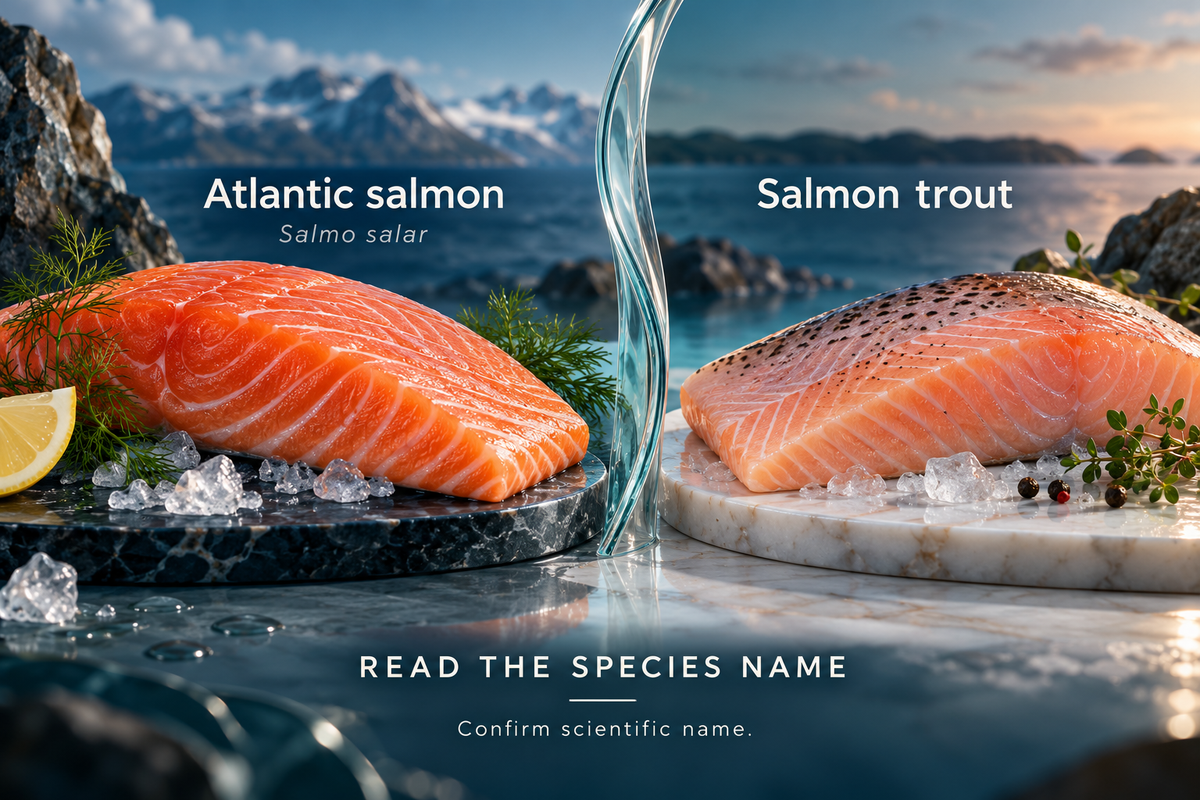
Salmon trout is a market description that can cause confusion. In many supply chains it refers to pink-fleshed rainbow trout, Oncorhynchus mykiss. Steelhead is the migratory form of rainbow trout; an orange fillet does not make either product Salmo salar. Local commercial names can differ, so request the scientific name on the product specification and supporting records.
This distinction matters for Iran Fish buyers. The website’s salmon-trout product range should be discussed as its own offering, with identity confirmed for the shipment. Do not assume that a commercial salmon enquiry means the supplier offers every Atlantic or Pacific species covered in this article.
Check that the invoice, carton label and product sheet describe the same fish. If a customer accepts trout as an alternative, obtain that approval explicitly and use a lawful destination-market name. The site’s salmon trout versus salmon guide explains the distinction in more detail.
Species, Origin and Production Method Are Different Specifications
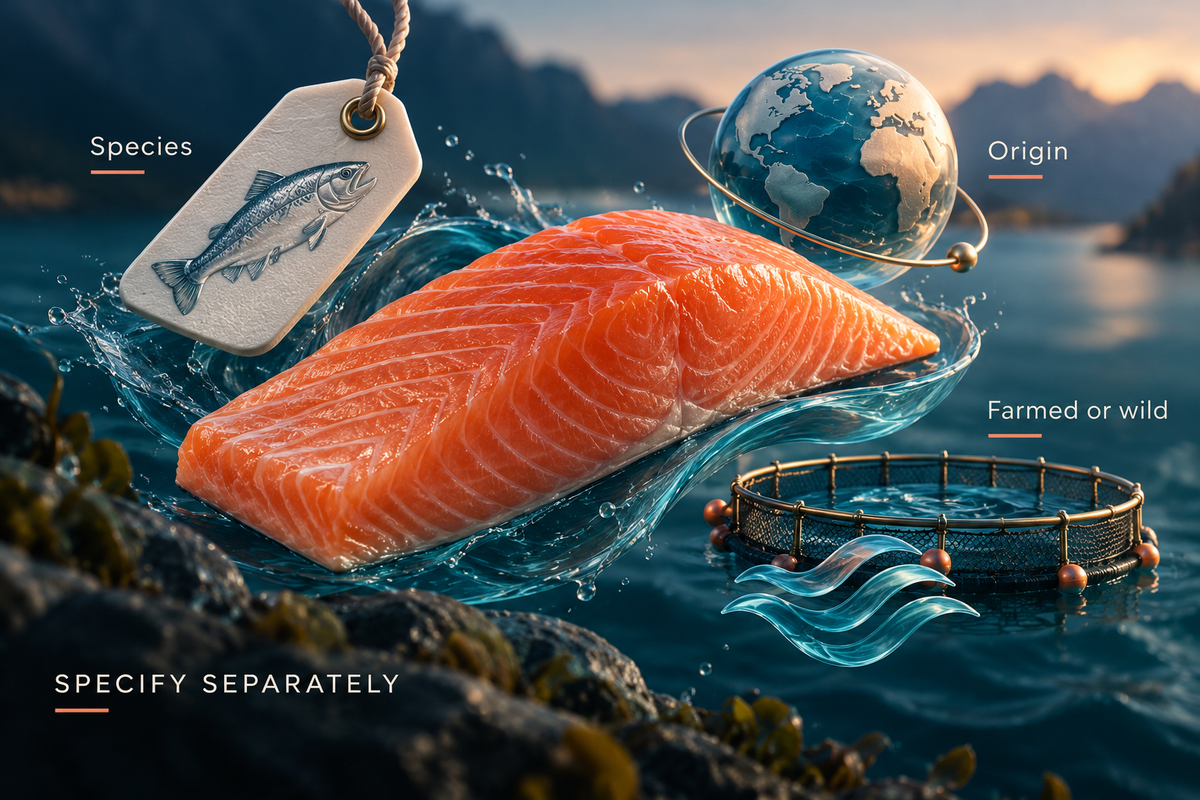
Atlantic or sockeye identifies a species, while farmed or wild describes how it was produced. Origin adds another layer, and each should appear separately in the purchasing specification.
Farmed versus wild
Neither description guarantees superior eating quality, food safety or environmental performance. Compare the actual production system, handling records and product samples. A well-managed frozen product can fit a distribution programme better than a poorly handled chilled one.
Production method also affects the records you should request. Farmed supply may need farm and harvest traceability; wild supply may require catch-area, vessel or landing information according to the market. Confirm the applicable documentation with the supplier and importer.
Origin and seasonal availability
Species and origin are not interchangeable. A geographic marketing name can describe a river or production region rather than a distinct species. Ask for the species behind the name and avoid assuming that origin alone predicts flavour.
Fresh wild availability depends on fishery openings, region and season. Frozen inventory can support distribution outside the harvest period, but available stock and remaining shelf life need confirmation. A supplier’s live production schedule is more useful than a generic global season chart.
Sourcing evidence
If certification is required, verify the certificate’s scope and the chain of custody supporting the shipment. The ASC salmon standard concerns responsible aquaculture requirements; it is not a substitute for a fillet quality specification or a shipment’s food-safety records.
Avoid presenting certification as proof that every product from a supplier is covered. Check the species, operation, product and supply-chain claims relevant to the actual order.
Match the Species and Product Form to Your Application
Start with the finished product your customer needs, then shortlist species and cuts. The following comparisons are purchasing priorities, not promises that one species must always be used for a particular application.
| Application | Product form to consider | Main selection priority |
|---|---|---|
| Retail fillets | Skin-on or skinless fillets | Appearance, dimensions, bones and label identity |
| Foodservice portions | Fixed-weight portions | Weight tolerance, thickness and cut-location consistency |
| Smoking | Fillets suited to the processor’s method | Texture, trim, size and trial results |
| Canning or flaked products | Fish prepared for the production line | Species identity, flesh condition and process suitability |
| Frozen wholesale distribution | Whole fish, fillets or portions | Pack integrity, net weight, lot identification and cold-chain history |
Foodservice and retail
Uniform portions require more than a species choice. Specify weight range, acceptable thickness variation, skin status and pin-bone status. Two portions with the same weight can have different shapes and behave differently during preparation.
Retail programmes may prioritise colour and presentation, but approved photographs should accompany measurable requirements. Establish whether mixed cut locations or variable fillet sizes are acceptable.
Smoking and further processing
Run a controlled trial with representative material. The relevant characteristics include flesh integrity, fat distribution, trim and consistency under the processor’s own method; avoid assigning a universal fat percentage to a species.
Further processing can change the hazards and documentation needed. Smoked, cured, canned and raw products require process-specific controls, rather than a generic declaration that the raw fish is suitable for every use.
Frozen distribution
Review how the fish was frozen and how it is packed. IQF describes individual freezing, while IVP describes individual vacuum packaging; they are separate specifications. The frozen salmon buying guide can help organise a shipment enquiry.
Check Quality and Food Safety Separately
Inspect representative samples for damaged skin, bruising, blood spots, gaping, dehydration and off-odours after controlled thawing. Record the inspection method and compare results with agreed tolerances. Photos can help document visible defects but cannot establish temperature history or microbiological safety.
Ordinary commercial freezing is not automatically a validated parasite-control treatment. Intended raw or undercooked use must be addressed explicitly in the supplier’s hazard assessment and applicable market requirements. The FDA seafood hazards guidance treats hazards and controls by product and process rather than by a reassuring marketing name.
The same care applies to vacuum-packed fish. Reduced oxygen packaging needs appropriate controls and handling instructions; it does not make fish safe at any temperature. Keep the product under its specified conditions and follow the approved thawing procedure rather than improvising at receipt.
Build a Clear Wholesale Salmon Specification
A useful specification turns a broad species enquiry into a product the supplier can confirm. Include the following details and resolve any difference between the approved sample and the written description before shipment.
- Commercial name and scientific name.
- Farmed or wild production method and origin.
- Whole, gutted, fillet, portion, steak or other agreed form.
- Weight basis, size range, dimensions and tolerances.
- Skin, pin-bone and trim requirements.
- Colour and visible-defect acceptance criteria.
- Freezing method, packaging format and glaze specification where relevant.
- Net fish weight, lot identification and remaining shelf-life requirement.
- Destination, intended application and required supporting documents.
| Request | Evidence to check |
|---|---|
| Correct species | Matching scientific name across product sheet and shipment records |
| Consistent product form | Written cut description and representative sample |
| Required quality | Inspection criteria, sample results and lot records |
| Suitable frozen supply | Packaging details and temperature records |
| Market suitability | Applicable import documentation and lawful product naming |

Frequently Asked Questions
These questions address common points of confusion in commercial salmon selection. The answers apply to product identification and purchasing, rather than guaranteeing the condition of an individual shipment.
What are the main commercial types of salmon?
Atlantic, Chinook, sockeye, coho, pink and chum are the main species discussed in many international buying guides. Masu is also a commercial salmon species with regional relevance. Confirm the scientific name whenever trade names vary.
Is king salmon the same as Chinook salmon?
Yes. King is a common name for Chinook, Oncorhynchus tshawytscha. A trade name still needs to be paired with the shipment’s origin, product form and agreed quality specification.
Is salmon trout actually salmon?
Not necessarily. Salmon trout commonly describes pink-fleshed trout, often Oncorhynchus mykiss. Confirm the supplier’s scientific name and destination-market labelling rather than identifying the species from flesh colour.
Which salmon species is best for wholesale portions?
There is no universal answer. Choose a species and raw-material size that meet your weight, thickness, appearance and application requirements, then approve a representative production sample. Processing consistency can matter as much as species.
Does frozen salmon mean it is suitable for raw consumption?
No. Frozen condition alone does not establish suitability for raw use. Confirm the intended-use specification, relevant parasite controls, handling history and other applicable food-safety requirements with the responsible supplier and importer.
Discuss Your Salmon-Trout Supply Requirements with Iran Fish
Explore Iran Fish’s salmon-trout supply page to start a product enquiry.
Send your destination, intended use, required cut, size range, skin and bone preferences, packaging and expected volume.
Ask the team to confirm scientific identity, current availability and the shipment specification before you approve supply.