


How to Store Caviar: Opened Tins, Unopened Packs and Shelf Life

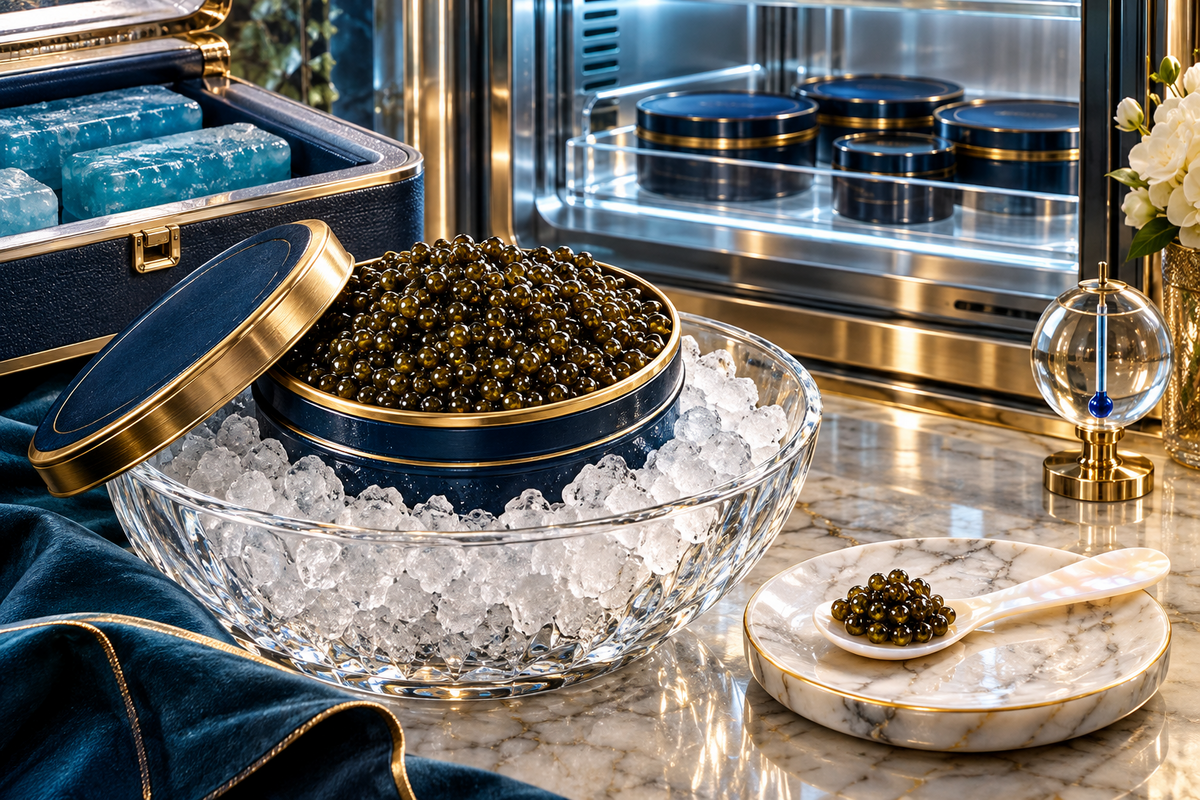
If you want to know how to store caviar, follow the tin’s temperature instructions, refrigerate it promptly and keep it sealed until serving. After opening, cover it, return it to refrigeration and follow the producer’s shorter consumption window. There is no universal shelf life for every caviar. Processing, packaging, date marking and the cold-chain history determine which instructions apply to your product.
| Situation | What to do |
|---|---|
| Unopened refrigerated caviar | Keep the original seal intact, follow the labelled temperature and use within the product’s stated shelf life. |
| Opened caviar | Cover promptly, record when it was opened and follow the producer’s after-opening instructions. |
| No clear storage instructions | Ask the supplier before relying on a generic temperature or shelf-life estimate. |
| Serving | Bring out only what you need and keep the serving container properly chilled. |
| A pasteurized product | Follow its label; pasteurization does not automatically mean pantry storage is suitable. |
| Considering freezing | Check whether the producer permits it; freezing can affect the texture of delicate roe. |
| Warm delivery or unknown handling | Hold the product for assessment instead of assuming that chilling it again restores safety. |
| Suspicious or damaged product | Do not taste it to assess safety; arrange appropriate rejection or disposal. |
How to Store Caviar at the Right Temperature
The correct temperature is the one specified for the product in your hand. A general refrigerator recommendation does not replace a narrower range on a caviar label.
Start with the product instructions
Read the storage statement before putting the tin away. Suppliers may specify different chilled ranges for different preparations and packaging formats. For example, Petrossian’s storage guidance describes its sealed caviar at 38°F, or about 3.3°C. That instruction should not be copied onto another supplier’s product without confirmation.
Measure the storage zone
The FDA’s food-storage guidance recommends keeping domestic refrigerators at or below 40°F, approximately 4°C. That is a general recommendation, not a claim that every caviar can use the full range. Use an appliance thermometer and ensure the place holding the tin meets its specific instructions.
Avoid an unverified cold spot
A fridge door is frequently exposed to warmer air, while a surface near a cooling outlet may freeze a delicate product. Choose a stable, measured location rather than assuming that “as far back as possible” always works. Leave room for air circulation and keep the tin protected from dripping raw foods or spills.
How Long Does Unopened Caviar Last?
An unopened tin lasts only as long as its own storage and date instructions allow under the required conditions. Do not start a new shelf-life clock on the day you buy it. A product may already have spent time in processing, distribution and retail storage before it reaches your refrigerator.
Differences between supplier recommendations are a reason to check the label, not to choose the longest number you can find online. Petrossian describes a period of three to four weeks from delivery for its sealed product when maintained under its specified conditions. Other products may carry different validated dates. Neither example establishes a general entitlement to keep any unopened caviar for weeks or months.
Keep the original label readable and preserve the seal until the planned opening. If a use-by or expiry instruction applies, follow it; date-marking terminology can differ between markets. A best-before date also does not excuse poor handling. If you cannot establish what the printed date means, ask the supplier rather than translating it into an assumed remaining life.
How to Store Caviar After Opening
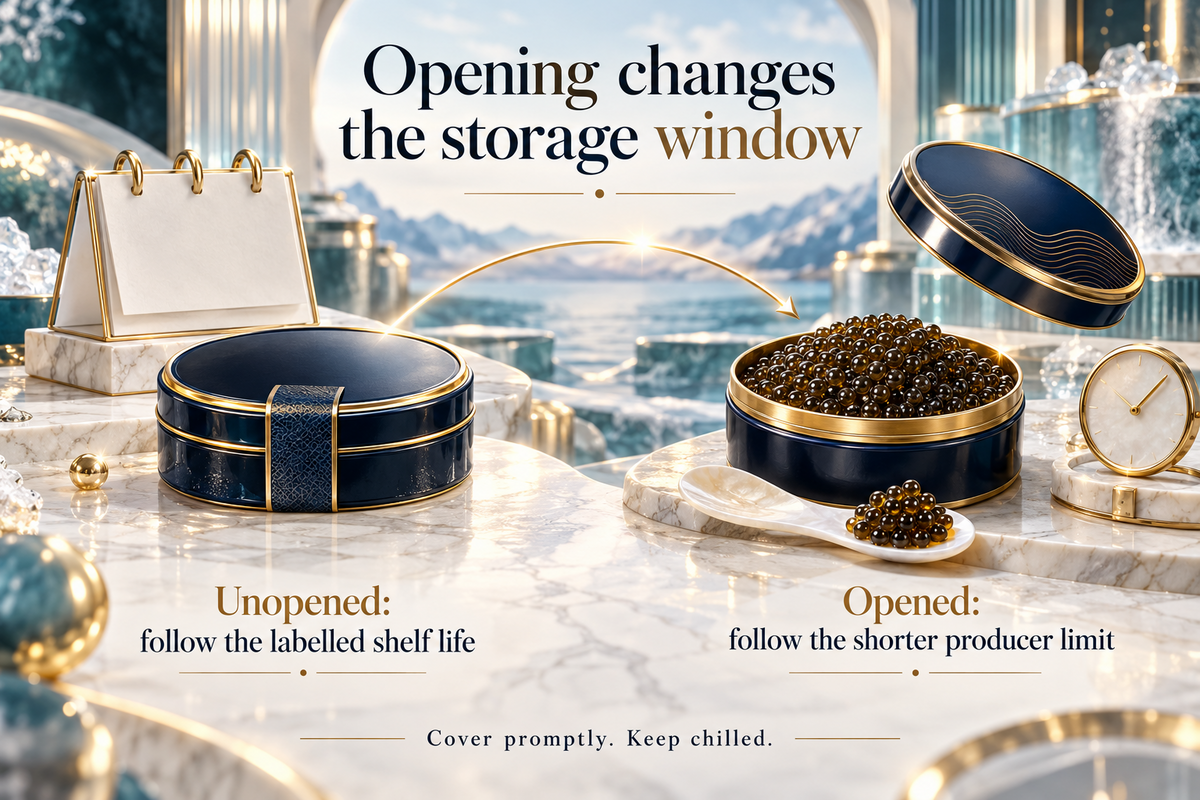
Opening changes the storage situation, even if most of the contents remain untouched. The original unopened date is no longer the only instruction you need.
- Open the tin close to the time you intend to serve it.
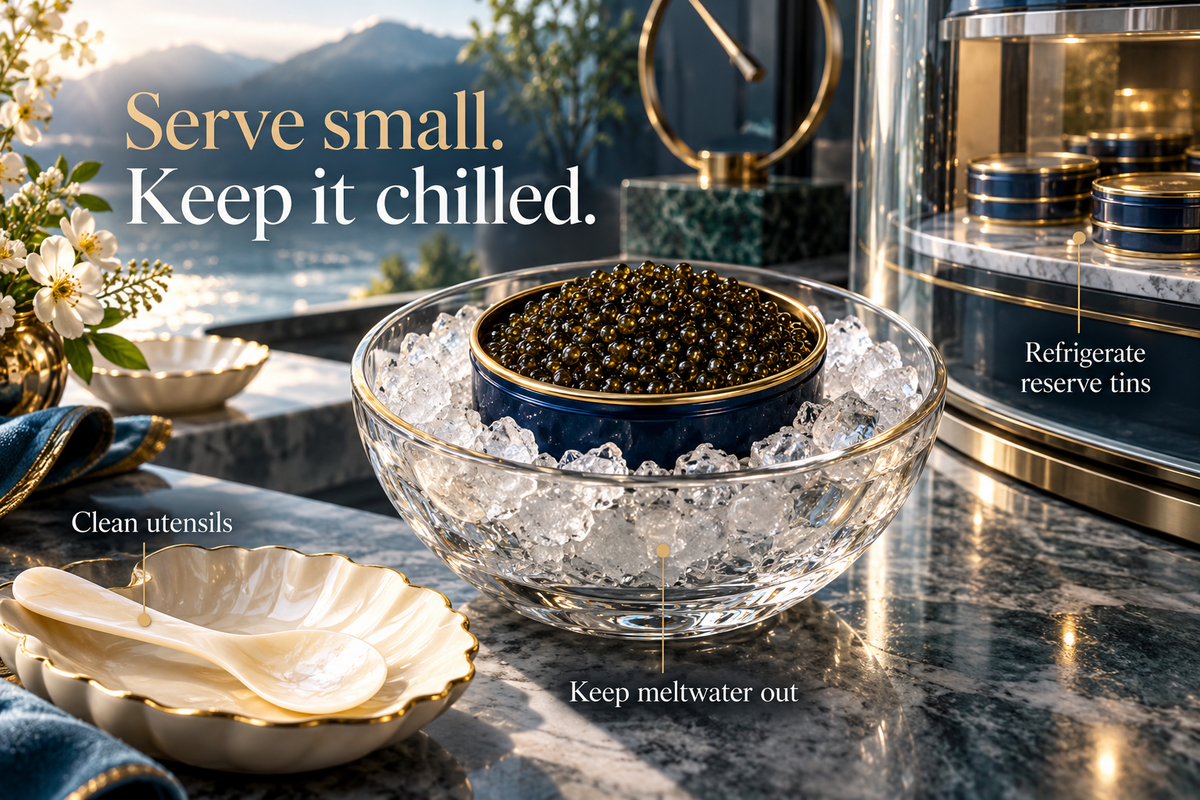
- Use a clean utensil and avoid returning a used tasting spoon to the container.
- Remove the portion needed rather than repeatedly warming the whole supply.
- Close or cover the container as directed by the producer.
- Record the opening date and time when the product will be retained.
- Return it promptly to the specified refrigerated conditions.
- Apply the producer’s after-opening limit as well as any earlier expiry instruction.
- Keep served leftovers separate from untouched stock instead of combining them.
Supplier advice varies. Petrossian instructs customers to consume its opened caviar within 24 hours, while Seattle Caviar’s serving and care guidance says to enjoy its opened product within two days. These are product-specific instructions, not competing universal safety guarantees.
If after-opening instructions are missing, ask the supplier before planning to retain leftovers. Do not extend the period by adding oil, extra salt or a new cover. Those changes do not recreate the original controlled packing process, and they can change the product you intended to serve.
Fresh, Pasteurized and Shelf-Stable Products Need Different Instructions
A tin is a package, not proof of shelf stability. The processing description and storage statement determine how to handle it.
Refrigerated fresh caviar
Treat a product marked for refrigeration as a chilled food before and after opening. “Malossol” describes a lightly salted style; it does not give permission to store the tin in a cupboard. Ask for the actual temperature range and expiry information.
Pasteurized caviar
Pasteurization is a processing step, but the word alone does not establish room-temperature storage or a specific shelf life. Read the finished product’s instructions. Do not assume that a glass jar is pasteurized or that every metal tin contains an unpasteurized product.
Products explicitly labelled shelf-stable
Only use ambient storage when the manufacturer clearly specifies it for that product. Follow the stated conditions while sealed, then check what changes after opening. Do not transfer storage advice between sturgeon caviar, trout roe and manufactured caviar-style pearls simply because their packages look similar.
| Product description | Storage decision |
|---|---|
| “Keep refrigerated” | Refrigerate while sealed and follow the stated range. |
| “Pasteurized” with refrigeration instructions | Continue to refrigerate; the processing word does not override the storage statement. |
| Explicitly shelf-stable while unopened | Follow the stated ambient conditions and the separate after-opening instructions. |
| Product type or instructions unclear | Obtain the matching specification from the supplier before deciding. |
Keep Caviar Cold While Serving
A well-chilled refrigerator cannot protect a tin that spends too long on a warm table. Plan serving so the product remains within its required handling conditions.
- Keep reserve tins refrigerated until needed.
- Use small serving portions and replenish with fresh chilled stock.
- Set the serving container over a suitable ice bed without letting meltwater enter the food.
- Keep the display away from direct sunlight and heat sources.
- Track time outside controlled refrigeration rather than judging by how cold the bowl feels.
- Do not mix a newly opened tin into leftovers that have already been served.
The CDC’s food-poisoning prevention guidance says not to leave perishable food out for more than two hours, or one hour when exposed to temperatures above 90°F, approximately 32°C. Those are general upper limits for uncontrolled exposure, not recommended caviar serving times. Follow stricter product instructions and keep the food chilled throughout service.
Putting a tin back in the refrigerator does not erase its earlier exposure. Ice is useful only when the arrangement actually maintains the required temperature. A decorative bowl with a little melting ice is not evidence that the caviar has remained adequately cold.
Can You Freeze Caviar?
Do not freeze premium refrigerated caviar simply to avoid using it within its stated life. Freezing can affect the texture and appearance of the roe, and suppliers may advise against it. Seattle Caviar, for example, instructs customers to refrigerate its caviar rather than put it in the freezer.
A product manufactured and supplied for frozen storage is a different case. If that is what you bought, follow its frozen-storage and thawing instructions, including any directions related to packaging. For delicate ready-to-eat roe, do not substitute microwave or countertop thawing for a controlled procedure specified by the producer.
Freezing is also not a rescue treatment for questionable food. The FDA explains that freezing does not kill most bacteria. If a chilled tin has already been mishandled, freezing it does not reverse that history. Ask the supplier about an accidentally frozen, otherwise correctly handled product, and do not assume that thawing or refreezing gives it a fresh expiry date.
Transport and Receive Caviar Without Breaking the Cold Chain
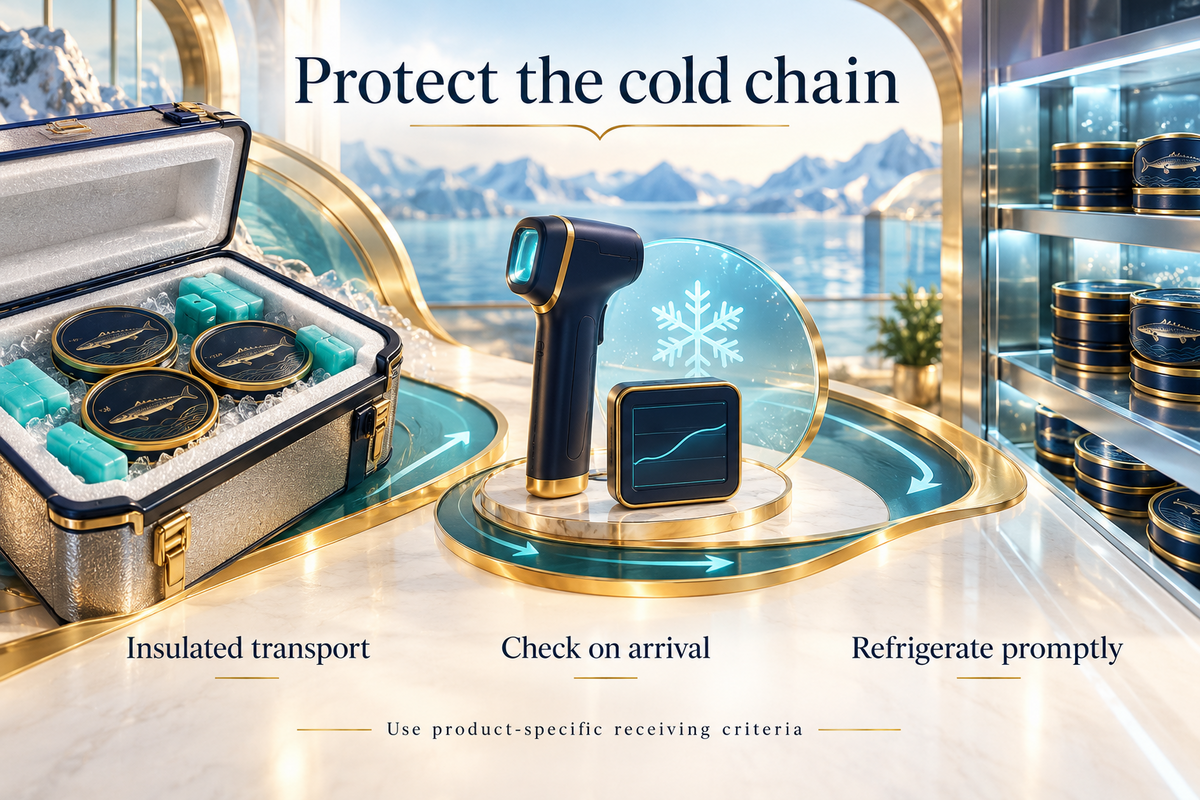
Storage starts before the tin reaches your shelf. A good receiving check connects the product’s condition to its handling information rather than relying on the outside of the shipping box.
- Arrange delivery when someone can receive and refrigerate the goods promptly.
- Confirm the required temperature and receiving criteria with the supplier in advance.
- Use suitable insulated packaging and refrigerants for the journey.
- Keep a cooler closed and protected from direct heat during local transport.
- Inspect for leakage, damaged seals or compromised primary containers.
- Review any supplied temperature indicator or logger according to its instructions.
- Record the delivery time, lot references and relevant observations.
- Move acceptable goods promptly into the specified storage conditions.
The FDA’s seafood-handling advice recommends a clean cooler with ice or cold packs for chilled seafood and keeping the cooler closed as much as possible. For commercial shipments, packaging and monitoring should suit the specific route and product.
A remaining ice pack is useful information, but it does not by itself establish the complete temperature history of every tin. If the goods arrive warm or the handling history is unclear, segregate them and contact the supplier promptly. Document the issue before discarding packaging needed to investigate it, while avoiding unnecessary delay in making a safe disposition decision.
When to Discard Caviar Instead of Saving It
Condition checks can identify reasons for rejection. They cannot certify that a product is safe simply because it looks normal.
Damaged packaging or visible deterioration
Do not eat caviar from a leaking, swollen or otherwise compromised container. Visible mould or an unusual sour, rancid or ammonia-like smell is also a reason to reject it. Do not remove the affected portion and serve the remainder, or taste a suspect sample to decide whether the concern is serious.
Unknown or unsuitable temperature history
A sealed lid does not protect against every consequence of warm storage. If the product has exceeded its handling limits, chilling it again does not validate it. For a business, hold the affected lot and use the responsible food-safety process; for household leftovers with doubtful handling, discard them.
Power interruptions and equipment faults
Keep the refrigerator closed while assessing an interruption and use reliable temperature information. Do not assume that another household food’s emergency allowance overrides a narrower caviar specification. Transfer stock to suitable functioning storage if appropriate and document the excursion. Where the required conditions cannot be established, do not serve the product on the strength of smell or appearance.
Storage Controls for Restaurants and Wholesale Buyers
A written product specification makes caviar storage easier to manage across receiving, stockholding and service. The same information should reach the people handling the product, not remain only in a purchasing email.
- Obtain the temperature range and unopened shelf-life conditions for each product.
- Confirm whether the product is supplied chilled or frozen and whether it is pasteurized.
- Request explicit instructions for opening, covering, thawing where applicable and consumption after opening.
- Agree on the minimum remaining shelf life needed at delivery.
- Record incoming lots so retained tins remain traceable.
- Rotate stock by the earliest applicable expiry, including shorter limits after opening.
- Keep temperature monitoring appropriate to the storage equipment and product requirements.
- Identify opened stock clearly and prevent it from being mistaken for sealed stock.
- Define how staff should report a temperature excursion or equipment failure.
- Keep disputed goods segregated until their disposition is decided.
Choose pack sizes that fit your service pattern rather than relying on repeated opening and prolonged retention. For sourcing discussions, review Iran Fish’s caviar export offering and request the handling details for the exact proposed product. A general catalogue statement should not substitute for a batch’s label and approved specification.
Frequently Asked Questions
These answers cover the practical questions that arise after buying or receiving a tin. The product’s own instructions remain the reference for its storage life.
Does unopened caviar need to be refrigerated?
Yes, if it is sold as refrigerated caviar or marked “keep refrigerated.” An intact seal does not make it shelf-stable. Use ambient storage only for a product whose manufacturer explicitly permits it under stated conditions.
How many days can I keep caviar after opening?
Follow the producer’s after-opening instructions rather than a universal number. Supplier examples range from 24 hours to two days for the products discussed above. Continuous refrigeration and hygienic handling are still required, and an earlier expiry instruction takes priority.
Should I move caviar out of its original tin?
Follow the producer’s instructions and use the original container when it remains suitable and can be properly covered. Unnecessary transfer adds handling. If a transfer is required, use a clean food-suitable container and retain the product identity, date and storage instructions.
Is caviar safe if it still smells normal?
Smell alone cannot establish safety. The FDA notes that harmful microorganisms may be present without obvious changes in smell, taste or appearance. Check the handling history and applicable dates, and do not taste questionable caviar as a test.
Can I store a sealed tin in my luggage during a trip?
A sealed tin of refrigerated caviar still needs its specified cold conditions. Arrange suitable temperature-controlled transport and confirm travel and import requirements separately. Ordinary luggage and a sealed lid do not demonstrate that those conditions will be maintained.
Ask Iran Fish for Product-Specific Storage Details
Before ordering, request the storage range, packing format, remaining shelf life and after-opening instructions for the proposed supply.
Explore the Beluga caviar product page to begin a discussion about your requirements.
Contact Iran Fish about caviar supply and handling with your destination, expected delivery schedule and intended use so the appropriate product details can be confirmed.