


How to Serve Caviar: A Practical Guide for Restaurants and Hosts

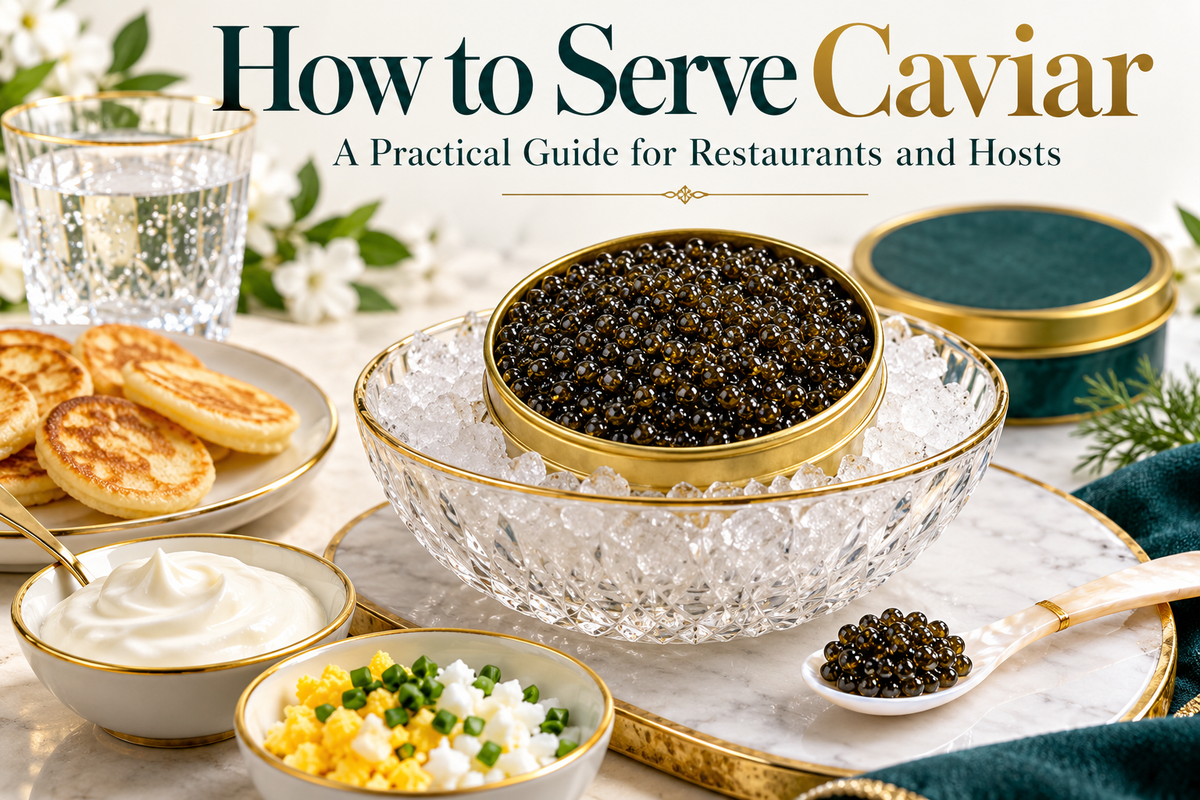
How to serve caviar well starts with keeping it chilled, opening it when the table is ready and using a clean, suitable spoon. Support the tin or serving bowl over ice without letting water reach the roe. Offer a small plain taste, then mild accompaniments such as blinis or crème fraîche. Plan portions around the menu, keep reserve stock refrigerated and follow the product’s handling instructions throughout service.
| Service decision | Practical answer |
|---|---|
| When to open | When the equipment and guests are ready, rather than leaving the roe exposed during preparation. |
| How to keep it chilled | Seat the container securely in a chilled holder or over ice; prevent meltwater entering the food. |
| Which spoon | Use a clean, smooth, food-safe, nonreactive utensil; mother-of-pearl is a traditional option. |
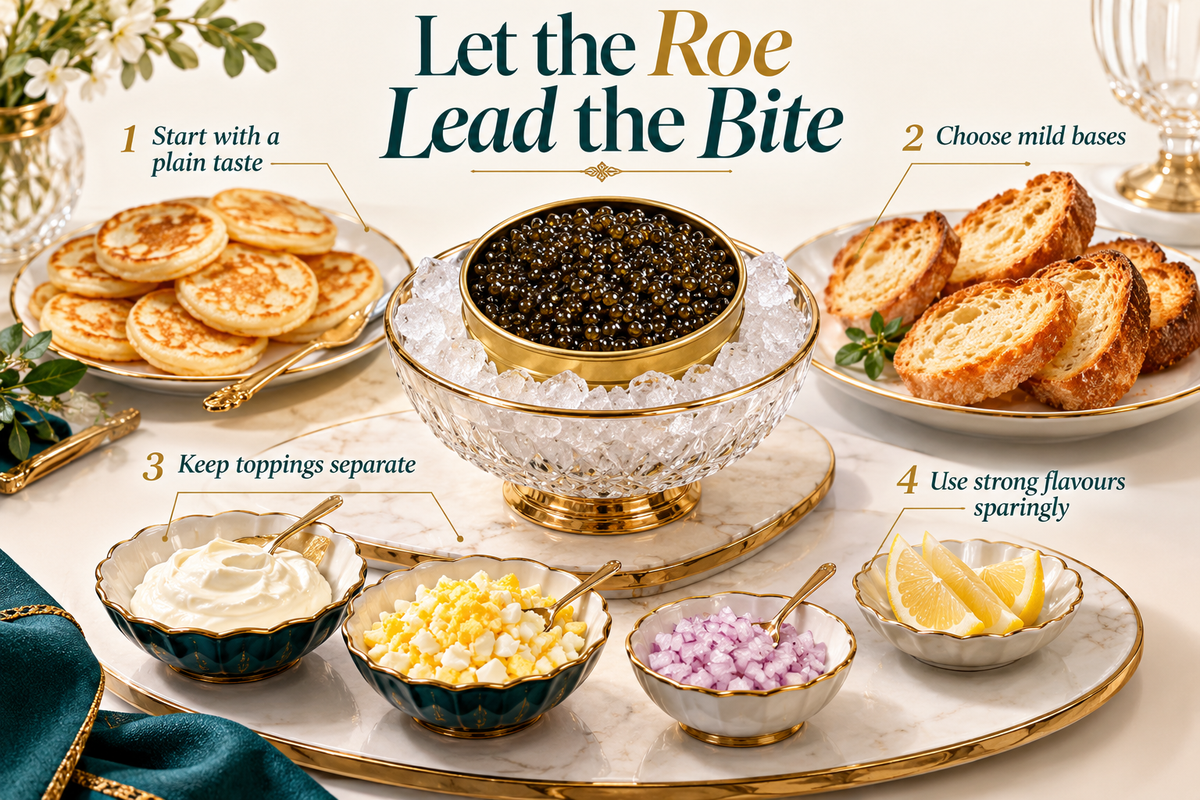
| First bite | Offer a small plain taste so the roe’s own texture and flavour can be noticed. |
| Accompaniments | Serve neutral bases and mild toppings separately; let guests choose how much to add. |
| Quantity | Set an intended portion for the menu and multiply by the number being served. |
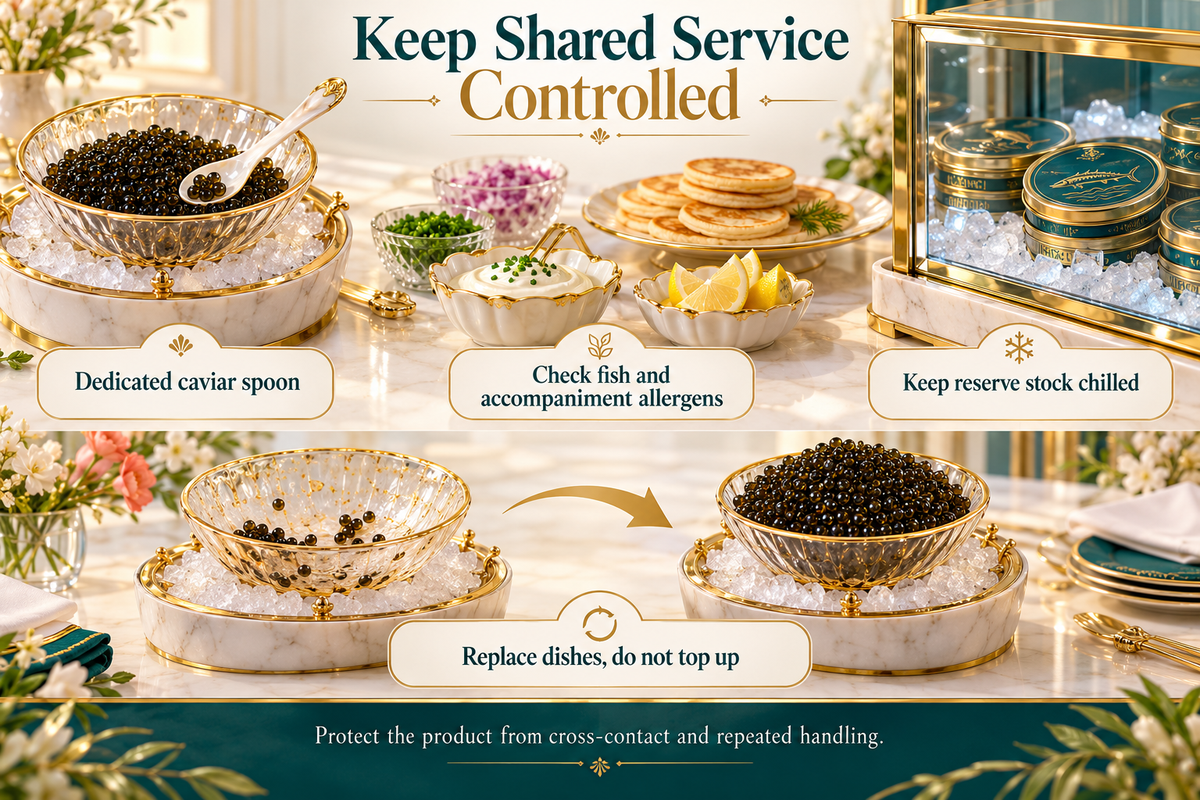
| Shared service | Use a dedicated serving utensil and separate utensils for accompaniments. |
| Replenishment | Replace the serving container rather than mixing fresh stock into exposed remnants. |
| Leftovers | Assess time, temperature and exposure; replacing the lid does not restart shelf life. |
How to Serve Caviar From Refrigerator to Table
Good service begins before the lid comes off. Prepare the setting while the product remains under its specified storage conditions.
Make the cold handoff deliberate
Read the product label and confirm the storage instructions for that roe. There is no single presentation temperature or warming period that suits every product and service environment. A producer’s tasting preference does not replace its storage requirements or the operation’s food-safety controls.
The FDA’s buffet guidance recommends keeping cold food at 40°F or colder, approximately 4°C. Treat that as general guidance, not permission to ignore a stricter caviar instruction. A restaurant should apply its local requirements and documented holding procedure as well.
Build a secure ice nest
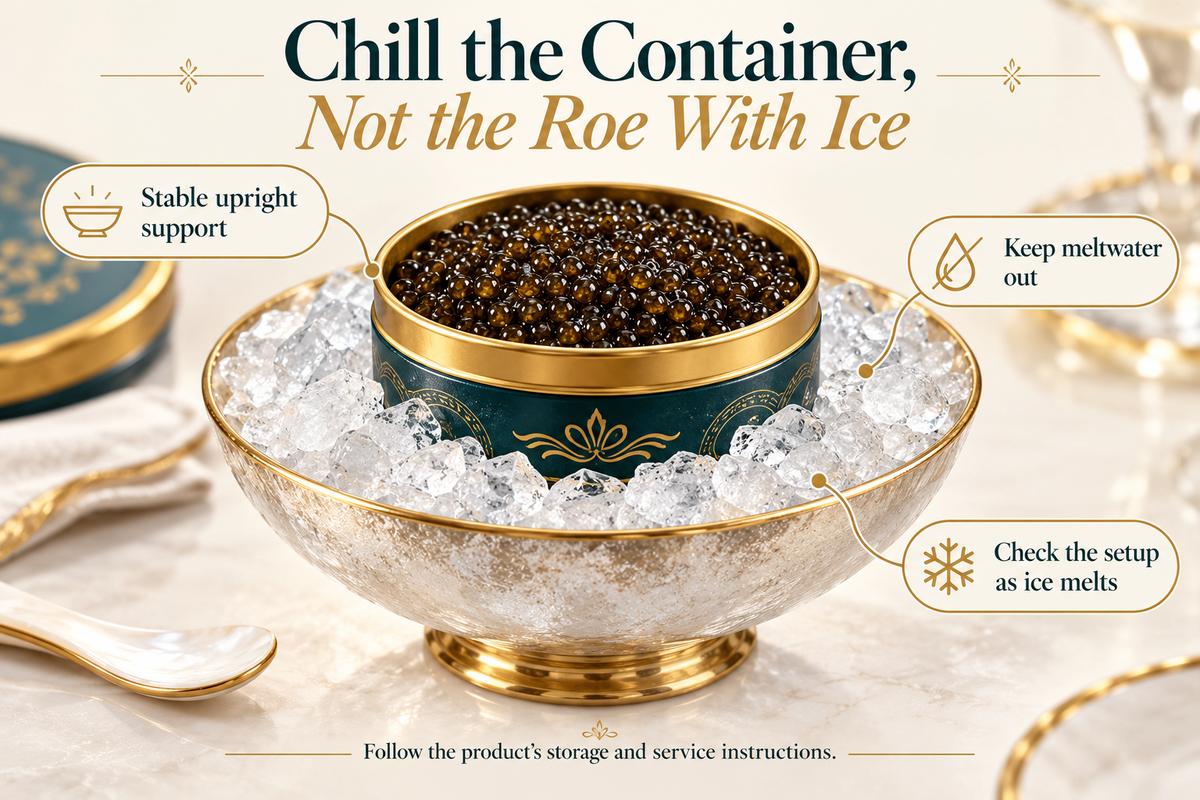
Use a bowl or holder that supports the pack without allowing it to tilt. Crushed ice can surround the outside of the container, but loose ice and meltwater should not contact the roe. Check the setup as the ice melts; a presentation that is stable at the beginning may become uneven later.
Do not place caviar directly on ice cubes. Keep the actual food in its suitable container and reserve ice for chilling the exterior. Avoid pouring away meltwater over an open tin.
Open only the pack being used
Have plates, spoons and accompaniments ready before opening. Inspect the packaging, use the appropriate tool and retain the batch information. Keep additional packs sealed in refrigeration until needed. The caviar storage guide explains why opening changes the applicable handling window.
Choose the Bowl, Spoon and Serving Format
The equipment should protect the roe and suit how guests will receive it. Elaborate tableware is optional; stability, hygiene and manageable portions are not.
Original tin or separate serving bowl
An original tin can be presented in a chilled holder if its condition and design permit. A clean glass or ceramic bowl is another option, particularly for an individual presentation. Decant gently with a clean utensil and retain the product identity and opening information behind the scenes.
Paramount’s serving guidance for caviar and roe describes bowls nested over ice and explains the food-safe lining in its tins. A metal package should not automatically be confused with bare reactive metal contacting the food.
A suitable serving spoon
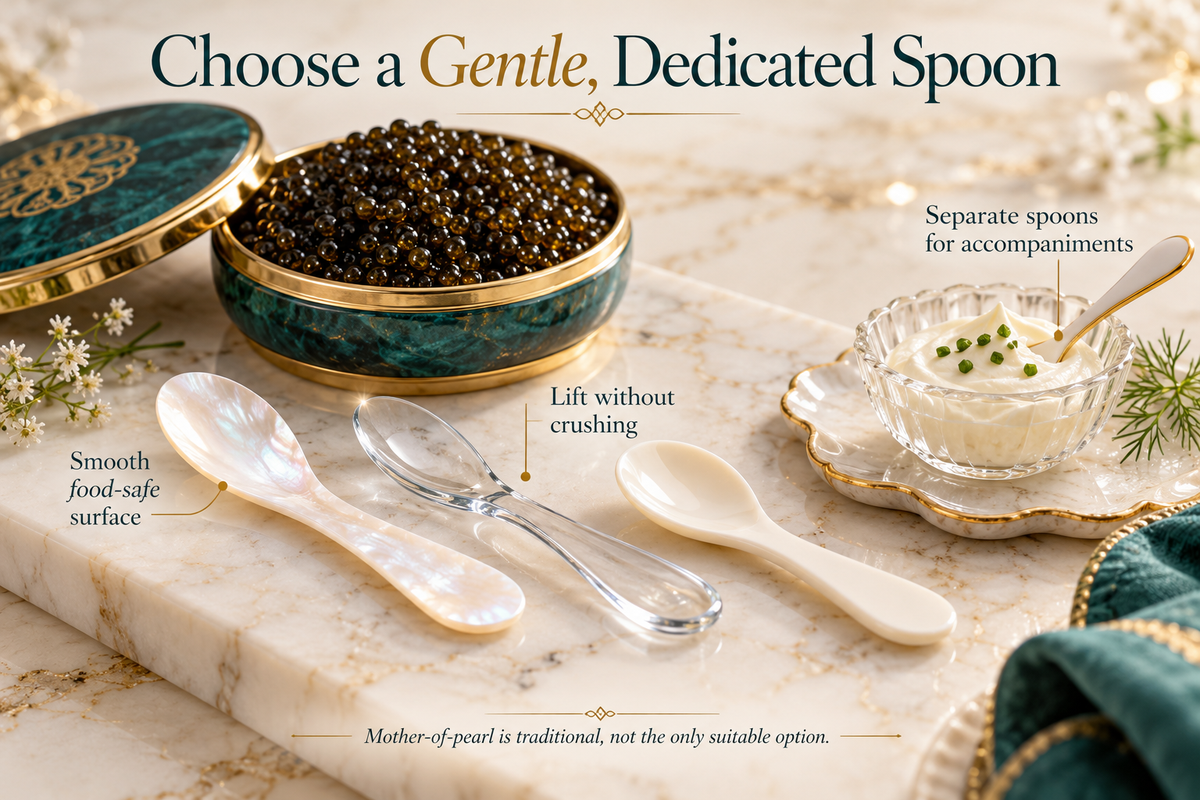
Mother-of-pearl is traditional and gives a smooth surface for lifting the pearls. A suitable food-safe glass or plastic utensil can also serve the purpose. Check the condition of reusable spoons and avoid chipped, damaged or difficult-to-clean pieces.
Avoid treating a spoon as a tool for stirring or pressing the roe. Scoop gently and keep the serving utensil dedicated to the caviar instead of moving it between cream, egg and the tin.
Shared or individual presentation
A shared tin provides a central presentation but requires clear utensil handling. Individual portions make the planned amount and service sequence easier to control. For a buffet, a staff-served station can reduce repeated handling of the central container. Choose the format that staff can maintain consistently throughout the event.
Plan Portions Around the Menu
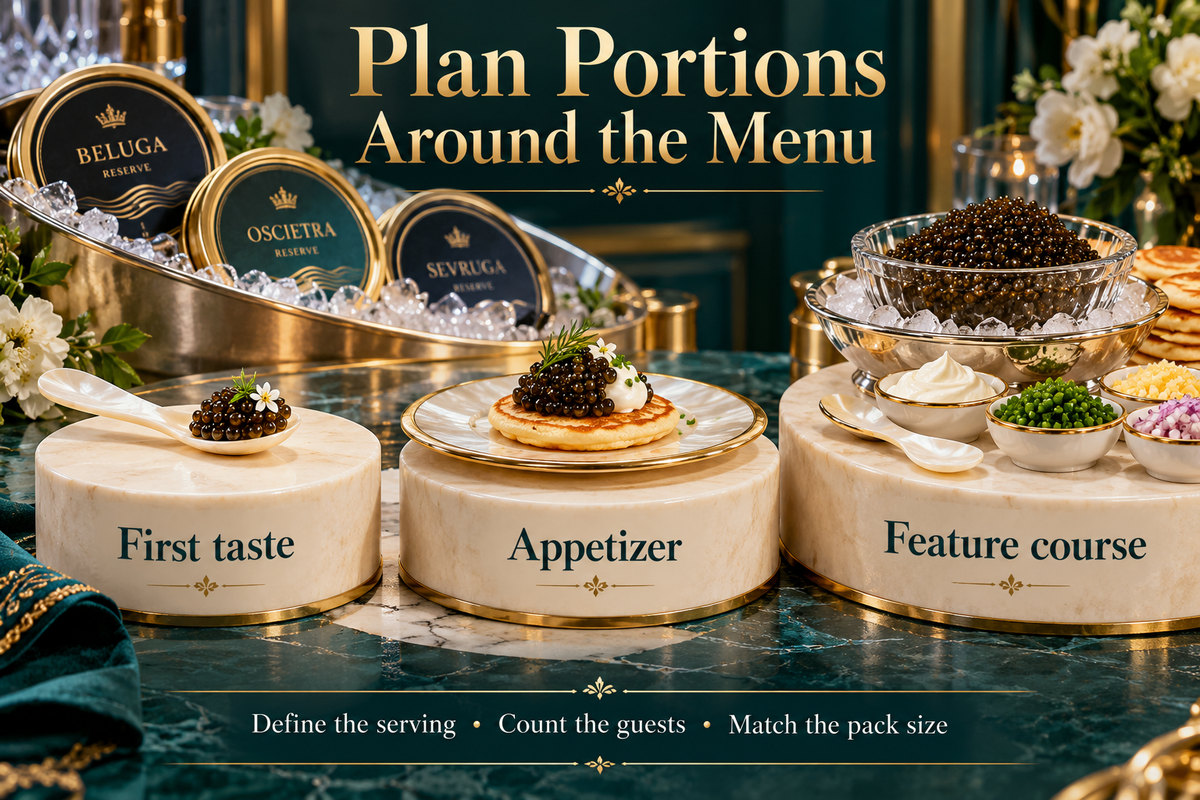
Start with the role of the caviar: a first taste, a garnish, an appetizer or the focus of a course. These are different experiences, so a single mandatory amount per guest is unhelpful. OM’s portion-planning discussion separates tasting, appetizer and feature-course quantities; those are planning suggestions rather than food-safety limits or universal etiquette rules.
For a working plan, set an intended weight per serving, multiply it by expected servings and compare the result with available pack sizes. As an illustrative calculation, not a recommended portion, 12 servings at a chosen 10 grams each require 120 grams. Confirm the final serving size in a menu trial, allowing for how the dish is actually plated and whether guests receive other courses.
Plan opening frequency as well as total quantity. A series of smaller sealed packs may fit staggered arrivals better than opening the entire event’s allocation at once. Check that any opened pack can be used within its instructions. The Iran Fish caviar range provides a starting point for discussing pack formats after the menu and service pattern have been defined.
Match Accompaniments Without Hiding the Roe
Choose accompaniments for a clear purpose: a mild base, a little richness or a contrasting texture. Keep strongly flavoured additions optional so they do not determine every bite.
Blinis, toast and potatoes
Plain blinis, lightly toasted bread and simply prepared potatoes provide different textures beneath the roe. Check the salt level of the base before adding more seasoning. A salty crisp combined with salted roe can dominate a small bite.
If a base is served warm, finish its preparation before adding the chilled caviar. Avoid leaving assembled bites beside a heat source or building a large tray long before guests arrive. Texture and cold holding are easier to manage with smaller, timely batches.
Crème fraîche, egg and herbs
A small amount of crème fraîche can provide a mild creamy contrast. Chopped egg and herbs are familiar options, but they should not overwhelm the roe or be mixed into the central service container. Provide their own utensils and keep perishable accompaniments appropriately chilled.
Petrossian’s caviar tasting advice includes a plain taste and a simple blini presentation. That leaves room to notice the product before deciding which accompaniments suit it.
Lemon and onion as choices
Lemon, onion and assertive sauces can change the balance of a delicate serving. They are not required additions and need not be treated as forbidden for every culinary use. Offer them separately where the menu calls for them, rather than squeezing lemon over an entire tin or mixing onion through the roe.
| Accompaniment | Role in the bite | Service consideration |
|---|---|---|
| Plain blini | Soft, mild base | Check ingredients and assemble close to service. |
| Toast point | Crisp base | Keep it lightly seasoned and avoid crushing the roe. |
| Crème fraîche | Creamy contrast | Provide a separate spoon and identify milk ingredients. |
| Chopped egg | Mild richness and texture | Use separate utensils and appropriate chilled holding. |
| Onion or lemon | Stronger flavour contrast | Offer separately and use sparingly if desired. |
Offer Drinks That Fit the Occasion
Champagne and chilled vodka are traditional accompaniments described in many caviar houses’ tasting suggestions. They are options for guests who choose alcohol, not necessary parts of a correct service. The drink should support the occasion without turning the presentation into a set of rules guests must follow.
For a non-alcoholic service, still or sparkling water gives guests a straightforward choice between tastes. Other pairings can be tested with the actual roe and menu. Very sweet, strongly flavoured or heavily garnished drinks may make a delicate tasting harder to compare, but preference remains personal.
Set out drinking glasses and any drinks station before the caviar arrives. Keep bottles and pouring activity away from the open food, and avoid using the caviar ice bowl as a general drinks cooler. This keeps the serving area controlled and prevents unnecessary movement around the roe.
Keep Shared Service Hygienic and Allergen Aware
Treat caviar as a ready-to-eat fish product and assess the complete plate, including accompaniments. The FDA’s allergen guidance identifies fish, milk, egg and wheat among major food allergens, all relevant to common caviar presentations.
- Confirm the product ingredients and the fish identity from the supplier’s information.
- Check blinis, toast, cream and garnishes individually rather than assuming a traditional presentation has a fixed recipe.
- Keep a dedicated serving spoon with the caviar and separate utensils with each accompaniment.
- Do not allow a utensil that has touched a guest’s mouth to return to a shared container.
- Prevent raw seafood, preparation equipment and contaminated hands from contacting the ready-to-eat service.
- Explain ingredients and cross-contact controls accurately when a guest asks about an allergy.
- Follow applicable advice for guests at increased risk from raw or unpasteurized foods; do not describe all caviar as suitable for everyone.
A tasting from the back of the hand appears in some culinary traditions. It is unnecessary for a shared restaurant service. An individual clean tasting spoon is a more controllable way to offer the first bite without introducing additional hand contact.
Manage Replenishment and Leftovers
A generous-looking display does not require opening every pack at the beginning. Keep reserve stock cold and replenish according to demand and the documented service plan.
- Bring out the amount needed for the current stage of service.
- Check the chilled holder as ice melts and ensure water remains outside the food container.
- Replace a nearly empty serving dish rather than topping exposed remnants with fresh stock.
- Keep track of opening, time away from refrigeration and any known loss of temperature control.
- Do not return guest-exposed portions to unopened or protected reserve stock.
- Assess leftovers against product instructions, exposure and applicable food-safety requirements.
The FDA’s safe buffet recommendations support small replenished dishes and avoiding the addition of fresh food to a used serving dish. Ice on the table is a control that needs checking, not proof that every part of the product remained acceptably cold.
Replacing the lid or transferring roe to a different bowl does not restart the storage period. If time and temperature history are unknown, do not use normal smell as a clearance for future service. Record the problem and follow the operation’s rejection or disposal procedure.
Avoid Common Caviar Service Mistakes
Most service problems begin with preparation or handling rather than the absence of elaborate tableware. Check the practical details before focusing on decoration.
- Do not leave the tin warming while preparing the rest of the table.
- Do not let loose ice or meltwater enter the roe.
- Do not mash the pearls when portioning or spread them as though they were a paste.
- Do not bury every serving beneath strongly flavoured toppings.
- Do not use a shared spoon for several accompaniments.
- Do not assume all jars, tins or roe types share one storage instruction.
- Do not taste a suspect product to decide whether it is safe.
When comparing roe types, identify them accurately on the menu. Beluga caviar and trout roe offer different grain sizes, colours and culinary effects. The service should make the actual product understandable rather than presenting all roe as interchangeable.
Frequently Asked Questions
These questions address common practical decisions for a host or restaurant. Product-specific instructions and local food-safety requirements take priority over general presentation customs.
Should caviar be served directly on ice?
Keep the container or a suitable inner bowl over ice, rather than placing the roe directly on ice cubes. Make sure the pack is stable and that meltwater cannot reach the food.
Is a mother-of-pearl spoon essential?
It is a traditional option, not the only suitable utensil. Use a clean, smooth, food-safe, nonreactive spoon that handles the pearls gently and can be maintained hygienically.
How much caviar should be served per person?
Set the amount according to the menu role and the rest of the meal. A small introductory taste and a dedicated caviar course need different portions; test the intended serving before choosing pack sizes.
Can caviar be added to a warm dish?
It can be used as a finishing garnish where appropriate, but prolonged heat changes its texture. Complete the hot preparation first and add the roe close to service, while managing the food-safety requirements of the entire dish.
Can leftover caviar be kept after a party?
Only assess that using the producer’s after-opening instructions and the actual time, temperature and exposure history. Do not return guest-exposed roe to reserve stock or assume a replaced lid restores the original sealed condition.
Plan Your Caviar Service With Iran Fish
Define the menu role, expected servings and chilled service arrangement before selecting a pack. The Iran Fish caviar selection supports an initial discussion of the product required.
Identify whether the menu calls for sturgeon caviar or a different roe, and request the corresponding product and handling information.
Send the service requirements through the Iran Fish contact page to confirm available packaging, storage instructions and supply documentation before the event or restaurant programme is finalised.