


Caviar Spoon Material: Mother-of-Pearl, Glass and Other Options

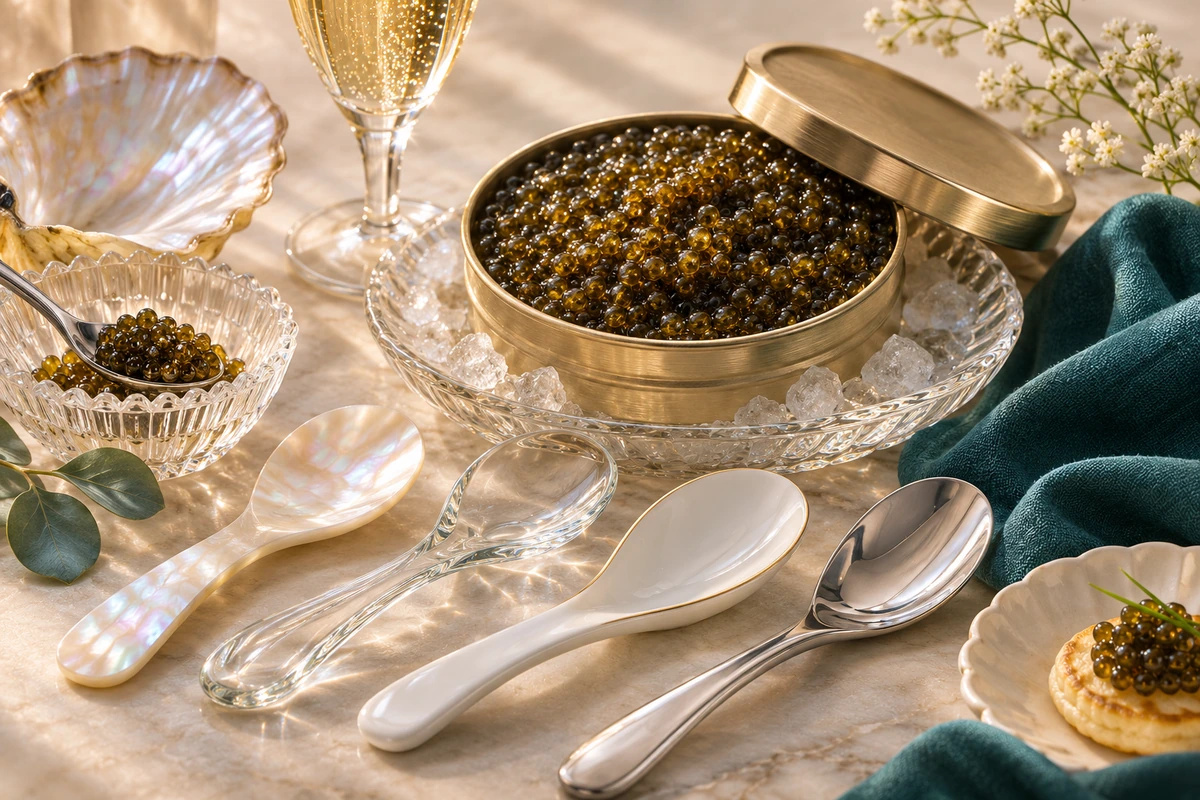
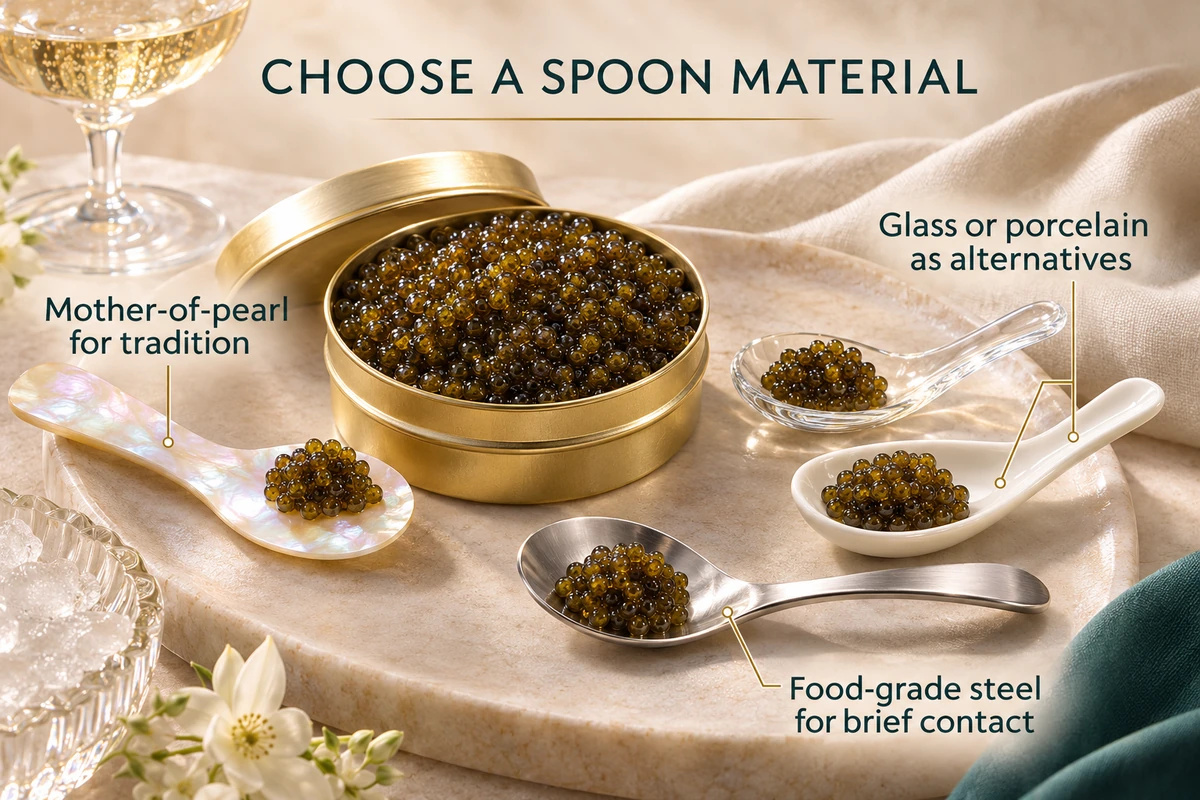
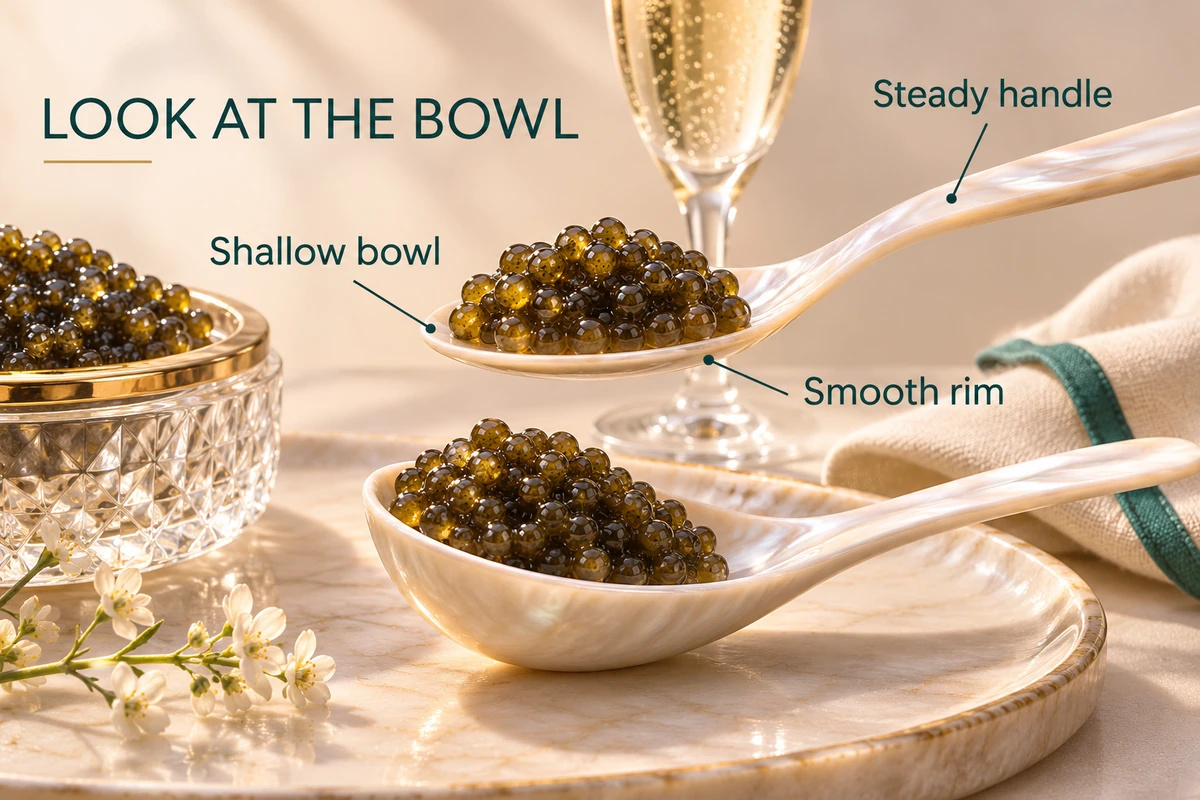
The best caviar spoon material for a traditional tasting is mother-of-pearl. A smooth, food-safe glass or glazed porcelain spoon is a practical alternative. If your only option is clean, undamaged food-grade stainless steel, use it for brief serving contact. Keep decorative or worn finishes out of food service, and choose a shallow bowl with a smooth rim so you can lift the roe gently.
| Material | Best fit | What to check |
|---|---|---|
| Mother-of-pearl | Traditional individual tastings and tableside presentation | Smooth rim, intact shell and manufacturer’s washing instructions |
| Glass | A neutral-looking alternative for a small tasting | Food-contact suitability, smooth bowl and no chips |
| Glazed porcelain | A uniform set for plated or repeated service | Food-safe glaze, suitable shape and an approved cleaning cycle |
| Stainless steel | Short serving contact or a practical backup | Food-grade construction, smooth surface and clean, dry finish |
| Wood or bamboo | An occasional alternative with a suitable finish | Food-contact finish, smooth grain and venue hygiene rules |
| Food-grade plastic | Casual or backup service | Rigid bowl and an undamaged surface |
| Silver or decorative plating | Display or a utensil with an appropriate food-contact insert | Prefer another material for the bowl that touches the roe. |
Choose a Caviar Spoon Material for the Job
Start with the job the spoon has to do. An individual tasting spoon carries roe from plate to mouth. A shared serving spoon moves it from a tin onto a blini, potato or guest’s spoon. At home those roles may use matching utensils, but at a reception the two jobs can call for different shapes and materials.
Choose mother-of-pearl if a traditional tableside presentation matters and you can care for the pieces as directed. Glass or glazed porcelain can fit a simpler presentation or a matching set. A kitchen that needs to turn utensils around between sittings should check its actual cleaning process before ordering a set. A spoon that fits the table but cannot be cleaned under the venue’s procedures is a poor choice for that service.
At home, look for a clean, shallow utensil already intended for food. The best practical substitute is the one that lets you scoop and release the roe easily. If two materials both work, compare the bowls. A shallow, smooth porcelain spoon can be easier to use than a thick shell spoon, while a well-shaped shell spoon may offer the look you want and feel lighter in the hand.
Why Mother-of-Pearl Became the Standard
Mother-of-pearl, or nacre, is the iridescent inner layer found in some mollusk shells. A shell tasting spoon is shaped from that material or made with it at the food-contact surface. It became a familiar part of caviar service because it offers a smooth serving surface, an elegant appearance and a way to avoid silver or other metals that some tasters find distracting.
In its guide to caviar spoon materials, Petrossian describes mother-of-pearl as the customary choice. The tradition is useful as a service convention, especially when several people are tasting caviar side by side. It gives guests a consistent presentation and removes one variable when staff want the roe itself to be the focus.
Look at the whole utensil before choosing it. Some shell spoons have a separate handle, a joined bowl or a decorative surface. Check that the bowl and any adjoining surfaces that could touch the roe are suitable for food contact. Look for an even rim, a stable handle and clear care instructions. Color variation is common in natural shell; cracks, lifting layers and rough edges are reasons to set the spoon aside. Buy for the actual service task as well as the appearance.
Can You Use a Metal Spoon for Caviar?
The material and the amount of contact matter more than the broad label “metal.” Treat a short transfer with a clean food-grade utensil separately from prolonged storage or repeated use of a worn decorative finish.
Stainless steel for brief contact
In its caviar FAQ, Petrossian says that a good-quality stainless-steel spoon will not alter the eggs or their flavor. Some serving guides recommend choosing a nonmetallic spoon for the tasting experience. These positions can be reconciled in practice: a venue can choose shell or glass as its presentation standard and keep a clean food-grade steel spoon for quick portioning when needed.
A practical distinction is who uses the spoon. If the steel spoon only transfers roe to a plate, the guest never puts that utensil in their mouth. If the spoon goes directly to the guest, the material’s feel, weight and temperature can influence how the tasting is experienced. If you want to compare the flavor, serve both samples on the same type of tasting spoon and vary only the utensil used to transfer them.
Silver and decorative finishes
Choose shell, glass or another food-safe alternative when the only metal utensil at hand is silver, plated, visibly tarnished or worn. If a utensil has a gold-colored finish, check what actually contacts the food and whether the manufacturer approves it for that use. A color label alone does not identify the substrate or the condition of the coating.
What the sources can establish
A supplier’s advice is useful service guidance. It does not establish that every metal changes flavor, or that every diner will detect the same difference. The FDA Food Code addresses food-contact properties such as smoothness, durability and cleanability. It does not rank caviar spoons by taste.
Compare Glass, Porcelain, Wood and Plastic
Once the utensil is suitable for food contact, compare how it feels and how you will clean it. A good fallback at home may be impractical for a crowded service station.
Glass and glazed porcelain
Choose a smooth glass spoon made for serving food. Glass can look elegant alongside shell and lets you see whether the bowl has been cleaned thoroughly. Check for chips around the lip, especially after transport. At a reception, consider where the utensils will sit between uses and whether staff can handle them without knocking them together.
Glazed porcelain offers a uniform look and may be easier to source as a matching set. Check the manufacturer’s food-contact and care information. Some porcelain tasting spoons have a deep bowl designed for liquids. With caviar, test whether the portion releases cleanly. A shallower shape may make it easier for guests to lift the roe or for staff to place it on a canapé.
Wood and bamboo
Wood or bamboo can be a workable home alternative if the utensil is intended for food and has an intact, smooth surface. Choose a spoon without splinters, rough seams or strong residual odors. Check the care instructions, particularly if the utensil has an applied finish. A hospitality operation should confirm whether the specific utensil fits the venue’s sanitation procedures and applicable rules before using it.
Food-grade plastic
A rigid food-grade plastic tasting spoon is useful when you need a simple spare. The bowl should hold its shape and release the roe without bending. Inspect reusable pieces for scratches or damage and follow their intended cleaning and reuse instructions. A disposable spoon should be handled according to its intended use.
| Venue constraint | Choose first | Test before service |
|---|---|---|
| Traditional tableside presentation | Shell with a shallow bowl | A clean portion transfer and suitable handwashing process |
| Repeated sittings | A porcelain set compatible with the venue’s cleaning cycle | Clean supply and spare capacity during peak service |
| Transport or a busy station | Durable, venue-approved utensils | Safe storage, stable handles and replacement procedure |
| Home tasting with no specialist set | Glass, porcelain or clean food-grade steel | Bowl shape and clean release of the roe |
Match the Bowl and Handle to the Service
A spoon that feels comfortable can make portioning easier even when its material is ordinary. Check the following points with the tin, base and service position you expect to use.
- A shallow bowl makes it easier to see the portion and slide it onto a small bite. A very deep bowl can leave eggs behind when the guest tries to lift them.
- A smooth rim should pass through the roe gently. Check for chips, burrs or sharp edges before use, particularly on transported utensils.
- A handle long enough for a stable grip helps staff reach the tin without touching the roe or the bowl of the spoon.
- A spoon that is narrower than the opening makes the last portion easier to reach. Try it near the side of the tin before service.
- Lift a small amount rather than pressing down or scraping across the tin. Move it directly to the base or plate and see whether it releases with a gentle tilt.
- Keep the shared serving utensil separate from individual tasting spoons. Give guests clean utensils and replace any shared utensil that has been contaminated.
Test Two Spoons Before a Service
Imagine a reception where the host wants traditional shell spoons, but the venue must reset quickly between groups. Compare shell and food-safe porcelain before settling on the presentation.
Keep the tasting consistent
Use roe from the same tin and keep the portions comparable. Set out two identical tasting spoons or plates. Transfer one sample with shell and the other with porcelain. Ask staff to compare the samples without telling them which transfer spoon was used. Switch the tasting order for the next person. This is a practical check for the service team and cannot establish a general rule about taste.
If a difference seems noticeable, check the service conditions. One portion may have sat longer or included a different amount of liquid. Repeat with comparable portions and the same wait before tasting. You can also run a separate test of how the two materials feel when used directly, since weight and rim shape are part of the guest’s experience.
Check the reset and choose a division of work
Have staff portion onto the actual bases and run the clean-up process for each utensil. Look for stable portions, clean release and enough spare spoons to reset without shortcuts. If the porcelain set is better suited to the documented cleaning cycle and both utensils perform well at the table, use porcelain for repeated service and keep shell for a dedicated presentation with its approved care process.
If neither shape works, change the bowl before changing the material. For example, a deep porcelain spoon that retains roe can be replaced by a shallow porcelain model. Check the replacement again with the same setup. Record the choice so the next shift knows which utensil is shared and where clean pieces are stored.
Clean and Store Each Spoon Correctly
Follow the instructions for the exact utensil and the venue’s food safety procedures. Build time into service for cleaning, drying and inspection.
- For shell, handwash when the maker directs it. Use a soft cloth or sponge, rinse as directed and dry promptly. Avoid soaking or a dishwasher unless the maker specifically approves the method.
- For glass and porcelain, follow the maker’s washing instructions and check the rim after washing. Remove chipped or cracked pieces from food service.
- For stainless steel, wash and sanitize as required for the service setting. Inspect the surface for damage and store it clean and dry.
- For wood or bamboo, avoid a method that damages the finish. Remove any piece that cracks, splinters or develops an unsuitable surface.
- Store delicate spoons in a padded divider or tray so they do not rub against other utensils. Keep clean serving utensils away from used tasting spoons.
- For a service with several sittings, set out only the clean stock needed and keep a separate container for used pieces. This makes the cleaning cycle easier to check under pressure.
Frequently Asked Questions
A specialist spoon is useful when its shape, material and care instructions fit the way you serve. These questions cover common substitutions and maintenance choices.
Can you serve caviar with a regular teaspoon?
Yes, if the teaspoon is clean, food-safe and smooth. A shallow one is easier to use for small portions. If you have several utensils available, choose the one that releases the roe gently.
Is a mother-of-pearl spoon made of pearl?
No. Mother-of-pearl is the nacre layer lining the inside of certain mollusk shells. A pearl is a separate structure. The material name describes the shell surface used to make the spoon.
Is glass better than mother-of-pearl?
Glass can work well when you want a smooth, readily available alternative. Shell suits traditional presentation. Compare the actual bowl shapes, storage conditions and cleaning instructions before choosing between them.
Can you put a shell spoon in the dishwasher?
Use the manufacturer’s instructions. Unless the maker explicitly approves dishwasher use, handwashing as directed is the safer choice for the piece. A cracked or rough spoon should be removed from service.
How many spoons do you need for a tasting?
Plan for a clean tasting utensil per guest and separate utensils for serving. If guests taste several tins, plan for clean replacement utensils and use dedicated serving utensils for each tin so samples stay distinct.
Plan Caviar Service with Iran Fish
Choose a utensil that suits the tin opening, the portioning method and the cleaning cycle for your venue.
Browse Iran Fish’s caviar range for food-service buyers when planning a tasting or menu.
Share the type of service and destination with the supplier so you can discuss suitable products and product-specific handling instructions.