


Beluga vs Osetra Caviar: Species, Texture and Flavour Compared

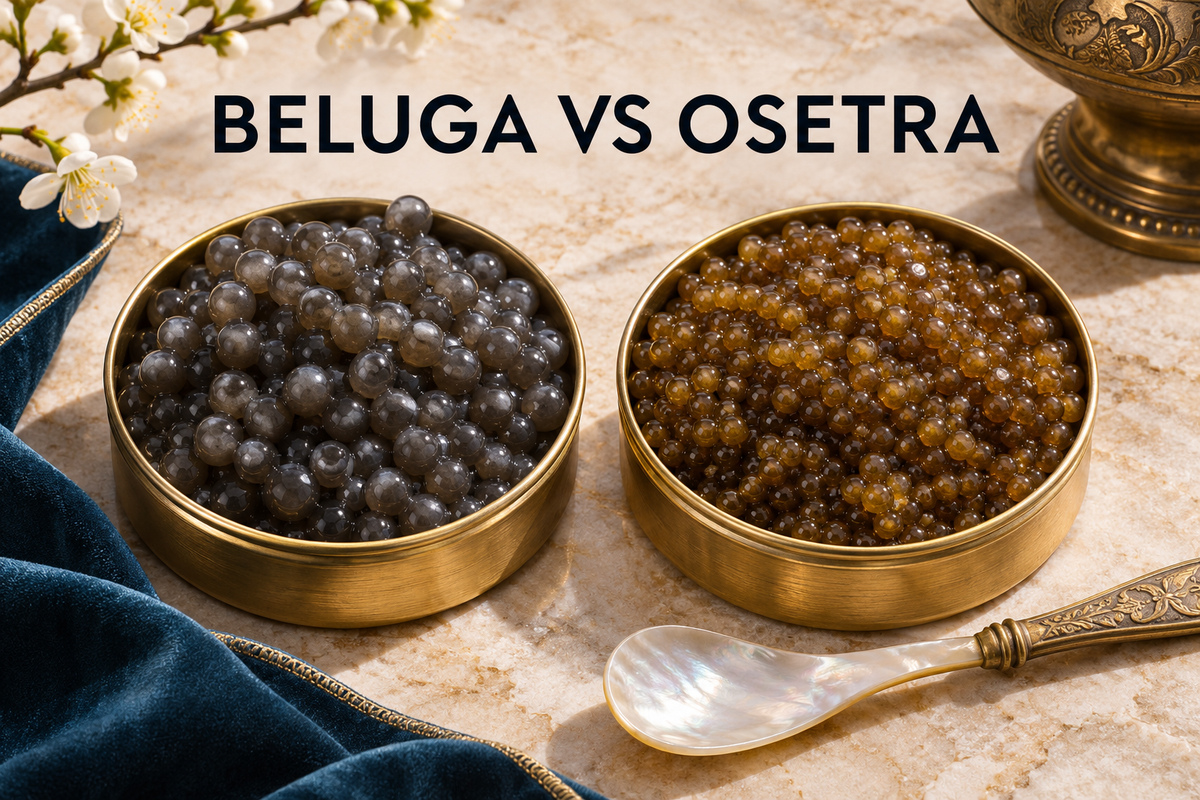
Beluga vs Osetra caviar is a comparison of different sturgeon and different eating experiences. Beluga comes from Huso huso and typically has large, delicate pearls with a soft, creamy finish. Osetra commonly comes from Russian sturgeon and tends to offer a firmer pop and nuttier flavour. These are tendencies: check the declared species and taste the actual lot before committing to a dish or order.
| Decision | Beluga | Osetra |
|---|---|---|
| Species | Beluga sturgeon, Huso huso | Commonly Russian sturgeon, Acipenser gueldenstaedtii; verify the declaration |
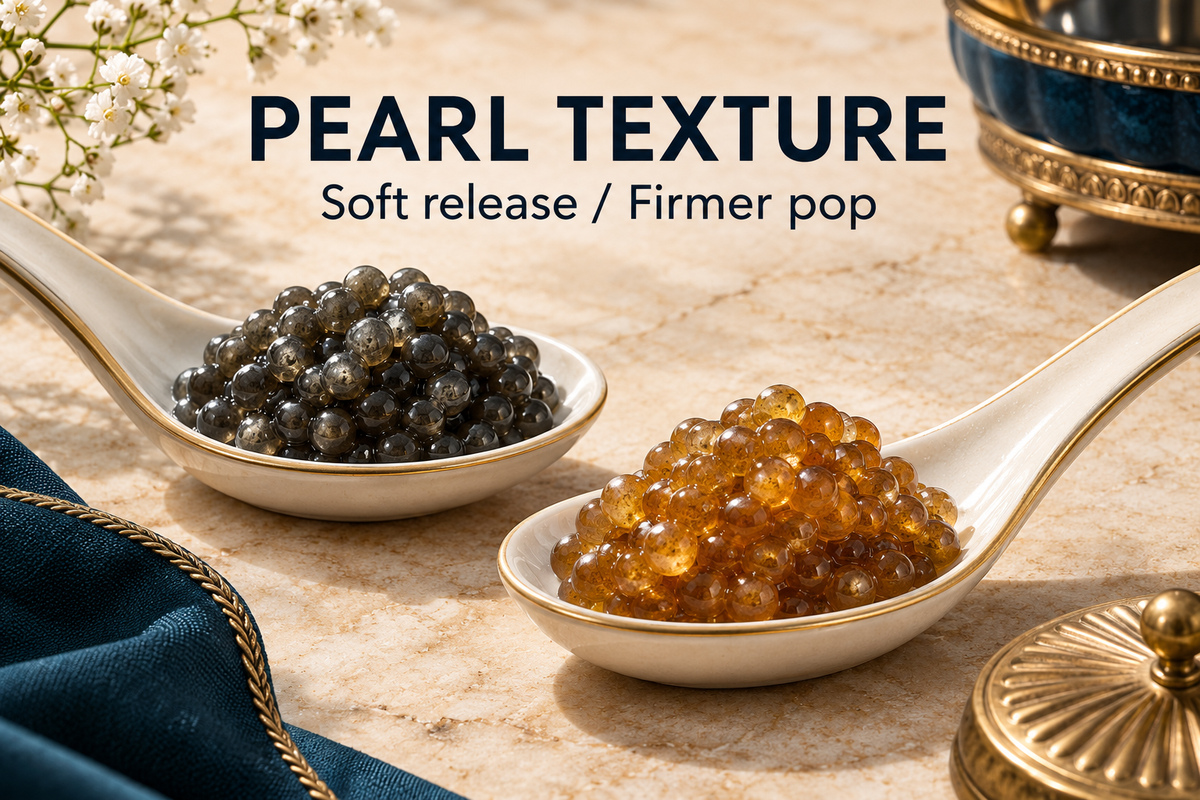
| Typical texture | Soft and yielding | Firmer with a more defined pop |
| Typical flavour | Mild, creamy and gently marine | Often nutty, briny or mineral |
| Typical appearance | Large pearls, often grey | Medium to large pearls; grey, brown, olive or amber tones are possible |
| Best starting use | Plain tasting or a gentle base | Tasting or a dish that benefits from a distinct pop |
| Order check | Confirm species, lot and destination eligibility | Confirm species, lot and sensory specification; colour is not proof |
Beluga vs Osetra Caviar: Species and Sensory Differences
The variety name is a useful starting point, but two tins can differ even when their front labels match. Compare the declared fish first, then judge the actual grains and flavour under the same conditions.
The fish behind the name
Beluga caviar comes from the Beluga sturgeon, Huso huso. Osetra, Ossetra and Oscietra are spellings buyers may meet in English trade, commonly associated with Russian sturgeon, Acipenser gueldenstaedtii. In OM Caviar’s side-by-side comparison, species is the first distinction. That distinction is more useful than treating the words as grades of a single product.
Check the actual species declaration when a seller uses a name such as Beluga-style or describes a blend or hybrid. Kaluga and Beluga may be compared for eating qualities, but a similarity in texture does not make them the same fish. A hybrid declaration tells you about parentage; it is different from an unqualified claim that the tin contains pure Beluga sturgeon roe. If the label is abbreviated, ask the supplier to expand it in writing and check it against the relevant species code list.
Names also do not establish origin. A species can be raised outside the area where it naturally occurs. For a provenance claim, ask for the declared origin and lot documentation rather than drawing a geographic conclusion from the name of the fish. If the specification says only “Caspian-style,” ask what that phrase describes: species, origin, cure or presentation.
Grain size, colour and membrane
Beluga often has larger grains and a membrane that gives way gently. Osetra can have a firmer release, which is what tasters describe as a pop. Colour can range even within a variety. Darker Beluga and darker Osetra can look similar in a photograph; a golden or amber Osetra may be visually distinctive without tasting better to every diner.
The appearance that matters at service is whether the grains suit the intended presentation. Consider how they hold together on a spoon, how clearly they can be seen on the base and how they release in the mouth. Photographs under different lighting are a poor way to judge shade or size. For a larger order, a sample from the offered lot is more useful than a catalogue image.
Flavour and finish
Beluga is often described as creamy, mild and gently marine. Osetra is frequently described as nuttier, sometimes with a more noticeable briny or mineral finish. Aptent’s comparison of serving and pairing describes these differences as tendencies influenced by provenance, cure and grading. An assertively salted Beluga lot can still taste more saline than a particular Osetra lot.
Separate the first impression from the finish when tasting. Note salt on contact, the way the grains open, and the flavour that remains after swallowing. This vocabulary is more useful for a supplier than asking for the best tin. For example, “gentle salt, clear nutty finish, intact grains on a potato base” describes three things a sample can actually be judged against.
Choosing for a Tasting or a Dish
Use the service format as the first filter. Then compare both lots in the setting where they will be eaten.
Run a fair side-by-side tasting
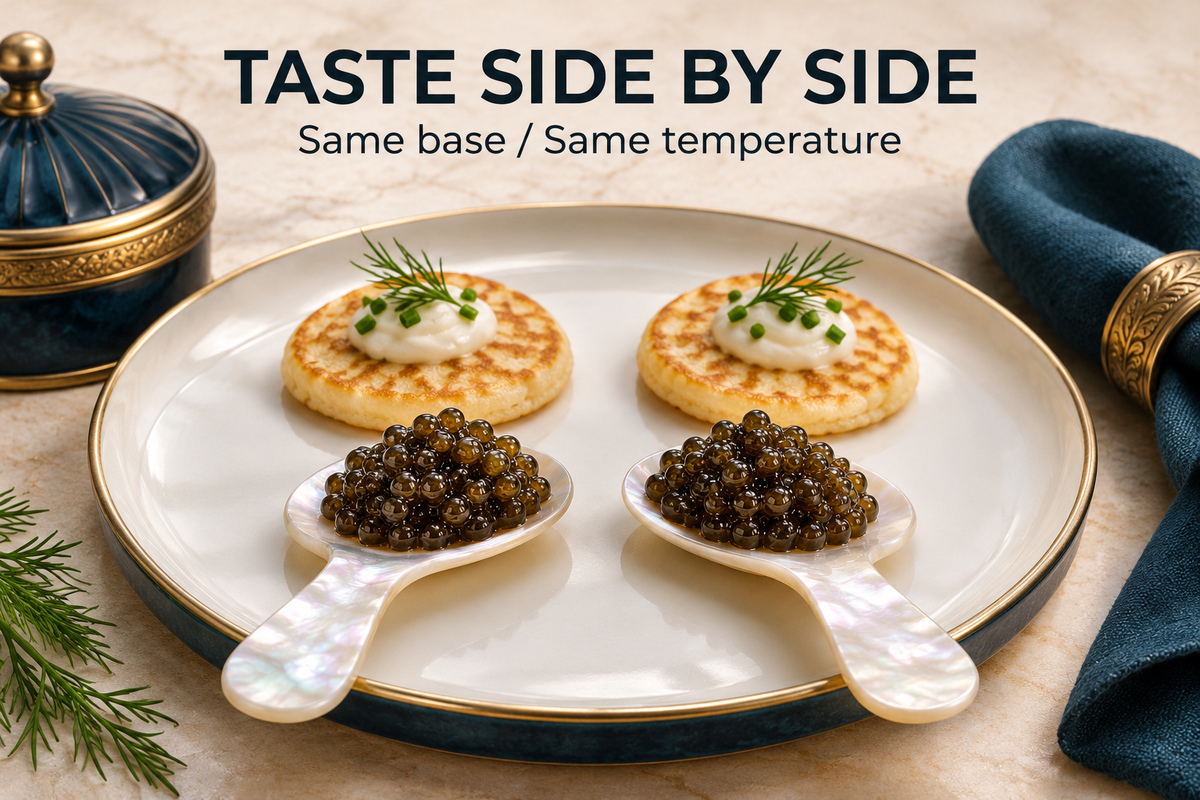
Use comparable portions from tins held according to their instructions. Set each on the same style of spoon or neutral plate, and keep their serving temperatures similar. If one sample is tasted plain and the other with an acidic or smoky base, the comparison mostly reveals what the accompaniments do. Try both plain first, then try both on the proposed base.
Record four observations: how the grains look, how they feel at first contact, the dominant flavour and the finish. If several people are choosing, have them note those points before discussing which sample they preferred. When a taster knows which is Beluga, reputation can colour expectations. An anonymous comparison can reveal whether the team is choosing the actual flavour or the name.
A sample should represent the lot if repeatability is important. If your supplier can only offer a reference sample from a different batch, treat it as a style indication and agree how you will check the delivered lot. Store and serve the samples as directed; differences in handling can confuse the result.
A decision with conflicting criteria
Suppose a chef wants the soft, creamy profile of Beluga for a reception canapé. The plate is a crisp potato bite with a bright cultured cream, and the service involves several tray rounds. Plain, the team prefers Beluga. On the finished bite, the cream takes over, while Osetra stays perceptible and offers a distinct pop against the potato. If the dish and tray format are fixed, the Osetra sample is a better fit for that application. If the chef can redesign the base and serve immediately, a gentler topping may let Beluga become the focus.
A similar conflict occurs at a guided dinner. Guests expect to try two distinct textures, but only one lot from each variety is available. If the Osetra sample is unusually soft, the nominal pairing may not produce the contrast advertised. The team can seek another lot, or describe the flight around flavour and species instead of promising a dramatic difference in firmness.
| Situation | Compare first | What breaks the tie? |
|---|---|---|
| Plain spoon tasting | Texture and finish | The actual lot’s balance and membrane |
| Potato canapé | Grain release and flavour on the full bite | Whether the base masks either sample |
| Two-variety flight | Contrast between both samples | Comparable temperature, salt impression and portion |
| Repeat hotel service | Documented lot, specification and handling | Agreement on what qualifies as a substitute |
Match the portion and base
A plain sample can make subtle flavour easier to notice. If you add a base, keep it light enough for the roe to remain the focus and compare the assembled bite before finalising service. A delicate sample may benefit from simpler accompaniments, while firmer grains can give a soft base more definition. The useful distinction is how each works in the planned bite, rather than a rule about which caviar must go with which food.
For volume service, standardise the amount and placement across plates. If diners are meant to judge varieties, use the same portion size for both. For a garnish, decide whether the desired contrast is visual, textural or both. That affects whether the kitchen needs a more visible grain, a stronger pop or a milder finish.
Reading Labels and Comparing Lots
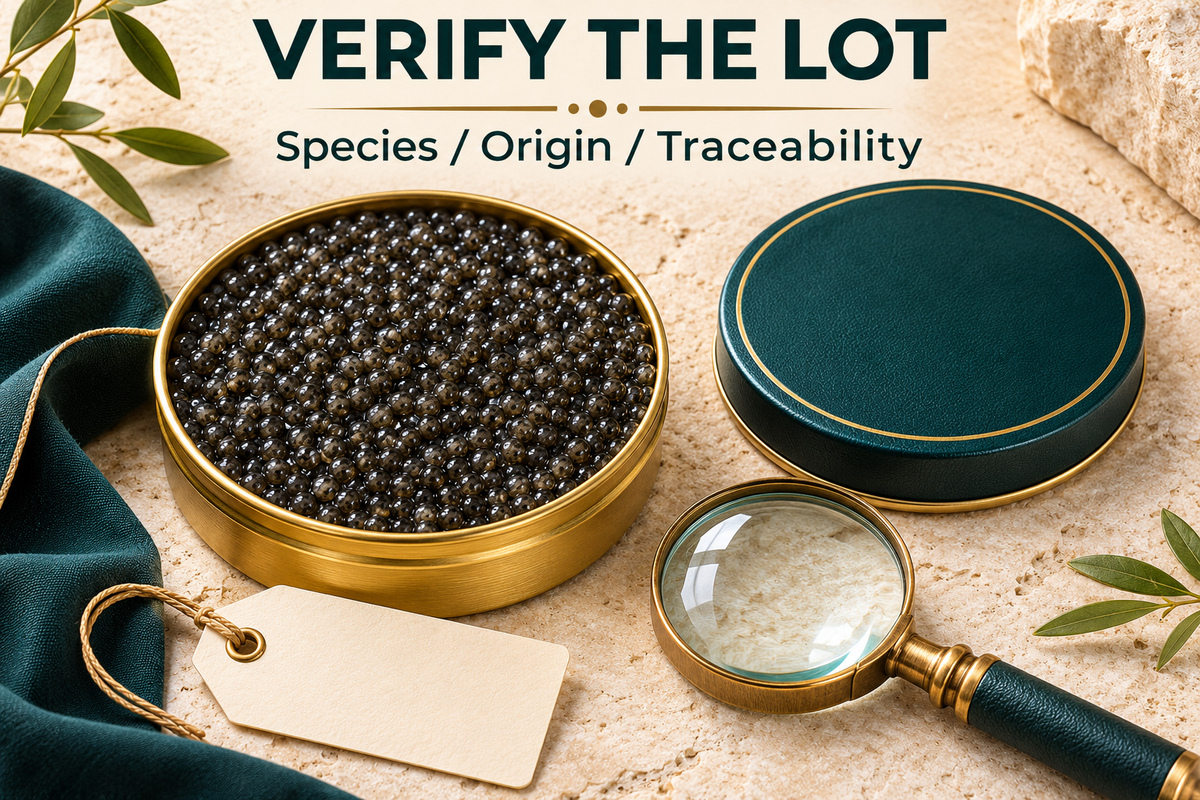
Begin with the product name, ingredient list, species declaration and net weight. For trade packs subject to the relevant controls, the CITES sturgeon and paddlefish labelling framework provides a traceability system for primary containers. Ask the supplier to explain the species and source information, origin and lot or repack identifiers for the offered product. If the pack was repacked, ask how the new identifier connects to the source documentation. Confirm destination requirements separately; a traceable tin does not establish permission to ship it to every market. Have the importer or competent authority confirm requirements before committing to delivery.
Next make a short specification for the intended use. Include the declared species, origin as supported by documents, the required pack weight, storage instructions and a sensory description. Ask whether the offered lot is pasteurised if that matters to the product brief. Describe acceptable variation: for instance, a natural shade range may be fine, but substitution with a different species requires approval. If the sample is a different lot, agree which characteristics must be rechecked. In a trade setting, a sample that looks beautiful but cannot be tied to the actual order is less useful than a documented sample with the intended pack and handling details.
Finally agree how receiving staff should compare deliveries. Check whether the delivered label and paperwork match the requested species and lot or approved replacement, and check the seal and temperature evidence against your receiving procedure. Treat damage, missing identifiers or a mismatch as reasons to hold the product for review rather than relying on a spoon test. A tasting evaluates preference; receiving checks verify whether the product is the one the buyer approved and whether it arrived under the agreed conditions.
Frequently Asked Questions
The name identifies the comparison, but the lot decides how it tastes. These questions help separate what a label can establish from what needs a sample.
Is Osetra the same as Ossetra?
They are alternate spellings used in trade. Neither spelling by itself proves a particular species or origin. Ask for the scientific species name and supporting label information if identity matters to your menu.
Is Golden Osetra always better?
No. The shade can be desirable for presentation, but it does not predict the salt balance, membrane or finish. Compare lots under the same lighting and serving conditions, then decide whether the colour matters to the finished dish.
Does Beluga always have a milder flavour?
No. Mildness is a common description, but cure and lot variation can change how saline or intense a sample tastes. Try both plain before choosing on the basis of flavour.
Can a Beluga hybrid be labelled as pure Beluga?
A hybrid and pure Huso huso are different product declarations. Ask for the exact parent species and the applicable label details, and check the destination’s naming rules. On a menu, describe the product as the supplier has verified it rather than dropping the hybrid qualifier.
Should Beluga and Osetra be stored differently?
Follow each pack’s instructions. Storage depends on the finished product and processing, not just the fish species. Confirm the unopened and opened conditions separately if both are relevant to service.
Compare Available Caviar Lots
Start with Iran Fish’s Beluga caviar page if you need a soft-textured sample, and ask for the exact declared species and current lot.
For a side-by-side comparison, enquire through the Iran Fish caviar range and describe the dish or service, preferred grain and finish, net pack weight and destination.
Ask which available samples represent the proposed shipment, and confirm the documents and handling requirements with the relevant parties before ordering.