

Signs of Spoiled Caviar: When to Reject a Tin and Seek Advice

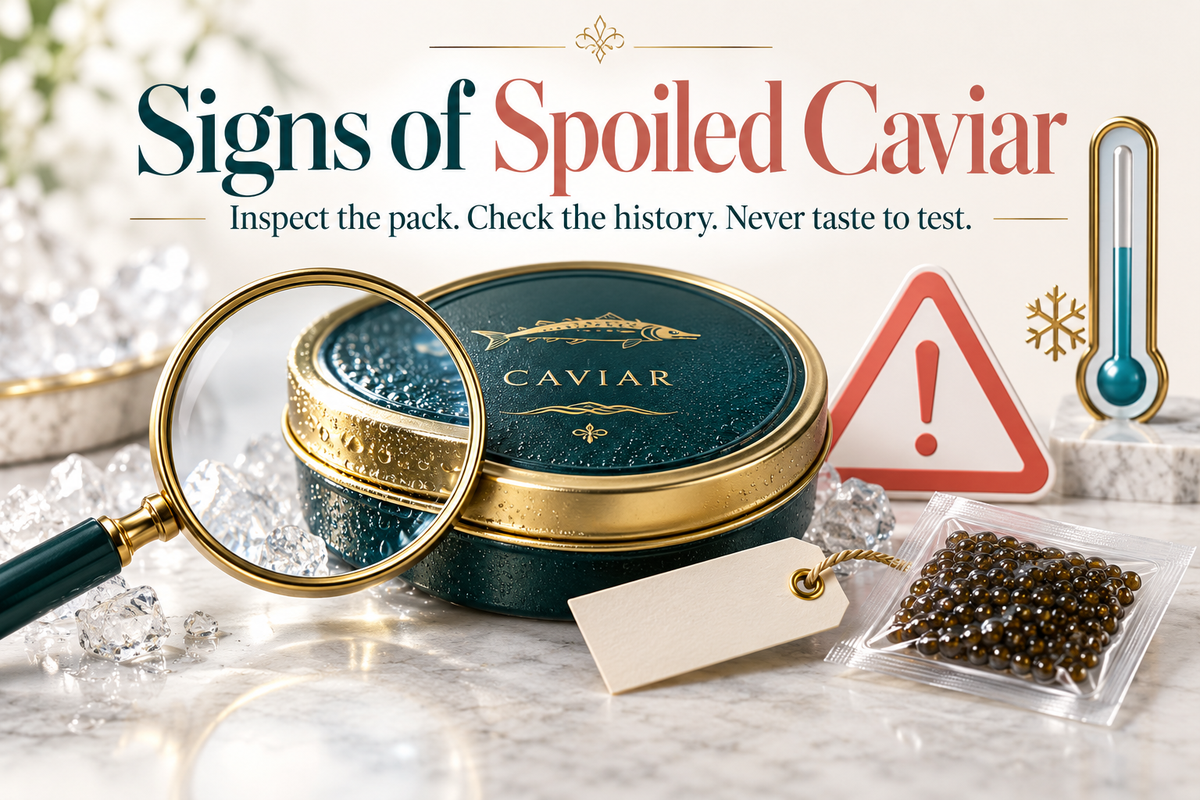
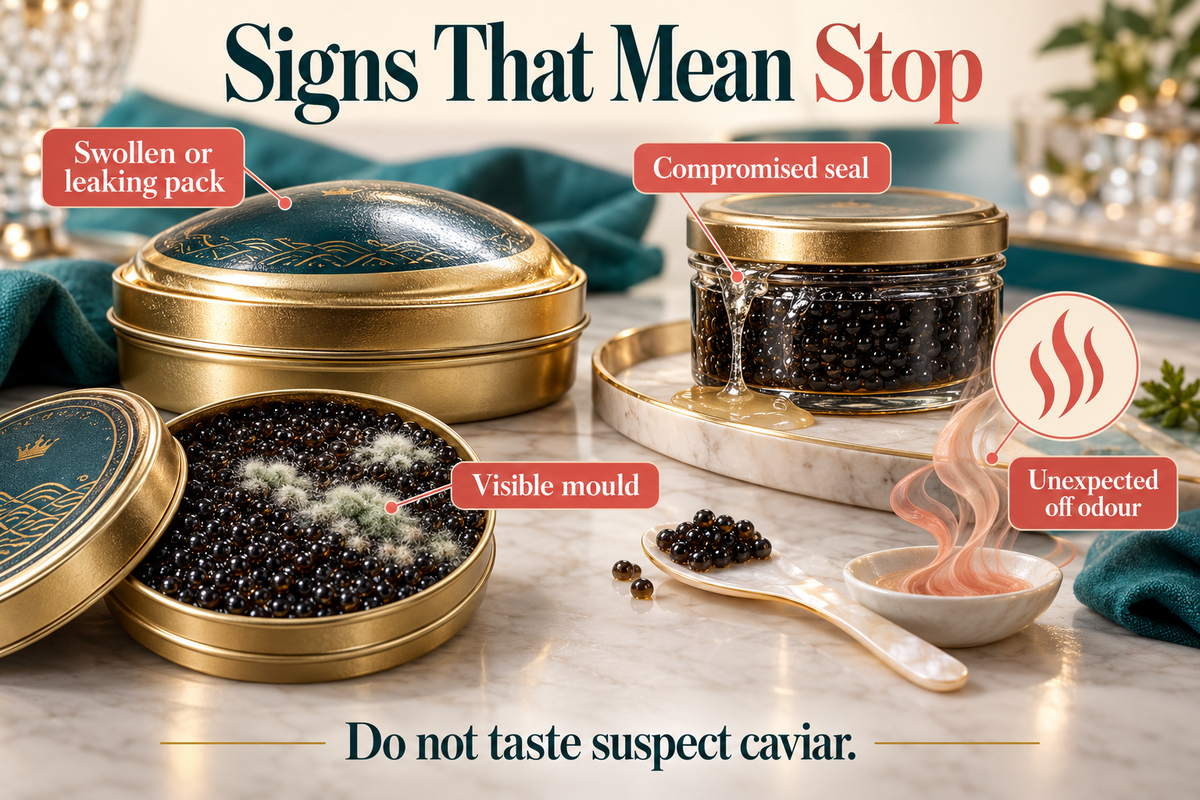
Signs of spoiled caviar include a swollen or leaking container, a compromised seal, visible mould and an unexpectedly sour or rancid odour. Stop handling or serving a suspect pack and never taste it to test safety. Normal-looking roe can still be unsafe after poor handling. Check the product instructions and temperature history, record the batch details, and seek supplier or food-safety advice where the product’s condition is uncertain.
| Observation | Immediate decision |
|---|---|
| Swollen, leaking or compromised container | Do not open or serve it; arrange safe rejection or disposal. |
| Visible mould or clearly abnormal growth | Do not scrape it off or taste the rest; reject the product. |
| Unpleasant sour or rancid smell noticed after opening | Stop use and do not conduct a taste test. |
| Normal smell but unacceptable or unknown temperature history | Do not clear it for service based on smell; hold for assessment. |
| Broken grains or extra liquid without other evidence | Investigate quality and handling; these observations alone do not diagnose the cause. |
| Product beyond a safety-related use-by date | Do not serve it or extend the date by smell testing. |
| Illness after consumption | Stop serving the batch and seek appropriate medical and food-safety advice. |
Signs of Spoiled Caviar That Mean Stop
Inspect the pack before treating the roe as ready for service. Warning signs call for a stop decision, not closer tasting or an attempt to make the product acceptable.
Container swelling, leaks or seal damage
An unexpectedly swollen lid, leaking package, cracked jar or damaged closure is a reason not to serve the contents. The important issue is loss of confidence in the packaging and product history, rather than identifying a particular microorganism from a photograph.
The FDA’s food-tampering advice warns against eating products with unusual damage, including bulging or leaking cans. For caviar, distinguish an unfamiliar closure design from damage by using the manufacturer’s pack information. If the container is visibly swollen or leaking, do not open it simply to investigate the smell.
Mould or abnormal surface growth
Visible mould is a rejection sign. Removing the surface layer does not establish that the rest of the container is safe. The same applies to mixing the affected roe into a sauce or covering the appearance with garnishes.
An unexplained film should not be confidently identified as harmless salt, fat or a packaging effect without appropriate evidence. Keep it out of service while the concern is assessed. A supplier may need photographs and batch details, but obtaining those should not involve unnecessary opening or spreading the contents.
Unexpected sour or rancid odours
An unpleasant sour, rancid or ammonia-like odour noticed during normal opening is a reason to stop. Do not bring a questionable container close to the face for a deliberate sniff test or ask several staff to smell it.
Caviar can naturally have a marine aroma, and different roe types have different sensory profiles. The relevant concern is a clearly abnormal or deteriorated smell, especially alongside packaging or handling problems. It is not a licence to accept a product solely because its aroma seems mild.
Why Normal Smell and Appearance Cannot Prove Safety
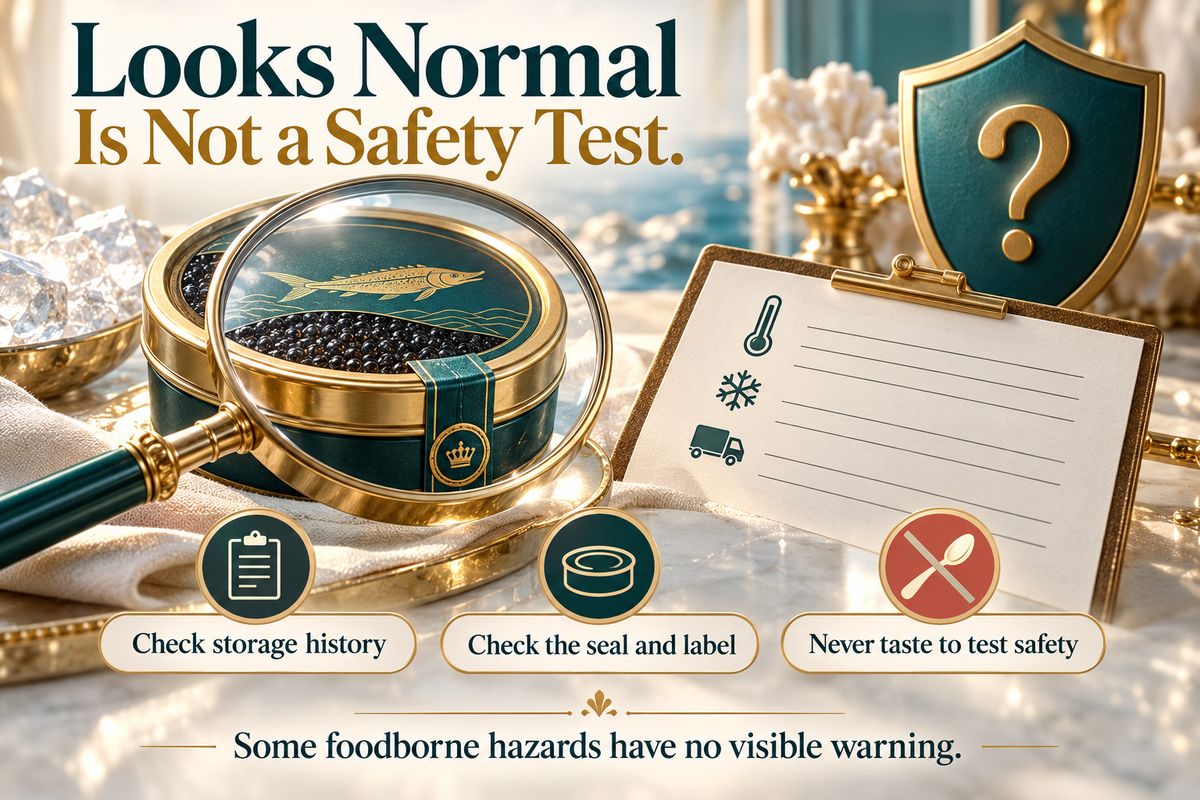
Spoilage and foodborne hazards are not the same thing. The FDA’s food-storage guidance explains that food may cause illness even when it does not look, smell or taste spoiled. A sensory check can reveal a reason to reject food; it cannot replace the controls that make a product suitable to serve.
The CDC’s botulism prevention guidance specifically states that the toxin cannot be detected by sight, smell or taste. This does not mean every damaged caviar tin contains that toxin. It explains why tasting is an inappropriate safety test and why warning signs must not be dismissed because the roe still looks attractive.
A reassuring photograph, intact-looking grains or a familiar salty aroma cannot reconstruct a missing temperature record. If a label requires refrigeration and the handling history is unacceptable or unknown, the decision needs more than personal confidence in the product’s appearance. Re-chilling does not establish that the earlier conditions were safe.
Separate Natural Variation From Quality Deterioration
Not every difference in colour or texture has the same meaning. Compare the product with its specification while keeping any suspect stock out of use.
Colour and grain differences
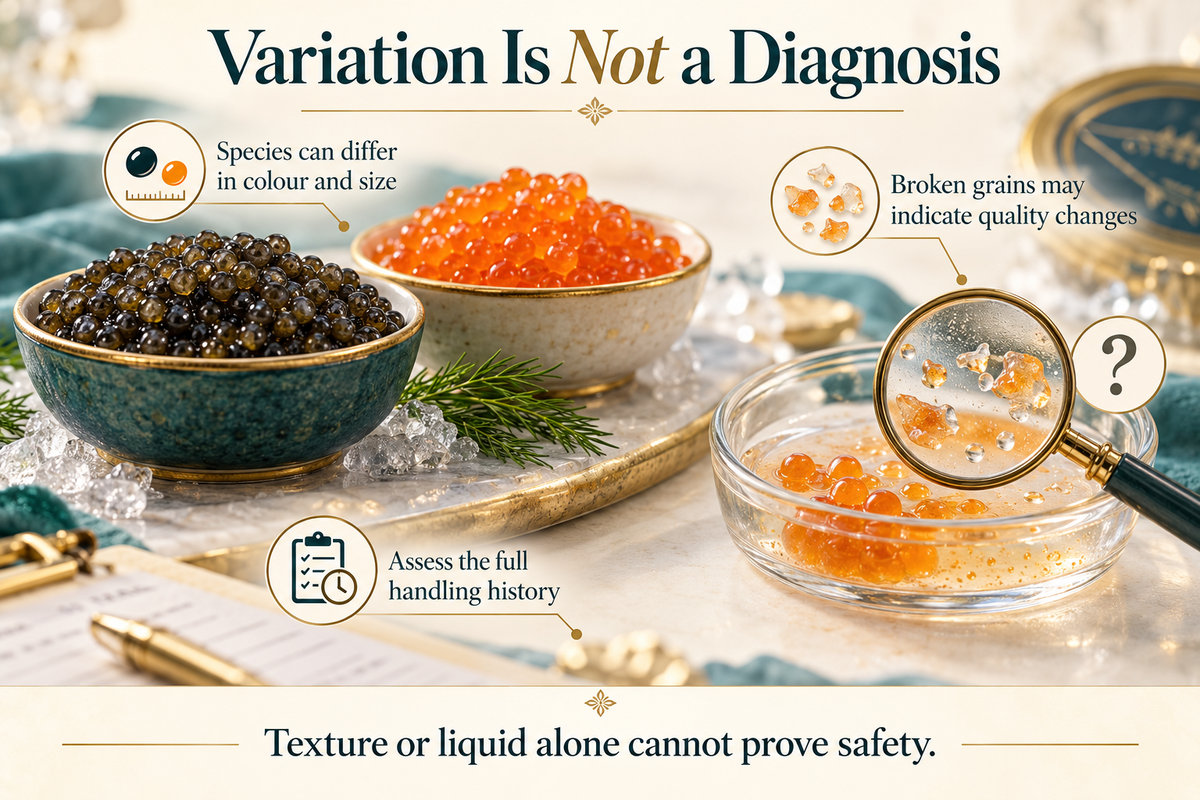
Sturgeon caviar and trout roe should not be assessed against one visual template. Species, processing and natural variation can produce different grain sizes and colours. A dark sturgeon product and orange trout roe are not fresh and spoiled versions of the same item.
Use the product identity when evaluating a change. The Iran Fish Beluga caviar range and trout roe range concern different products. A mismatch between the delivered item and its order or label is a separate reason to question the delivery.
Broken eggs and liquid
Damaged grains, softness or increased liquid can indicate a quality problem, but they do not identify a single cause. Handling, product characteristics and prior freezing can affect texture. There is no universal liquid-volume threshold that a buyer can use to declare every caviar safe or spoiled.
Record what changed and compare it with the producer’s description. If liquid is accompanied by an unpleasant smell, mould, compromised packaging or unacceptable storage, do not use the uncertainty about texture to excuse the clearer warning signs.
An unfamiliar product is not a home experiment
Do not rinse questionable roe to remove odours, scrape away a film, add lemon or salt, or freeze it in an attempt to restore safety. These actions can conceal the original condition and complicate an investigation. An unopened replacement from acceptable stock is a different product decision from trying to salvage a questionable container.
Check the Label and Temperature History
The label provides product-specific instructions that generic shelf-life lists cannot supply. Review the history of the actual pack, including what happened after delivery and after opening.
- Confirm the exact roe type and whether processing information is available.
- Read the required storage conditions and date marking.
- Establish whether the container was previously opened and when.
- Check the supplier’s after-opening instructions rather than restarting a clock when the lid is replaced.
- Review recorded receiving conditions, refrigerator performance and any known interruptions.
- Check relevant supplier notices and official recall information using the exact product and batch.
A use-by date and a best-before date can have different meanings under local rules. Do not treat either as proof that mishandled food is safe before that date. For chilled caviar, uncertain date terminology is a reason to obtain clarification before service, not to borrow a rule intended for shelf-stable pantry foods.
The caviar storage guide explains why unopened and opened containers need separate handling decisions. A jar, a vacuum lid or a tin does not independently establish a safe storage period.
What to Do With a Questionable Delivery
Keep the decision process simple enough for receiving staff to follow. A clear hold procedure prevents questionable stock from reaching the kitchen while someone is waiting for a reply.
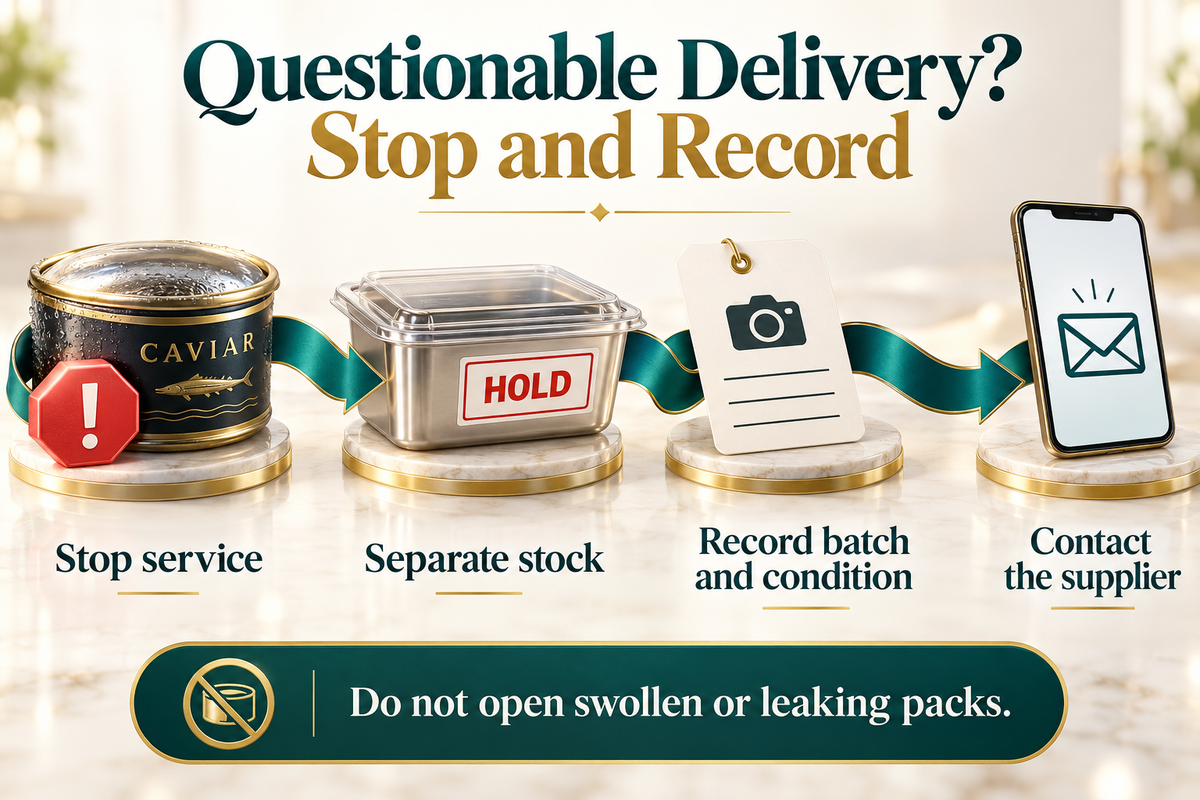
- Stop use and identify the affected product and quantity.
- Keep suspect stock separate from food available for sale or service, following the site’s food-safety procedure.
- Do not open swollen or leaking containers for evidence gathering.
- Record delivery time, observed temperatures where available, package condition, batch code and date marking.
- Photograph the exterior label, damage and transport packaging without unnecessary handling.
- Contact the supplier with the records and ask for a documented disposition.
- Follow recall, regulatory or food-safety instructions where applicable; supplier discussion does not override a clear rejection requirement.
For a commercial operation, a hold is a controlled status, not permission to serve the product later if nobody responds. Set responsibility for the decision and ensure the rest of the shift knows the product is unavailable. If multiple packs share the same concern, assess the relevant batch or delivery rather than assuming the issue ends with the first tin.
Where contamination is suspected, obtain appropriate local instructions for disposal or retention of evidence. Do not send a leaking container back through ordinary transport without an agreed safe arrangement.
What If Someone Has Already Eaten It?
Stop serving the product, retain identifying records and seek medical advice if illness develops. Symptoms can have different causes and onset times; an article or photograph cannot establish that a particular tin caused them. Tell the clinician what was eaten and when, and provide the batch information if requested.
The CDC’s food-poisoning symptom guidance identifies warning signs such as bloody diarrhoea, persistent vomiting and dehydration that warrant medical attention. Pregnant people, older adults and people with weakened immune systems should seek prompt advice about suspected foodborne illness rather than relying on a sensory assessment of the remaining food.
Difficulty breathing or swallowing, double vision, slurred speech or muscle weakness require emergency medical attention. The CDC describes these as possible botulism symptoms needing urgent care. Do not wait for supplier confirmation or for every symptom to appear before seeking help.
Prevent Problems in Retail and Restaurant Storage
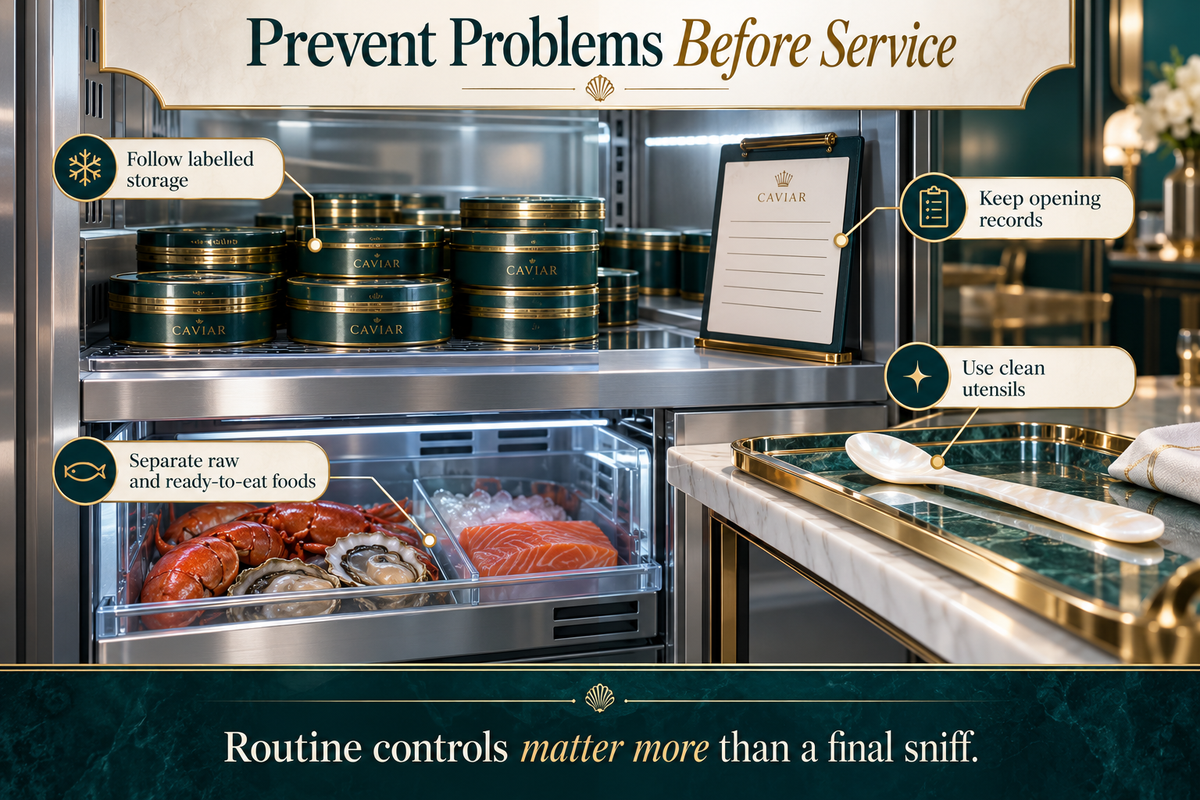
Prevention depends on routine controls, not a final sniff before service. Build those controls around the product instructions and the operation’s food-safety plan.
- Receive caviar against an agreed product and transport specification.
- Use monitored chilled storage that meets the label requirements.
- Rotate stock by the relevant date and keep batch information legible.
- Mark opening information and apply the shorter after-opening instructions.
- Keep ready-to-eat caviar separate from raw seafood and contaminated utensils.
- Use clean serving equipment and avoid returning exposed portions to reserve stock.
- Train staff to escalate damage, unusual condition or an unexplained cold-chain interruption.
Clear labelling helps staff distinguish similar-looking tins and identify affected stock quickly. The guide to CITES caviar labels supports traceability for applicable sturgeon products, but such a label does not replace hygiene or demonstrate microbiological safety.
Frequently Asked Questions
These answers help distinguish rejection signs from uncertain quality observations. They do not replace the label, a recall notice or professional assessment of a suspect batch.
Can caviar be unsafe if it smells normal?
Yes. Normal smell and appearance do not rule out foodborne hazards. Check storage, date marking, packaging and handling history rather than treating smell as a safety clearance.
Is a little liquid in the tin proof of spoilage?
No. Liquid alone does not establish the cause or safety of the product. Compare with the specification and investigate changes; reject it if clearer warning signs or unacceptable handling are present.
Can mould be removed so the rest can be eaten?
No. Do not scrape, rinse or taste the remaining roe. Keep the product out of use and arrange appropriate disposal or follow an official investigation instruction.
Does a warm delivery become safe after refrigeration?
Refrigeration does not demonstrate that earlier handling was acceptable. Record the delivery conditions and hold or reject the product according to the food-safety procedure and qualified advice.
Should a swollen caviar tin be opened to check it?
No. Do not open a visibly swollen or leaking container to smell or taste the contents. Arrange safe rejection or disposal and obtain appropriate instructions if evidence must be retained.
Ask Iran Fish About a Product or Delivery Concern
For an Iran Fish product concern, prepare the order reference, label photographs, batch information and delivery observations before making contact.
Use the Iran Fish contact page to request product-specific handling information or discuss the affected shipment. Keep questionable stock out of service while the concern is resolved.
For future supply planning, review the caviar product range and agree receiving requirements in advance. Medical concerns or suspected contamination should also be directed to the appropriate healthcare or food-safety service.