


Caviar vs Fish Roe: Names, Species and Label Differences

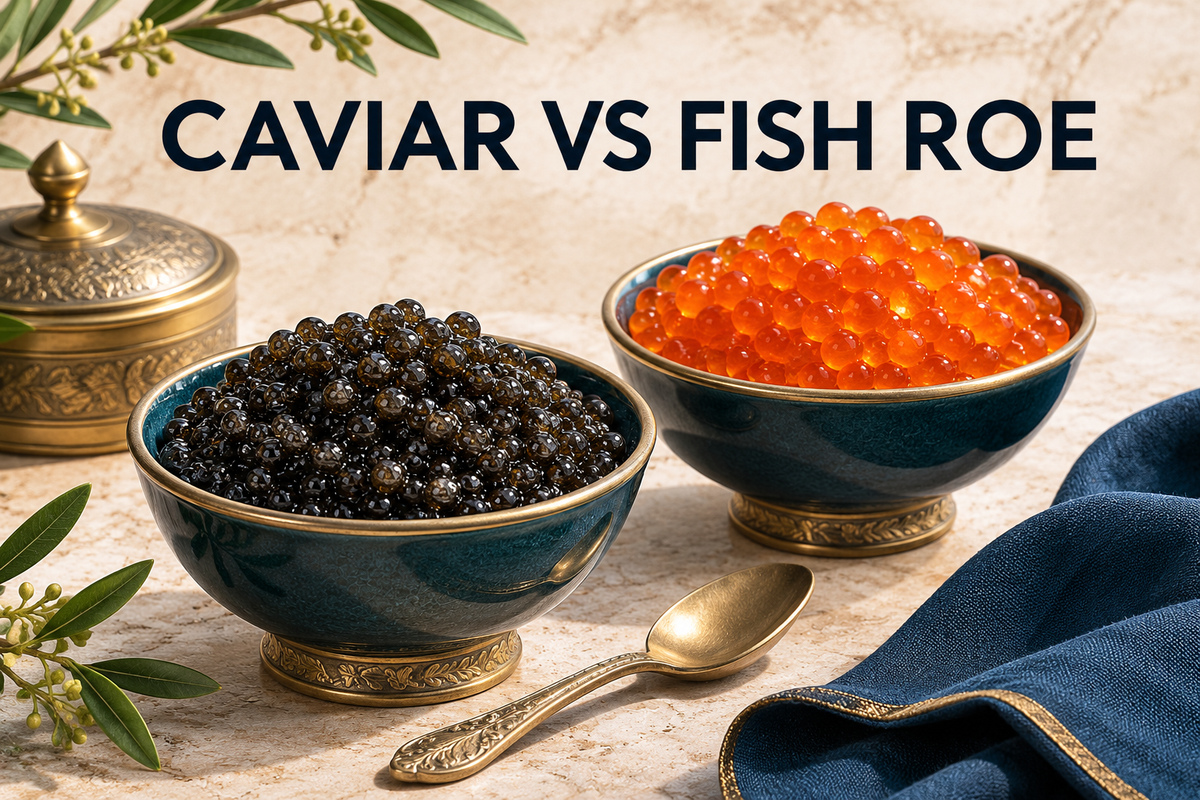
Caviar vs fish roe comes down to species and product naming. Roe is the broad term for fish eggs. The Codex standard for sturgeon caviar covers salted eggs from the sturgeon family. Salmon, trout, lumpfish, tobiko and masago are other fish roes, even when a label uses a qualified name such as salmon caviar. Read the declared fish and ingredients before relying on colour, grain size or a menu name.
| Product or term | What it means | What to check |
|---|---|---|
| Sturgeon caviar | Salted roe from the sturgeon family in the Codex standard | Scientific species or hybrid, lot and applicable traceability |
| Salmon or trout roe | Roe from the named fish | Species, cure and grain size |
| Tobiko and masago | Flying fish and capelin roe, respectively | Named species, seasoning and colour ingredients |
| Lumpfish roe | Roe from lumpfish; colour may be added | Ingredients rather than colour alone |
| Paddlefish roe | Roe from a fish related to sturgeons, outside the sturgeon family | Market naming and relevant wildlife controls separately |
| Plant-based pearls | A garnish that can resemble roe | Ingredients and allergen information; it is not fish roe |
Caviar vs Fish Roe: What the Names Mean
Roe describes eggs, while a prepared product name describes what has been done to them and sometimes which fish supplied them. Market naming, food standards and wildlife traceability answer different questions.
Start with the fish
The Codex standard for sturgeon caviar covers granular caviar made from eggs of the sturgeon family, Acipenseridae, treated with food-grade salt. It includes relevant sturgeon hybrids. Examples include Beluga and Russian sturgeon caviar. An unprocessed egg from a sturgeon can be called sturgeon roe; the prepared product is what the standard describes.
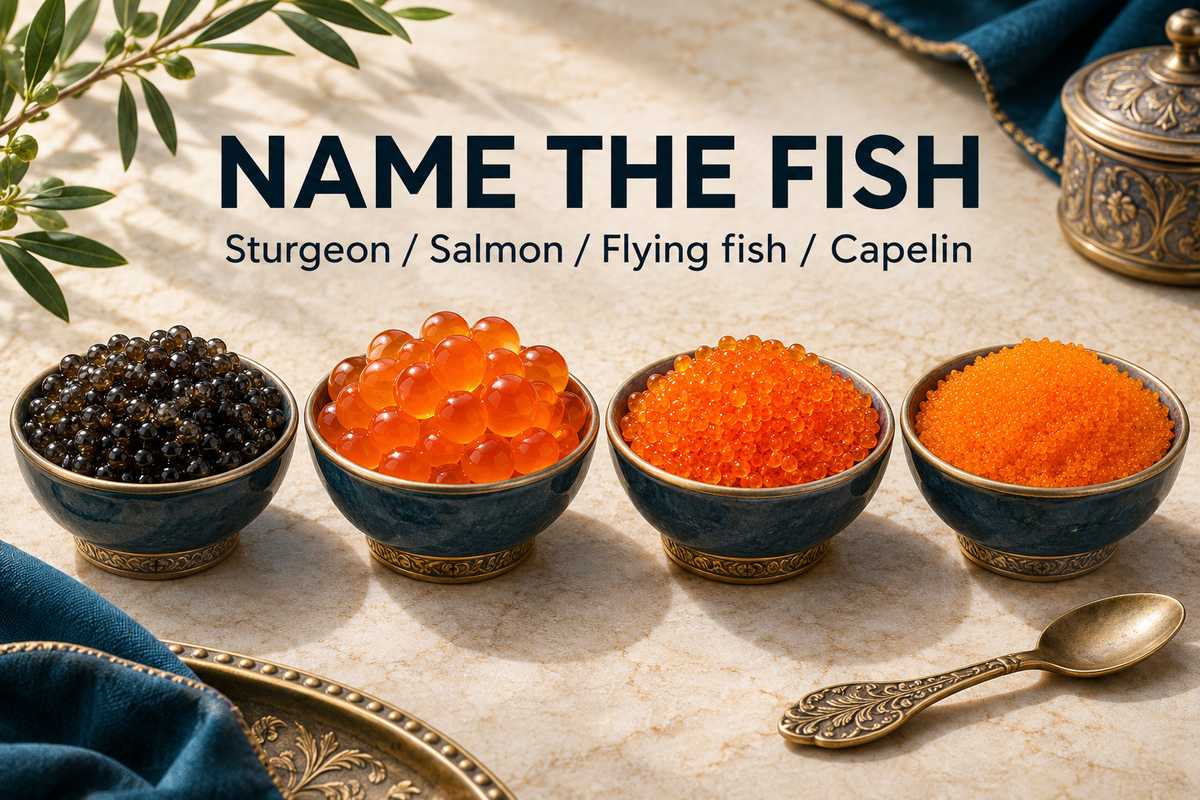
Salmon roe, also encountered as ikura, is usually recognisable by its relatively large orange grains and juicy release. Trout roe can have a similar colour, with a different grain size or texture depending on the product. Tobiko is flying fish roe and often offers a crisp texture in a small grain. Masago is capelin roe and is also fine-grained; it is not another spelling of tobiko. Lumpfish roe is small and can be sold in different colours. CaviarHub’s guide to common roe varieties illustrates why colour and appearance are useful in the kitchen but weak identifiers of species.
Separate the food name from the conservation rules
Labels can use terms differently across markets. The FDA’s US caviar labelling guidance distinguishes an unqualified caviar name from a qualified name identifying another fish. A label that says salmon caviar is declaring a different source from a label that says sturgeon caviar. If a product will be sold under a particular name, check the destination’s applicable rules instead of treating US guidance as a universal labelling law.
Paddlefish belongs to a different family from sturgeons, even though both are included in the order Acipenseriformes. The CITES resolution on sturgeon and paddlefish trade uses a conservation and traceability framework that can cover both. Therefore, a wildlife trade label can be relevant to a product that does not meet the Codex definition of sturgeon caviar. Verify the taxon and applicable requirements separately.
Read appearance as a culinary clue
Black, brown, amber and orange tell you how a roe may look on a plate. They do not settle which fish supplied it. A dark lumpfish product can resemble a dark sturgeon product in a small photograph, especially under strong directional lighting. Check the name, the declared source and the ingredient list before concluding that a product is dyed, naturally dark or a particular species.
Terms such as “black caviar,” “red caviar” and “caviar-style pearls” also leave different questions open. The first may tell you a colour, the second may refer to a different fish, and the third may describe a plant-based or formulated garnish. The front-of-pack image is a presentation, while the product name and ingredients are the starting points for identification.
Choosing Roe for a Dish
Select roe for the role it plays in the bite and for the description diners will see. A good substitute matches the features that matter and is presented under its own name.
Match the grain and the base
A delicate sturgeon caviar can be served plain or on a simple base where the membrane and finish are noticeable. Salmon roe can provide a conspicuous orange accent and a juicy burst. Trout roe may fit a dish that calls for an orange garnish with a smaller footprint, depending on the lot. Tobiko and masago can spread across a small surface because of their fine grain, but a seasoned version can bring flavours the recipe did not expect.
To compare products, assemble a test bite with the same base and a measured amount of each roe. Taste the whole bite rather than the roe by itself. A crisp grain can work well on a soft base, while a large roe may need a stable spoon, cup or indentation to stop it rolling away. If the garnish is acidic, spicy or smoked, check whether that seasoning carries through the dish. A substitution that looks equivalent can still change how a guest experiences the first bite.
A substitution decision with conflicting priorities
Suppose a kitchen plans a pale potato canapé advertised with sturgeon caviar. Its priorities are a dark accent, a subtle marine finish and an accurate menu description. The intended sturgeon lot is unavailable. Dark lumpfish can preserve the colour contrast but may give the bite a different texture and salt impression. Salmon roe can provide a noticeable burst, but it changes the colour and appearance. The two alternatives solve different parts of the problem.
If the promised species is essential, find a verified sturgeon alternative or remove the canapé from that service. If the menu can change and the colour contrast matters most, test the lumpfish and rewrite the dish description. If the chef values a juicy texture over the original look, test the salmon roe and make the orange garnish part of the new presentation. In either case, confirm the ingredients and update the allergen information under the kitchen’s procedure.
| Desired result | Test first | What may force a change |
|---|---|---|
| Soft release on a plain spoon | The offered sturgeon lot | A firmer membrane or a stronger cure than expected |
| Bright, juicy accent | Salmon or trout roe | The grains may be too large for a narrow garnish |
| Fine coverage on a small bite | Tobiko or masago | Added flavour or colour may conflict with the dish |
| Dark visual accent | Verified dark roe suitable for the dish | Menu or procurement rules require a particular species |
Check ingredients when the recipe depends on them
Two jars with the same species name can have different seasonings or curing ingredients. The commercial guide from BSA Food Products on roe species and grades shows how trade descriptions bring together species, product form and handling. For kitchen use, check the actual ingredient declaration and storage directions for the product received. A bright colour may be natural, added or affected by the recipe; the ingredients are better evidence than a photograph.
Roe is a fish-derived ingredient. A plant-based garnish is a separate product, and its appearance is no basis for an allergy assurance. For diners with dietary restrictions, check the supplier’s ingredient and allergen declarations and apply the establishment’s cross-contact procedure before making any claim.
How to Read a Roe Label
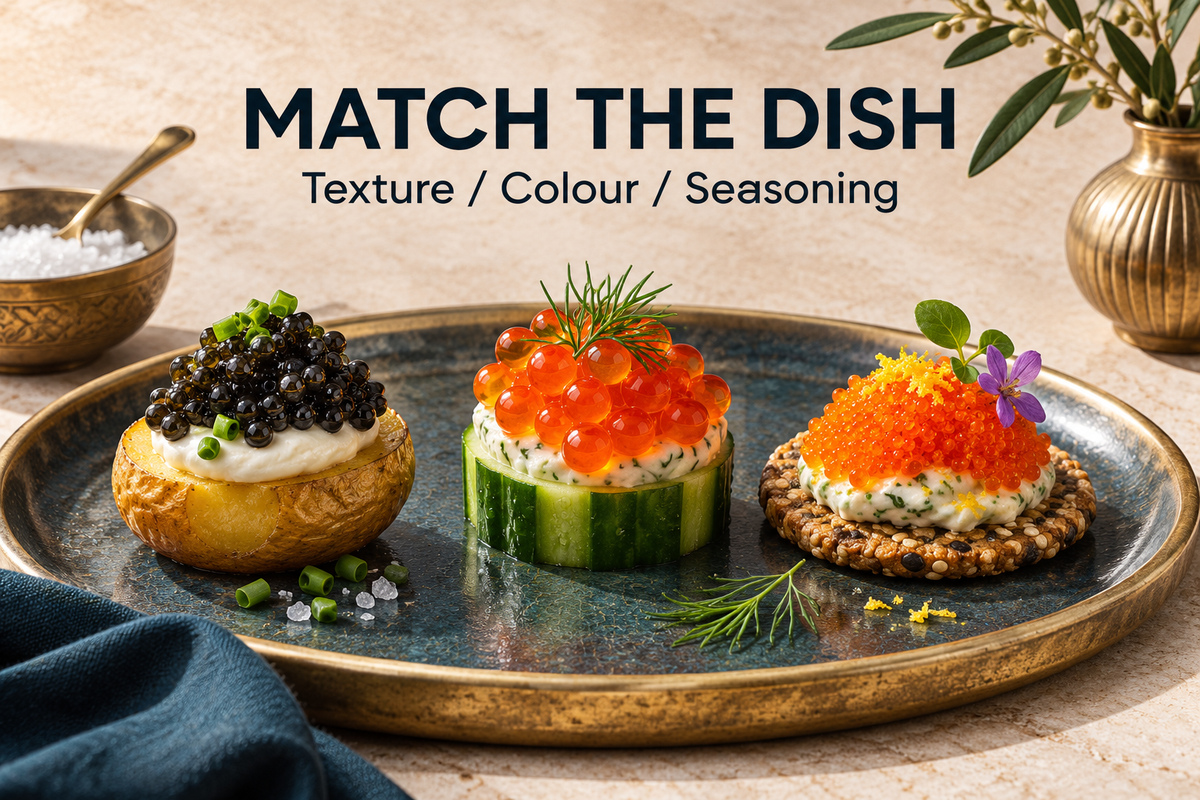
Start with the commercial name and work towards more specific evidence. The product name tells you what the supplier is offering, the ingredient declaration helps confirm the fish source and treatment, and the traceability record connects that particular pack to a lot. Record net weight and handling instructions separately. In a trade enquiry, ask for a legible image of the pack label and the product specification before writing a menu, approving artwork or booking delivery. If the pack claims a particular species or hybrid, ask for that identity in a form the buyer can compare with the associated documents.
For sturgeon or paddlefish products subject to wildlife controls, request the applicable traceability information and match it to the paperwork. A repacking identifier may differ from the original producer’s identifier, so ask how the supplier connects the repacked unit to its source. The CITES labelling framework is a starting point for the label, while the importer or relevant authority confirms what documents the transaction actually needs. For other roe, retain its own supplier and lot records; the absence of a sturgeon caviar label is not proof that the product lacks traceability.
Consider a delivery invoice that says “caviar” while the ingredient panel says lumpfish roe. The practical step is to separate the lot from the approved stock, check the purchase specification and request a written clarification. If the purchase was for lumpfish roe, correct the product record and verify how it should appear on the menu. If the purchase required sturgeon, hold the delivery for the supplier’s response. Changing the menu is a chef’s decision; it does not resolve a shipment that fails the purchase specification. A documented check prevents the same ambiguous name from being repeated in the next order.
Frequently Asked Questions
Short names are useful for conversation but can be too broad for purchasing. The product details determine what to order and how to describe it.
Is all caviar fish roe?
Sturgeon caviar is made from fish roe. Roe is a broader term that includes fish eggs sold as salmon roe, tobiko and many other products. The Codex standard applies to prepared sturgeon caviar, not to the whole category.
Is red caviar the same as sturgeon caviar?
The term red caviar is commonly associated with salmon roe. Check the named fish. Red or orange colour alone does not distinguish salmon from trout or a coloured roe product.
Is paddlefish roe sturgeon caviar?
Paddlefish and sturgeon belong to different families. Paddlefish roe is outside the Codex sturgeon caviar definition, although relevant wildlife trade controls can still apply.
Are tobiko and masago interchangeable?
They come from different fish. They may serve a similar visual role, but the texture, seasoning and ingredient declaration can differ. Test the actual products before substituting and update the dish description if it names the roe.
Can colour identify authentic sturgeon caviar?
No. Sturgeon caviar varies in colour, and other roes can resemble it. Use the declared species and lot evidence to verify identity. Use colour for judging presentation. For a repeat order, record the name and lot of the sample that matched the finished dish.
Specify the Roe You Need
If your brief calls for sturgeon caviar, use the Iran Fish caviar range to enquire about a declared species and an available lot.
Include the intended menu name, destination, net pack size and desired texture or appearance. Ask for the ingredient declaration, product handling instructions and applicable lot documentation.
Confirm the actual product before approving a substitute or committing the description to print.