


How Is Caviar Made? From Harvesting and Salting to the Finished Tin

How is caviar made? Producers assess the maturity of sturgeon roe, harvest the eggs, separate them from surrounding tissue, clean and sort the grains, add food-grade salt, then pack the caviar in labelled containers. The finished tin stays under its specified storage conditions. Harvest methods differ: conventional production usually uses non-ovulated eggs, while some methods collect ovulated eggs and treat them before packing.
| Stage | What happens | What a buyer can verify |
|---|---|---|
| Maturity assessment | Producers assess the fish and development of the roe | Declared species, source and harvest method if specified |
| Harvest and separation | Roe is collected and intact grains are separated from tissue | Product type and production description |
| Cleaning and grading | Broken grains and visible material are removed; lots are assessed | Grain integrity, specification and representative sample |
| Salting and packing | Food-grade salt is added and the product is packed under controlled conditions | Ingredient list, pack status and net weight |
| Traceability and transport | Containers are labelled and the product is kept under specified conditions | Lot identifiers, seal, documents and temperature evidence |
How Is Caviar Made Before Salting?
The quality of the finished tin begins with the fish and the condition of its eggs. Harvest timing and separation determine what the processor has available to cure.
Raising sturgeon and assessing maturity
In aquaculture, farms raise sturgeon and monitor fish development. Timing varies with species and conditions; a fixed age is not a reliable indication that a particular fish is ready. The Institute of Food Technologists’ explanation of caviar processing describes ultrasound as one tool used to assess sex and roe development. A farm’s assessment may involve more than one check, depending on the fish and production system.
Why assess the eggs before processing? The target is a batch of grains with the characteristics the processor needs for that product. The timing of harvest and whether the eggs have ovulated affect how they can be handled. The commercial description should reflect the method actually used. A supplier who specifies only “farmed sturgeon” has identified the source category, but has not yet answered how the eggs were collected.
Conventional and non-lethal harvest methods
In conventional production, the fish is typically killed and non-ovulated eggs are removed with ovarian tissue. That tissue is handled so the grains can be separated intact. A processor’s ability to use the rest of the fish is a distinct question from whether the roe harvest itself is lethal.
In some non-lethal approaches, producers collect ovulated eggs and treat them so they are suitable for the intended finished product. The Codex standard for sturgeon caviar recognises appropriately treated ovulated eggs from aquacultured sturgeon within its scope. Beleaev’s farm-to-tin guide explains why different methods do not produce identical eggs at the same stage. If harvest method is important to procurement, request the supplier’s explanation for the specific lot. A product name, grain colour or taste cannot establish that method.
Separating, cleaning and grading the grains
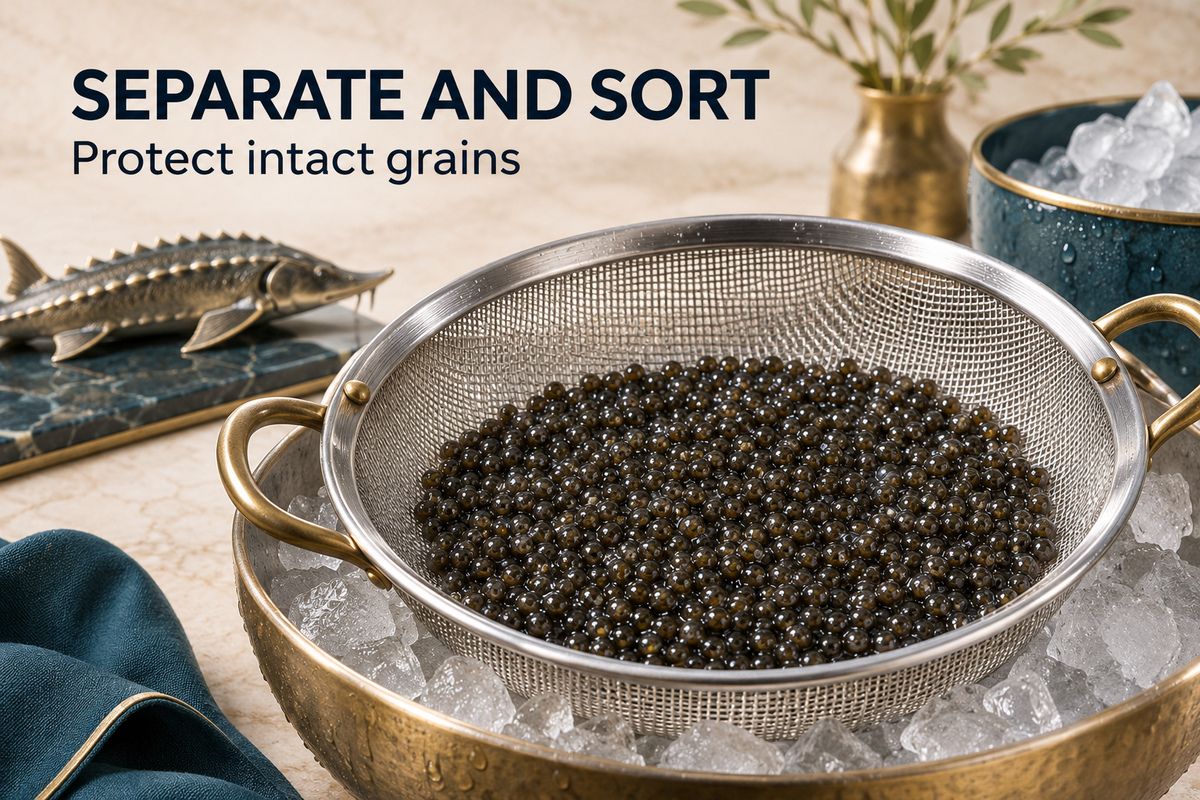
For conventional roe, a screen can help separate the eggs from surrounding tissue. The operator works gently to protect the membranes and then removes tissue fragments, damaged grains and other visible material. The IFT description of screening and rinsing illustrates why care at this stage matters: eggs that burst during handling cannot be made intact again by curing. Controlled processing and hygiene are distinct from appearance. Removing visible fragments does not establish food safety by itself.
Grading describes the batch a producer has after assessment. It can consider size, colour, firmness, grain integrity and sensory qualities. Grade terms differ between producers, so a name such as “reserve” is less actionable than the criteria behind it. A chef might ask for grains that remain distinct on a spoon, while a distributor may need a range consistent enough for repeat orders. Neither needs a universal colour hierarchy to make that decision.
Salting, Packing and Traceability
Salting changes the flavour and the way a finished batch is handled. Packing and labelling add information that salt level or appearance alone cannot provide.
Curing the batch
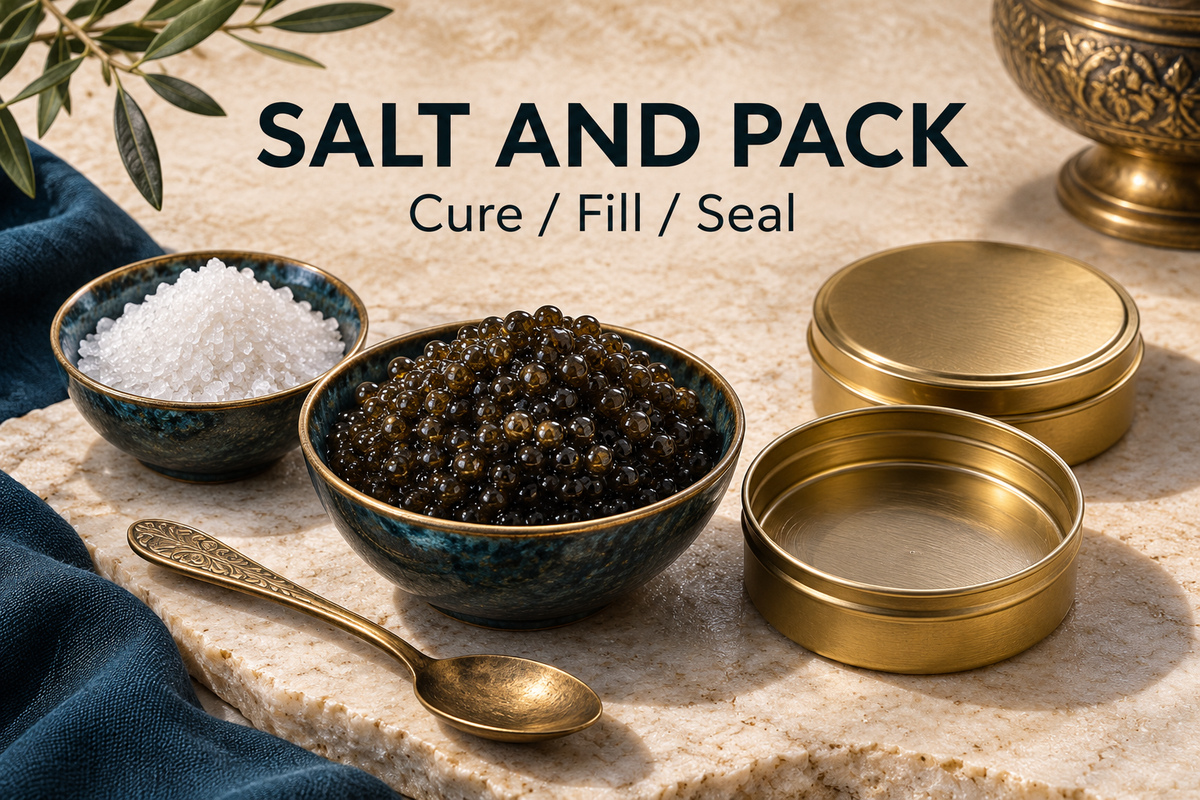
The processor applies food-grade salt under a controlled process. Salt contributes to the finished flavour and can affect the product’s moisture and handling characteristics. Excess liquid can be drained as appropriate to the process before packing. The exact procedure is part of the producer’s controls. For buyers, the useful questions are what ingredients were used, whether the lot matches the agreed specification, and what storage instructions the producer provides.
Malossol is commonly used to signal a lightly salted style. The word alone is not a measured salt declaration, a universal grade or a shelf-life instruction. Two tins using the same style name may taste different. If salt level matters to a kitchen or product specification, ask for the documented value or agreed sensory description instead of treating the term as an exact number. A cook can then judge the saltiness of the complete dish rather than correcting for a label adjective.
Packing, repacking and optional pasteurisation
Caviar may be packed into an original container and later repacked into smaller units. Repacking changes the pack identification and can introduce a different operation into the traceability chain. Ask which facility packed the unit being offered and how that facility connects its identifier to the source batch. An unbroken connection matters when the buyer needs to trace a quality issue or match units from different deliveries.
Pasteurisation is a separate processing decision. It is not implied by a vacuum seal, by the word malossol or by the use of a tin. If the distinction matters to the intended service, ask whether the lot was pasteurised and request the written storage directions. Do not assume either product is shelf stable. The sealed tin and the opened tin may have different handling and use instructions.
Identifying the finished lot
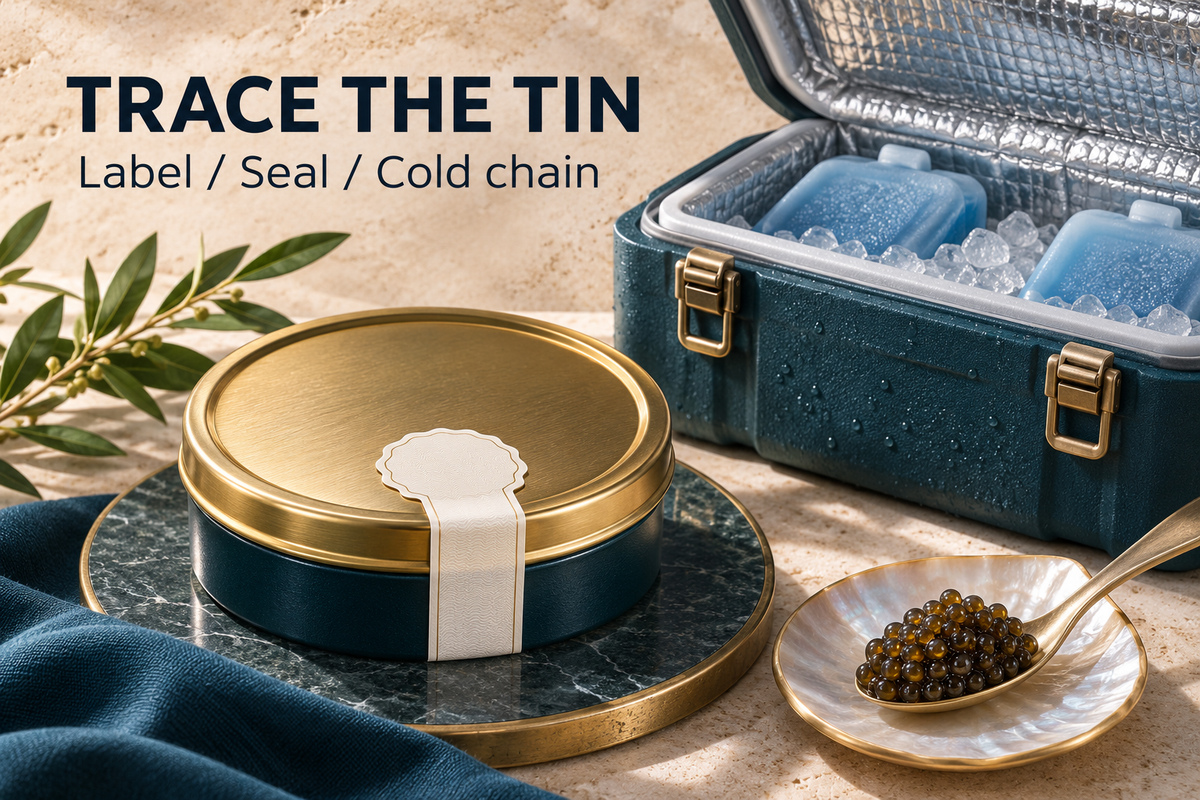
Under the CITES sturgeon and paddlefish labelling framework, primary containers within scope carry traceability information. Depending on whether the unit is an original pack or repacked, the label and records can connect the product to species, source, origin and packing or repacking identifiers. The particular shipment may also need separate documentation. The importer and relevant authorities should establish those requirements for the destination.
| Term | What it tells you | What it cannot establish on its own |
|---|---|---|
| Malossol | A lightly salted style claim | Measured salt level or safe holding conditions |
| Pasteurised | A stated treatment when documented for the lot | Shelf stability or a universal use period |
| Repacked | Product moved into a new primary container | Whether it was mishandled or whether traceability is complete |
| Species code | Identity information within a traceability system | Texture, flavour or destination eligibility |
| Net weight | Amount of product in the unit | The number of portions without a portion plan |
From Finished Tin to Receiving Dock
Before shipment, agree on the declared species and source, net pack weight, lot or approved substitution, seal expectations, storage range and evidence to accompany the delivery. Ask for a label image and distinguish the producer’s lot from any repacker’s identifier. The receiving team should know which fields must match before accepting the product. For example, a hotel that approves a particular sensory lot for a tasting should state whether a later batch of the same species needs a new sample or written approval. A distributor planning a retail label should settle the product declaration before producing artwork. The supplier specification should distinguish the pack date from the date until which the product can be held unopened. It should also identify any separate directions after opening. Receiving staff can then compare the delivery with written acceptance criteria, while service staff can decide when to open a unit without borrowing the unopened storage period. If an order is divided between a restaurant and a reseller, agree the pack format for each use before production. A large kitchen tin and a small retail unit may come from the same lot while needing different handling records.
Imagine a chef approves a sample and orders smaller tins from the same batch. At delivery, the new tins carry a repacking reference, but the invoice gives only the original batch. The receiver checks seals, label details and temperature evidence against the agreed procedure, then requests the record connecting both identifiers. A valid repacking trail may resolve the apparent mismatch. If the link cannot be verified, or if the seal or holding evidence fails the receiving criteria, the product stays on hold under the organisation’s procedure. A sample from the delivery should not be used to waive that decision.
After acceptance, keep the stock under the written product conditions and maintain the lot identity through service or redistribution. The FDA’s seafood handling guidance explains why cold seafood should stay refrigerated until service. The product instructions and applicable food-safety plan determine the specific storage and handling of the tin. Record which units were opened for which event when traceability matters. If a customer later reports a problem, the record should link the unit used in the kitchen to the delivery and lot instead of relying on memory or an unlabelled lid.
Frequently Asked Questions
The harvest method, ingredient list and pack each describe a different step. These questions address what can and cannot be inferred from the finished tin.
Does making caviar always kill the sturgeon?
No. Conventional harvest typically kills the fish and uses non-ovulated eggs, while some producers use non-lethal collection methods with ovulated roe. Verify the method for the specific lot if it is part of your sourcing policy.
Why are the eggs passed through a screen?
In conventional processing, the screen helps separate individual eggs from the surrounding tissue. Gentle handling helps retain intact grains. Sorting and cleaning can remove visible fragments and damaged eggs after separation.
Is caviar cooked?
It depends on what the question means. Caviar is salt-cured; some finished products also receive a documented pasteurisation treatment. Check the specification for the lot rather than assuming that salting or sealing is a heat treatment.
Does every tin have the same shelf life?
No. The processing method, packaging and validated storage conditions affect how long a product can be held. Read the date and instructions on that pack, and follow separate instructions after opening.
Does repacking mean the caviar is a different species?
No. Repacking changes the container. The identity should remain traceable through the repack identifier and supplier records. If the species declaration or lot connection is unclear, ask for clarification before accepting it as the same product.
Ask Iran Fish for a Lot Specification
Use the Iran Fish caviar export page to enquire about the species, pack size and destination you need.
Ask for the ingredient declaration, whether the pack is original or repacked, applicable lot identifiers and the product’s storage directions.
For a commercial shipment, agree which documents and temperature evidence must accompany the delivery before the order is released.