
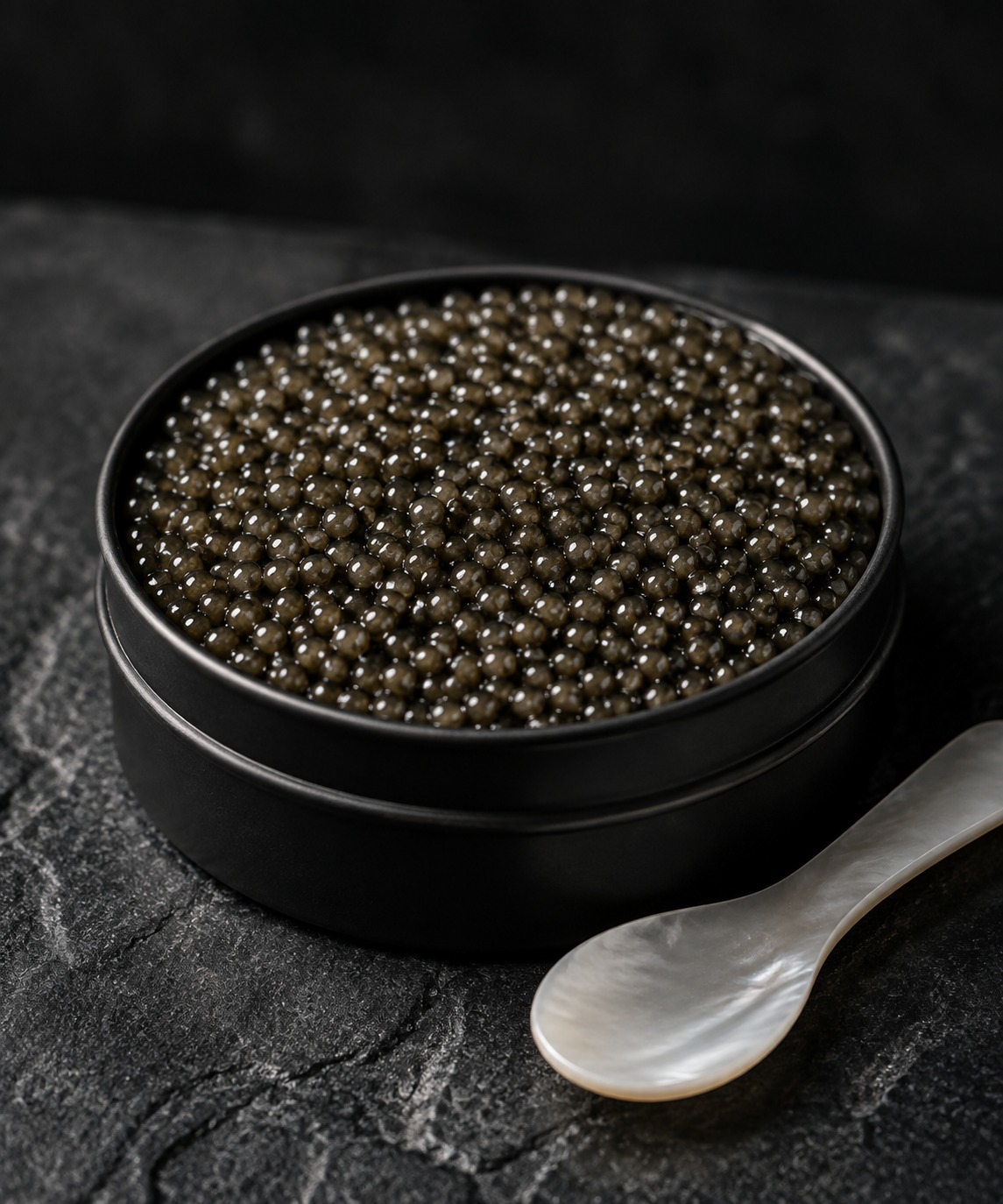

Beluga Caviar
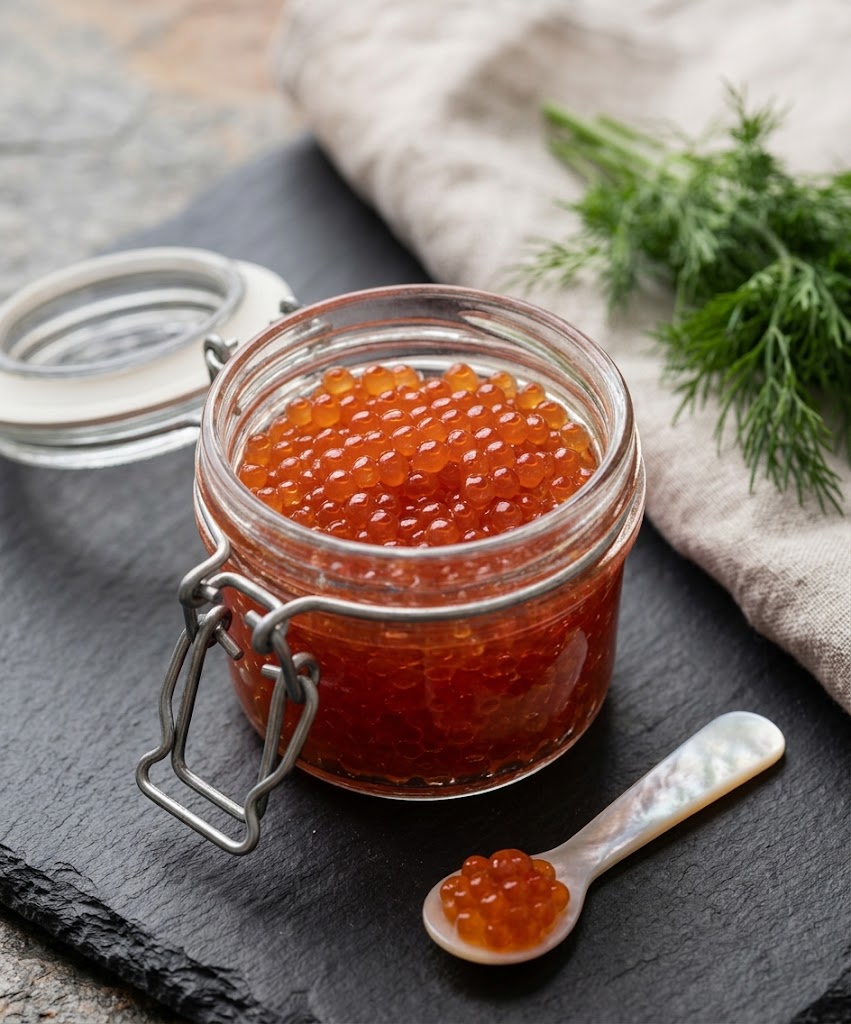
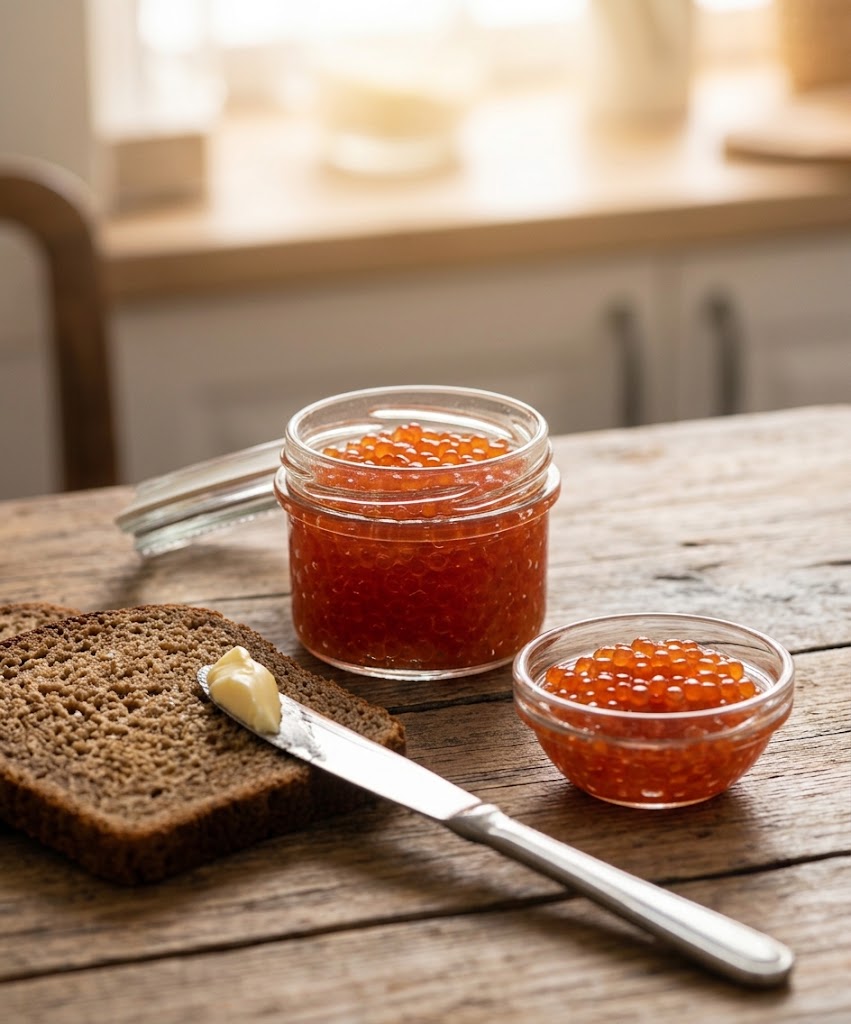
Trout Caviar
Caviar Exporter: Premium Iranian Caviar Sourced Straight From the Caspian Sea
Looking for a caviar exporter you can actually rely on? Iran Fish supplies Beluga and premium sturgeon caviar directly from Caspian Sea farms to importers, distributors, hotels, and food-service buyers worldwide — fully certified, cold-chain shipped, and ready for bulk B2B orders.
| What You Get | Details |
|---|---|
| Caviar Types | Beluga, Osetra, Sevruga, and Kaluga caviar |
| Source | Wild-caught and farmed sturgeon from the Caspian Sea, Iran |
| Certifications | CITES permit, HACCP, ISO, veterinary health certificate, certificate of origin |
| Who We Serve | Importers, distributors, retailers, hotels, and food-service buyers |
| Packaging | Vacuum-sealed tins in custom bulk weights, including private-label options |
| Shipping | Cold-chain logistics with full export documentation to global markets |
What Makes a Reliable Caviar Exporter
Not every caviar exporter can back up its claims with paperwork, and that gap is where most B2B buyers get burned. A trustworthy supplier sources from traceable farms, grades every batch by size, color, and flavor, and ships with the certificates customs officials actually check — not just a glossy product photo.
Iran Fish sources its caviar from sturgeon farms along Iran’s Caspian coast, an area long associated with the richest, most distinctive roe in the world. Every batch is handled under strict cold-chain protocols from harvest to tin, which preserves the delicate texture that separates genuine Beluga caviar from lower-grade substitutes.
For B2B buyers, that reliability translates into fewer customs delays, consistent quality across repeat orders, and a supplier who can scale from sample tins to container-level volume without cutting corners.
Types of Caviar We Export
Iran Fish works with the species that international buyers ask for most, each graded for size, color, and flavor before it ever reaches a tin.
- Beluga caviar — the largest, softest roe, prized for its buttery texture
- Osetra caviar — medium-sized eggs with a nutty, complex flavor
- Sevruga caviar — smaller grains with a bold, pronounced taste
- Kaluga caviar — a rich, Beluga-like alternative in growing demand
Certifications and Documentation Behind Every Shipment
Caviar is one of the most tightly regulated foods in global trade, and for good reason — sturgeon are a protected species. Every Iran Fish shipment travels with the full documentation buyers and customs authorities require.
CITES Certificate
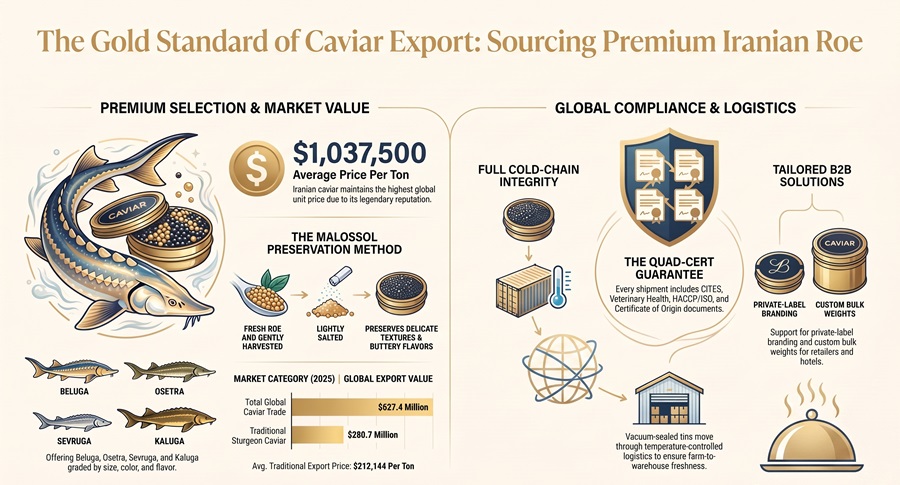
Since sturgeon fall under the Convention on International Trade in Endangered Species, every export requires a CITES permit confirming the caviar was sourced legally and sustainably.
Veterinary Health Certificate
This certificate verifies the product meets food-safety standards for human consumption and clears veterinary inspection before it leaves Iran.
HACCP and ISO Certification
These certifications confirm that processing, handling, and storage follow internationally recognized food-safety protocols, from the farm to the packing facility.
Certificate of Origin
Buyers and customs agents use this document to confirm the caviar genuinely originates from Iranian Caspian Sea farms, protecting against mislabeled or counterfeit product.
From the Caspian Sea to Your Warehouse: Our Export Process
The process starts at the farm, where sturgeon are raised and harvested under controlled conditions along Iran’s northern coastline. Roe is extracted, graded by size and color, then lightly salted using the traditional malossol method that preserves flavor without masking it.
Once graded, the caviar is packed into vacuum-sealed tins and moved into cold storage immediately to protect texture and freshness. Iran Fish prepares export documentation, including the CITES permit, health certificate, and certificate of origin, so shipments clear customs without unnecessary delays.
From there, the product moves through temperature-controlled logistics to the buyer’s destination, whether that’s a distributor’s warehouse, a hotel group’s central kitchen, or a retailer’s cold storage facility. Every step is built around one goal: the caviar arrives exactly as it left the farm.
Global Caviar Trade at a Glance
The caviar trade is smaller than most gourmet food categories, but it moves serious value, and Iranian roe sits at the premium end of it.
- Global caviar exports reached $627.4 million in 2025, with traditional sturgeon caviar accounting for $280.7 million of that total
- China, Italy, France, Poland, and Germany are currently the top five exporters of traditional caviar by sales volume
- The average export price for traditional caviar stood at $212,144 per ton in 2025
- Iran recorded the highest average unit price of any exporting country in 2025, at roughly $1,037,500 per ton, reflecting the scarcity and reputation of Caspian Sea Beluga caviar
Beyond Caviar: A Full-Range Seafood Exporter
Caviar sits at the top of what Iran Fish ships, but it’s part of a much wider export catalog built on the same sourcing and certification standards. Buyers who source Caviar from us often expand their orders into other Caspian and Persian Gulf products once they see the quality and documentation firsthand.
Our Marine Fish and Farmed Fish lines cover species raised and caught along Iran’s northern and southern coastlines, while our Shrimp range includes both farmed and wild-caught options for retail and food-service buyers. For buyers focused on cephalopods, we also export Squid and Cuttlefish in bulk, processed to the same cold-chain standards as our caviar.
Rounding out the catalog are Dried Seafoods for buyers who need longer shelf life and lower shipping costs, plus Sea Cucumber, a high-demand product in Asian markets. Working with one exporter across all these categories simplifies sourcing, consolidates shipping, and keeps every certificate and traceability record under a single, verified supply chain.
Partner With Iran Fish, Your Caviar Exporter of Choice
If your business needs a caviar exporter that ships with full certification, consistent grading, and Caspian Sea sourcing you can verify, Iran Fish is ready to work with you. Contact our team today to request a sample, discuss bulk order terms, and start a partnership built on quality you can trace back to the source.
Frequently Asked Questions
Is Iranian caviar legal to import? Yes, as long as it’s accompanied by a valid CITES permit and complies with the destination country’s import regulations. Some countries, including the United States, restrict specific species or origins, so buyers should confirm requirements before ordering.
What is the difference between Beluga, Osetra, and Sevruga caviar? Beluga has the largest eggs and a soft, buttery texture; Osetra offers medium-sized eggs with a nutty flavor; Sevruga has smaller, bolder-tasting grains. All three come from different sturgeon species.
How is caviar kept fresh during export? Caviar is vacuum-sealed in tins immediately after grading and shipped through temperature-controlled cold-chain logistics to maintain freshness and texture from farm to destination.
What documents should a caviar shipment include? A legitimate shipment includes a CITES certificate, veterinary health certificate, certificate of origin, HACCP/ISO compliance documentation, and a detailed packing list.
Can I order private-label or custom-weight caviar tins? Yes, Iran Fish offers custom packaging, including private-label branding and a range of bulk tin sizes suited to hotels, retailers, and distributors.