

Caviar Preservatives Explained: Ingredients and Label Checks

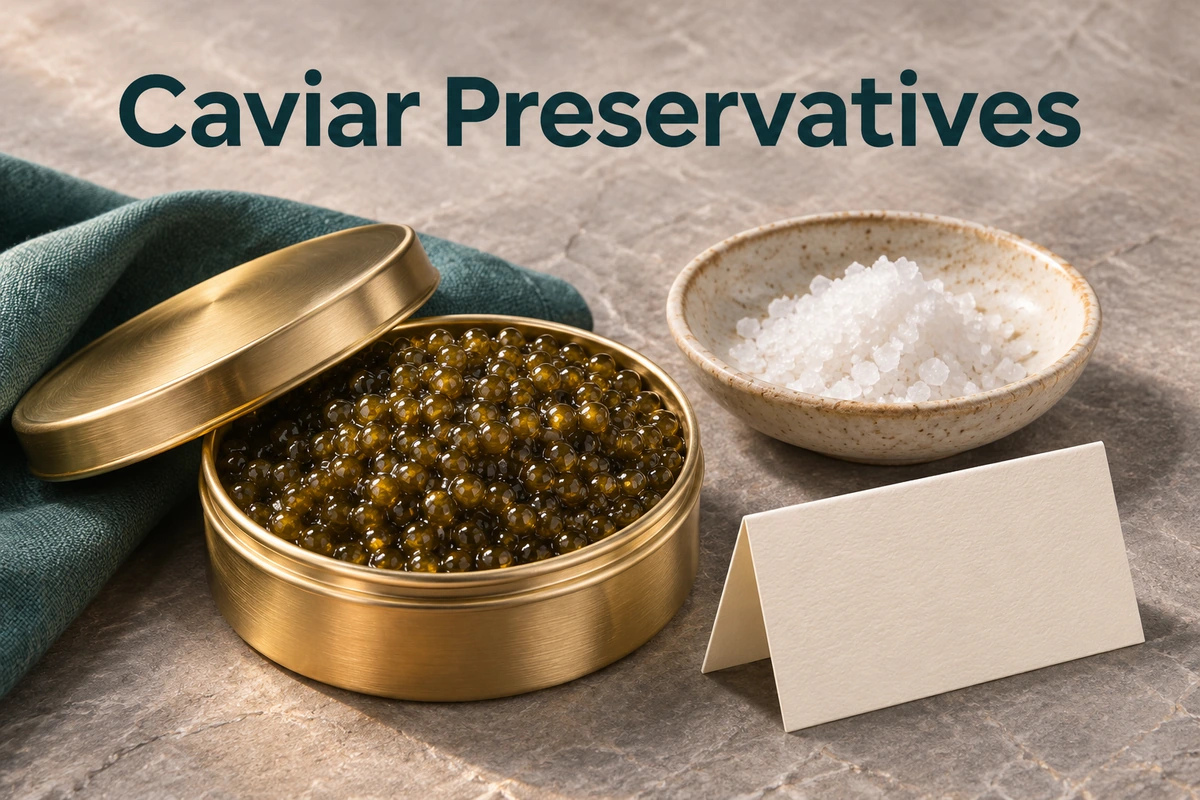
For buyers who want caviar preservatives explained, start with the ingredient list and the exact product specification. Sturgeon roe and salt are common, while some formulations declare an added preservative such as sodium tetraborate. Malossol, pasteurised and refrigerated each describe different aspects of a product. Verify the destination rules, seal, storage instructions and the lot you will receive. Ask Iran Fish’s wholesale caviar team for the current specification.
| Wording or document | What to check |
|---|---|
| Sturgeon roe and salt | Match the ingredient statement to the exact SKU and confirm any applicable fish allergen declaration. |
| E284 or E285 | Check the named additive, its permitted use in the destination and any amount or declaration your importer requires. |
| Malossol | Treat it as a salting description and confirm the full formulation separately. |
| Pasteurised | Verify the process and product-specific storage and opening instructions. |
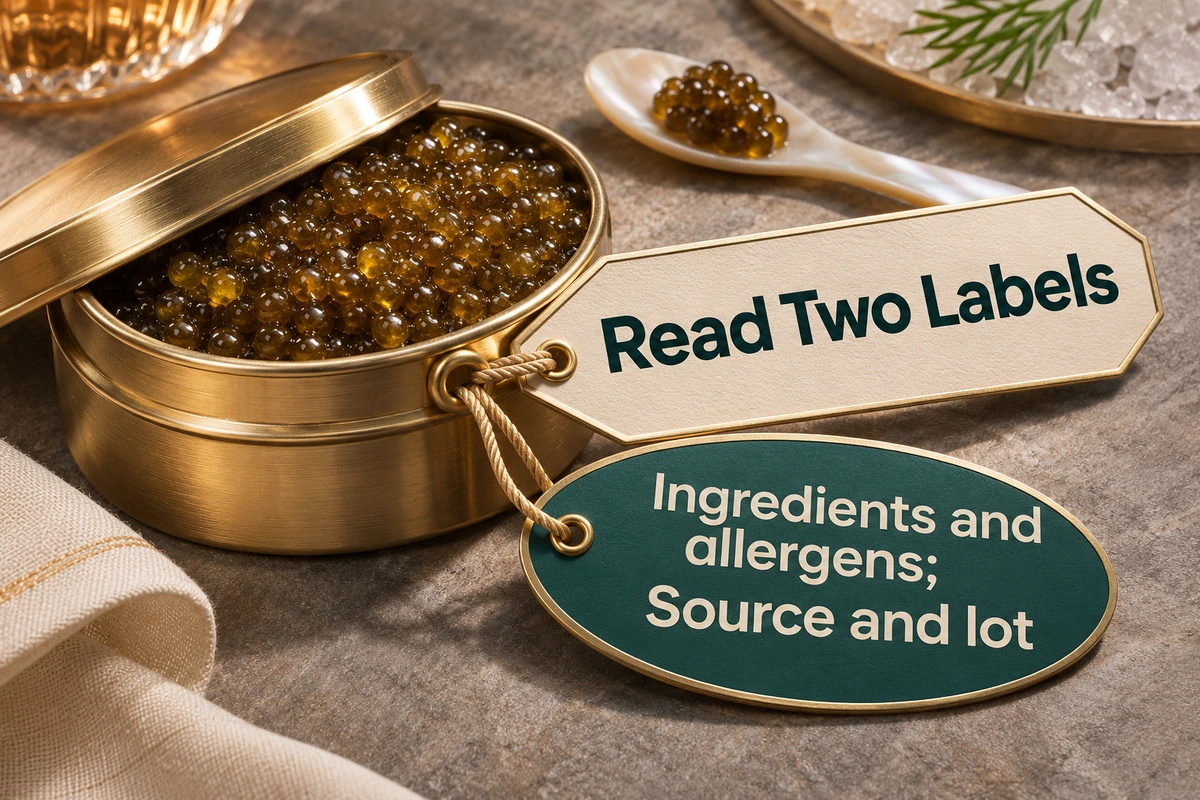
| CITES traceability label | Use it to trace the caviar’s source and lot. Check the ingredient declaration separately. |
| Substitution or conflict | Hold approval until the supplier and importer reconcile the lot, pack and specification. |
Read more · Caviar vs Fish Roe: Names, Species and Label Differences
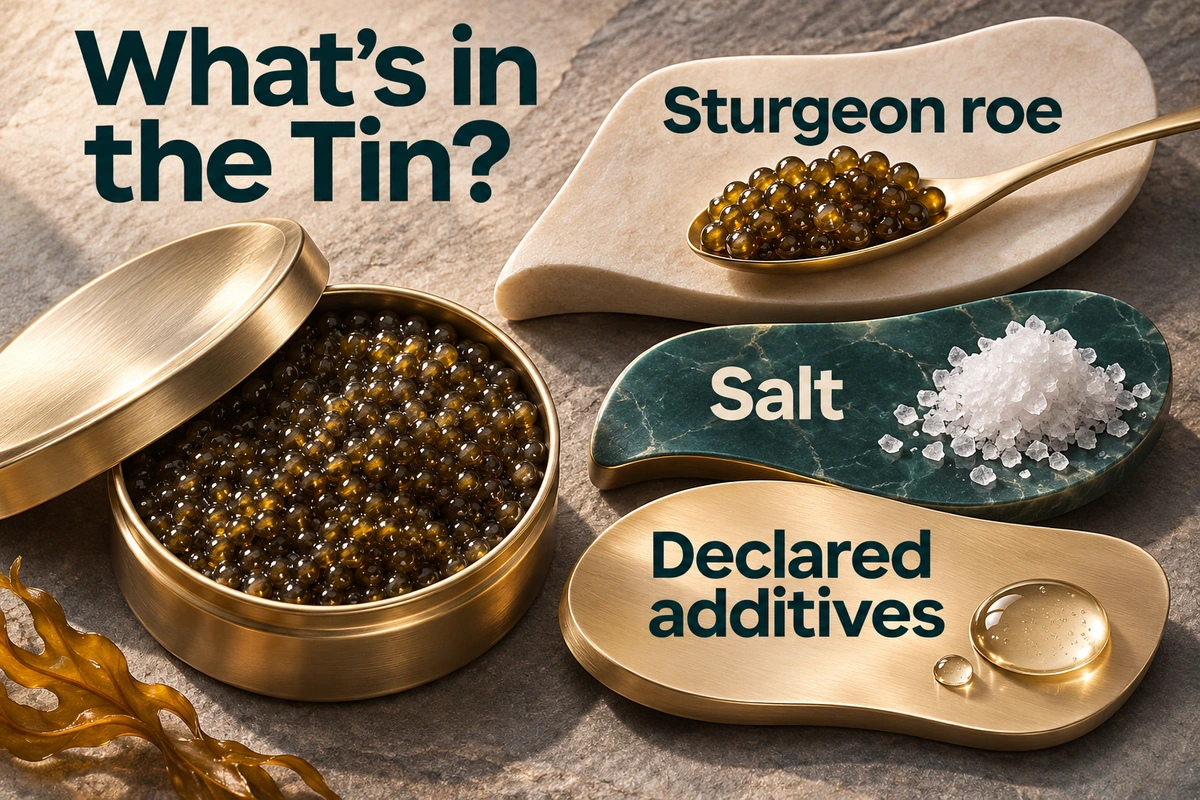
Caviar Preservatives Explained by Ingredient and Process
Salt, an added preservative, a heat treatment and refrigeration can play different roles. The buyer needs to understand which measures apply to the specific caviar and what can be substantiated on the label.
What salt does
Caviar production typically involves adding food-grade salt to sorted sturgeon roe. Salt contributes to flavour and preservation. A specification might express salt in the finished product or use a different measurement for a particular control. In seafood safety, water-phase salt refers to salt relative to the water portion, which is a different basis from percentage salt by total product weight. The FDA seafood hazards guidance on reduced-oxygen seafood discusses water-phase salt in the context of processor controls. Use the producer’s validated specification and the destination’s rules when assessing commercial requirements.
If your chef needs consistent perceived salinity, review the formula and taste a retained or delivered sample under matching conditions. A number in a specification can help identify a formulation change. Perceived saltiness also depends on the serving conditions and the dish. A salt-forward sample on a neutral spoon may feel balanced on an unsalted base and overpower a garnish on an already seasoned canapé. Keep the sensory note and the ingredient record as distinct parts of approval.
How to recognise an added preservative
In EU additive terminology, E284 refers to boric acid and E285 refers to sodium tetraborate, commonly called borax. The EU food additives regulation is an example of a jurisdiction-specific source that identifies conditions for these additives in sturgeon eggs. Check the current consolidated rules and ask your importer about the precise product category, legal conditions and label language for the destination. Suppliers may sell different formulations under similar product names, and a foreign label or supplier description does not settle local permission.
If a buyer requires roe and salt only, put that exact requirement in the specification and ask the supplier to confirm the chosen SKU. A claim such as “traditional recipe” gives no ingredient detail. Likewise, “no added preservative” needs to be evaluated with the ingredient documentation and the rules on claims in the destination. For retail, check the wording to be placed on the consumer pack and the online listing. For food service, make sure the chef or product lead has the same version of the specification that purchasing approved.
What processing and cold storage tell you
Pasteurisation is a declared processing step. A product may be sold in a jar or tin and still have a process or ingredients that you cannot infer from the container. If format, flavour and handling have to align, ask whether the offered SKU is pasteurised and request the manufacturer’s instructions for sealed and opened product. “Malossol” commonly signals a lightly salted style. The precise formulation and shelf-life conditions still need to come from the supplier.
A sealed product can have a different handling window once opened. Make sure receiving, kitchen and retail teams understand which information applies before and after opening. If a seal is compromised or the temperature history is unknown, follow the receiving and food safety procedure for that deviation. An ingredient declaration and a pleasant aroma cannot establish that a temperature excursion was acceptable.
Read more · How Is Caviar Made? From Harvesting and Salting to the Finished Tin
What to Check on the Label and Specification
Request a legible photograph of the pack and a document carrying the SKU and revision. Line the evidence up before you authorise a label, order or substitute.
- Record the full ingredient wording. Ask whether the offered pack declares an additive by name, code or both, and send the current wording to the importer for review where needed. Capture the exact spelling in each language on a multi-market package.
- Match the label to the operator’s specification. Check the species description, product name, pack size, SKU and formula against the document. A brochure shared across a whole range may show useful background without identifying the offered formulation.
- Verify fish allergen information and any other applicable declarations with the responsible food business or importer. If the product is used in a prepared dish, give kitchen staff access to the latest approved ingredient record so they can answer questions consistently.
- Check process and handling fields. Record whether the product is pasteurised and how the producer specifies the storage conditions, shelf life and instructions after opening. Determine which instructions the buyer must pass to the end user.
- Keep the ingredient statement and wildlife traceability details in separate fields. A CITES label can identify source and lot information, while the ingredient list tells you what was declared in the product. You may need both during the same receiving check.
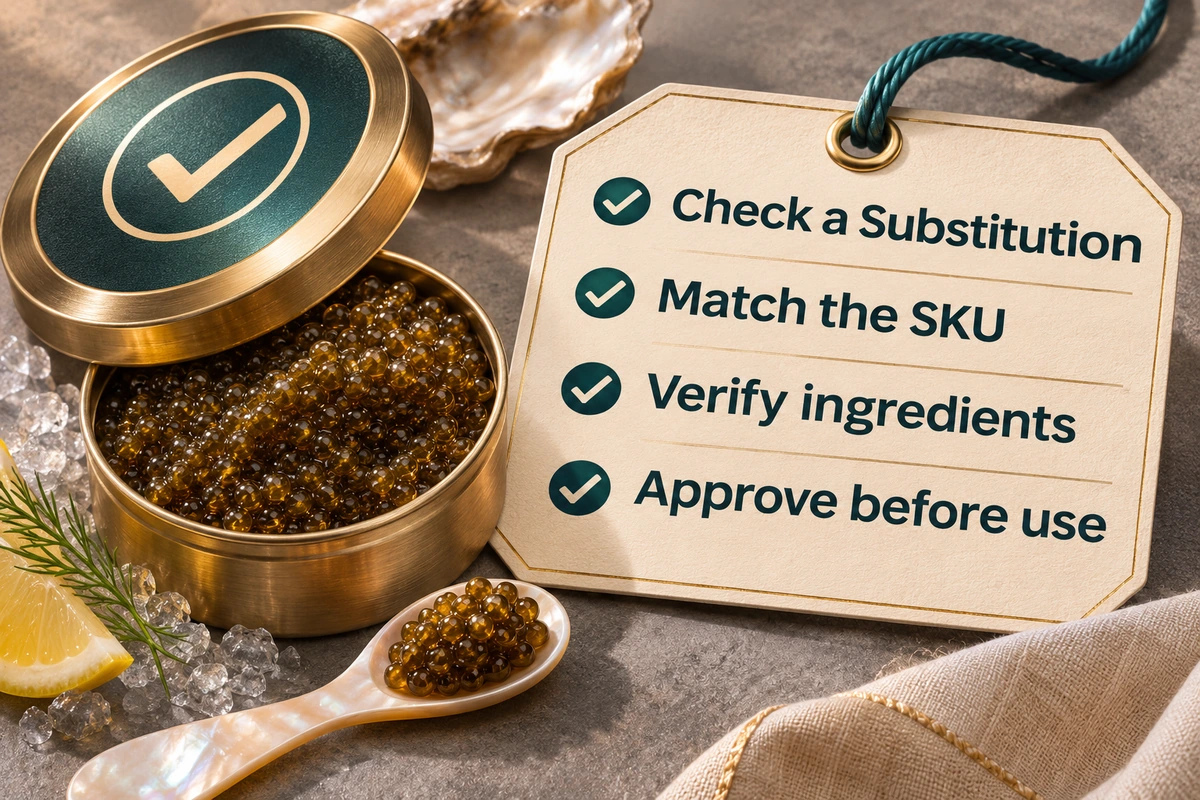
- Confirm how the seller handles substitutions and repacking. Ask who notifies your team if the ingredients, facility or pack are changed, and require approval before an alternate lot or format is dispatched when those details affect the purchase.
- Verify the destination and channel. A formula intended for one market may need different label treatment elsewhere, and the importer must resolve any question about product eligibility before release. Keep the approval record with the product file.
- Ensure the approved pack is identifiable at receipt. Provide a photo or label proof, the expected identifiers and the name of the person to notify if they differ. Have a plan for cartons that contain more than one lot or SKU.
| Common decision | Evidence needed |
|---|---|
| Accept a salt-only formulation | Current supplier specification and pack declaration for the offered SKU. |
| Use a preservative declaration in a retail listing | Destination review and the approved pack wording. |
| Extend a catering operation across two services | The producer’s opening guidance and the operation’s food safety procedure. |
| Switch from one jar or tin to another | Confirm SKU, ingredient statement, storage and approval of the substitution. |
Read more · How to Open Caviar: Tins, Jars and Vacuum Seals
A Worked Ingredient Approval from Sample to Delivery
Consider a hotel ordering caviar for a tasting menu that requires sturgeon roe and salt only. The first sample meets the taste brief, and the supplier also offers another SKU of the same species under a similar name.
Identify the approval sample
Purchasing keeps a photograph of the sample lid and ingredient panel and records its SKU, lot and format. The chef documents the intended portion and application, while purchasing asks the supplier to confirm whether the sample formula will be the same for the order. A positive tasting result is entered next to the sample identifier. The technical contact obtains the relevant storage instructions and passes them to the kitchen lead. When the menu is finalised, staff can refer to the approved ingredient record rather than relying on a product name taken from the tasting notes.
Review a proposed change before dispatch
The supplier proposes a different pack size and sends a new sheet that lists an additive. Purchasing checks whether the sheet applies to the alternate SKU. It asks for the matching package proof and the reason for the difference. If the alternate would change the approved formulation, the buyer either asks for the original SKU or asks the responsible teams to consider the new product. The importer reviews the destination rules. The chef checks whether the revised sensory profile still fits the dish. The approved ingredient information is updated before the alternate can be released.
Establish the receiving decision
At delivery, the receiver compares the approved pack details with the actual lot, seal and handling evidence. Suppose an outer case carries the expected product code while the inner pack differs from the retained proof. The team separates the affected stock, keeps records of the discrepancy and asks the supplier and importer to reconcile it. They follow the operation’s process before the product can enter service. That same approach works for lots that have the correct ingredient wording but lack required cold-chain records. Each acceptance check addresses a different risk.
Build an approval record that survives a shift change
Write down exactly which version of the supplier specification was approved, which ingredient wording was checked and which file shows the label on the offered pack. Make the handling instructions accessible where the tins are received and opened. If your buyer approves a case containing multiple lots, ask how the operator identifies which packs belong to each batch. The receiving team can then make a decision without calling the chef who conducted the original tasting.
If the buyer makes an ingredient claim to diners, give service staff a verified answer in ordinary language and a person to contact if the label seems different. If the product is sold at retail, record separately who maintains the web listing and who is responsible for the physical label. Those teams may update on different schedules. A dated link from the approved specification to the current pack proof makes it easier to trace a discrepancy and correct the information before the product is used or sold.
Can the same brand sell both formulas under similar packaging?
Yes. A producer or distributor can offer different recipes by pack format or market. Ask your supplier to show which SKU is being offered, then compare that identifier with the version of the ingredient sheet and the package proof. Without a match, a brand-wide description is useful for preliminary research but insufficient for approving the wording on a carton, retail page or menu.
Read more · Signs of Spoiled Caviar: When to Reject a Tin and Seek Advice
Frequently Asked Questions
Similar labels can refer to different recipes, processes or controls. Keep your questions tied to the actual product and its intended market.
Is all caviar preserved with borax?
No. Formulations vary. Ask for the list of ingredients on the exact retail or food-service SKU and confirm whether an additive is declared. Verify its use against current rules for the destination.
Does malossol mean the product contains only roe and salt?
Malossol describes a lightly salted style. The declaration and specification will tell you what the producer lists for that item. Ask for confirmation if you have an ingredient requirement.
Does pasteurisation tell me how to store the tin?
Ask the producer for the instructions for that SKU. Follow the specified storage conditions and the guidance after opening. The designation alone gives you less information than the manufacturer’s handling sheet.
Why do the trade label and ingredients appear in different places?
They serve different functions. One supports wildlife traceability, and the other declares the formulation under applicable food information rules. Review both records and match them to the actual pack.
What if the sample and shipment have different labels?
Compare the exact SKU, ingredient list, lot and pack information. Hold the product if the difference affects approval, then ask the responsible buyer, supplier and importer to document the decision before use.
Read more · Caviar Tin vs Jar: Packaging Choices for Retail and Food Service
Request a Caviar Ingredient Specification from Iran Fish
Share the destination, pack size and menu or retail use with your enquiry.
Review Iran Fish’s wholesale caviar options and specify any ingredient or processing requirements.
Contact Iran Fish to request the offered SKU’s ingredient declaration, pack proof and product-specific handling instructions.