

Farmed vs Wild Caviar: Sourcing, Traceability and Quality Questions

Farmed vs wild caviar describes how the sturgeon was sourced. To choose a lot, verify its species, source, origin, packing history and shipment documents, then taste the actual batch for your intended use. A farmed lot can suit a demanding menu, and a wild claim needs evidence before it appears on an order or menu. Ask Iran Fish’s wholesale caviar team for the lot details and destination requirements.
| What you need to establish | Practical buyer check |
|---|---|
| Farmed or wild source | Match the source code to the product specification and applicable trade paperwork. |
| Species and origin | Confirm the species or hybrid, origin and packing location as separate fields. |
| Repacking history | Request a link between the original batch and the new lot or document reference. |
| Eating quality | Compare samples at matching serving conditions and score the intended dish. |
| Suitability for purchase | Verify destination eligibility and put documentation, sensory limits and receiving conditions into the order. |
Read more · Signs of Spoiled Caviar: When to Reject a Tin and Seek Advice
What Farmed vs Wild Caviar Actually Describes
Farmed caviar comes from sturgeon raised in aquaculture. Wild caviar comes from wild-sourced fish, and buyers need to ask what evidence applies to the specific lot and route.
Source and species answer different questions
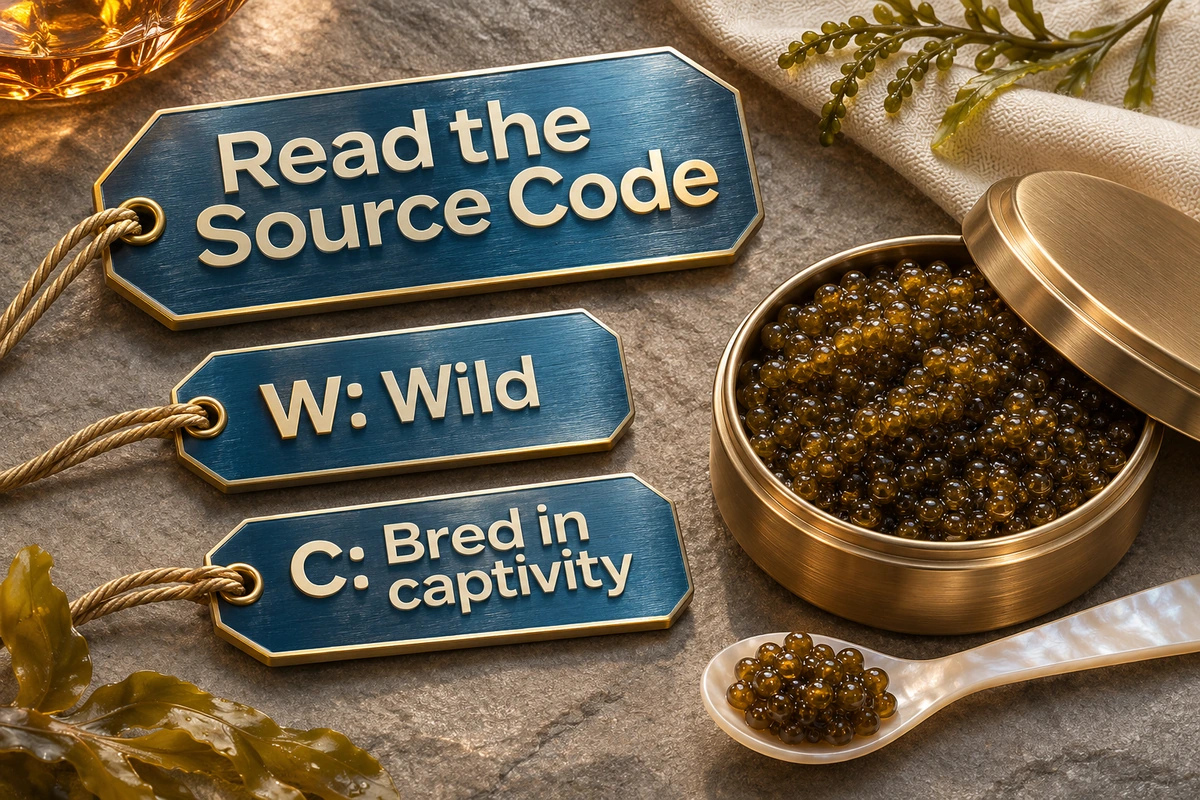
A farmed sturgeon can be Beluga, another species or a documented hybrid. Species describes the fish that produced the roe. Source describes the circumstances under which the fish was obtained or bred under the applicable coding system. Country of origin adds another fact, and a processor or packer can operate somewhere else. Write all of these into separate fields when you compare proposals. A product name that combines a region and a species can otherwise make two or three different facts look like one.
The broad market shift towards aquaculture followed severe pressure on wild sturgeon. That history is important context for why a supplier might offer several farmed selections and why a statement that something is wild should trigger precise questions. For a particular route, check rules on the species, source and countries involved. A harvesting practice described in a supplier’s history does not establish present-day eligibility for a new consignment. The EU Wildlife Trade Reference Guide on caviar describes how traceability requirements also apply to farmed product.
Provenance, sustainability and eating quality
Ask what a provenance claim actually refers to. “Caspian” might appear in a story about a species’ historic range, an account of where a farm operates, or a declaration of product origin. For a menu or retail specification, the documented product origin matters. Ask for wording that you can tie to the actual lot. If you need to explain the product to customers, prepare that description after reviewing the paperwork and sample.
Farmed origin can make it possible to ask detailed questions about a named farm, production records and repeat supply. It does not tell you how a particular farm manages water, feed or animal welfare. Ask for evidence that covers the facility and the claim the seller wants you to use. For wild-origin claims, ask about the legal source and identity of the harvest. Sustainability and authorisation also deserve separate questions. A permit decision and a statement about environmental performance describe different aspects of the purchase.
Read more · Caviar vs Fish Roe: Names, Species and Label Differences
How to Verify Caviar Source and Traceability
Ask for a photograph of the intact primary container and a specification for the same lot. Then check how those records will connect to the shipment that actually arrives.
Read the label in the context of the packing step
For a container packed in the country of origin, the CITES sturgeon and paddlefish resolution sets out a sequence that includes species code, source code, country of origin, year of harvest, processing plant registration and lot identification. W denotes wild source, while C denotes animals bred in captivity under the applicable CITES criteria. Other source codes exist. If the offered code differs from what you expected, request the supplier’s explanation and confirm it against the applicable authority’s requirements.
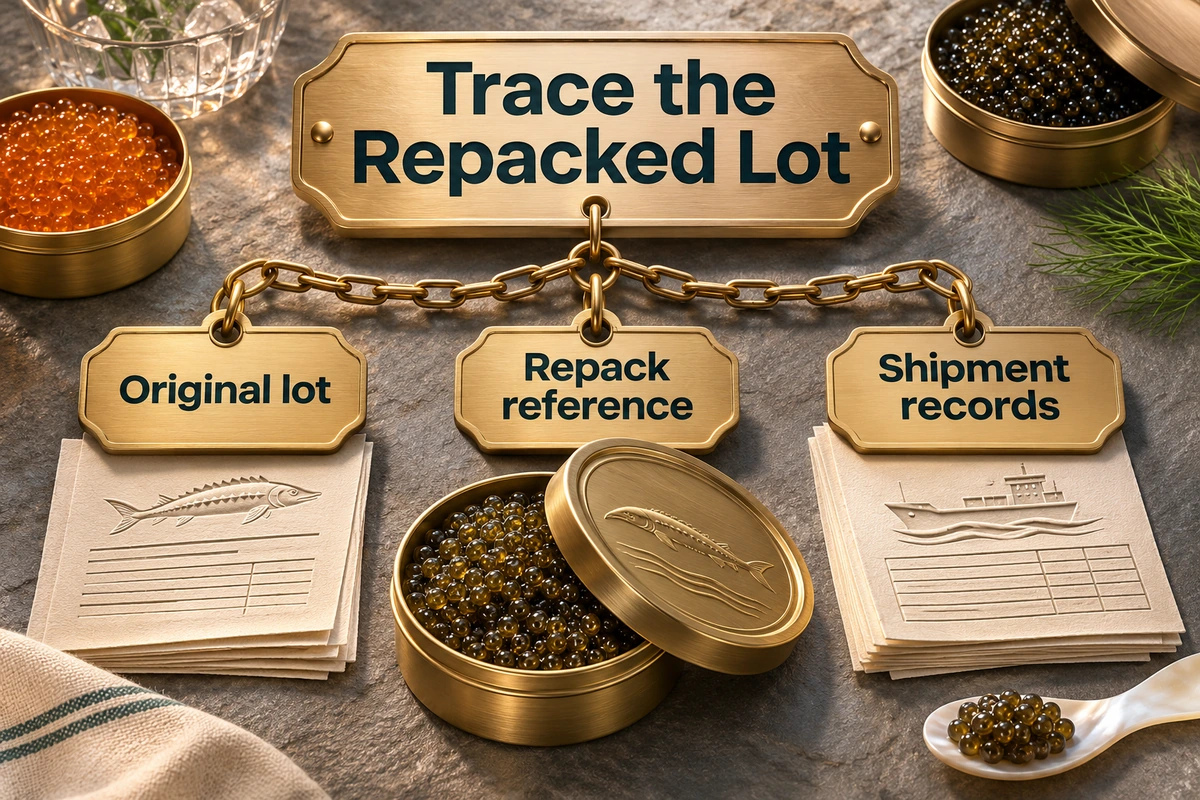
For repacked caviar, the label uses related fields with changes for the repacking step. For example, the original harvest year field and the repacking year field refer to different events. The repacking plant identifier can identify a facility outside the country where the roe originated. Ask the supplier how to relate the repack label to the original caviar and which lot identifier or trade document reference to expect. That gives receiving staff a way to distinguish a legitimate new pack from unexplained differences.
Ask the supplier which documents can be shared at quotation, on allocation and at dispatch. A sample label might be enough to start a review while final paperwork is pending. Set a deadline for the final review and identify the person who can release each hold. An order can be technically approved for taste and recipe development while still awaiting confirmation for import. Record those decisions separately, especially if an events team needs an answer before the lot is allocated.
Test a repacking explanation
Suppose the sample label and the consignment label have the same recorded species and source but different plant identifiers. A repack declaration says the product moved into smaller tins. Ask for the original lot reference, the new repack reference and evidence that connects them. Check whether the declared country of origin is consistent and whether the final container is traceable through the documents that apply to the route. If a pallet mixes several repack lots, ask the packer to identify which cartons contain each lot and give the receiver those references. A packing country can be entirely credible while the link to a specific source remains unresolved.
Confirm the paperwork before dispatch
An international shipment can require documents beyond the container label. Have the importer confirm the relevant permits, certificates, customs requirements and food import conditions before dispatch. Ask how the consignment is identified across the label, invoice, packing list and records used for the route. Record who checks the final copies and how discrepancies are handled. If the same order includes several lots, specify whether those lots can be combined under one product line on the commercial documents and how receiving can identify each one.
| Record | Compare against | If a detail differs |
|---|---|---|
| Primary container photo | Species, source, plant and lot expected | Request a legible update for the actual lot. |
| Original and repack references | Producer or packer’s written batch mapping | Keep the lot on hold until the link is established. |
| Commercial packing list | Product identity and allocation in the shipment | Ask the supplier and importer to reconcile the records. |
| Route-specific documents | Destination requirements and shipment identifiers | Have the importer confirm eligibility before release. |
Make a receiving instruction that someone else can follow
Give receiving staff an approved label image, product code and the storage and handling specification for that SKU. Tell them what a valid lot substitution looks like and who can approve one. Include instructions for damaged seals, missing temperature records or an unidentified lot. Raising a discrepancy before opening the product preserves evidence and keeps affected containers separate from stock cleared for use. Follow your own food safety and receiving procedures for deviations, even if the container appears attractive or the seller describes the batch as premium.
Read more · Caviar Tin vs Jar: Packaging Choices for Retail and Food Service
How to Compare Quality and Sustainability Claims
Taste can confirm whether a lot is suited to a dish. Procurement records confirm whether the same lot meets the source, origin and other claims attached to the product.
Control what you can in the sample comparison
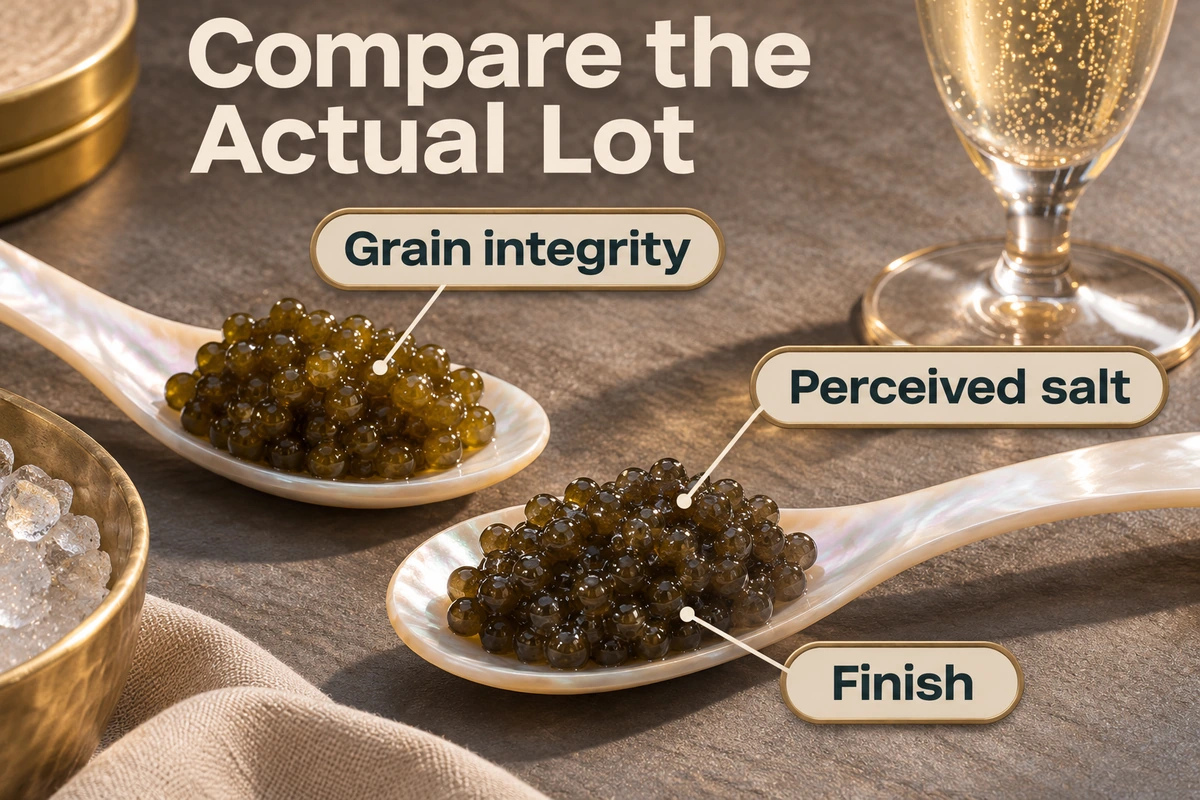
If you can obtain both sources legally and have comparable samples, match species where possible. Ask for the formulation, pack history and handling instructions for each sample. Have your team taste them in the same session at the intended service temperature, following producer instructions and your food safety plan. Use consistent portions and the same spoon or base. Ask tasters to describe grain integrity, firmness, perceived salt and the finish before revealing the identities. Make a second pass on the dish in which you intend to use it. A caviar that tastes compelling alone can become hard to identify on a strongly flavoured base.
The sample lot also matters when comparing two farmed products. Different producers can use different specifications and release criteria, and batches can vary. Record the sample identifier so your notes attach to the actual product. The Iran Fish guide to caviar production explains earlier processing stages that can affect the grain and finished tin. When you need a repeatable result, turn your preferred sensory description into a short set of acceptance criteria and confirm how a substitute will be reviewed.
Resolve a trade-off before the order
Imagine a restaurant compares an aquaculture lot with a sample promoted as wild. The first has a firm, clean finish and records that reconcile with the reserve lot. The second has a longer finish that the chef prefers on its own. The seller has sent a photograph of its original tin but has yet to identify which repack will be delivered or confirm the import terms. The restaurant can approve the farmed lot for a menu deadline and keep the other under review. The sensory advantage can still be useful as a benchmark for future tastings. It does not justify placing the stronger provenance claim on the menu before the evidence is ready.
If a retailer has a different priority, such as publishing detailed information about a production system, that buyer may need more information than a restaurant serving a short-term special. Request the scope of a certificate or audit and check whether the named farm, packer and relevant production activities are covered. Where the evidence is limited to a general statement on a brand site, ask which narrower claim can be verified for the exact item. Record the approved wording where the sales and menu teams can use it.
Can a supplier’s farm audit support a wild-origin claim?
An audit covering a named aquaculture facility describes the scope stated in that audit. A wild-origin claim requires records for the particular source and lot. When both products appear in the same catalogue, ask which evidence belongs to each item. Keep the claim out of customer-facing copy until purchasing can connect it to the actual lot, and record a neutral description for product that remains under review.
Read more · Beluga vs Osetra Caviar: Species, Texture and Flavour Compared
Frequently Asked Questions
The terms on a product listing can give you a useful starting point. Use the lot and route documents to answer the questions that affect the order.
Does farmed caviar mean a different species?
No. Farming describes the source. A species such as Beluga can be raised in aquaculture, and hybrid details should be checked separately. Ask the supplier to state both the source and the species identity on the specification.
Does wild caviar taste better?
There is no dependable ranking by source. Species, the condition of the roe, processing and the condition of the tin can all matter. Use a documented, blind side-by-side comparison when quality is what will decide the purchase.
Can a packing country differ from the country of origin?
Yes. A company can repack caviar after it moves from the original country under applicable rules. Ask the packer or distributor to identify the original product and show how the new reference links to it.
Can a CITES label establish that an import is allowed?
It is part of traceability. The importer still needs to check requirements for the shipment, the species and source involved, and the origin and destination. Seek route-specific confirmation before committing to a delivery.
What should go in a repeat order?
Include the species, source, expected lot or approval procedure for alternates, intended service method, agreed pack format and documentation required for the destination. Retain the earlier approved specification and sample notes so the next batch can be compared consistently.
Read more · How to Serve Caviar: A Practical Guide for Restaurants and Hosts
Request a Traceable Caviar Specification from Iran Fish
Share your destination, pack format and intended menu or retail application.
Review Iran Fish’s caviar range and identify which source and species claims your team needs to substantiate.
Contact Iran Fish to request the specification and available lot details before arranging sample or shipment approval.