


Beluga vs Kaluga Caviar: Pure Species, Hybrids and Taste Differences

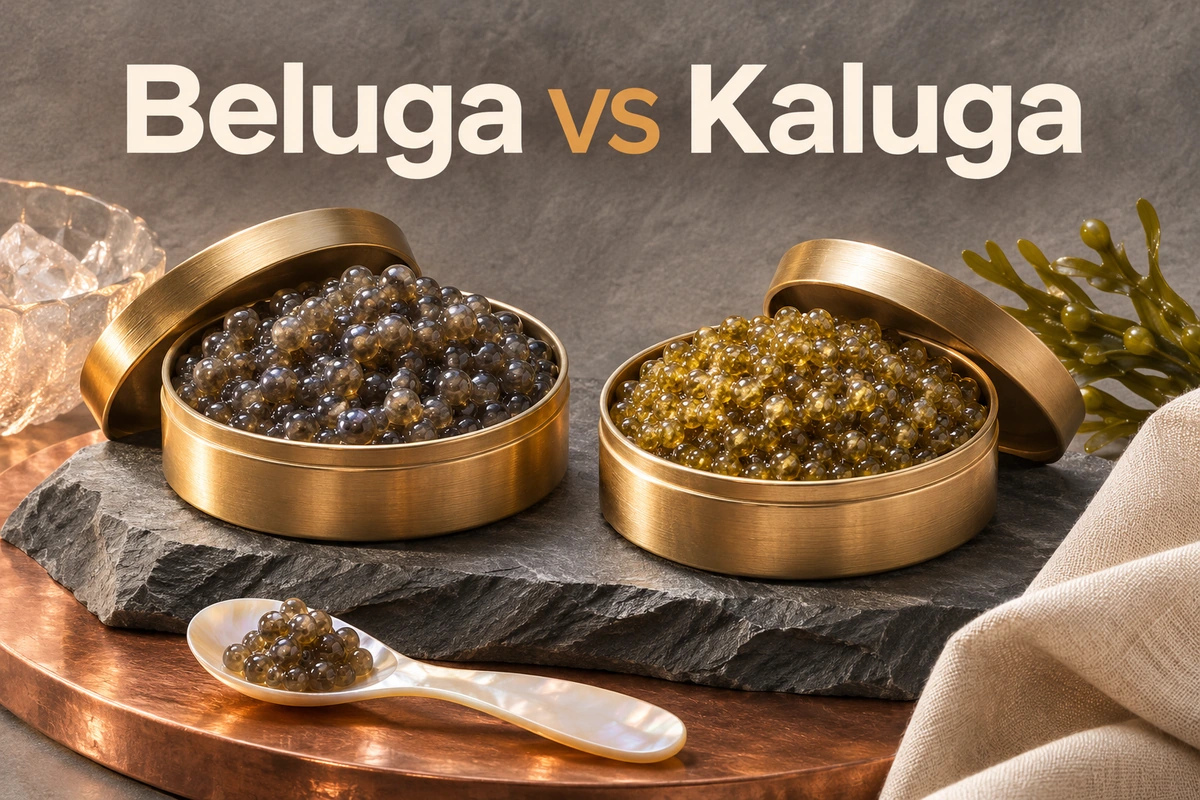
A Beluga vs Kaluga caviar comparison starts with the fish. Pure Beluga is Huso huso, pure Kaluga is Huso dauricus, and a Kaluga hybrid has two parent species. Large grains and a buttery finish can overlap, so check the label and sample the intended batch before ordering. For a documented Beluga option, ask Iran Fish’s Beluga caviar team about the species, lot and destination.
| Product | Identity to verify | How to assess it |
|---|---|---|
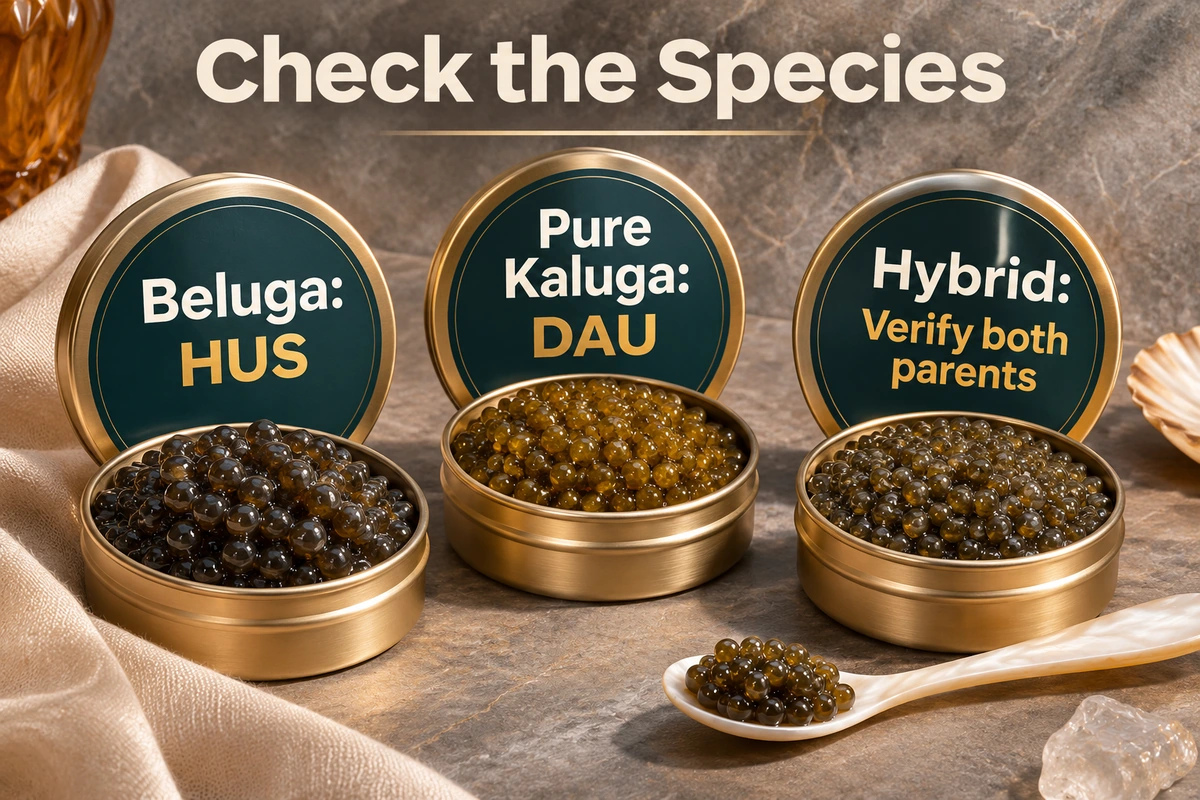
| Pure Beluga | Huso huso, CITES code HUS | Check documentation and test the grain, texture and finish of the offered lot. |
| Pure Kaluga | Huso dauricus, CITES code DAU | Confirm single-species identity and taste without relying on colour or grain size. |
| A Kaluga–Amur hybrid | Huso dauricus and Acipenser schrenckii, with parent order verified | Ask for the exact cross and agree on suitable display wording. |
| Any proposed substitute | New SKU, species, source and lot | Recheck label, destination and dish performance before approval. |
Read more · What to Eat with Caviar: Food Pairings That Let the Roe Shine
Beluga vs Kaluga Caviar Starts with Species
Pure Beluga and pure Kaluga are separate sturgeon species. A hybrid product comes from a cross, so a buyer needs the identities of both parents and a clear explanation of the product’s name.
Confirm the Latin name behind the sales description
Beluga caviar is associated with Huso huso. Pure Kaluga comes from Huso dauricus, sometimes called river Beluga in marketing. That nickname does not identify Huso huso and should not be used as the only description in a specification. Ask the supplier for the Latin name, the labelled species code and the actual container photograph. If a distributor sells a product as Kaluga across multiple formats, request those details separately for the format you are buying.
A Kaluga hybrid can be made with Amur sturgeon, Acipenser schrenckii, as the other parent. Other commercial products can have other crosses and labels. A supplier may describe a product as similar in style to Beluga. That can be useful as a tasting lead. The species details govern whether it meets a pure-species purchase order or a menu claim. If an item is described as Beluga hybrid, request the parent species just as you would for a Kaluga hybrid.
Use the label to confirm the hybrid
The CITES resolution on sturgeons and paddlefish lists HUS for Huso huso, DAU for Huso dauricus and SCH for Acipenser schrenckii. Its hybrid convention puts the female species code first and the male species code second. So DAU × SCH would describe a Kaluga female and an Amur male under that convention. Check the actual label and the producer declaration. A name displayed in a webshop does not tell you the parent order.
The Codex standard for sturgeon caviar addresses naming for hybrid products. Confirm how applicable law and trade standards translate into menu, wholesale and retail wording in your market. Make sure a tasting organiser, chef and distributor all use the same approved identity. If a supplier ships a repacked product, ask how the new lot relates to the product originally approved.
Read more · Caviar vs Fish Roe: Names, Species and Label Differences
How Taste, Grain and Texture Compare
Beluga, Kaluga and some hybrids can all be sold as large-grain caviar with rich or buttery notes. To decide whether they are interchangeable in a dish, examine individual traits under matching conditions and keep the species evidence separate.
Compare what you see and how the grains behave
Compare colour and visual uniformity under the same light, ideally on the intended plate or spoon. The grains can vary in shade and size within each category. Note whether they remain distinct when spooned, and how they look against the colour of the carrier. Some lots present with more uniformity than others. Your kitchen needs the batch that meets that presentation brief. An attractive photo of another tin gives little insight into whether the next delivery will meet it.
Texture is a separate check. Score the firmness of a grain on the palate and its integrity after portioning. An individual lot may have a gentle release, while another may offer a firmer pop. The result is useful for a tasting flight or canapé. Refer to the label and records for identity. Use the physical characteristics as quality observations rather than a species test.
Make the flavour notes specific enough to repeat
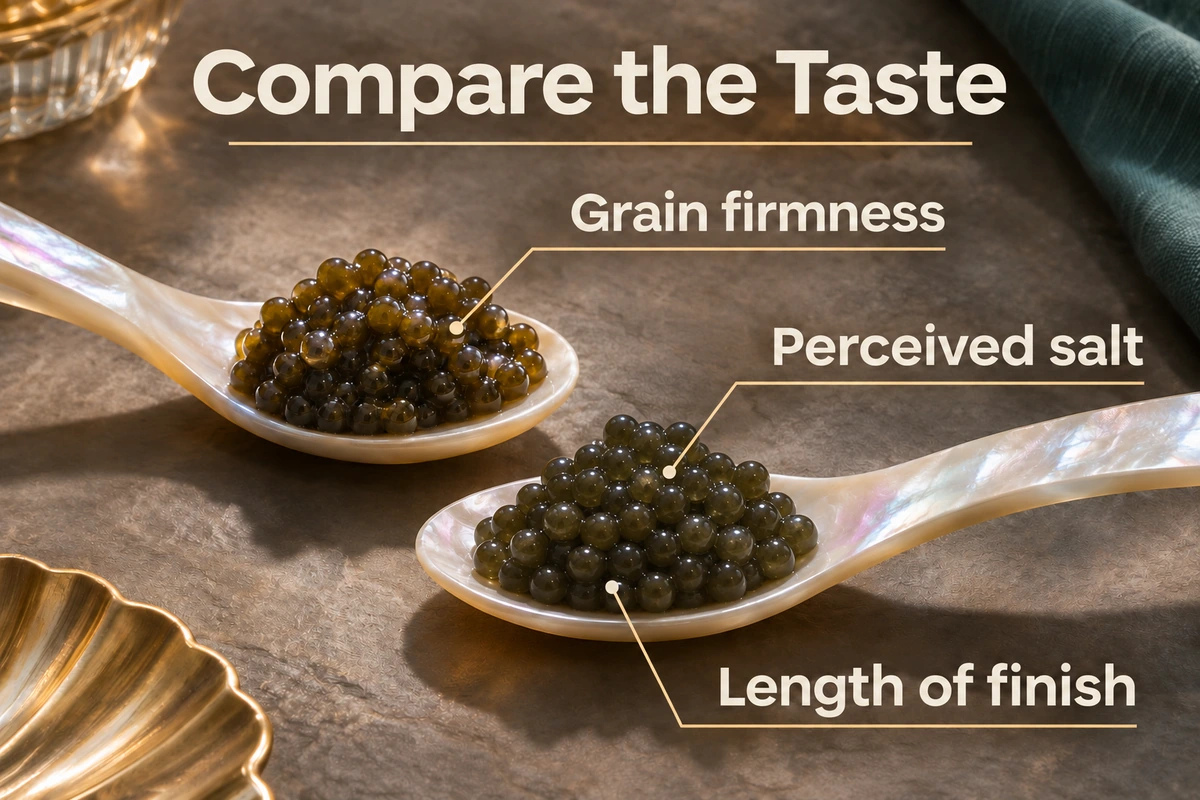
Have tasters note the first impression, perceived salt, flavour intensity and finish separately. Terms such as buttery, clean or nutty can make sense when everyone has tasted the same samples. Include what the note means in the dish. If a lot has a creamy mouthfeel but a short finish, a strongly flavoured garnish can make it disappear. If another sample has firm grains and a longer finish, a small portion on a familiar carrier can still feel distinct.
Try to match the serving temperature, portions and presentation. Ask whether the formula, maturation description and container format are comparable before assigning any difference to species. Taste blind where practical. Reveal which products were used only after the first notes are recorded. A second pass can show how the narrative changes when the chef knows which lot is the one currently on the menu.
| Tasting trait | Useful description | Why it matters |
|---|---|---|
| Grain integrity | Individual grains stay distinct when spooned | Canapés and high-volume plating |
| Texture | Delicate release or firm pop | Mouthfeel in a plain tasting |
| Perceived salinity | Mild at first, more noticeable with the carrier | Balance with the rest of a dish |
| Finish | Clean and short, creamy, or long and nutty | Whether the caviar remains identifiable after each bite |
Read more · How Is Caviar Made? From Harvesting and Salting to the Finished Tin
How to Choose for a Menu or Retail Specification
Decide whether the product has to meet an identity claim, a sensory target or both. Then write down what a supplier must provide before you agree to the batch or allow an alternate.
Plan the decision around the menu wording
A named Beluga tasting calls for verified Beluga and an eligible route. A canapé that only specifies a documented sturgeon caviar can allow a larger set of products, within local naming rules and the venue’s own specification. Verify the origin, source and destination requirements for each candidate. Restrictions and entry rules can differ across species, sources and routes. Your importer should confirm the exact combination before dispatch, especially when a product crosses a border or supply comes from a new country.
If the retail label specifies a cross, use the approved parent-species wording across the package, trade listing and product information. A last-minute substitute should be checked against each place where the original name appeared. If a seller offers a hybrid with a name that sounds close to the pure product, ask which name can be used with the correct species identity. Capture this answer before the products appear side by side in a tasting or retail display.
Work through a real procurement decision
Imagine a hotel is choosing between documented Beluga, pure Kaluga and a Kaluga hybrid. The kitchen wants distinct grains that hold on a potato canapé. Marketing has also printed a menu for a separate Beluga tasting. In a plain comparison, the Beluga sample has the most delicate texture and is the team’s preference for the tasting. In the dish trial, the hybrid grains hold their shape and the finish remains noticeable with the intended seasoning. Pure Kaluga is acceptable in both, but the offered lot has not yet been matched to shipment documentation.
The hotel can allocate verified Beluga to the named tasting and approve the hybrid for a separate dish if its disclosure and route requirements are met. It can keep pure Kaluga on hold pending document review. It then checks whether the samples are available in the required format and asks who may approve a substitute. This gives purchasing, marketing and the kitchen a single decision that accounts for taste, identity and supply.
Read more · Beluga vs Osetra Caviar: Species, Texture and Flavour Compared
Set a repeat order standard
Include the approved species or cross, source, lot or substitution procedure, handling specification and pack format. Add the traits important to the service, such as intact grains and a finish that can be tasted through the chosen pairing. Keep the sample identifier and the label photo with the notes. Receiving should know which document identifiers must match and which issues trigger a hold. If a supplier offers a comparable flavour from another species, give the alternative its own approval record and check any menu or label changes it requires.
Prepare a handover for the service team
Give the service team one approved description for each selection and a clear reason for the distinction. The tasting host should be able to explain where the names come from, identify the hybrid correctly and describe the differences guests will actually notice. Buying two samples with different salt or maturation profiles can be perfectly useful for a menu decision, provided the host presents the result as a comparison of those lots. Species is one detail in the description. The sensory notes should be tied to the product served.
If the preferred product cannot arrive, ask how much of the programme can still run with the approved alternatives. You may be able to keep a generic canapé and revise the lineup for the named tasting. For an advertised Beluga flight, notify whoever owns the event description and update booking or printed material before service if the offer has changed. Check that alternate tins can be distinguished quickly at the pass. A short reference sheet pairing product names with the correct labels is useful when two nearly identical packs arrive in the same delivery.
What is the simplest way to keep multiple products straight?
Assign separate internal product codes for Beluga, pure Kaluga and each hybrid you approve. Store the scientific name or parent species, source and label photo in each record. At the service station, use the approved name on prep containers and check it against the original pack information. In a mixed tasting, record the order in which samples are served so the tasting notes remain tied to their lot. If leftover portions remain, follow the documented storage and handling instructions for each product and keep the traceability information with them. This is especially important when a visually similar replacement has been approved for only one of several dishes. Give the person checking the trays a short list of substitutions and confirm with the menu owner which dish each substitution applies to.
Read more · How to Serve Caviar: A Practical Guide for Restaurants and Hosts

Frequently Asked Questions
Similar naming and grain size cause most confusion in this comparison. Verify species and source at the product level before using a description publicly.
Is Kaluga the same as Beluga?
No. Pure Kaluga is Huso dauricus and Beluga is Huso huso. The nickname river Beluga can refer to Kaluga, so the scientific name and documented species code are important.
Is all Kaluga caviar a hybrid?
No. Pure Kaluga and products made from hybrids both exist. Ask for the exact species identity and the names of both parents when a product is a cross.
Can you tell a hybrid from its colour or grain size?
Those features can overlap across pure species and hybrids. Ask for the producer declaration and pack traceability label, and taste the actual lot to determine whether it fits your application.
Which works best for a canapé?
A batch that keeps its grain definition and stays perceptible with the carrier and seasoning is a useful candidate. Try the intended recipe under matching conditions and use accurate naming for whichever product you choose.
Can Kaluga hybrid be served in place of Beluga?
It can meet some of the same culinary goals after a suitable tasting trial. A dish advertised as Beluga needs the correct species; update the description and approvals if you use a different product.
Read more · Caviar Tin vs Jar: Packaging Choices for Retail and Food Service
Request a Label and Lot Review from Iran Fish
Bring the intended menu wording, format and destination to the conversation.
See Iran Fish’s Beluga caviar specification options and ask what the documentation can establish for the offered lot.
Contact Iran Fish to discuss a sample, species declaration and delivery requirements.