

Salmon Trout vs Salmon: What Is the Difference?

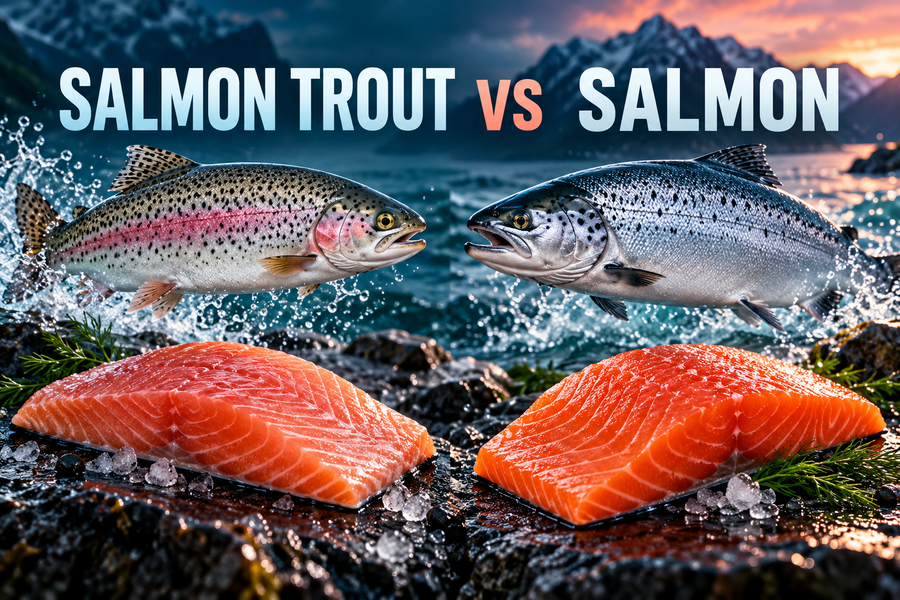
If you are comparing salmon trout vs salmon, the key difference is species: “salmon trout” is a market name usually applied to pink-fleshed trout, often rainbow trout, while salmon refers to several different salmon species. Both belong to the salmonid family, but pink flesh and a similar flavor do not make them the same fish. Ask for the scientific name on the product specification before choosing a fillet or placing a wholesale order.
Salmon Trout vs Salmon at a Glance
| Question | Salmon trout | Salmon |
|---|---|---|
| What is it? | A variable market name, commonly used for pink-fleshed trout; confirm the species | A common name for several species, including Atlantic and Pacific salmon |
| Example scientific name | Often Oncorhynchus mykiss when the fish is rainbow trout | Salmo salar for Atlantic salmon; other names for Pacific species |
| Typical flesh | Pink to orange, depending partly on diet | Pink, orange or red, depending on species and diet |
| Typical flavor | Often mild and delicate; richer in some larger trout | Varies by species; farmed Atlantic salmon is often rich and buttery |
| Nutrition | Protein and omega-3 fats; exact values vary | Protein and omega-3 fats; exact values vary |
| Best way to verify | Request the scientific name, origin and product specification | Request the specific salmon species, origin and product specification |
These are useful buying distinctions, not a visual test. A deep-orange trout fillet can resemble salmon, while two salmon species can differ substantially from each other.
What Does “Salmon Trout” Actually Mean?
The wording sounds like a cross between salmon and trout, but that is usually not what a seller means. It describes a product in the marketplace rather than a single scientific species.
A market name, not a single species
“Salmon trout” commonly refers to trout with pink or orange flesh, including farmed rainbow trout. The term may be applied differently across regions, so it should not replace the scientific name in a purchase specification. In the United States, the FDA Seafood List identifies Oncorhynchus mykiss as rainbow or steelhead trout; it does not make “salmon” an acceptable market name for that species. Naming rules vary by importing market, so buyers should check local labeling requirements too.
Rainbow trout and steelhead
Rainbow trout and steelhead are forms of Oncorhynchus mykiss. Steelhead describes the migratory, sea-going form, while many rainbow trout populations remain in freshwater. That relationship does not mean every farmed “salmon trout” is steelhead. A pink-fleshed, freshwater-raised trout can carry the salmon trout trade name without having lived at sea.
Why labels differ across markets
Retail names such as salmon trout, ocean trout and fjord trout communicate a style or source to shoppers, but their precise use depends on the market and supplier. For Iran Fish’s Iranian product, the sensible first question is: Which species is this particular lot? The site’s salmon trout product page describes the product and available processing, while a lot-specific specification should establish the scientific name and origin.

Salmon Trout vs Salmon: The Biological Difference
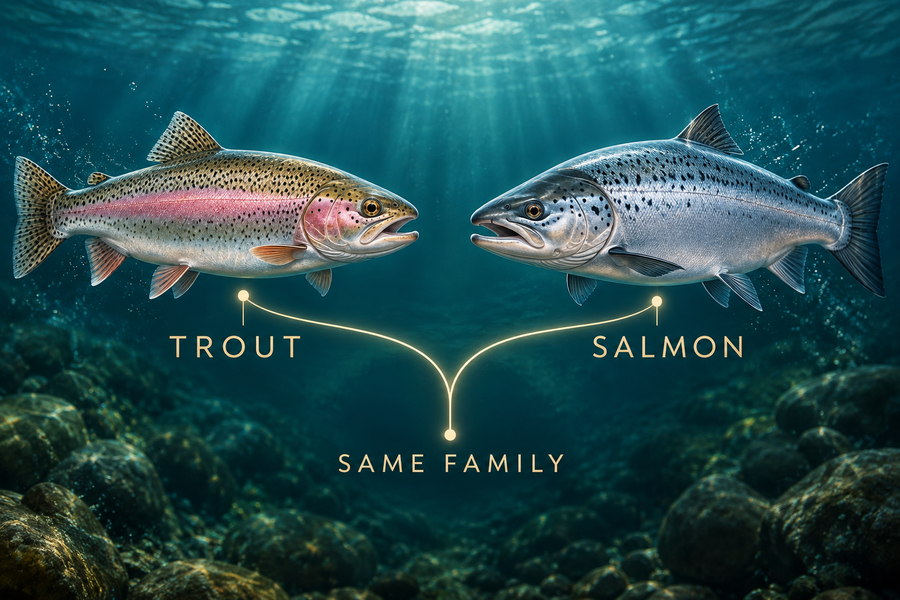
Salmon and trout are close relatives in the family Salmonidae. Their everyday names do not map neatly onto one habitat, one genus or one fat level.
Species and family
Atlantic salmon is Salmo salar. Rainbow trout is Oncorhynchus mykiss, a distinct species in the same genus as several Pacific salmon. As the Smithsonian Ocean explanation of salmon and trout shows, the family also includes char and other fish. “Salmon” alone is therefore too broad for a precise nutritional or purchasing comparison: Atlantic salmon, sockeye and coho are not interchangeable biological labels.
Freshwater and migration
Many salmon hatch in freshwater and migrate to the sea before returning to spawn. Some trout remain in freshwater, whereas steelhead migrate between freshwater and saltwater. Habitat alone cannot reliably separate a salmon from a trout. Farmed fish add another distinction: where a fish is raised is a production detail, not proof that it belongs to a different species.
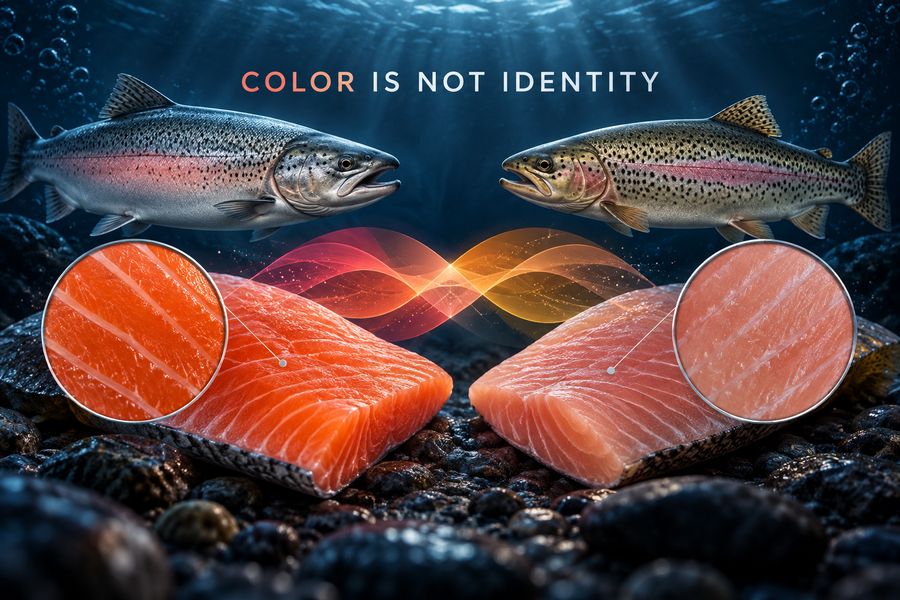
Why a pink fillet proves little
Flesh color reflects pigments acquired through diet and can vary with feed and species. A coral-colored fillet may be trout or salmon. Once the head, skin and packaging are removed, appearance becomes even less dependable. If correct identification matters to your menu or import documentation, rely on a traceable label and specification, not a photograph or a claim that the fish “looks like salmon.”

How Do Appearance, Taste and Texture Compare?
Whole fish provide more clues than a trimmed fillet, but none replaces the species name. Flavor is also affected by feed, rearing conditions, cut and handling.
Whole fish and fillets
Rainbow trout often has a spotted body and a colored lateral band, especially in freshwater forms. Salmon appearance varies greatly by species and life stage. Fillets can overlap in color and thickness, so the familiar rule that salmon is always darker or larger fails on individual products. Compare like with like: a small freshwater trout is a different eating experience from a large sea-raised trout, just as sockeye differs from farmed Atlantic salmon.
| Eating quality | Pink-fleshed rainbow trout | Farmed Atlantic salmon |
|---|---|---|
| Flavor | Typically mild and gently sweet | Typically fuller and richer |
| Mouthfeel | Often delicate, with finer flakes | Often softer and more buttery |
| Appearance | Pink or orange flesh is possible | Typically orange flesh, with visible fat lines |
| Cooking | Watch thinner portions closely | Richer fillets can be more forgiving |
Flavor and mouthfeel
If you want a gentle fish flavor, trout is often an appealing choice. If you want a richer, more pronounced mouthfeel, farmed Atlantic salmon often fits better. These are typical culinary descriptions, not guarantees for every fish. Larger, well-fed trout can be particularly rich, and some wild Pacific salmon are leaner and firmer than farmed Atlantic salmon.
What changes from one batch to another
Uniform trimming, freezing practice and cold-chain handling can matter as much as the species to a chef. A well-handled frozen trout fillet may perform better than a poorly handled fish sold as fresh. Examine consistency within the lot, the condition of the packaging and the product’s documented history rather than judging quality from a bright color alone.
Nutrition and Food Safety: Which Should You Choose?
Both fish provide protein and long-chain omega-3 fatty acids. A blanket claim that all salmon has more of any nutrient than all trout ignores differences among species, feeds and production methods.
Protein, fat and omega-3
Trout and salmon are both useful options for a varied seafood menu. Farmed Atlantic salmon is commonly richer in fat than many freshwater rainbow trout products, but the precise protein, fat and EPA/DHA figures depend on the species and lot. If a menu makes a numerical nutrition claim, use a validated specification or laboratory result for the actual product rather than borrowing values from an unrelated species.
Mercury guidance
For consumers using U.S. guidance, the FDA and EPA fish-advice chart lists salmon and freshwater trout as “Best Choices”. That category is relevant to mercury advice; it is not a guarantee about every aspect of an individual product’s quality. Follow the dietary advice applicable to the person and country concerned, especially for pregnancy and young children.
Safe storage and cooking
Keep seafood cold, avoid damaged packaging and thaw frozen fish in the refrigerator when possible. The FDA’s seafood-handling guidance recommends cooking most seafood to 145°F (63°C). A food thermometer is the reliable check. Whether a fish is labeled trout or salmon, species identity does not eliminate the need for proper handling and cooking.
Can You Cook Salmon Trout Like Salmon?
In many cooked dishes, yes. Start with the thickness and fat level of the actual cut, then adapt your method rather than copying a fixed cooking time.
- For baking, use similar seasonings for either fish and check the thickest part for doneness; a thin trout fillet can finish sooner than a thick salmon portion.
- For pan-searing, dry the surface before cooking and handle a delicate trout fillet gently when turning it.
- For grilling, a skin-on fillet or suitable basket helps support softer portions; prevent overcooking by checking the fish itself.
- For smoking, specify the species and processing method clearly so the final menu label matches the ingredient.
- For a recipe swap, salmon trout can replace salmon in many fully cooked dishes, though the flavor and texture may be lighter. Do not assume a fish is suitable for raw service merely because it was frozen; request product-specific controls and follow local food-safety rules.
What Should Importers and Restaurants Check Before Ordering?
The practical difference between salmon trout and salmon becomes most important when a buyer needs consistent labels and predictable portions. A clear written specification protects both the purchasing decision and the eventual menu description.
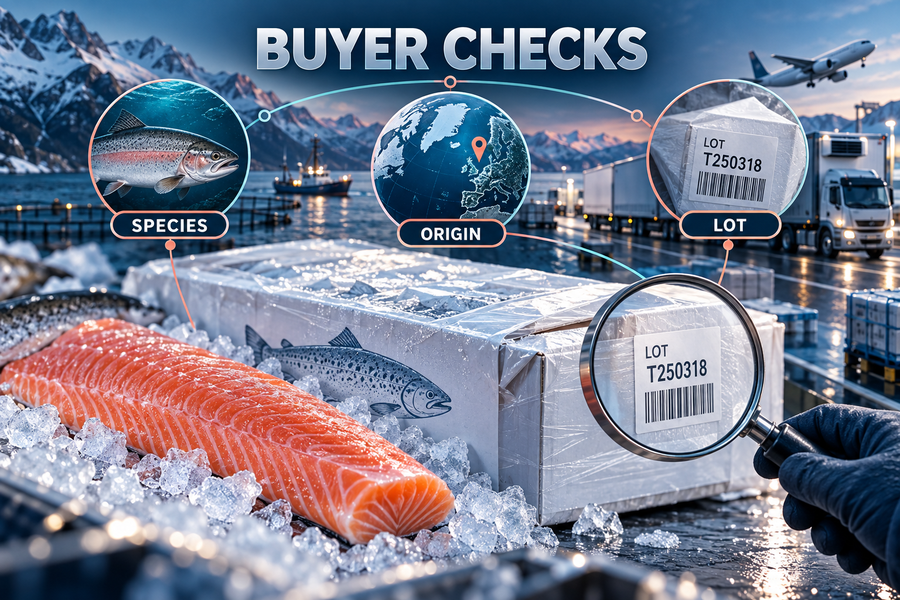
- Ask for the scientific species name as well as the common and market names used on the invoice and carton.
- Confirm whether the fish was farmed or wild-caught, its country of origin and, where relevant, whether it was raised in freshwater or seawater.
- Define the presentation you need: whole, gutted, filleted, skin-on, skinless or portioned. Specify any acceptable size range for your operation.
- Confirm whether the order is fresh or frozen and request information on freezing, storage and the intended shipping temperature.
- Check pack format, net weight, production or lot identifiers and the documents required by your destination market.
- Request sample images or a sample lot when flesh color, trimming and portion consistency matter to your customers.
Iran Fish presents farmed fish supply and a separate rainbow trout product alongside its salmon trout page. Because trade descriptions on a website are broad, confirm the exact species and available format for the shipment you plan to buy. This is especially important if your local market regulates how trout and salmon may be named.
Frequently Asked Questions
These questions address the confusion that remains after seeing two similar-looking fillets. For an actual purchase, the lot specification is the final reference.
Is salmon trout actually salmon?
Usually no. Salmon trout is commonly a trade name for pink-fleshed trout, often rainbow trout. The word “salmon” in the name describes its resemblance or marketing category, not proof that the fish is Atlantic or Pacific salmon. Ask for the scientific name.
Is salmon trout the same as steelhead trout?
Not necessarily. Steelhead is the sea-going form of rainbow trout, Oncorhynchus mykiss. “Salmon trout” can also refer to farmed pink-fleshed rainbow trout raised in freshwater. The two terms may overlap in a particular marketplace but are not universal synonyms.
Can you tell salmon trout and salmon apart by flesh color?
No reliable identification can be made from flesh color alone. Diet influences pigmentation, and there is substantial visual overlap among trout and salmon products. The labeled species, origin and traceability documents provide better evidence than shade.
Can I substitute salmon trout for salmon in a recipe?
Yes, for many cooked recipes. Expect a potentially milder flavor or a more delicate fillet, then adjust the cooking process to the thickness of the cut. Check doneness with a thermometer instead of assuming the same timing will work for both.
Which is better for a restaurant or seafood importer?
The better choice depends on your menu, target texture, portion size and labeling requirements. If a mild pink-fleshed fish suits the dish, request a sample of salmon trout with a confirmed species specification. If the menu promises a particular salmon species, buy that species and keep its documentation with the lot.
Source Salmon Trout with Clear Specifications
Choosing between salmon trout and salmon starts with naming the fish correctly. The next step is matching the species, cut, handling and documentation to the dish or destination market.
Explore Iran Fish’s salmon trout offering and contact its export team with your preferred presentation, order needs and destination. Ask the team to confirm the scientific name and current lot details before you finalize a specification.
One thought on “Salmon Trout vs Salmon: What Is the Difference?”