


Shrimp Heads: Culinary Uses, Handling and What to Discard

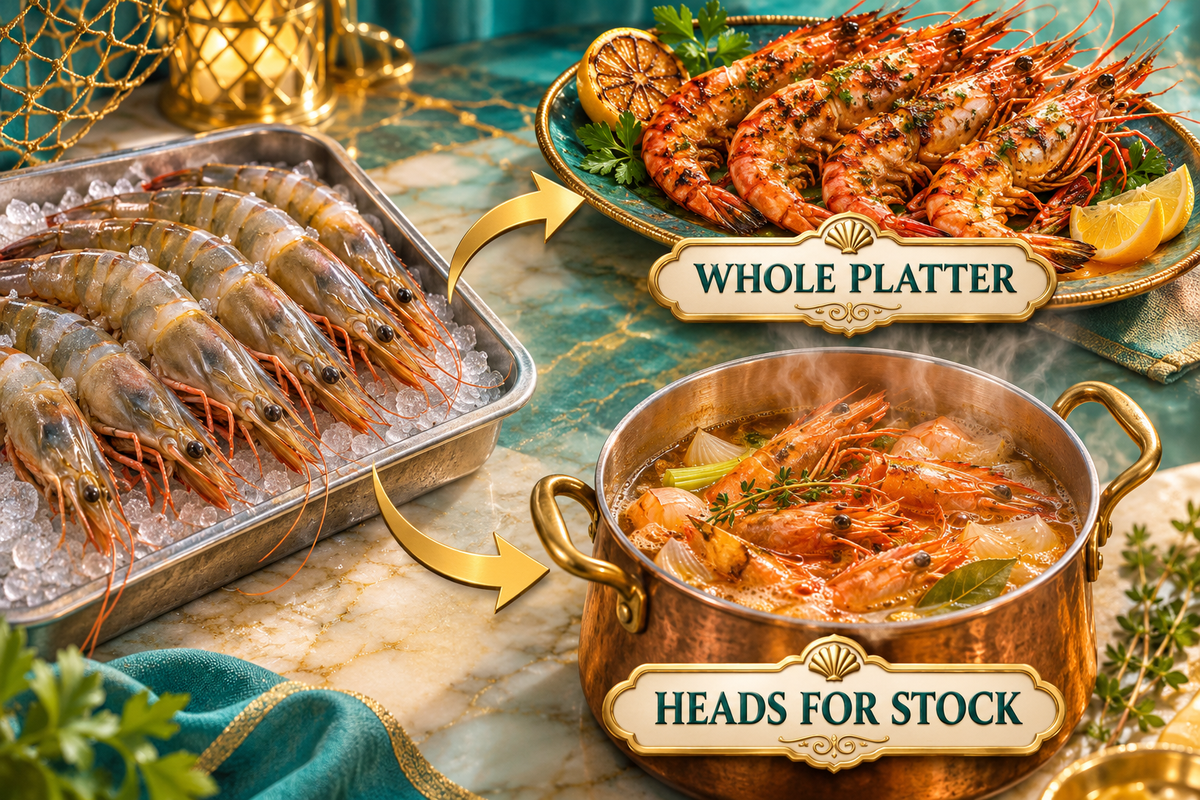
Keep shrimp heads only when the prawns were properly chilled and the heads smell clean, and use them promptly for stock or a whole-prawn dish. Remove the heads for fork-ready service, protect the cold chain, and discard any batch with an off odour or uncertain handling history. Do not use cooking to rescue spoiled seafood. For a whole-product order, review Vannamei Shrimp and specify head-on, raw or cooked state and count explicitly.
| Situation | Action | Reason |
|---|---|---|
| Good-condition raw head-on prawns for a grill platter | Keep heads on through appropriate cooking | Whole presentation and flavour |
| Good-condition heads removed during prep | Use promptly for stock, or chill and store appropriately | Extract flavour from usable trimmings |
| Fork-only pasta or buffet | Remove heads before service | Easier, cleaner eating |
| Strong ammonia, sour or rancid odour | Reject the seafood, including its heads | Seasoning and simmering do not correct spoilage |
| Unknown thawing or handling history | Do not repurpose the heads | Unsafe uncertainty travels into stock |
Should you keep shrimp heads?
Yes, when the product is sound, cold and suited to a whole-prawn presentation or a cooked seafood stock. Heads offer culinary value, but they require deliberate handling because they remain raw seafood until fully cooked. Keep the same safety standard for scraps that you use for the flesh. A stockpot is not a disposal route for questionable material.
| Intended use | Keep head? | Prep decision |
|---|---|---|
| Whole grilled prawn platter | Yes | Thaw, cook completely and serve with clear eating expectations |
| Risotto or seafood sauce | Remove head and use sound heads and shells for stock | Keep the stock separate from ready-to-eat ingredients until cooked and strained |
| Peeled prawn pasta | No heads on the plate | Use sound heads separately for stock or discard them |
| Cold ready-to-eat shrimp salad | Follow the cooked product’s specification | Do not add raw heads to finished food |
A decision with competing priorities
Picture a restaurant ordering head-on prawns for dramatic presentation but also serving a quick corporate lunch where guests expect fork-only pasta. The whole heads suit the first service, while headless peeled pieces suit the second. If procurement has already received sound whole prawns, remove heads during the pasta prep and prepare a separate stock, provided the cold chain was maintained. Do not force the same table experience onto two different dishes just to use one carton.
Read more: Shrimp With Head On: 7 Checks Before Cooking or Serving.
How do you remove and handle shrimp heads?
Work with chilled raw prawns and a dedicated clean tray. Twist the head away from the body firmly, without crushing the edible flesh.
- Inspect the product’s declaration, condition and cold handling before prep. A clean appearance does not override an off odour.
- Set up a raw-seafood board, a container for usable heads and a separate container for waste. Keep ready-to-eat food elsewhere.
- Grasp behind the head and twist gently. Place sound heads directly into the cold container for planned cooking.
- Peel or devein the bodies according to the dish. Treat the dorsal tract and head as separate prep questions; removing one does not automatically remove the other.
- Wash hands and sanitise the board and knife before using them with cooked prawns or salad. The CDC clean, separate, cook and chill guidance applies to raw seafood scraps too.
- Cook the planned head stock promptly or refrigerate the usable trimmings under the same cold-control standards as the raw prawns. If the handling history is uncertain, discard the trimmings.
Keep the head container behind the prep line rather than letting it sit beside garnish. A cook who has already plated herbs should not have to reach across raw heads with clean tongs. That small layout decision reduces accidental cross contact and keeps the workflow steady during service. This is a practical kitchen example, not a claim of an observed Iran Fish processing run.
Read more: Shrimp Grading System: Counts, Sizes and Commercial Standards.
What can you make from shrimp heads?
Choose a dish that benefits from a strong seafood base. Use only sound heads and strain hard pieces and antennae out before a smooth sauce or soup.
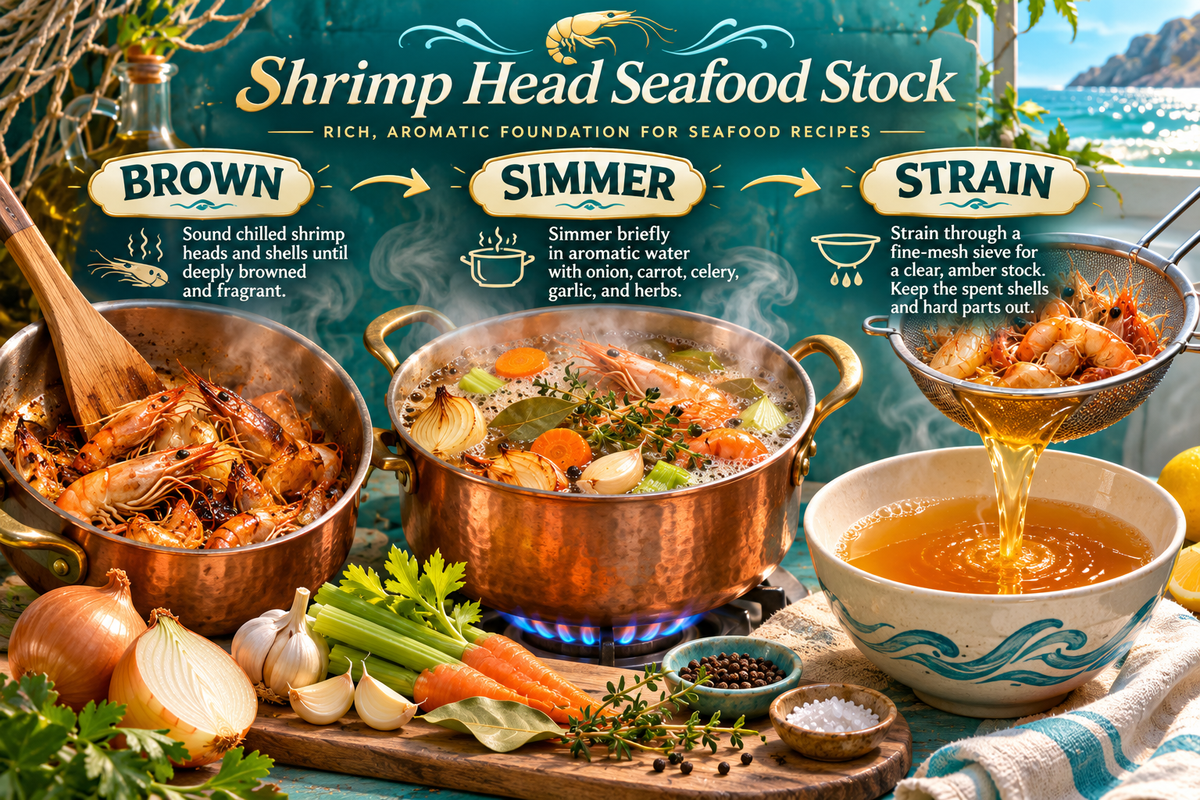
A quick stock for risotto or soup
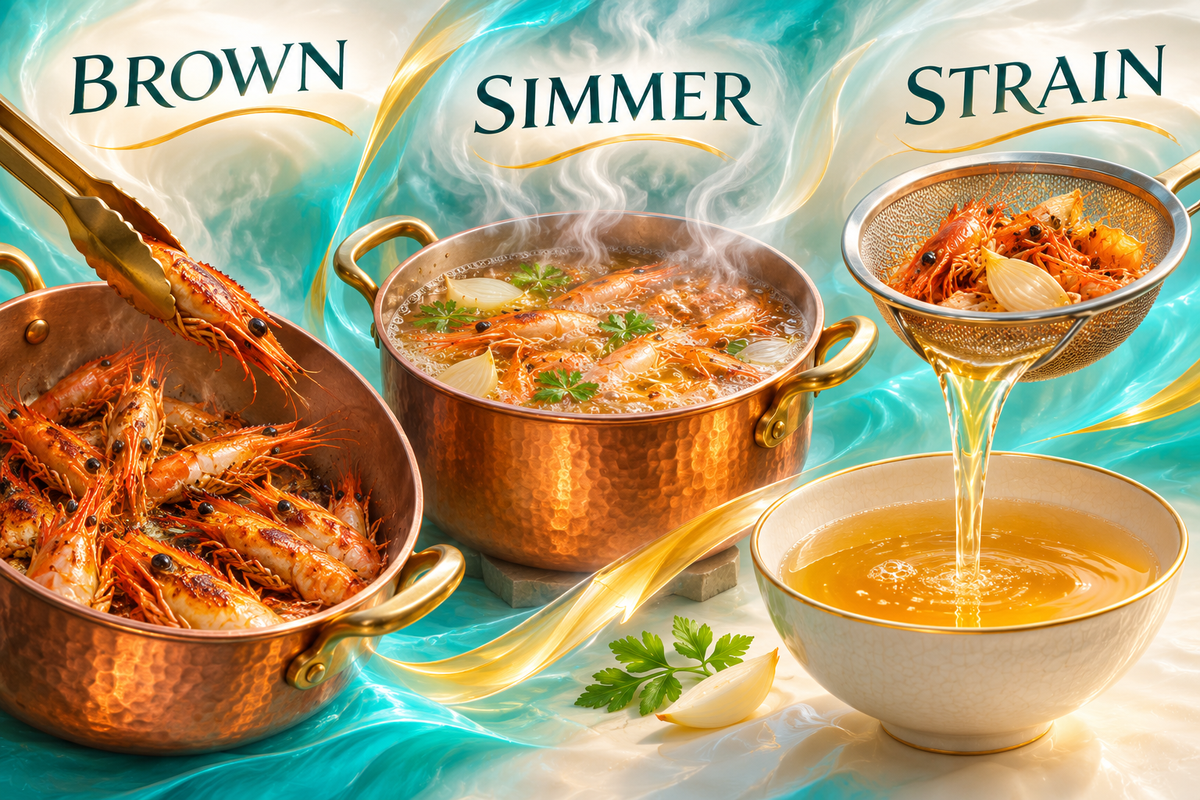
Brown sound heads and shells briefly in a pot, add water and aromatics, simmer according to a tested recipe and strain carefully. A tested shrimp-stock method found a short simmer gives a better shrimp-flavoured result than prolonged boiling in its shell-stock test. Adjust an actual recipe to your ingredients, and keep raw trimmings away from the cooked risotto until the stock has been cooked and strained.
A base for a smooth sauce
Use cooked, strained stock in a tomato seafood sauce, noodle broth or bisque-style preparation. The heads are an extraction ingredient; the final sauce should not contain hard mouthparts or shell fragments unless the dish explicitly calls for a whole cooked prawn. Taste the cooked stock before committing the whole batch of sauce. Long boiling is not a fix for weak or poor-condition seafood.
An infused oil or butter
Some cooks toast sound shell trimmings and heads in oil, then strain carefully for a seafood-flavoured finishing ingredient. Use a tested recipe and keep the result appropriately chilled if it is not used promptly. Avoid serving visible hard head fragments in an oil intended for drizzling. If the cooking plan is a cold dip, start from a properly cooked and strained base rather than mixing raw head liquid into it.
Whole roasted or grilled prawns
Leave the heads attached when the diners expect a hands-on seafood platter. Cook the whole prawn thoroughly, provide a place for shells and tell guests what is being served. Some diners enjoy the head juices; others discard the heads at the table. Their preference does not change the safety rule: raw seafood must be cooked and sound before serving.
Read more: Types of Prawns: A Practical Guide to Species and Cooking Uses.
How do you make a head-and-shell stock?
Begin with chilled, sound heads and shells from one identified batch. Build flavour with a short, controlled simmer and strain before using the liquid.
- Prepare a clean saucepan, strainer and a separate clean receiving bowl. Keep raw seafood scraps away from finished food.
- Heat oil in the pan and cook the sound heads and shells until their colour and aroma develop. Stir to prevent scorching.
- Add water and the aromatics specified by a tested recipe, bring the mixture to a simmer and cook for the prescribed time. The A tested shell-stock recipe uses a brief simmer rather than a prolonged boil.
- Strain through a fine sieve into a clean bowl. Discard the spent solids. Check the liquid for shell fragments before adding it to risotto or soup.
- Use the stock promptly, or cool and refrigerate it safely according to your kitchen’s food-handling procedure. Keep it separate from raw trimmings.
Here is a complete instructional example: a pack of correctly chilled raw head-on prawns is selected for peeled pasta; the cook removes and chills the heads and shells while keeping the cleaned bodies in the refrigerator; the sauce base is prepared in a separate pot; the heads and shells are cooked for stock, the stock is strained into a clean vessel, and the prawn bodies are cooked through in the final pasta. The service gets a fork-ready dish and a seafood-flavoured sauce without placing raw heads on the finished plate. No part of this example represents a documented customer or company kitchen event.
Read more: Frozen Shrimp Shelf Life: Storage Rules and Guide.
Can you serve or eat shrimp heads?
Yes, serve a whole head-on prawn when the product and recipe call for it, the seafood has been handled safely and the whole prawn has been cooked thoroughly. Provide diners with a clear presentation so the hard shell, antennae and head are expected. Do not assume everyone wants to eat every part of the head; making a whole-prawn platter available does not require consuming the shell.
Never serve raw head juices in an otherwise cooked dish. The FDA seafood safety guide emphasises raw seafood separation and proper cooking. Check the thickest edible flesh rather than trusting the red shell to indicate doneness. With cooked head-on product, follow its own pack directions for thawing and reheating instead of using the raw-prawn cooking route.
Remember shellfish allergy at service. A stock made with shrimp heads remains a shrimp ingredient after straining, even when no shrimp flesh is visible in the soup. Identify it clearly in the kitchen and on the applicable allergen information for the dish. A customer who avoids shrimp must not receive “just the broth.”
Read more: Shrimp Grading System: Counts, Sizes and Commercial Standards.
When should you discard shrimp heads?
Discard them when product quality or handling cannot be established. Do not try to recover a questionable batch by boiling it for longer.
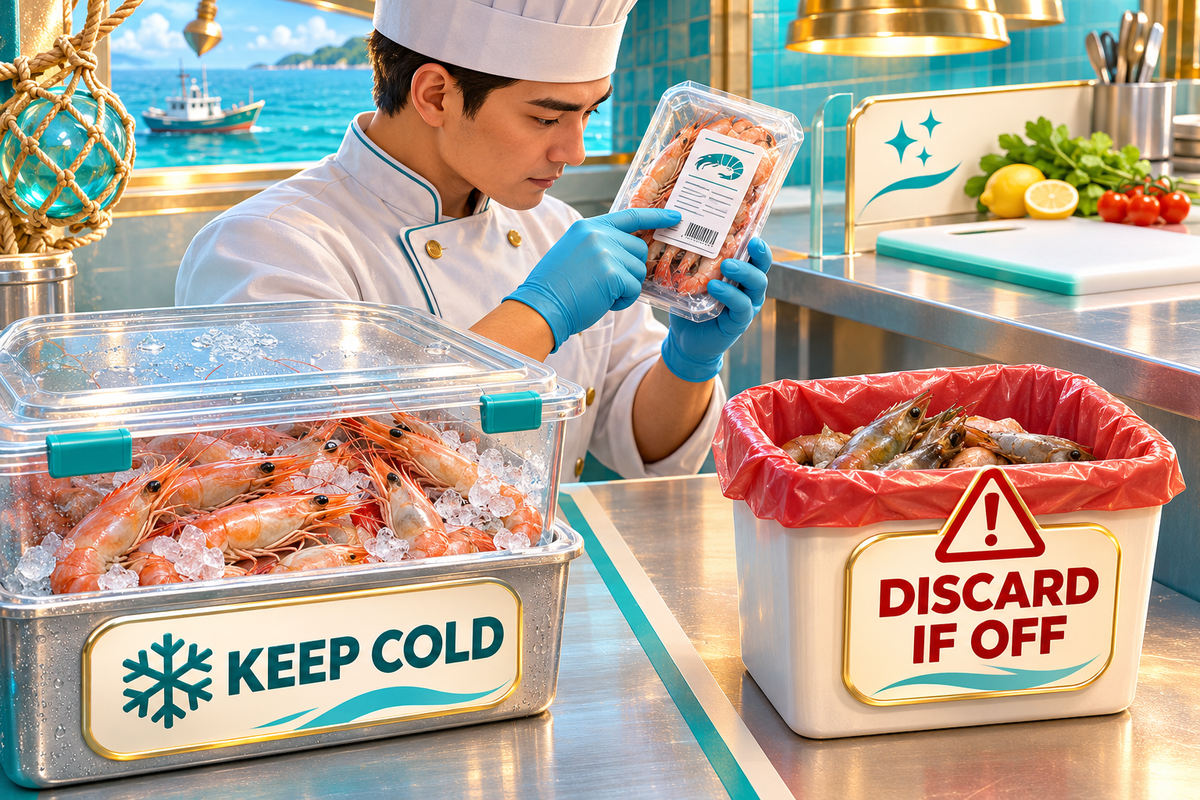
- Reject seafood with a strong ammonia, sour or rancid odour. The FDA advice for seafood selection recommends mild fresh scent rather than fishy, sour or ammonia-like odour.
- Discard heads from raw prawns left warm through an uncontrolled prep period or a pack with an uncertain thawing history.
- Discard trimmings that touched dirty surfaces or mixed with non-food waste.
- Discard spent heads and shells after straining stock; they have done their job.
- Do not mistake every dark spot for proof of spoilage. Check the whole product, smell, handling and label; when in doubt about safety, reject the batch rather than relying on visual colour alone.
The most useful operational habit is to decide the destination of heads before opening the pack: whole service, prompt stock or waste. A bucket of unidentified heads left beside a busy preparation station has no clear cold-chain history by the time someone decides to make soup. Planning the destination first makes the discard decision clear.
How do you choose head-on versus headless?
Choose head-on for an intentional whole-prawn dish and headless for fast, clean eating. The same size grade does not mean the same edible yield when heads and shells are included. Specify product form with count and species in a purchase order.
If a menu needs both whole presentation and stock, a sound head-on product gives the kitchen more uses. If the team lacks prep time or safe cold storage for removed heads, order the prepared form required by the finished dish. Avoid describing a head-on carton as interchangeable with peeled tails merely because both are marketed as shrimp.
Iran Fish describes Vannamei Shrimp and has a related article on Shrimp With Head On. Use those pages to begin a specification discussion, then confirm the actual head state, count and packing with the supplier.
Frequently asked questions
Use these answers to decide whether sound shrimp heads belong in the cooking plan. Treat product condition and cold handling as prerequisites.
Can I use shrimp heads for stock?
Yes. Cook sound, properly chilled heads and shells in a tested stock method and strain the liquid before serving.
Should I remove the heads before cooking?
Remove them for a fork-ready dish. Keep them attached for a properly cooked whole-prawn presentation or separate them for stock.
Are black spots on a head always spoilage?
No. Colour changes alone are not a complete safety test. Assess the product’s smell and handling history; reject seafood with an off odour or uncertain cold chain.
Can I freeze removed heads for later stock?
Only store sound trimmings promptly under controlled cold conditions, clearly labelled and separated from ready-to-eat foods. If their history is uncertain, discard them.
Does straining stock remove shrimp allergens?
No. Shrimp stock remains a shrimp-derived ingredient. Identify it in allergen information and prevent cross contact.
Discuss whole-shrimp requirements with Iran Fish
Tell the supplier whether the dish needs whole prawns, stock trimmings or headless prepared tails. Add species, count, raw/cooked state and freezing format to the request.
Review Vannamei Shrimp and the Shrimp With Head On guide.
Contact Iran Fish to discuss the correct product form.