


Grilled Tiger Prawns: How to Keep the Shells Intact and Flesh Tender

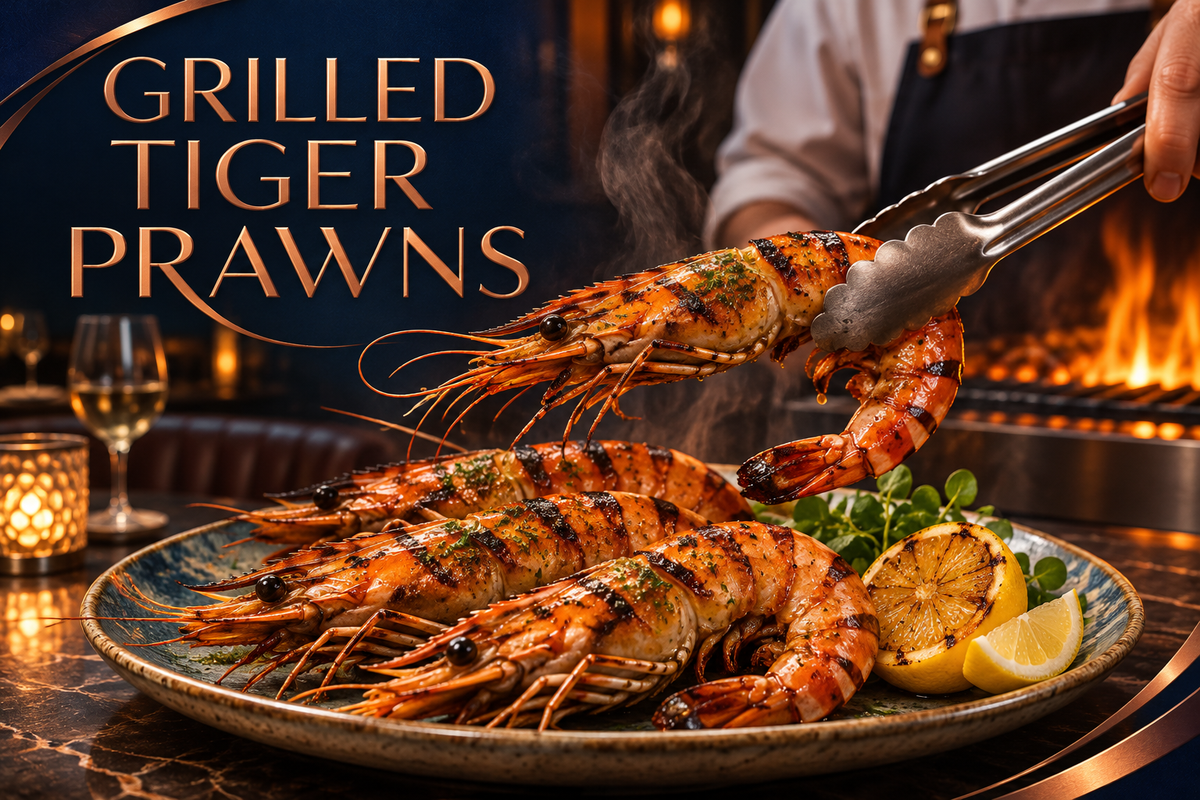
Grill tiger prawns with intact shells by thawing them safely, making a narrow back cut to remove the vein, drying the shells, and cooking in a single layer until the thickest flesh is firm, pearly and opaque. Turn with tongs at the body; do not pull on the head. A test prawn sets the batch method better than a fixed time. Choose a consistent whole-shrimp grade, and review wild shrimp or Vannamei shrimp for the service you are planning.
| Kitchen decision | Direct answer |
|---|---|
| Whole or split? | Keep a small-to-medium prawn whole; split a thick, large prawn along the back for even access to the flesh. |
| Shell on or peeled? | Keep the shell on for an exposed grill and whole-prawn presentation; peel for a ready-to-eat dish with fast sauce coverage. |
| When to turn? | Turn after the first side releases cleanly from a hot grate; handle the body, not the head. |
| When to stop? | Check the thickest flesh for a firm, pearly and opaque finish. Shell colour alone is insufficient. |
| How to repeat it? | Match size grade and thaw state, cook one layer at a time, and record the successful setup. |
Select Tiger Prawns for the Grill
Choose a species and size that suit the plate before deciding on seasoning. A dramatic banded shell helps a whole-prawn dish; a more uniform peeled dish has a different purchasing brief.
Confirm the species and product form
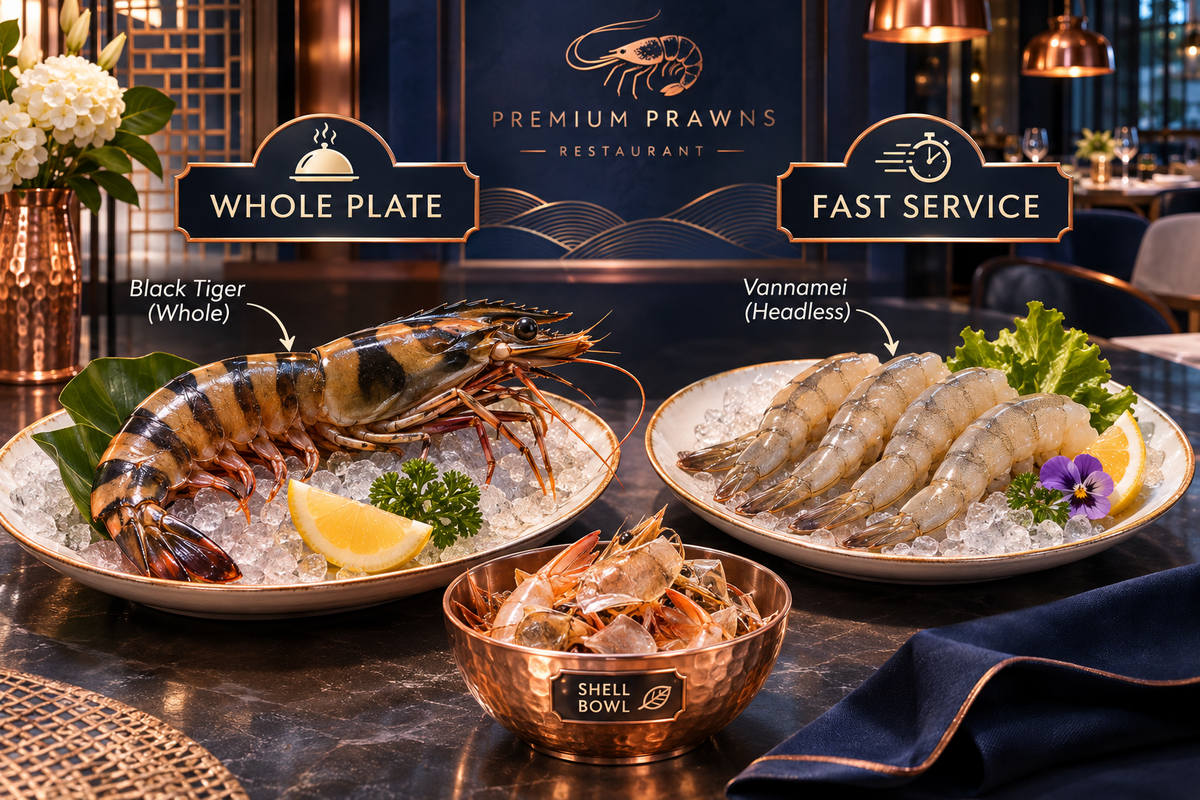
“Tiger prawn” can refer to different banded species in different markets. Request the scientific name and origin rather than buying on the common name alone. Black Tiger is Penaeus monodon; its distinctive bands and substantial whole presentation make it a natural grill candidate. Iran Fish’s Vannamei versus tiger shrimp comparison explains the sensory and supply distinction. A restaurant needing a large showpiece can prioritize Tiger; a high-throughput line needing repeatable portions can evaluate Vannamei in a matching grade.
State head-on shell-on (HOSO) or headless shell-on (HLSO). For a table-service plate, a sound head-body joint and intact antennae at receipt matter. For a skewer meant to be eaten quickly, HLSO removes one handling step. If the shell will be opened in the kitchen, make sure the back cut and vein-removal workmanship meet the menu standard.
Set a count you can cook evenly
Specify the count range, unit of weight and product form together. “16/20” alone is incomplete: the unit and whether the product is whole or headless change what the kitchen receives. The shrimp grading system covers this distinction. Sort a thawed test batch by thickness; a few outliers on the same grill can force the thinner prawns to overcook while the largest finish.
Inspect the pack for intact seals, dehydration and signs of thawing. Check a representative sample for a clean odour and firm flesh. Do not use a pretty shell to excuse an ammonia smell or soft meat. The FDA seafood guidance makes clear that appearance alone does not establish freshness.
Read more: Vannamei Shrimp Sizes for Wholesale Buyers
Prepare the Shell Without Breaking It
Thaw in a refrigerator, then dry the surface. A wet shell steams against the grate and encourages rough handling when it sticks.
Thaw and sort by thickness
Set sealed packs over a drip tray below ready-to-eat food. For a same-day shortcut, use a leak-proof bag in cold water and cook the shrimp immediately after thawing. Never leave raw prawns on a counter. Pull only the quantity needed for the test and service batch. Individually quick frozen (IQF) pieces support that workflow; a block requires a plan for the entire unit. The distinction is explained in Iran Fish’s shrimp processing methods.
Make one narrow back cut
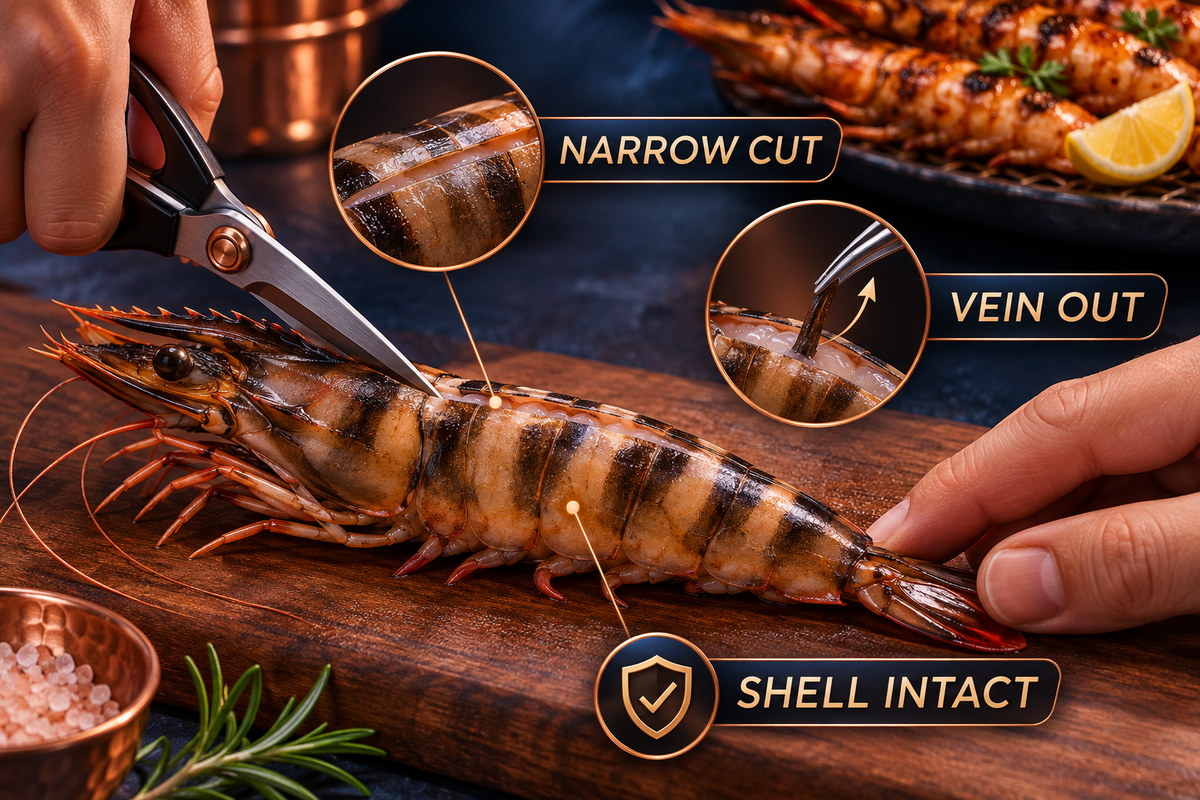
Use shears along the back of the shell, lift out the digestive tract and keep the shell joined around the sides. For a thick prawn, open the back enough to expose the center to heat while leaving the belly intact. Avoid cutting through the body and creating two loose halves unless the menu calls for a butterfly. Trim antennae that would hang into flames. A whole head is a visual asset only when it remains attached through the turn and plate-up.
Pat dry, then apply a light film of oil. Keep acidic marinades brief so the surface is seasoned without turning the prep into a prolonged soak. Season the cut flesh as well as the shell; a thick shell does not carry a dry rub into the meat by itself. Set a clean tray for prepared raw prawns and a separate one for cooked pieces.
Decide whether to skewer
Use a skewer for small pieces that would fall between the bars or curl unpredictably. Pass it through the thick body without cracking the shell. A very large split prawn sits more evenly cut-side up without a skewer. For a service line, commit to one approach per size grade so the cook does not change the handling method in the middle of the batch.
Read more: Shrimp Processing Methods Explained: HOSO, HLSO, PD and PTO
Grilled Tiger Prawns: Cook for Tender Flesh
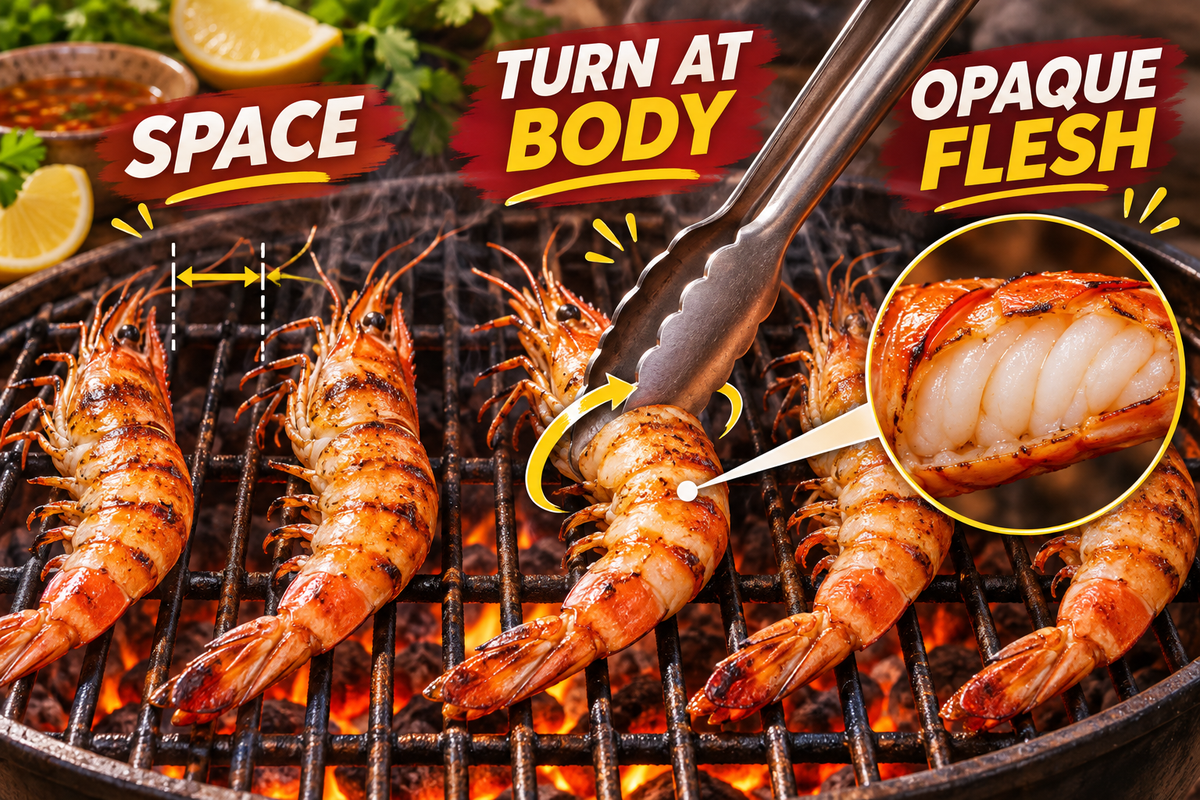
Heat and test the grate before loading it. Cook one layer with space between prawns, then check the meat at its thickest point.
Start with a clean, hot grate
Brush the grate and oil it lightly. Lay the prawns down deliberately rather than dropping a pile onto one hot spot. Once the first side releases, turn with tongs gripping the body. Do not pull on antennae, head or tail fan. Move a prawn away from a flare-up instead of repeatedly flipping it over direct flame.
Use the flesh as the stop signal
The FDA describes cooked shrimp flesh as firm, pearly and opaque. Check an opened portion near the thickest body segment. Shells can char before the center is done, and different sizes reach that endpoint at different times. A published recipe’s minutes are a starting example, not a universal specification. Record the actual grill setting and batch result for the selected size.
Take a test prawn from the hottest edge and another from the coolest edge when the grate has uneven zones. If they finish differently, reduce the batch area or rotate positions deliberately. This is a useful line-control detail: one beautifully cooked sample from the center does not validate a full overloaded grill.
Plate without undoing the work
Transfer finished prawns to a clean tray and serve promptly. Keep a shell bowl and wipes available for head-on service. Add sauce to the exposed flesh or beside the prawn; a heavy coating hides the shell colour and softens its visual definition. For pre-plated events, choose the service format before prep: a headless, split shell can be quicker for diners even if a whole head looks more dramatic.
Read more: Understanding the Global Frozen Shrimp Supply Chain
Keep a Service Batch Consistent
Standardize the raw material, prep and pan load. That simple sequence prevents a change in prawn size from being misdiagnosed as a problem with the cook.
- Write down species, HOSO or HLSO form, count per stated unit and freezing format.
- Thaw a consistent service quantity; keep the rest frozen rather than cycling it through thaw and refreeze.
- Sort pieces with noticeably different thickness into separate grill loads.
- Make the same back cut, drain and dry each load, and use a clean cooked tray.
- Check the thickest flesh of a representative piece from each heat zone.
- Record the method and any shell breakage at the turn, then adjust tong position or grate heat on the next load.
Consider a restaurant choosing between two goals: a striking whole Black Tiger plate and a rapid, uniform banquet service. If visual impact leads, choose a defined HOSO Tiger lot and allow diners a shell bowl. If throughput leads, choose a consistent HLSO or prepared form and plate a smaller number of easy-to-handle pieces. Do not buy a whole showpiece and then strip every head during the busiest hour. This is a decision example, not a claim about an Iran Fish customer project.
Read more: Vannamei Shrimp Buying Guide for Importers and Distributors
Choose Sauces and Presentation
Keep the seasoning legible. A light garlic oil, herbs and citrus at the end let the shrimp remain the focus; a thick sweet glaze can burn on an exposed grill before a large prawn cooks through. Dress the flesh at service rather than flooding the grate.
For a whole-prawn plate, orient the heads consistently and leave enough space to grasp and peel. For a split shell, set the cut face upward so the diner can see the cooked flesh. A sauce on the side protects a crisp-edged shell and gives the diner control.
For an event, test the finished plate after the actual handoff interval, not just as it leaves the grill. Texture changes while food waits. Arrange a service flow that keeps prepared raw prawns cold, cooked prawns protected and the pass moving. Follow the applicable food-service holding requirements in your jurisdiction.
Read more: Farmed vs Wild Shrimp
Frequently Asked Questions
Settle the five decisions that most often slow down a grill station.
Should tiger prawns be grilled with the shell on?
Yes for a whole or split grill presentation. The shell protects the flesh from direct contact with the grate. Peel when the dish requires fork-ready portions.
Can you devein without removing the shell?
Yes. Cut narrowly along the back with shears and lift the tract out. Keep the sides of the shell joined for intact presentation.
How do you know the prawns are done?
Check the thickest flesh. Stop when it is firm, pearly and opaque; do not judge only by red shell colour or a fixed minute count.
Can frozen tiger prawns go straight onto the grill?
Thaw safely first for this method. Dry and inspect the prawns, then cook a consistent batch. The thaw lets the kitchen clean and check the center.
Why do shells break during grilling?
Rough turning, a stuck grate and an overly deep back cut are common causes. Clean and heat the grate, use a light oil film, turn at the body and leave the shell connected along the sides.
Source the Right Prawns from Iran Fish
Send the desired species, whole or headless format, count with weight unit, freezing method, destination and the finished dish. Include a photograph of the intended plate if presentation drives the decision.
Review a representative lot sample against shell integrity and flesh texture before standardizing the grill method. Explore wild shrimp and Vannamei shrimp, then contact Iran Fish with a complete specification.