


Types of Prawns: A Practical Guide to Species and Cooking Uses

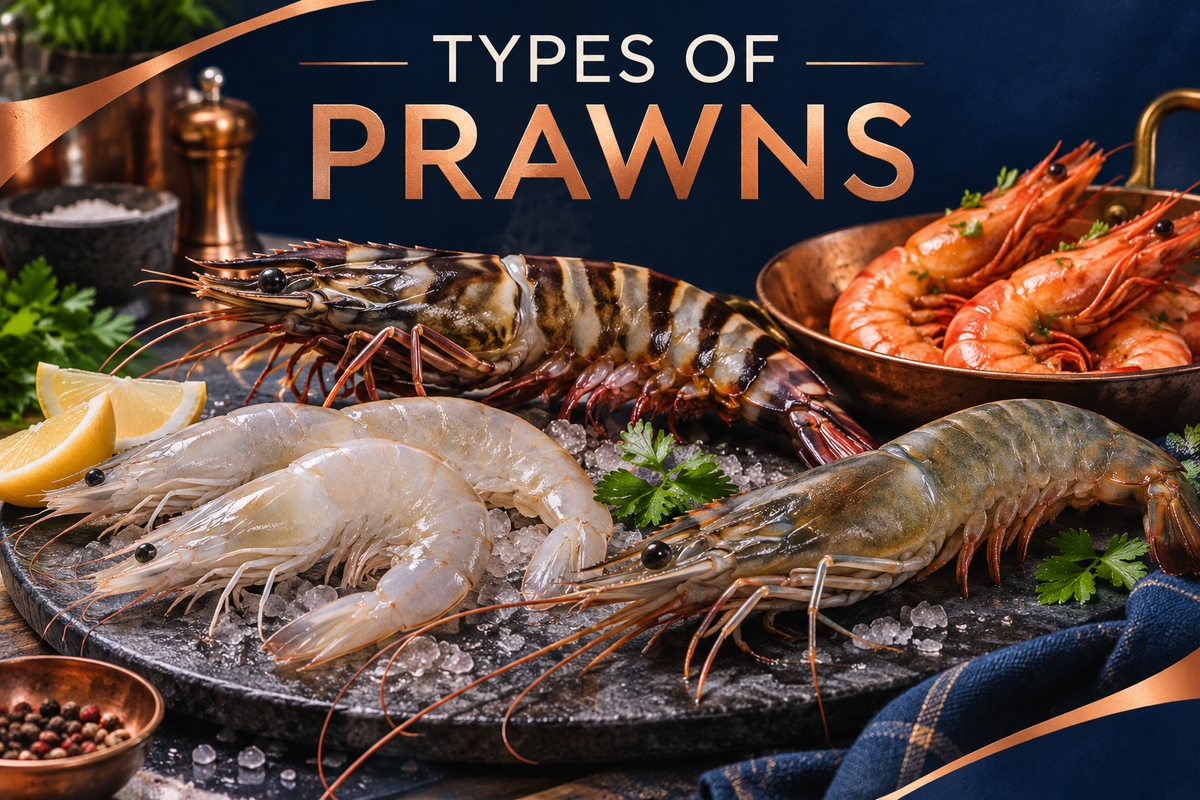
Choose different types of prawns by species, size, product form and dish, not by the name on a menu alone. Black Tiger (Penaeus monodon) suits a conspicuous whole grilled plate; Pacific white shrimp or Vannamei (Penaeus vannamei) offers a broad range of uniform forms for repeat prep. Banana, king and freshwater prawns need their scientific names and origin checked because common names vary by market. Match the count unit and shell format before switching species. Compare Iran Fish’s Vannamei shrimp and wild shrimp for your intended dish.
| Menu need | Start with | Check before approval |
|---|---|---|
| Large whole grilled plate | A suitably graded Black Tiger or another approved large prawn | Scientific name, head attachment, shell integrity and count basis. |
| Consistent peeled portions | Vannamei in the specified peeled form | Count unit, vein removal, net weight and batch uniformity. |
| Regional wild-prawn dish | A named wild species from an identified origin | Seasonal lot, size spread, texture and traceability. |
| Stock plus whole presentation | HOSO prawns | Condition of heads, cold chain and planned prep yield. |
| Fast stir-fry | Uniform peeled or headless pieces | Thaw state and thickness so pieces finish together. |
Identify the Species Behind the Name
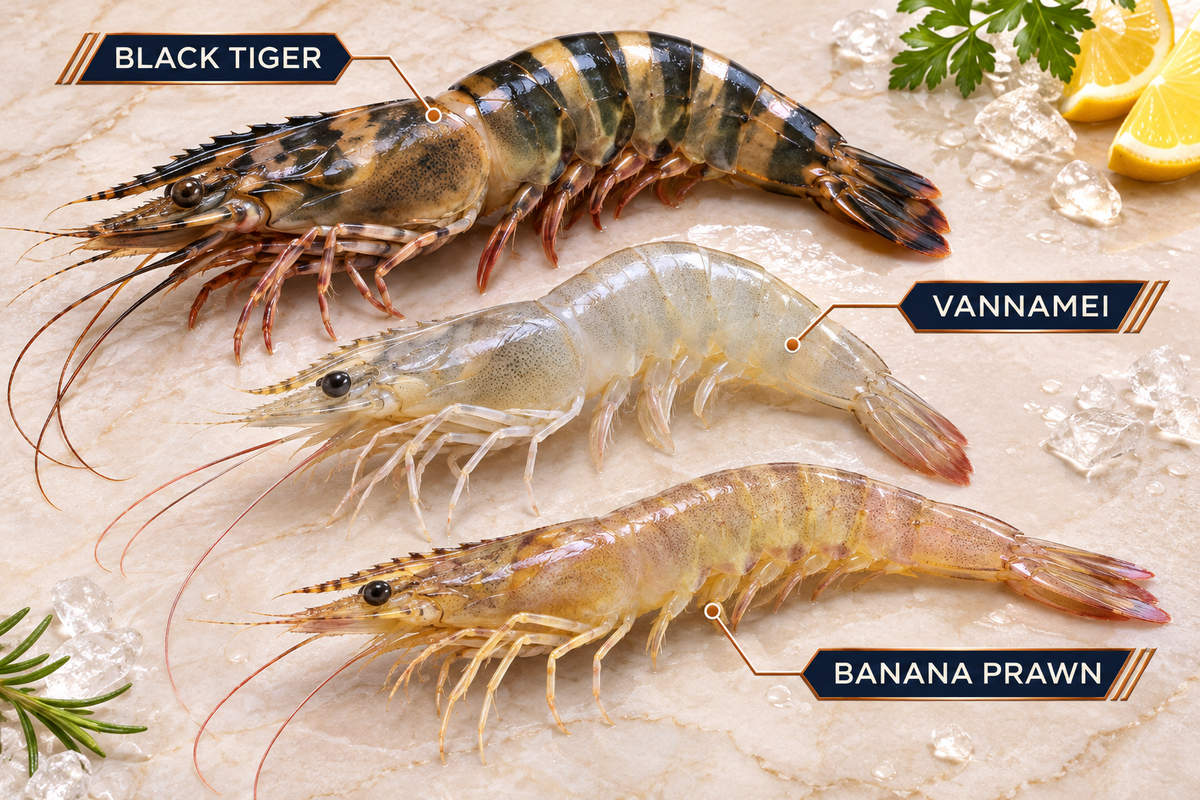
Read the scientific name on the specification. “King,” “white,” and “tiger” are commercial terms that vary across places and do not identify a lot reliably.
Pacific white shrimp or Vannamei
Penaeus vannamei, also called whiteleg shrimp, is widely farmed and sold in multiple processing forms and grades. Choose it when a kitchen needs repeatable peeled portions, retail packs or a consistent headless shell-on line. Iran Fish’s Vannamei shrimp page describes its farmed range; the buying guide shows how to define an inspectable order.
Black Tiger
Penaeus monodon is the giant or Black Tiger prawn. Its banded shell and potential for large whole pieces make it a useful choice when appearance is central to the dish. The Australian Fisheries Management Authority’s prawn species overview identifies Tiger prawns and their culinary positioning. Do not assume every item marketed as “tiger” is P. monodon; confirm the scientific name and origin.
Banana, king and other marine prawns
“Banana prawn” can refer to species such as Fenneropenaeus merguiensis, while “king prawn” covers different species and trading conventions. The reliable workflow is to request the Latin name, origin and product form, then cook a representative sample. A label based only on a common name is too weak for a substitution in a signature dish. Regional species can be excellent for a quick sauté, a platter or a sauce, but their supplied size and preparation determine the final use.
Freshwater prawns
Giant freshwater prawn, Macrobrachium rosenbergii, is a different product from the common marine farmed and wild shrimp lines. Its large claws and body shape change the visual and prep requirements. Do not substitute it into a marine-prawn recipe by matching an approximate body length. Specify whether the dish wants the visual claws or a defined tail-meat portion.
Read more: Vannamei vs Tiger Shrimp: Buyer Guide
Match Different Types of Prawns to Cooking Uses
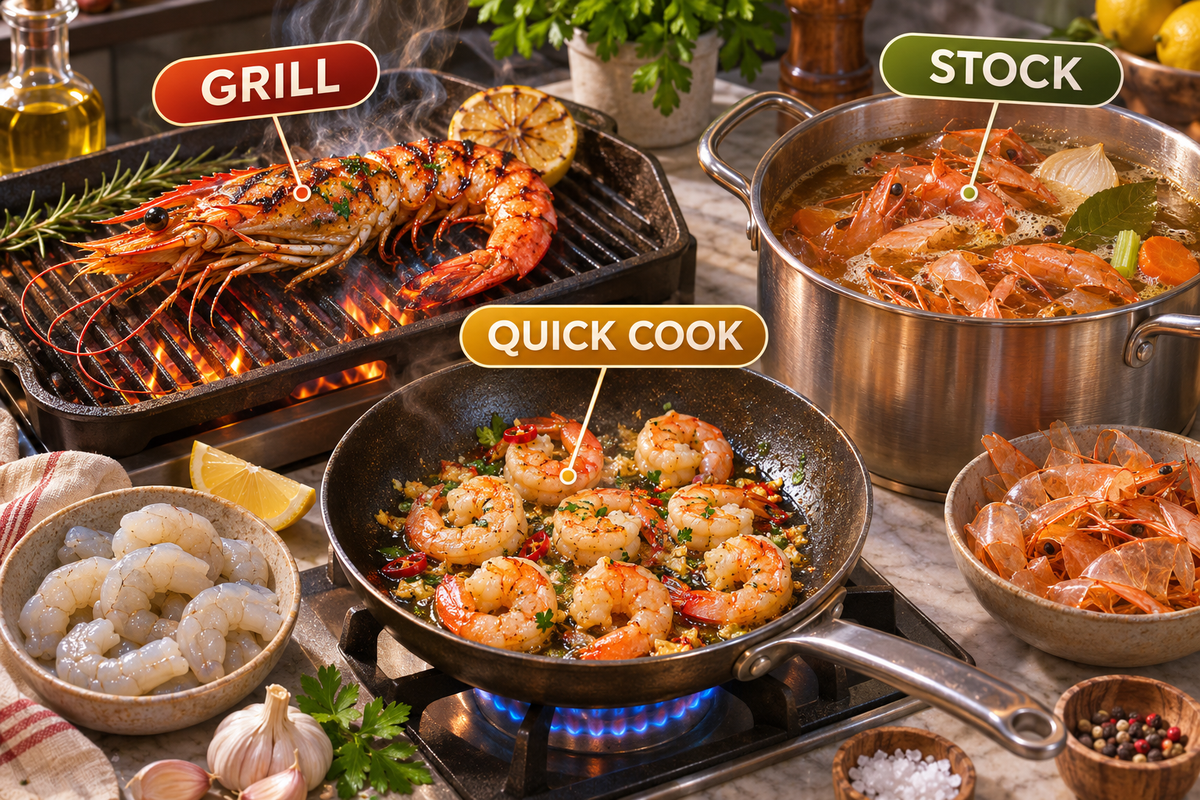
Choose the final eating experience first: whole and hands-on, peeled and fast, or a stock-driven preparation. Then select the species, count and processing form together.
Grill and roast
Use a sound, appropriately large whole or headless shell-on prawn for direct grill presentation. Black Tiger’s banding makes an immediate visual statement. A large Vannamei lot can also work if its size, shell and texture match the plate. Make a narrow back cut for deveining, dry the shell and cook until the thickest flesh is firm, pearly and opaque. A species label does not replace a cooking test.
Stir-fry, curry and filled dishes
Use uniform peeled or headless pieces when every portion must cook and plate at the same pace. Choose count and form by bite size. A small number of thick pieces in a fast stir-fry can finish unevenly alongside thin vegetables; a consistent grade prevents the cook from holding the dish while the largest prawn catches up. For a curry, add the shrimp near the end so the flesh does not sit through the entire sauce reduction.
Stock and whole seafood service
Use clean raw shells and heads for a separately labelled shrimp stock and reserve the flesh for short cooking. A whole-prawn seafood plate needs intact heads, tails and shells at receipt. A stock-focused kitchen instead needs traceable raw material and a reliable cold-chain plan; it should not pay attention only to visual perfection. Shellfish allergens remain present in a strained stock.
Here is a full decision example. A restaurant wants a signature grilled prawn and an easy-to-eat corporate banquet version of the same flavour profile. It selects a specified whole Black Tiger grade for the table-service plate, tests the head attachment and shell integrity, then uses an approved peeled Vannamei grade for banquet portions. It produces the sauce from separately controlled shell stock, not from unlabelled service scraps. The species change is intentional because the two service goals conflict. This example illustrates a practical purchasing workflow rather than a verified Iran Fish customer case.
Read more: Farmed vs Wild Shrimp
Read Size and Processing Labels Correctly
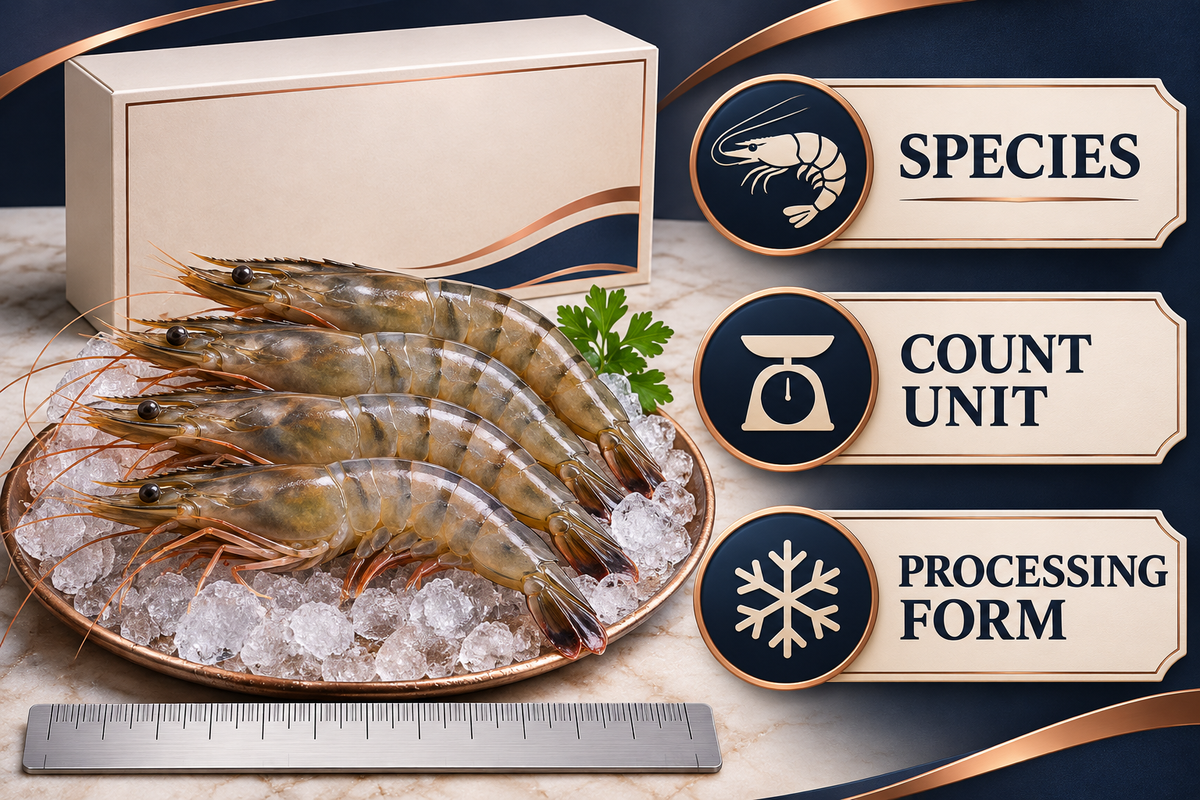
Specify the number of pieces in a named weight unit and the form being counted. A lower count denotes larger pieces only when the units and forms match.
Count and grade
“21/25” has no complete meaning until the supplier states per pound or per kilogram and HOSO, headless or peeled. A whole prawn includes head and shell weight; a peeled piece does not. Compare like with like. Iran Fish’s shrimp grading system explains the practical implications for wholesale specifications.
HOSO, HLSO, PD and PTO
HOSO keeps the head and shell; HLSO removes the head and keeps the shell; PD is peeled and deveined; PTO leaves the tail on after peeling. Choose a form according to the work the kitchen should perform and what diners will see. A menu that promises a dramatic whole prawn cannot be fulfilled with PD even if the scientific species and count are correct. The processing methods guide defines the forms in purchasing terms.
IQF, block and glaze
IQF pieces can be taken out in smaller quantities; a block is handled as a unit. Neither term establishes species or head status. Protective ice glaze must be identified separately from the declared net shrimp contents. Check sealed packs, lot codes and temperature evidence at receipt. The Codex standard for quick-frozen shrimps or prawns addresses net contents excluding glaze and product description.
Read more: Vannamei Shrimp Sizes for Wholesale Buyers
Substitute Without Changing the Dish
Match four attributes before replacing one prawn with another: cooked bite, visible size, preparation form and portion count. A name-based switch is not enough. Cook a sample in the actual recipe and plate it in the actual vessel. Measure whether it looks and eats as intended; then approve the purchase specification.
For a grilled whole plate, switching from Black Tiger to a smaller peeled Vannamei loses both shell presence and a substantial bite. Choose a suitably large HOSO Vannamei sample if availability demands a species change, then test grill performance. Conversely, replacing uniform peeled Vannamei in a fast banquet stir-fry with variable whole wild prawns introduces prep and portioning problems. The better decision can be a headless or peeled wild grade with a defined size spread, or retaining Vannamei.
Do not treat wild versus farmed as a universal quality ranking. Handling, freezing, pack integrity and the specific lot decide whether the product meets the brief. Iran Fish’s farmed versus wild shrimp comparison is a useful starting point. When two priorities conflict, write down which one controls the dish; a visible whole shell and fast fork-ready service cannot both dominate the same product form.
Read more: Vannamei Shrimp Buying Guide for Importers and Distributors
Inspect the Lot Before It Reaches the Kitchen
Review the paperwork and a representative sample together. The goal is to ensure the actual lot matches the dish that was tested.
- Match scientific name, origin, farmed or wild status and processing form across carton and specification.
- Confirm count per named weight unit, net contents excluding glaze, freezing format and lot code.
- Check packaging, frozen handling and evidence of thawing or dehydration.
- Thaw a sample under safe conditions; check odour, firmness, shell integrity and workmanship.
- Cook a sample in the intended method before approving a species or grade substitution.
- Record what was sampled and accepted so the next delivery can be judged consistently.
The FDA’s seafood handling advice recommends looking beyond colour, keeping seafood cold and cooking shrimp until firm, pearly and opaque. Reject an ammonia odour or mishandled lot rather than assuming a strong seasoning will conceal it.
Read more: Understanding the Global Frozen Shrimp Supply Chain
Frequently Asked Questions
Use these answers to resolve common purchasing shorthand.
Are prawns and shrimp the same thing?
Common usage overlaps and varies by country. Use the scientific species name and product form for purchasing instead of relying on the menu word.
Is a Black Tiger prawn the same as Vannamei?
No. Black Tiger is Penaeus monodon; Vannamei is Penaeus vannamei. Compare the actual graded lots for texture, size, form and intended dish.
Which prawn is best for grilling?
Choose an intact, appropriately sized shell-on lot and test it on the intended grill. Black Tiger is a strong visual choice; a matching Vannamei grade can serve a more standardized line.
What does a 16/20 prawn count mean?
It indicates a count range only when a unit, such as per pound or per kilogram, and a product form are stated. Do not compare two bare counts.
Can one species replace another in a recipe?
Yes after a cooked sample matches the required bite, visible size, form and portion. Document the approved substitute so the next kitchen shift receives the same result.
Select Prawns with Iran Fish
Send Iran Fish the dish, scientific species preference, desired bite, head and shell format, count with unit, freezing method and destination. Identify the feature the kitchen cannot compromise.
Review a representative sample before confirming a repeat specification. Explore Vannamei shrimp and wild shrimp, then request the lot details that fit the menu.