


Shrimp Shells: What They Add to Stock, Flavour and Presentation

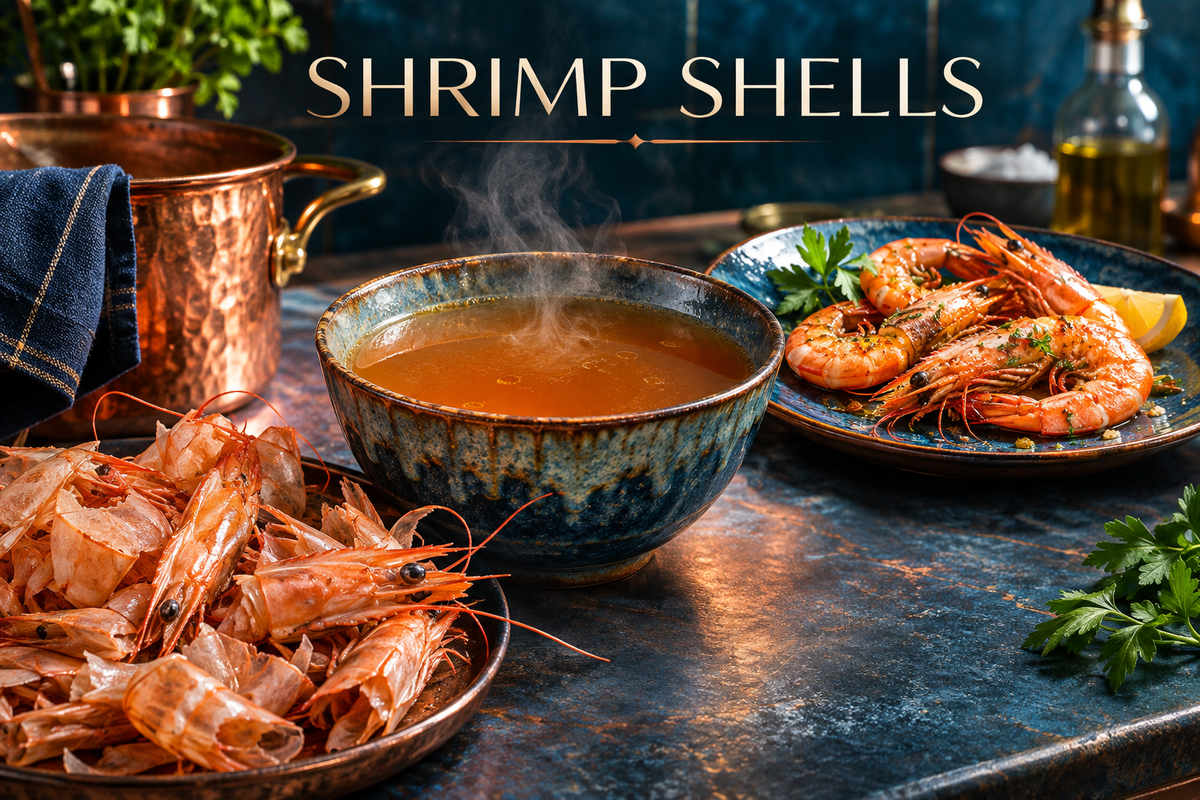
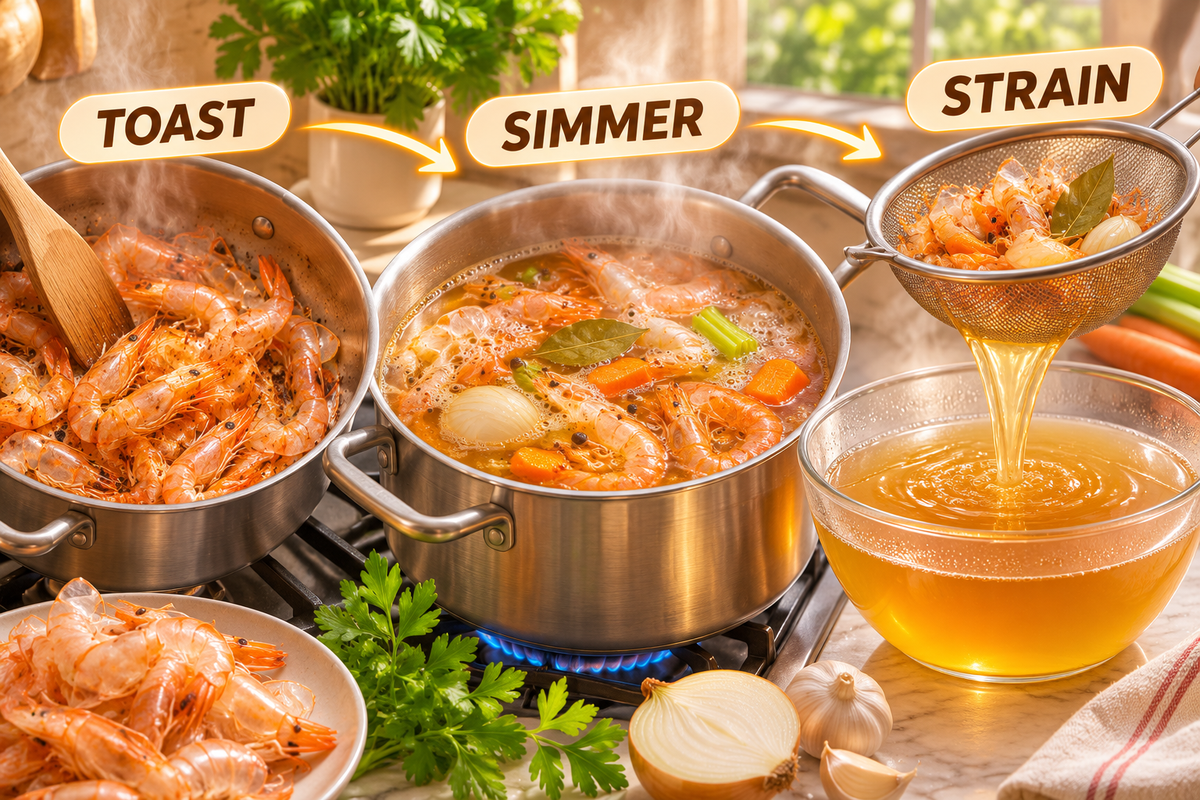
Keep a shrimp shell when it improves the dish: it protects flesh on a grill, gives a whole prawn its visual shape and supplies an aromatic base for stock after peeling. For a clean stock, collect raw shells under refrigeration, toast them gently, add water, simmer without a hard boil, strain and chill promptly. Discard shells from an off-smelling or mishandled lot. Choose Vannamei shrimp by the form your kitchen will actually use, then discuss the specification with Iran Fish.
| Use | Best shell decision | Kitchen control |
|---|---|---|
| Whole grilled prawn | Keep head and shell intact or make a narrow back cut | Check flesh doneness beneath the shell. |
| Quick fork-ready dish | Choose peeled or tail-on presentation | Use clean raw shells separately for stock. |
| Shrimp stock | Collect clean raw shells and heads | Keep cold, extract gently, strain and chill. |
| Sauce or rice | Use a strained shell stock or infused oil | State the shellfish allergen clearly. |
| High-volume service | Choose a repeatable processing form | Do not rely on unplanned peel waste for a fixed stock yield. |
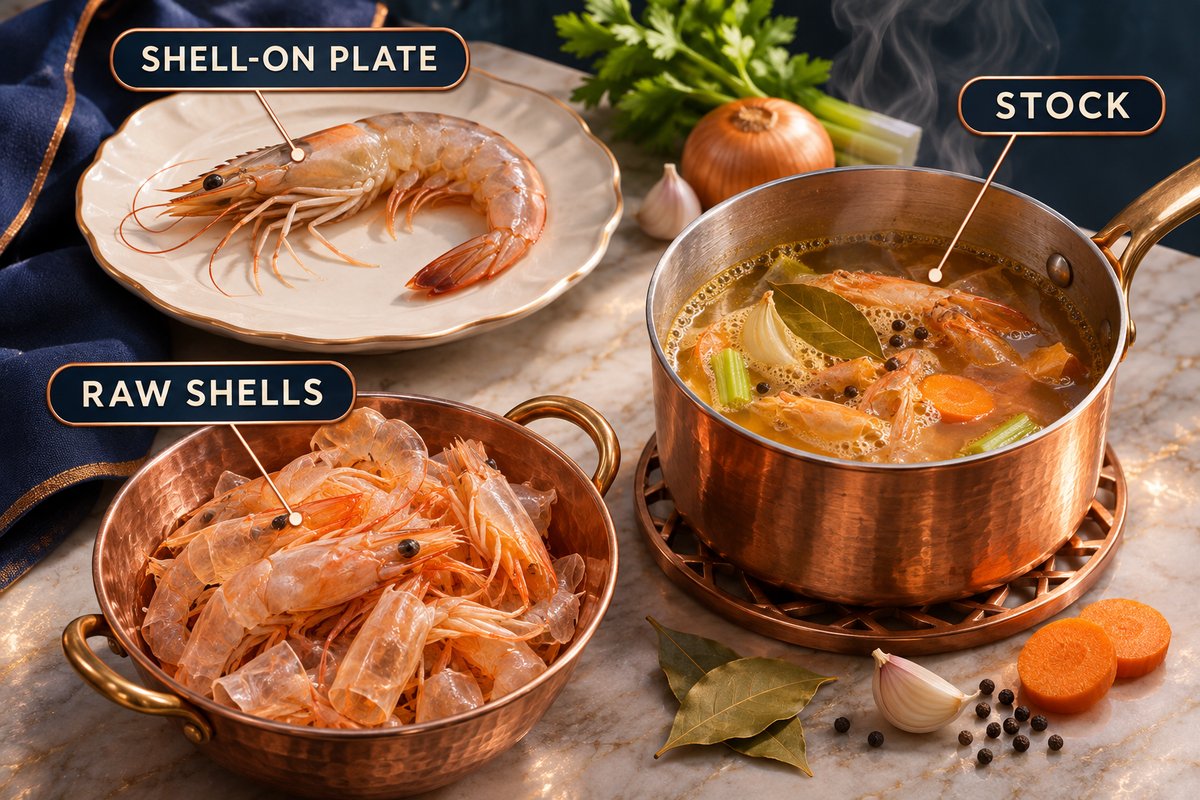
Choose Shell-On Service or Shell Stock
Decide at the menu stage whether the diner should handle the shell or the kitchen should extract its flavour. The same ingredient gives a different result in a grilled whole prawn and a spoonable sauce.
Leave shells on for a visible whole dish
A head-on, shell-on prawn retains its recognizable shape on a grill or platter. A headless shell-on format keeps much of that look while reducing work at the table. For a thick prawn, make a narrow cut down the back, remove the digestive tract and leave the sides joined. Check the flesh for doneness rather than treating shell colour as a thermometer. Iran Fish explains HOSO, HLSO, PD and PTO so a purchasing brief can match the service style.
Peel for speed, then plan the by-product
Peeled and deveined shrimp are the direct choice for a filling, quick sauté or fork-ready catered dish. If the kitchen peels raw shell-on shrimp itself, set a clean chilled container for the shells before the first tray is opened. Label species and lot, and separate raw shells from cooked food and ready-to-eat garnish. Do not build a menu that assumes every peeled portion will yield enough shell stock when a future order may arrive already peeled.
Select a form by the end use
An attractive head-on wild shrimp and a uniform peeled Vannamei shrimp solve different problems. A buyer balancing a dramatic seafood platter with fast banquet service can use a smaller whole-prawn feature on the plate and a separate peeled component for the bulk of the dish. This is a planning scenario, not a report of a specific customer order.
Read more: Shrimp Processing Methods Explained: HOSO, HLSO, PD and PTO
Make a Clean Stock from Shrimp Shells
Use clean, cold raw shells from a sound lot. Build flavour with controlled heat, then stop extraction and cool the stock promptly.
Collect and inspect
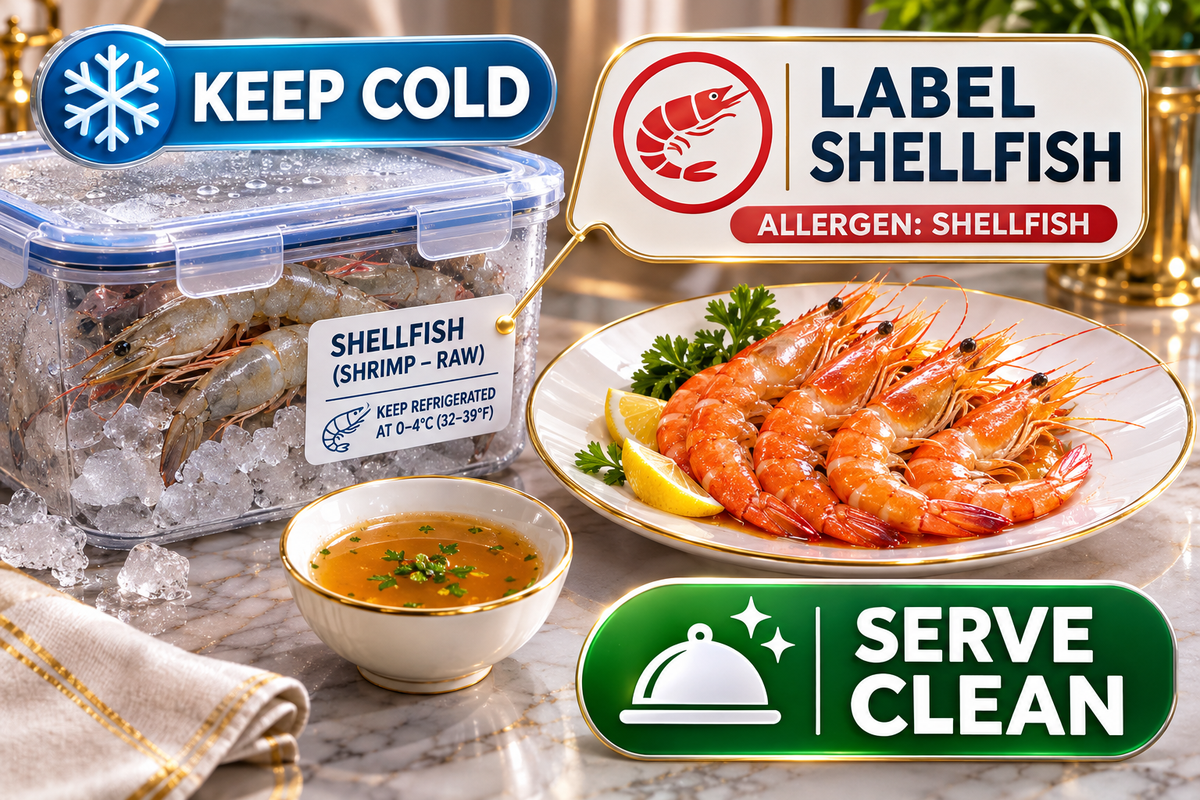
Set a covered, labelled container in refrigeration while peeling. Use shells from a lot with a clean marine odour, intact packaging and sound cold-chain history. Reject raw material with an ammonia or sour smell. The FDA seafood selection and handling guidance emphasizes cold storage and separation from ready-to-eat foods. A stockpot does not rescue spoiled raw seafood.
Check whether heads are included. They bring stronger character but also require especially careful chilled handling. Trim or rinse away sand and loose debris with cold potable water, then drain well. Do not repeatedly wash shells in warm water or leave them soaking on the bench.
Toast and extract gently
Warm a clean pot with a little neutral oil, add the drained shells and stir until their aroma becomes pronounced and their colour changes. Add aromatics that fit the final dish, then cover with water. Bring to a gentle simmer and skim as needed. A violent boil breaks material into the liquid and produces a cloudier stock. Strain through a fine sieve into a clean vessel; do not grind the shells into a smooth soup unless the recipe has a validated method for that preparation.
Use the stock for rice, seafood sauce, bisque or a light soup. The Michelin Guide’s chef shrimp stock recipe demonstrates a head-and-shell extraction in a composed dish. Adapt aromatics to the menu, but keep a standard shell-to-liquid method for repeat service rather than adding random peelings throughout the day.
Chill and label
Strain into shallow, clean containers and cool according to the food-service requirements that apply to the kitchen. Mark the lot, preparation date and shellfish allergen. Keep raw-shell prep utensils separate from clean serving utensils. When stock is used in an otherwise fish- or vegetable-led sauce, disclose that it contains crustacean shellfish; a guest cannot infer that from the appearance of a strained liquid.
A useful prep detail is to divide shells by dish before toasting. A strongly charred grill shell and a clean raw peel do not make the same delicate stock. Pooling every shell into one bin destroys control of flavour and provenance.
Read more: Understanding the Global Frozen Shrimp Supply Chain
Use Shells for Flavour Without Hiding the Shrimp
Shrimp shell stock gives a sauce a shrimp base even when the edible meat cooks for only a short period. Use the strained stock to cook rice or reduce it into a sauce, then add the shrimp near the end. This separates long flavour extraction from short flesh cooking. Do not simmer peeled shrimp for the full duration of a stock merely to make the liquid taste stronger.
Infused oil is another route. Gently heat clean raw shells in oil, strain thoroughly and use a controlled amount to finish a seafood dish. Treat it as a shellfish-containing ingredient and keep it under the kitchen’s validated storage controls. A clear oil carries aroma without leaving brittle fragments on a plate.
For a composed dish, pair a shell-on feature piece with a separately made sauce. The shell gives height and recognisable form; the stock gives continuity of flavour throughout the plate. The choice also avoids a common mismatch: buying a large whole prawn for presentation, then burying it under a heavy sauce that hides the very shell the kitchen selected.
Read more: Vannamei vs Tiger Shrimp: Buyer Guide
Build Better Shell-On Presentation
Choose a shell layout the diner can understand. A handsome plate still needs an obvious way to lift the meat and somewhere to put the waste.
- Keep whole head-on shrimp for a hands-on seafood plate and serve with a shell bowl and wipes.
- Split a thick shell neatly along the back so cooked flesh is visible and accessible.
- Use headless shell-on shrimp when a visual shell matters but head removal would slow the table.
- Choose tail-on peeled shrimp when the tail is a handle or visual cue and most of the flesh should be ready to eat.
- Give sauce separately or along the exposed flesh rather than coating every shell detail.
Inspect shell integrity at receipt. Broken pieces and detached heads may still have culinary uses after proper inspection, but they do not meet a strict whole-prawn plating standard. Define the acceptable breakage rate in the purchase specification and photograph a representative approved sample, not just the best piece in the carton. The Vannamei shrimp buying guide shows how to describe workmanship and acceptance in a repeat order.
Read more: Shrimp Grading System: Counts, Sizes and Standards
Handle Shells Safely
Keep raw shells cold, separate and traceable. Clean extraction and an allergen statement matter as much as the recipe.
Maintain the raw-to-cooked boundary
Thaw shrimp in a refrigerator or in a leak-proof bag in cold water for immediate cooking. Put raw shell trays below ready-to-eat foods, collect drips and wash hands and surfaces before switching to cooked components. Never return cooked shrimp to a tray that held raw shells.
Identify the allergen in every use
Shrimp shells remain crustacean shellfish ingredients when transformed into a clear stock, oil or sauce. Name the ingredient in recipe records and communicate it through the kitchen’s allergen procedure. A “vegetable risotto” cooked in shrimp-shell stock is not shellfish-free.
Discard questionable shells
Do not save an unlabelled bowl of warm shells for tomorrow’s stock. Discard shells from a lot with an off odour, compromised cold-chain evidence or uncertain identity. Follow your jurisdiction’s food-service cooling and storage rules for any prepared stock. The FDA guide gives the baseline consumer handling guidance, while a commercial kitchen must follow its applicable code and food-safety plan.
Read more: Shrimp Import Requirements for International Buyers
Frequently Asked Questions
Use these answers when deciding what to save and how to serve it.
Can you make stock from shrimp shells alone?
Yes. Toast clean raw shells, add water, simmer gently, strain and chill. Heads deepen the flavour but are not required.
Can you use cooked shrimp shells for stock?
Use clean shells that have been handled safely, but expect a different flavour from raw shells. Do not collect table scraps or shells exposed to diners for a commercial kitchen stock.
Are shrimp shells edible?
Some preparations intentionally serve crisp shells, but a whole shell-on prawn is usually peeled by the diner. Decide by the specific recipe and avoid presenting a tough shell as if it were tender edible meat.
Does shell-on shrimp cook more slowly?
The shell changes heat transfer and the visible cues. Check the thickest flesh for firm, pearly, opaque doneness instead of applying a fixed time from a peeled-shrimp recipe.
Does shrimp-shell stock contain a shellfish allergen?
Yes. Treat and label stock, oil and sauces made from shrimp shells as crustacean shellfish ingredients.
Choose a Shell Format with Iran Fish
Tell Iran Fish whether the menu needs whole presentation, shell-on cooking, peeled meat or a separate stock program. Specify species, processing form, count with weight unit and freezing format.
Compare a representative sample against the dish and receiving criteria. Explore Vannamei shrimp and wild shrimp, then request the product specification that fits the kitchen workflow.