


Head-On Shrimp: What to Check Before You Cook or Serve Them

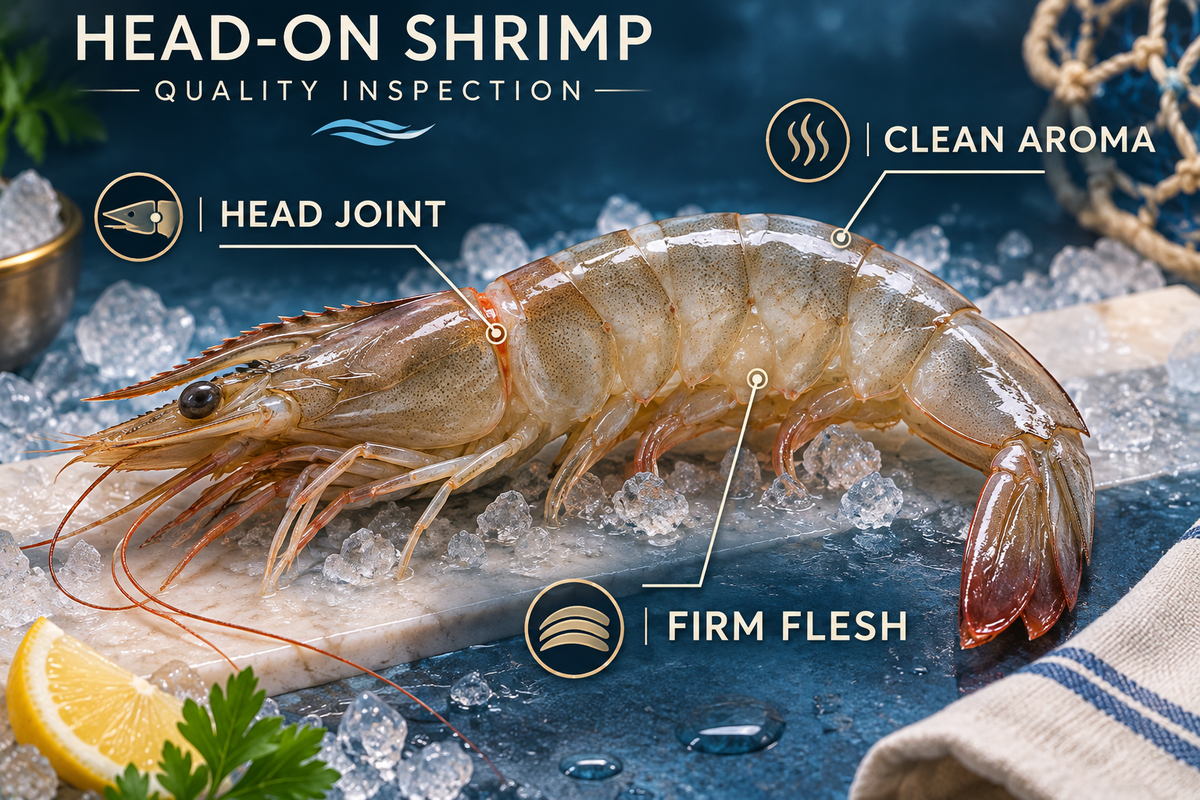
Buy shrimp with head on for a whole-shrimp presentation or a stock that uses the heads. At receipt, check the carton, lot, cold chain, clean odour, firm flesh and intact head attachment; reject a lot with an ammonia smell or evidence of thawing and refreezing. Thaw under refrigeration, clean each shrimp, then cook until the flesh is firm, pearly and opaque. For a whole-shrimp specification, explore Vannamei shrimp and send Iran Fish the intended dish and product form.
| Decision | Do this |
|---|---|
| Whole plate or peeled dish? | Choose head-on, shell-on (HOSO) for visible whole presentation; choose a headless or peeled form for ready-to-eat convenience. |
| Accept a delivery? | Match species, lot, count unit, pack condition and frozen handling to the approved specification; examine a representative thawed sample. |
| Thaw it? | Thaw in a refrigerator or in a sealed bag submerged in cold water when cooking immediately. Do not thaw on a counter. |
| Cook it? | Stop when the flesh is firm, pearly and opaque. Check thick pieces rather than trusting shell colour alone. |
| Save heads? | Keep raw heads cold and use them promptly for a separately labelled shellfish stock. |
Inspect Shrimp With Head On Before Service
Start with the carton and the lot, then open a representative pack. A dramatic whole-shrimp dish fails before the grill if the heads are detached, the pack has thawed, or the product no longer matches the agreed grade.
Check identity before appearance
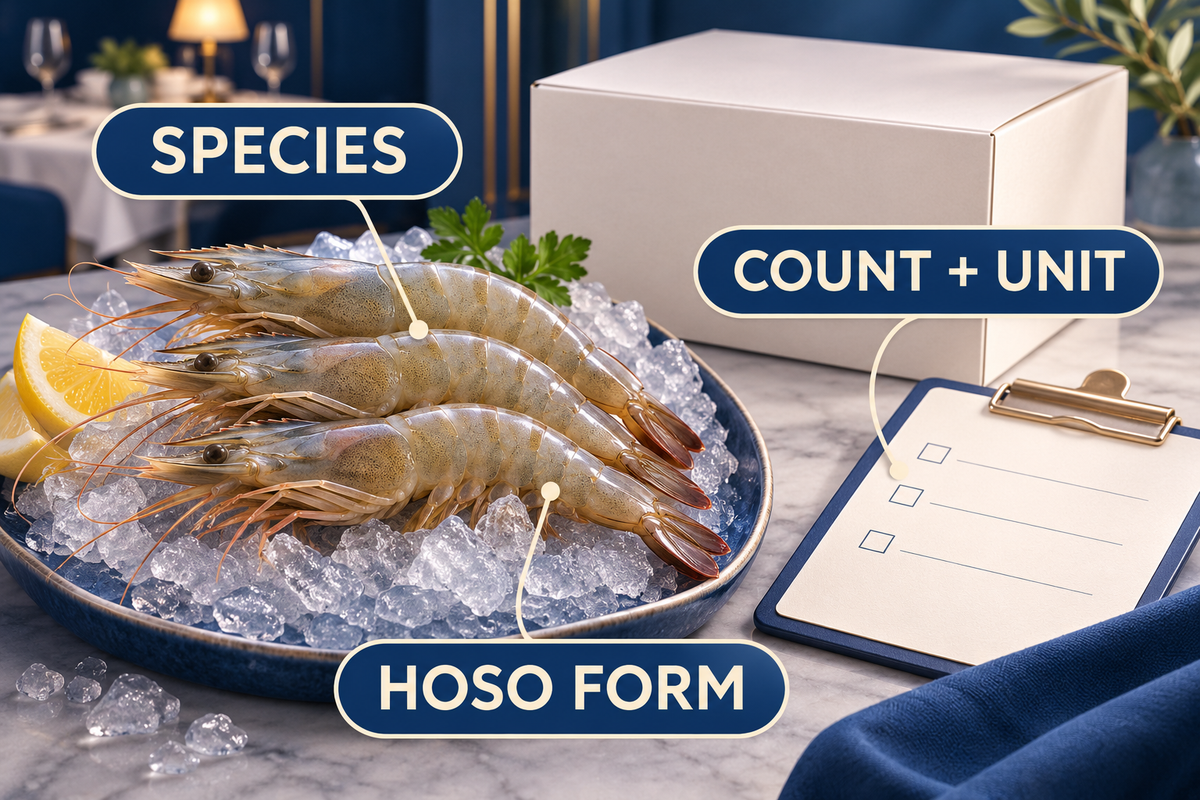
Read the scientific or unambiguous commercial species name, raw or cooked status, HOSO presentation, count range and its weight unit, net weight, freezing method, lot code and storage statement. A 30/40 count without “per pound” or “per kilogram” does not define a usable size. A headless 30/40 pack also does not contain the same number of whole prawns as a HOSO 30/40 pack on an equivalent stated basis. Iran Fish’s shrimp grading system explains why the unit and product form must travel with the count.
Look for intact cartons, sealed inner packs and evidence that the product stayed frozen. Large ice crystals within the pack, dehydrated patches, pooled liquid or clumped pieces that should be free-flowing trigger a closer receiving inspection. Record what you saw against the lot rather than silently mixing it into an approved batch. These signs call for investigation; they do not by themselves establish a laboratory safety verdict.
Examine a thawed sample
Thaw a representative sample safely and inspect the head-body joint, shell, flesh and odour. A clean, mild marine smell and firm flesh support acceptance. An ammonia or sour smell is a reject signal. Head separation, mushy flesh and widespread damage undermine a whole-shrimp presentation even when the tail meat looks acceptable. The Florida Department of Agriculture’s shrimp guidance describes tightly adhering shells, intact legs, firm meat and a fresh sea-breeze odour as useful quality cues.
Do not reject a batch solely because one shell has a dark mark. Species, melanosis and processing affect appearance; colour alone is a poor test of freshness. The useful check is the whole pattern: odour, texture, pack history and a representative set of pieces. If a single dark head has prompted concern, inspect adjacent pieces and the exposed flesh before deciding whether the entire lot conforms to the agreed specification.
Read more: Shrimp Processing Methods Explained: HOSO, HLSO, PD and PTO
Choose the Right Preparation
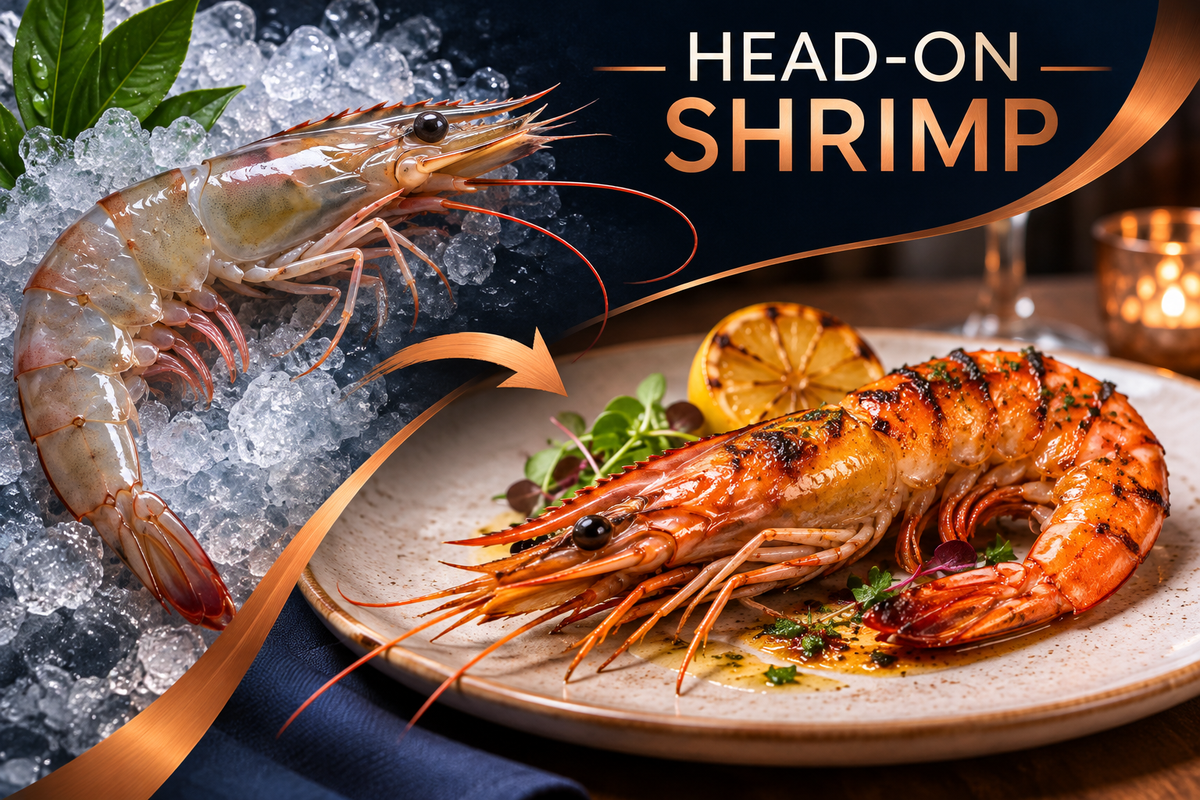
Keep the head for a dish where guests see and handle the whole shrimp: grilled prawns, a seafood platter or a head-on roast. The shell protects the flesh from direct heat and makes the plate visually substantial. Leave room on the plate for diners to remove heads and shells; a crowded sauce bowl turns a striking presentation into a messy service.
Remove the head when the dish must be eaten with a fork without further work, or when a sauce or filling needs uniform peeled portions. Do not ask a kitchen to solve a throughput problem with a whole-shrimp specification. The Vannamei versus tiger shrimp guide helps match the species to either a consistent prep line or a large, highly visible whole presentation.
Save clean, raw heads and shells for stock when the dish needs shrimp depth. Separate the edible meat immediately, keep the shells chilled and label the resulting stock as shellfish. The small operational advantage is to decide the disposition of the heads before prep begins. Otherwise, the team strips heads into an unlabelled bowl, loses the cold chain and cannot reliably use them later.
Read more: Vannamei Shrimp Buying Guide for Importers and Distributors
Thaw and Clean Whole Shrimp
Thaw under refrigeration as the default. Keep raw seafood below ready-to-eat ingredients and collect drips in a tray so the thaw does not turn a clean prep station into a cross-contamination route.
Thaw the amount you will actually cook
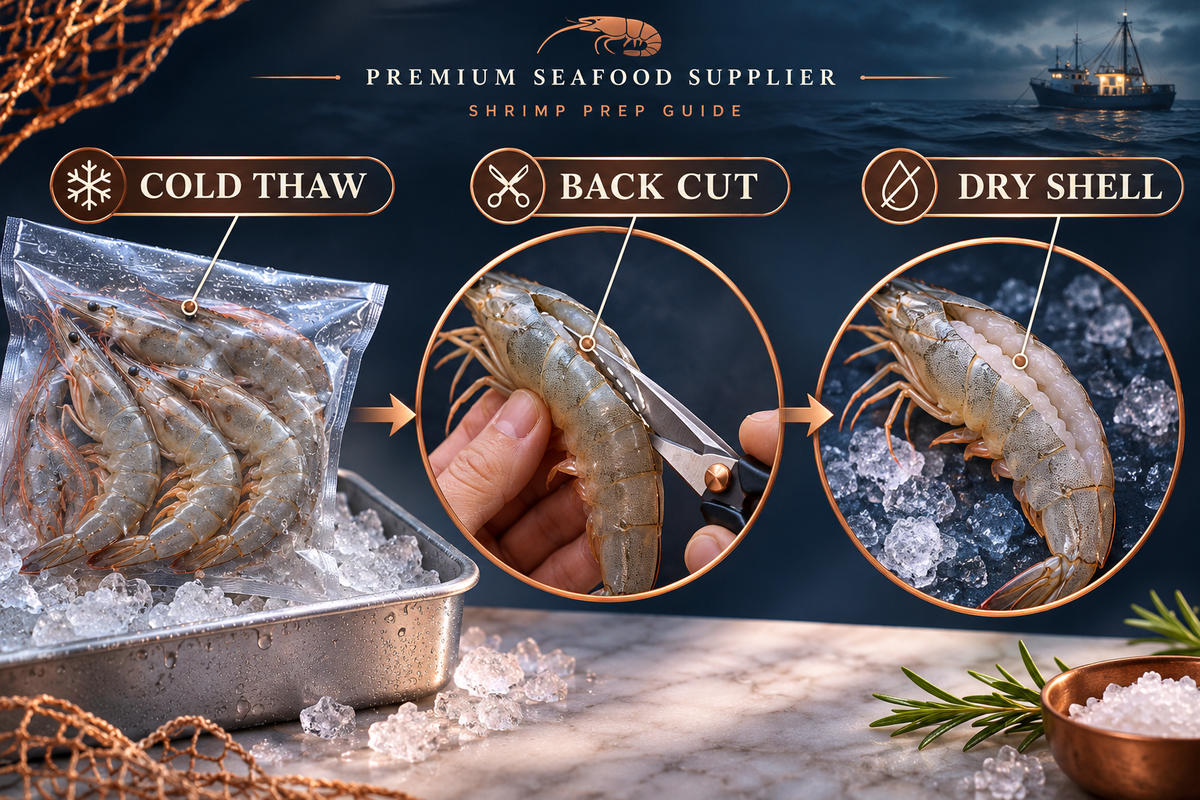
Move a labelled pack into the refrigerator and allow the center to thaw fully. For a faster same-day method, place the shrimp in a leak-proof bag in cold water and cook them immediately after thawing. The FDA’s seafood handling guidance gives both methods and warns against room-temperature thawing. IQF pieces let a kitchen pull a service quantity; a block requires planning for the whole block. Do not repeatedly thaw a block merely to pry off a few pieces.
Clean while preserving the look
Use kitchen shears to make a shallow cut along the back of the shell, lift out the dark digestive tract and keep the shell and head attached. Work over a chilled tray in small batches. Pat the shell dry before grilling or searing. Drying is a practical texture control: pooled thaw water steams the shell instead of letting it take on controlled colour.
Trim long antennae for a tidy, safe pass. Keep utensils that touched raw shrimp away from cooked shrimp and ready-to-eat garnish. Wash hands and sanitize contact surfaces between raw and cooked work. Do not put the cooked product back on the raw prep tray.
Read more: IQF versus Block-Frozen Shrimp
Cook and Serve Without Sacrificing Texture
Cook to the flesh, not to the clock. Size, whether the head is attached, the cooking vessel and the starting temperature all change the time needed.
- For a grill, use a clean hot grate, lightly oil the shell and turn the shrimp with tongs at the body rather than pulling on the head. Split large pieces along the back when even heat penetration matters.
- For a pan, work in a single layer. Crowding traps steam and creates uneven doneness. Cook a second batch instead of hiding a dense pile under a lid.
- For steaming or simmering, stop when the thickest flesh is firm, pearly and opaque. The FDA gives that appearance as the cooking cue for shrimp.
- For a catered platter, move cooked pieces to a clean service vessel and follow the relevant hot or cold holding rules. Do not let a plated sample sit through a long photography or dispatch delay and then treat it as the standard for the rest of the batch.
Here is a complete kitchen scenario. A restaurant wants a whole-shrimp grill plate but also wants guests to eat quickly. Its buyer chooses a consistent HOSO size with strong head attachment, then the kitchen thaws one service batch in the refrigerator, makes a back cut, removes the vein, dries the shells and cooks one test piece. The chef checks the thickest meat, plates it with a clear shell-disposal area and records the batch method. If service speed remains the stronger requirement, the next order switches to headless shell-on rather than stripping every head during the rush.
Read more: Understanding the Global Frozen Shrimp Supply Chain
Specify Head-On Shrimp for a Repeat Order
Write a specification that another buyer and another kitchen can reproduce. “Large whole shrimp” leaves the species, count basis, glaze and pack format unresolved.
State the complete product identity
Specify species, farmed or wild origin, HOSO, raw or cooked state, count range per named weight unit, IQF or block freezing, inner pack, net shrimp weight excluding glaze, and intended use. The Codex quick-frozen shrimp standard supplies the framework for product identity, count and net contents. Document any treatments and required label statements under the destination market’s rules.
Define what the kitchen will accept
Approve a sample against intact heads, shell and tail condition, odour, texture and allowed breakage. Inspect the same criteria on arrival. A practical receiving note should identify the lot, number of packs sampled, observed defects and disposition. That is more useful than a photograph of one attractive prawn that never represented the shipment.
For whole-shrimp service, ask for a size that fits the plate and a pack quantity that matches batch throughput. For stock or further processing, a different form or grade may serve the kitchen better. Compare Iran Fish’s wild shrimp and Vannamei shrimp by the actual lot specification rather than a broad species label.
Read more: Shrimp Import Requirements for International Buyers
Frequently Asked Questions
Use these answers to settle the common prep and buying decisions before service.
Do you have to remove the head before cooking?
No. Cook head-on shrimp whole for a suitable dish, provided the product was handled safely and the flesh is thoroughly cooked. Remove the head before cooking when the menu calls for easy, uniform portions.
Is a dark shrimp head proof that the shrimp is spoiled?
No. Check odour, flesh firmness, head attachment and handling history together. Reject product with an ammonia smell, mushy flesh or clear evidence of temperature abuse.
Can you devein shrimp without taking off the shell?
Yes. Cut a narrow line along the shell’s back with shears, lift out the tract and leave the head and shell in place.
Should frozen head-on shrimp be thawed on the counter?
No. Use the refrigerator, or a sealed bag in cold water for immediate cooking. Keep raw shrimp and drips away from ready-to-eat food.
What does HOSO mean on a shrimp carton?
HOSO means head-on, shell-on. Add species, count unit, freezing method, net weight and lot to make the purchasing specification complete.
Request Whole Shrimp from Iran Fish
Send Iran Fish the dish, species preference, whole or headless presentation, count unit, freezing method and destination. Include the pack size your kitchen will use at one time.
Compare the proposed lot with the receiving checks above and approve a representative sample against your plating and prep workflow. Start with Vannamei shrimp or the Iran Fish shrimp range and request a specification-aligned discussion.