


IQF vs Block Frozen Shrimp: Which Freezing Method Is Better for Your Business?

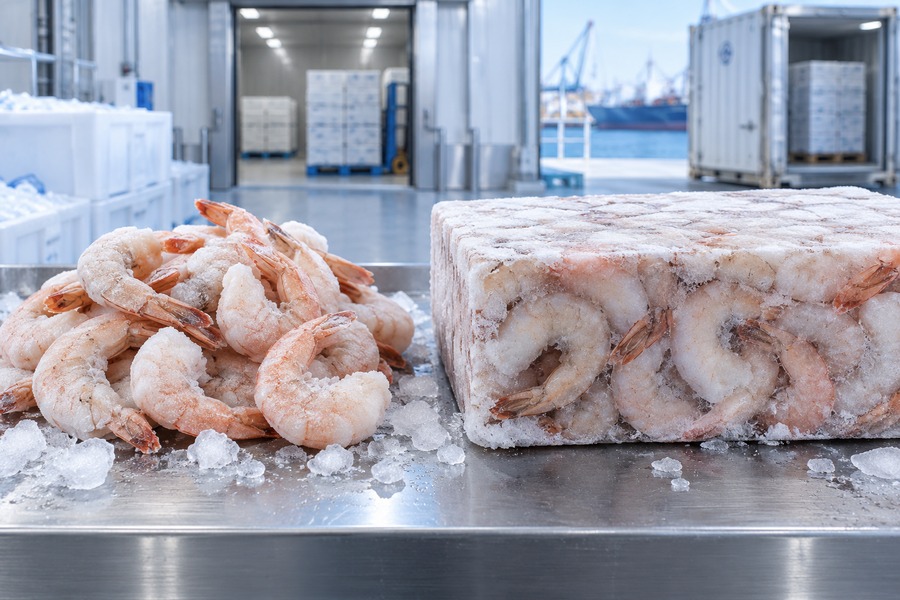
For most restaurants, retailers and mixed-customer distributors comparing IQF vs block frozen shrimp, IQF is the more flexible choice because each shrimp can be removed separately. Block frozen shrimp are often better when a factory or high-volume kitchen will thaw and use the entire pack at once. The right answer depends on end use, batch size, product form, packaging and cold-chain control; neither label guarantees quality on its own.
| Decision factor | IQF shrimp | Block frozen shrimp | Practical answer |
|---|---|---|---|
| Frozen format | Pieces are frozen individually and should remain free-flowing | Shrimp are frozen together as one solid unit | Choose according to how much product will be used at one time |
| Portion control | Individual pieces can be removed as needed | The full block normally needs a planned thaw | IQF is more flexible for variable daily demand |
| Typical users | Retailers, restaurants, hotels, caterers and broad-line distributors | Further processors, commissaries and high-volume users | Match the format to the customer’s workflow |
| Thawing | A selected quantity can be thawed | The complete block is generally thawed together | Block works best for full-batch production |
| Quality priority | Piece separation, even glaze and freedom from clumps | Block integrity, even freezing and condition after thawing | Inspect the physical product, not only the label |
| Packaging | Bags and foodservice packs support partial use | Compact lined cartons or blocks support bulk handling | Confirm inner pack, carton and pallet configuration |
| Best overall use | Flexible inventory and precise portions | Predictable bulk processing | The better method is the one that prevents unnecessary handling and repeat temperature exposure |
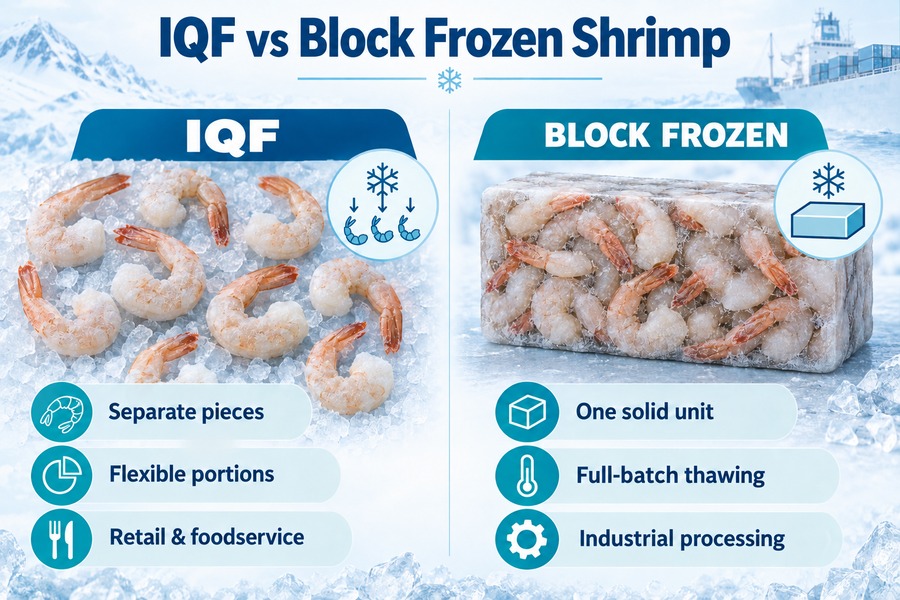
What Does IQF Mean in Frozen Shrimp?
IQF stands for individually quick frozen. Instead of turning a full pack into one mass, the process freezes shrimp as separate pieces so a buyer can remove a required quantity without thawing everything else.
How Individual Quick Freezing Works
After reception, washing, grading and any specified processing, shrimp move through a rapid freezing system as individual pieces. Depending on the product, they may be raw or cooked, head-on, headless, peeled, deveined or tail-on. The essential commercial result is separation: correctly handled pieces remain loose enough to be poured or selected from the pack.
Why Shrimp Remain Separate After Freezing
Pieces must enter the freezer without being compressed into a block and must be kept moving or spaced during the critical freezing period. Afterward, careless exposure to warmth can soften the surface. When the product freezes again, adjacent pieces may stick together, creating clusters that no longer deliver the handling benefit the buyer expected.
A good IQF pack therefore contains recognisable, separately frozen shrimp with no widespread clumping. A few pieces touching is different from a bag that has become a solid mass. The latter may indicate poor process control, damaged glaze or temperature fluctuation and deserves investigation.
The Role of Glazing and Protective Packaging
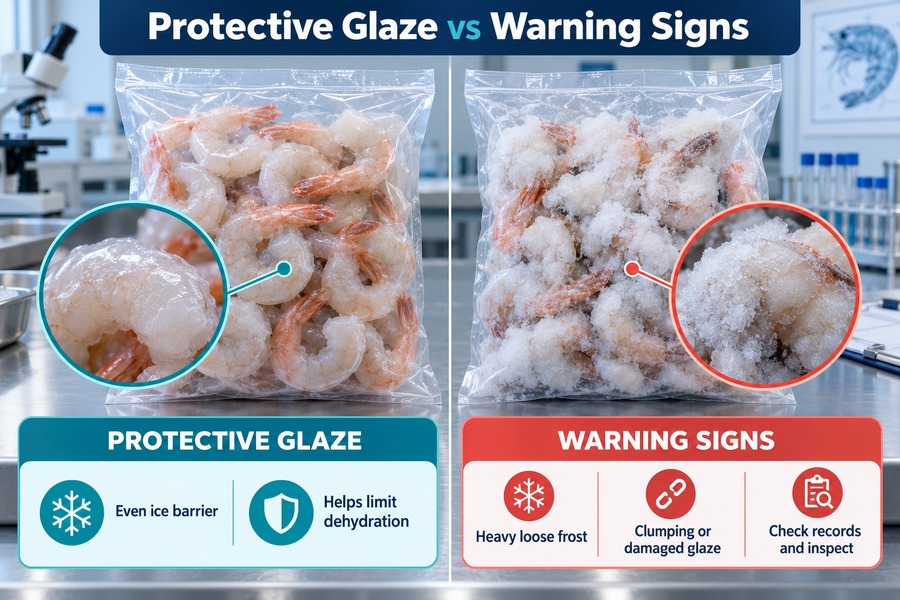
Many IQF shrimp receive a thin protective ice glaze after freezing. This barrier limits moisture loss and oxidation during frozen storage. The bag or liner then provides another defence against dry air, odours, physical damage and contamination. Glaze is useful protection, but it is not shrimp flesh and must be accounted for correctly when net contents are checked.
What Is Block Frozen Shrimp?
Block frozen shrimp are arranged or filled into a container and frozen together as a solid unit. The format is built for buyers who can plan around a complete block rather than remove pieces one by one.
How Shrimp Are Frozen into a Solid Block
Prepared shrimp are packed in a tray, liner or carton, often with controlled water addition where the agreed specification permits it, and frozen until the unit becomes firm throughout. Plate freezing is commonly associated with blocks because cold surfaces can remove heat from the pack, although the exact equipment and process should be confirmed with the supplier.
Common Product Forms and Pack Formats
Block freezing can be used for head-on shell-on, headless shell-on and other forms. It is particularly practical when the shrimp will be peeled, breaded, marinated, cooked or otherwise transformed after thawing. The specification must still identify species, raw or cooked status, product form, count grade, block weight, ingredients, glaze or added-water basis, packaging and acceptance criteria.
Buyers comparing forms can use Iran Fish’s guide to HOSO vs HLSO shrimp before selecting the freezing method. Product form and freezing format are separate decisions: HOSO or HLSO describes what remains on the shrimp, while IQF or block describes how the pieces are frozen and handled.
When Full-Block Thawing Makes Operational Sense
A seafood factory that processes a full block in one scheduled run may gain little from individual separation. The same is true for a central kitchen that empties a complete unit into a controlled thawing system and uses it promptly. In those situations, compact blocks can simplify batch identification, stock rotation and material feeding. Problems arise when a user needs only part of a block and attempts to chip, warm or repeatedly handle it to release a smaller quantity.
IQF vs Block Frozen Shrimp: The Key Differences
The freezing format changes what happens after a carton enters the buyer’s cold store. It affects access to individual shrimp, production planning, thawing discipline and the checks needed at receiving.
| Attribute | IQF | Block frozen |
|---|---|---|
| Piece separation | Each shrimp should remain individually accessible | Pieces are intentionally joined in one frozen unit |
| Quantity released | Any practical number of pieces | Normally the complete block |
| Demand pattern | Irregular or mixed order sizes | Stable, high-volume batches |
| Handling | Pour, weigh and return the protected pack to storage | Stage, thaw and process the block under a defined plan |
| Main receiving defect | Clumping, broken glaze, dehydration or loose ice | Cracked block, damaged liner, uneven appearance after thawing |
| Customer flexibility | High | Best for a known production use |
| Inventory planning | Supports small withdrawals | Supports batch-based consumption |
| Inspection emphasis | Separation, glaze, piece condition and count | Block integrity, core condition, thaw uniformity and net contents |
- IQF is generally the stronger choice when orders must be weighed into different portions or when a kitchen’s daily demand changes.
- Block frozen product is generally the stronger choice when the buyer has a validated full-batch thawing process and immediate use for the complete unit.
- IQF can reduce unnecessary exposure of unused shrimp, but only if the bag is resealed and returned promptly to stable frozen storage.
- A block can be operationally efficient, but trying to separate it while frozen can damage shrimp and weaken portion accuracy.
- Packaging format, product form and count grade must be compared alongside freezing method. An IQF peeled product and a block-frozen HOSO product are not equivalent simply because both contain the same species.
- Quality depends on the entire chain from harvest to destination. A well-produced, continuously frozen block can outperform poorly handled IQF shrimp.
How the Freezing Method Affects Texture, Appearance and Eating Quality
Freezing rate matters because water inside the muscle turns to ice. Faster freezing generally limits the growth of large crystals that can disrupt tissue, which is one reason IQF is associated with good texture. Yet an IQF line can still deliver weak results if raw material was mishandled, if the freezer was overloaded or if the product later experienced temperature cycling. Conversely, properly prepared block frozen shrimp can retain clean flavour and firm texture when the block is frozen efficiently, stored steadily and thawed correctly.
The most useful test occurs after a controlled thaw. Compare firmness, springiness, surface moisture, odour, flavour where appropriate, colour and cooking performance against an approved sample. Excessive drip, mushiness or dryness may reflect several causes, including slow freezing, long pre-freezing delays, protein treatment, dehydration, partial thawing and refreezing, or poor thaw control. The freezing-format label alone cannot identify the cause.
Appearance also provides evidence. White dry patches, deep dehydration, damaged glaze and heavy loose frost can signal moisture loss or fluctuating conditions. Black spot, shell damage and discolouration require their own agreed tolerances and should not be diagnosed from a photograph alone. Buyers should combine frozen inspection with product-temperature records, packaging review and a repeatable thawed assessment.
Portion Control, Thawing Time, Labour and Product Waste
The clearest operational difference is how much shrimp must be released from the frozen pack. That decision affects preparation schedules, exposure time and the risk of thawing more product than the business can use.
Partial Use Versus Full-Batch Thawing
With free-flowing IQF shrimp, staff can weigh the day’s requirement and keep the remainder frozen. This supports menus with fluctuating sales, retail packs, sampling and customers ordering several portion sizes. The benefit disappears if the pack is left open, allowed to warm or repeatedly moved between storage and preparation areas.
A block should be treated as a production unit. Before thawing, the operation needs enough refrigerated space, suitable containers, drainage control, traceable labelling and a plan for the entire quantity. If those conditions are available and demand is predictable, block frozen shrimp can move efficiently through a high-volume line.
Kitchen and Processing Workflow
Restaurants often value IQF because cooks can release a counted or weighed portion close to service. Distributors can split inventory among customers with different requirements, subject to hygienic repacking rules and destination regulations. Further processors may prefer blocks because a full unit can feed a peeling, cooking or value-added line in one scheduled batch.
Safe thawing remains essential for either method. The U.S. Food and Drug Administration’s seafood guidance advises gradual thawing in a refrigerator overnight; for a faster method, seafood can be sealed in a plastic bag and immersed in cold water. Commercial operations should follow their own validated food-safety plan and applicable local rules.
Refreezing Risk, Drip Loss and Avoidable Waste
Unused thawed shrimp create a planning problem, not permission to improvise. Repeated warming and refreezing can damage texture, create clumps and obscure the product’s handling history. A buyer should choose pack units that match actual throughput and train staff to withdraw, label, thaw and use product consistently.
Drip after thawing should be measured on representative samples when yield affects the production specification. Compare like with like: same species, form, count, treatment, glaze basis, thawing method and cooking test. A format that looks convenient at purchase may be less suitable if it causes over-thawing, broken pieces or inconsistent portions in the customer’s real workflow.
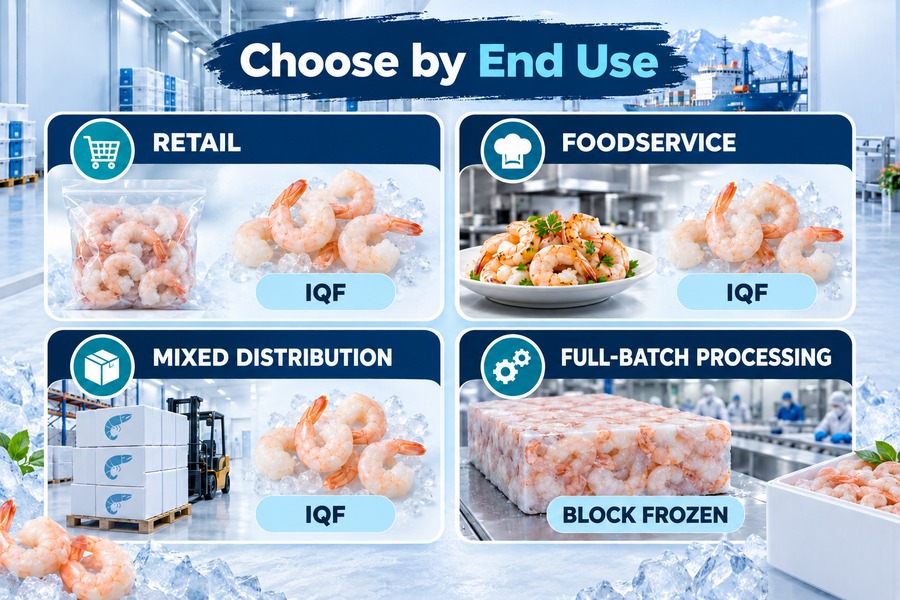
Which Format Fits Retail, Foodservice and Industrial Processing?
There is no single winner across every sales channel. The right frozen shrimp format is the one that fits the smallest practical handling unit used by the final customer.
Retail and Private-Label Packs
IQF suits resealable and fixed-weight consumer packs because shoppers can take out a few shrimp and return the rest to the freezer. Separate pieces are easy to count, display through a transparent window where permitted and divide between meals. Retail specifications should cover the species name, product form, count, raw or cooked status, ingredients, net contents excluding glaze where required, origin, lot code, storage instructions and destination-market labelling.
Restaurants, Hotels and Catering Operations
IQF is usually easier for à la carte service, banqueting with changing covers and kitchens that use the same shrimp in several dishes. It supports measured withdrawals and can help keep portion size consistent. The operator should select a bag size that can be resealed or transferred into a protected, identified food-grade container without losing traceability.
Block frozen shrimp fit commissaries, buffets and event kitchens when production volumes are confirmed in advance. A full block may be scheduled for refrigerated thawing and processed in one session. The buyer should ensure that the block weight matches real batch capacity.
Distributors Serving Mixed Customer Types
Iran Fish provides both farmed Vannamei shrimp and wild-caught shrimp. Availability, freezing format and processing configuration should be confirmed for the proposed lot rather than inferred from a general product category.
Seafood Factories and Further Processors
For factories, the decision starts with line throughput. A processor using the entire unit for peeling, deveining, breading, cooking or marinating may prefer block frozen input. A processor running short recipes, multiple sizes or rapid product changes may value IQF separation. Trial production is the safest comparison: record thaw behaviour, broken pieces, trimming, line flow, finished texture and usable output under the same controlled conditions.

Packaging, Glazing and Cold-Chain Requirements
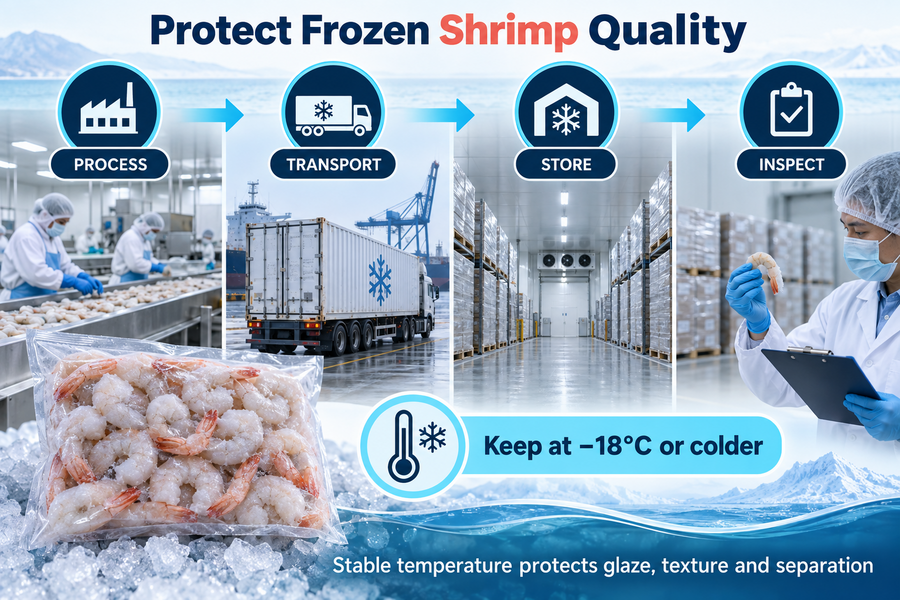
Freezing protects shrimp only when the frozen condition is maintained. Packaging, glaze and temperature history determine whether IQF pieces remain separate and whether a block arrives in the condition approved at origin.
Why Glaze Is Different from Excess Surface Ice
Glaze is an intentional protective layer of ice applied to limit dehydration and oxidation. Loose ice, thick frost inside a bag or irregular opaque build-up may instead indicate damaged packaging, glaze loss, moisture migration or temperature fluctuation. Visual inspection can raise a concern but should be followed by temperature-history review and product testing.
The commercial distinction between gross weight and net shrimp contents must be explicit. NOAA’s lot-by-lot inspection procedures use different net-weight methods for readily separable glazed IQF seafood and seafood frozen together in a block. Buyers should name the agreed method in the specification and apply it consistently at origin and destination.
Packaging Integrity and Moisture Protection
Check seals, liners, carton strength, punctures, water staining, compression, coding and pallet condition. IQF bags must limit air exchange after packing and withstand normal frozen handling. Block liners should contain the unit, release correctly during controlled thawing and prevent direct contact with damaged board or contaminated surfaces.
Maintaining the Product at −18°C or Colder
The Codex Standard for Quick-Frozen Shrimps or Prawns, CXS 92-1981 states that quick freezing is not complete until the product reaches −18°C or colder at its thermal centre after thermal stabilisation. It also requires the product to remain deep frozen during transportation, storage and distribution. This is a condition of the shrimp, not simply the number displayed on a room or reefer controller.
Purchase instructions should define acceptable evidence, such as calibrated temperature records, production logs, container monitoring and receiving checks. A single measurement at the door cannot reconstruct the full journey, so lot identification and continuous cold-chain discipline matter.
Warning Signs of Partial Thawing and Refreezing
Widespread IQF clumping, deformed packs, collapsed blocks, water staining, damaged cartons, heavy internal frost and glaze separation justify closer inspection. None proves the complete history alone. Quarantine the affected lot according to the buyer’s food-safety system, preserve records and use qualified personnel to determine disposition.
How Importers Should Inspect IQF and Block Frozen Shrimp
A defensible inspection compares the delivered lot with a written specification and an approved sample. Broad phrases such as premium IQF shrimp or export-quality block shrimp are not measurable acceptance criteria.
| Inspection point | IQF focus | Block-frozen focus | Evidence to request |
|---|---|---|---|
| Identity | Species, form and count on each bag | Species, form and count on each block or carton | Specification, label and traceability records |
| Frozen condition | Free-flowing pieces, limited clumping, intact glaze | Complete block, intact liner, no collapse | Receiving photographs and temperature record |
| Net contents | Deglazed weight using the agreed IQF method | Drained or deglazed weight using the agreed block method | Sampling sheet and calibrated scale record |
| Workmanship | Broken pieces, shell remnants, vein removal and tail condition as applicable | Condition and uniformity after the controlled thaw | Approved sample and defect limits |
| Sensory quality | Odour, colour and texture after controlled thawing | Odour, colour and texture throughout the thawed block | Signed inspection report |
| Pack condition | Bag seals, punctures and loose surface ice | Liner, carton, cracks and water staining | Packaging checklist |
| Documents | Lot code, processing details and required certificates | Lot code, processing details and required certificates | Current destination-specific document set |
- State the scientific species rather than relying only on a common name.
- Write the product form in full, such as head-on shell-on, headless shell-on, peeled and deveined, or peeled deveined tail-on.
- Give the count range and its unit. The Vannamei shrimp size guide explains why a count without pieces per pound or pieces per kilogram is incomplete.
- Define raw or cooked status, permitted ingredients and any treatment declaration.
- Establish a sampling plan, thawing method, count method, deglazing method and acceptance limits before shipment.
- For IQF, set expectations for piece separation, clumps, broken pieces, glaze coverage and dehydration.
- For blocks, set expectations for unit integrity, internal uniformity after thawing, broken pieces and complete-pack usability.
- Separate gross pack weight, ice or glaze and actual shrimp net contents.
- Review traceability from source through processing, packing and finished lot.
- Confirm health, origin, halal, HACCP-related and other documents required by the destination and buyer. Requirements differ by market, so current rules must be checked for each shipment.
- Retain an approved sample or detailed reference photographs where colour, presentation and workmanship are commercially important.
- Compare the pre-shipment result with destination inspection using the same definitions and methods.
A Buyer-Focused Decision Checklist
The choice should be made before a quotation or contract reduces the product to a short code. Use the following questions to convert the customer’s operational needs into a complete frozen shrimp specification.
- Will the customer use individual portions, a few kilograms at a time or the entire pack in one production run?
- Is demand predictable enough to schedule a full-block thaw without surplus product?
- Does the customer sell through retail, restaurant, catering, distribution or further-processing channels?
- Which species and product form are required: Vannamei or wild shrimp, HOSO, HLSO, peeled, deveined, tail-on, raw or cooked?
- What count range and count unit does the final customer recognise?
- Can the facility thaw a complete block under refrigerated, traceable conditions?
- Does the kitchen need to count pieces quickly or weigh several portion sizes during service?
- Which inner-pack and master-carton sizes fit cold-store space and stock rotation?
- Is a retail-ready or private-label pack required, or will the shrimp enter another processing line?
- How will glaze and net shrimp contents be declared and verified?
- Which defects will cause rejection, and how will clumping, dehydration, broken pieces, discolouration and texture be measured?
- What temperature evidence and reefer records must accompany the lot?
- Which certificates, labels, languages and import documents are required at destination?
- Will a representative sample or pilot production test be approved before the shipment is finalised?
For a broader procurement framework, use the Vannamei shrimp buying guide for importers and distributors. It connects freezing format with species identity, product form, size count, glaze, net contents, traceability and inspection.
Common Misconceptions About IQF and Block Frozen Shrimp
IQF does not automatically mean premium quality. It describes how pieces are frozen and presented, not the freshness of the raw material, accuracy of the count, workmanship, treatment, glaze, cold-chain history or sensory condition. An IQF pack with heavy clumping, deep dehydration or weak texture may be less suitable than a carefully produced block.
Block frozen does not mean inferior shrimp. The format can be a rational choice for factories and kitchens using full batches. Quality problems usually arise when the block is incompatible with the user’s workflow, frozen unevenly, stored poorly or thawed without control. A buyer who approves the format through a production trial can evaluate its real performance.
Visible ice is not always a defect because an even glaze protects shrimp. The concern is whether the ice matches the declared specification, whether net contents exclude glaze as required and whether loose frost or irregular build-up suggests a damaged cold chain. The correct decision comes from weight testing, physical inspection and records together.
Frequently Asked Questions
These answers address the questions buyers most often face when comparing the two formats. Final specifications should still be based on the proposed product, destination rules and actual customer workflow.
Is IQF Shrimp Always Better Than Block Frozen Shrimp?
No. IQF is usually better for piece-by-piece access, changing portion sizes, retail bags and mixed foodservice demand. Block frozen shrimp can be better for a processor or central kitchen that will thaw and use the complete unit in one controlled batch. Quality also depends on raw material, processing, glaze, packaging, storage and thawing, so the freezing name cannot replace inspection.
Does IQF Shrimp Need to Be Thawed Before Cooking?
That depends on the product and the validated recipe. Some individually frozen shrimp can enter a cooking process from frozen, while other dishes need controlled thawing for even cooking, seasoning or further preparation. Follow the product instructions and the operation’s food-safety plan. For general consumer handling, FDA guidance recommends thawing frozen seafood overnight in the refrigerator or, when faster thawing is necessary, in a sealed bag immersed in cold water.
Why Is Frozen Shrimp Covered with an Ice Glaze?
Glaze forms a protective ice barrier that helps reduce surface dehydration and oxidation during frozen storage. It should be relatively even and consistent with the agreed specification. The declared shrimp net contents must be distinguished from protective glaze, using the applicable rules and an agreed deglazing or drained-weight method.
How Can Buyers Detect Thawing and Refreezing?
Possible warning signs include widespread clumping in an IQF pack, deformed bags, cracked or collapsed blocks, water-stained cartons, glaze damage and heavy frost inside otherwise sealed packaging. These signs are not a complete diagnosis. Review temperature records, lot history, packaging condition and representative product samples, then follow the receiving facility’s hold-and-assess procedure.
Which Format Is Better for Wholesale Shrimp Orders?
IQF is often the most adaptable wholesale format when the distributor serves customers with different order sizes or end uses. Block frozen shrimp are often more suitable when the wholesale customer is a processor using full units. A complete order should state species, product form, count and unit, raw or cooked status, freezing method, pack size, net contents, glaze basis, quality limits, documents and cold-chain requirements.
Choose the Right Frozen Shrimp Format with Iran Fish
The best freezing method is the one that reaches the customer in a usable unit and remains protected through storage, transport and preparation. Before ordering, connect IQF or block freezing to the shrimp species, product form, size count, daily batch, packaging, labelling and inspection plan.
Explore Iran Fish’s frozen shrimp range and send a detailed requirement rather than a product name alone. Include the destination, expected use, Vannamei or wild shrimp preference, HOSO, HLSO or peeled form, count basis, freezing format, inner pack, carton configuration and required certificates.
To discuss current configurations and shipment documentation, contact Iran Fish. The trade team can review the requested IQF or block frozen shrimp specification against available supply and help clarify the product before production and packing.
3 thoughts on “IQF vs Block Frozen Shrimp: Which Freezing Method Is Better for Your Business?”