


Raw Prawns: How to Handle, Prepare and Cook Them Safely

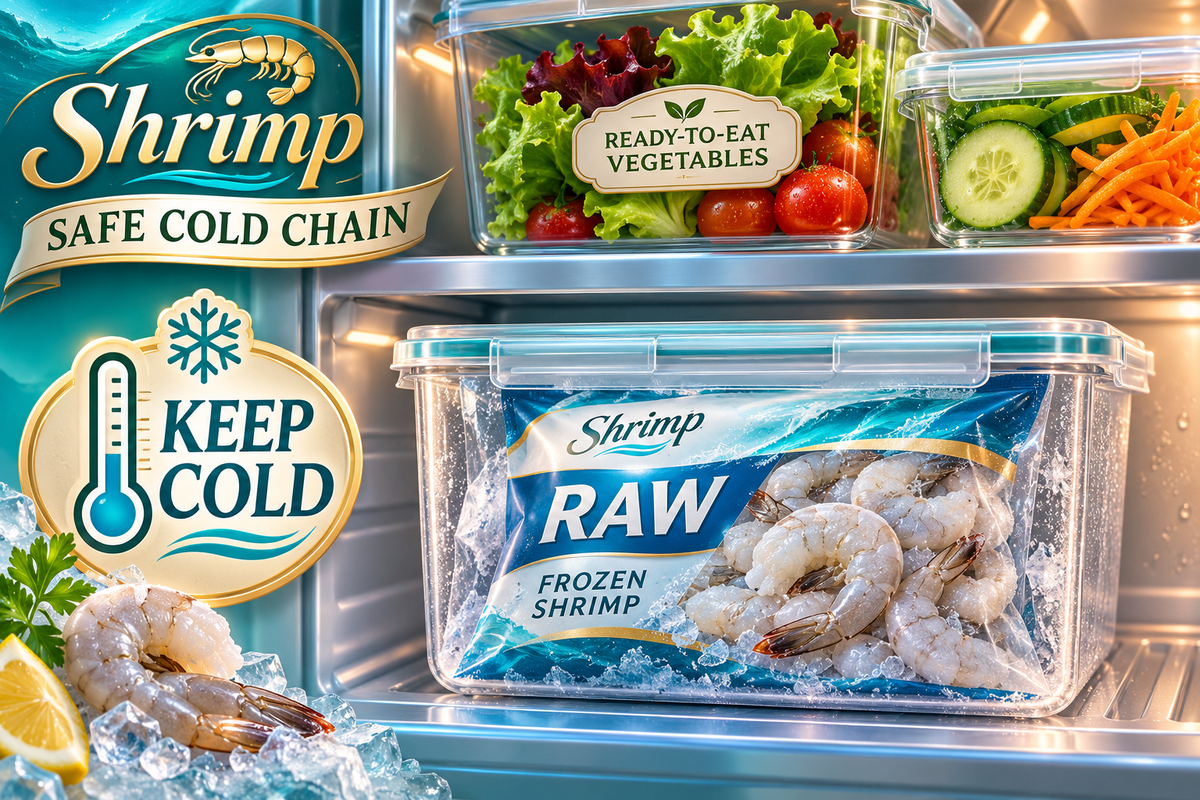
Keep raw prawns cold, separate them from ready-to-eat food, and cook until their thickest flesh is pearly, opaque and firm. For a fast meal, buy peeled, deveined raw prawns; for a whole-prawn presentation, leave heads and shells on and plan the prep. Thaw frozen product in the refrigerator or a sealed bag in cold water. Select a documented size and form from Vannamei Shrimp before choosing a recipe.
| Starting point | Do this | Why |
|---|---|---|
| Pack says raw | Cook fully before eating | Colour alone does not prove the product is ready to eat |
| Frozen raw prawns | Thaw safely unless pack gives direct-cook instructions | Improves control and even cooking |
| Head-on, shell-on | Choose whole presentation or remove head and shell before cooking | Matching prep to the dish prevents rushed handling |
| Visible dark dorsal tract | Lift it out with a shallow cut if desired | Cleaner presentation and easier inspection |
| Thickest piece translucent after heating | Continue cooking | The batch is not finished |
| Raw juices touched board or tongs | Wash and sanitise before cooked food contact | Prevents cross contamination |
What does raw prawns mean on a product label?
Raw means the prawn has not received a complete cook. It can be fresh or frozen, whole or peeled, head-on or headless, and with or without the intestinal tract removed. None of those processing choices turns raw shrimp into ready-to-eat food. Read the full declaration, not just a photograph on the pack. Pink shells are not a reliable signal: species and processing influence appearance.
Check three things before opening a carton: raw or cooked state, product form and count. A head-on shell-on prawn behaves differently at the table from a peeled tail-on piece, even when they come from the same species. Count tells you about size only when the unit and form are clear. The Shrimp Grading System explains why a bare number cannot describe the whole purchase.
For a buyer, the useful specification is a sentence: “raw, individually frozen, peeled, deveined, tail-off prawns of one stated count for a pasta line,” or “raw, head-on, shell-on prawns for a whole-grilled presentation.” State the intended dish to the supplier. This is an example of a good order instruction, not an account of an actual Iran Fish order.
Read more: Types of Prawns: A Practical Guide to Species and Cooking Uses.
How should you handle raw prawns before prep?
Keep them cold and keep raw juices contained. Prepare clean utensils and a separate area for food that will be served without another cook.
- Keep refrigerated prawns in a covered, leakproof container low in the fridge. Check the product’s date and storage directions.
- Thaw frozen prawns in the refrigerator in a tray, or place them in a leakproof bag in cold water and cook promptly after thawing. The FDA seafood safety guide sets out both routes.
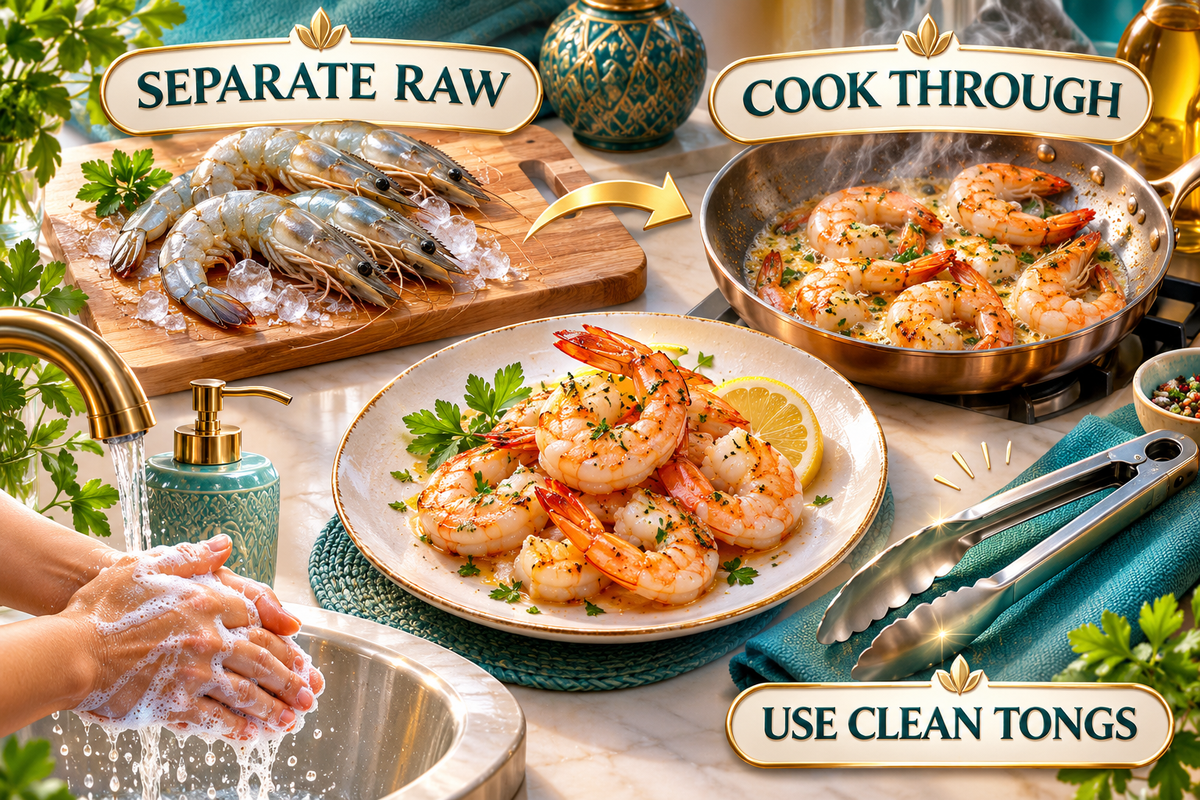
- Wash hands before and after handling raw seafood. Wash and sanitise boards, knives and tongs before they touch cooked prawns or salad.
- Open and inspect the pack: check the label, ice glaze and condition. A strong sour, rancid or ammonia-like odour is a reason to reject seafood rather than mask it with lemon or spice.
- Do not leave raw prawns on a counter during a long prep session. Portion what you need and return the rest to cold storage.
- Keep raw seafood away from guests with shellfish allergy and prevent ingredient or utensil cross contact.
The practical kitchen improvement is to prepare the salad, garnish and clean serving plate before opening the raw prawn pack. Then handle seafood on its own board, wash up, cook, and move the finished prawns only with clean utensils. This order removes the common moment when a cook reaches for a “clean” lemon wedge with a hand that just touched raw shells.
Read more: Frozen Shrimp Shelf Life: Storage Rules and Guide.
How do you peel and devein raw prawns?
Decide whether the finished dish needs the shell first. If guests should eat without handling shells, peel before the cook; if the whole prawn is the presentation, keep the shell and plan the serving instructions.
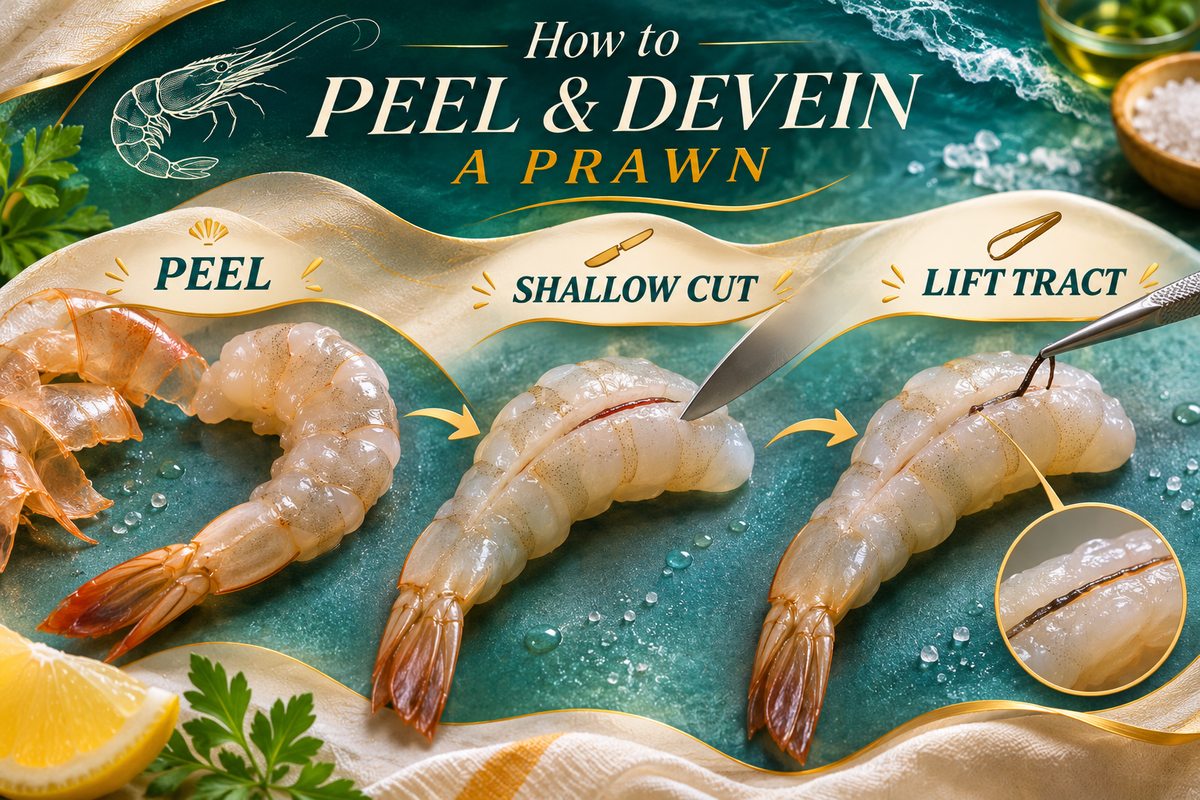
Remove the head and shell
Hold the body firmly and twist off the head if your dish calls for headless prawns. Peel the shell segments and legs away from the flesh. Leave the tail only when it serves the presentation or a deliberate hand-held dish. If the prawns are very slippery, dry your hands and work over a tray rather than gripping so hard that the flesh tears. A standard prawn preparation sequence shows the head-to-shell sequence.
Find and remove the dorsal tract
Look along the back for a dark line. Make a shallow incision and lift the tract with the tip of a small knife or a suitable deveining tool. Avoid cutting deep into the flesh merely to chase a faint line. The tract is a digestive channel, not a blood vein. For a peeled prawn intended for a neat pasta or salad presentation, removing a visible tract gives a cleaner finish; it does not replace proper cooking or cold handling.
Butterfly only when the dish benefits
After a shallow dorsal cut, open the flesh gently without slicing completely through. Butterflying exposes more surface to seasoning and changes how quickly the piece cooks, so group butterflied pieces separately from intact thick prawns. If you want a whole shell-on grilled prawn, keep the shell and use a careful cut through it only when the recipe calls for that preparation.
A full prep-to-plate example
Take a labelled pack of raw frozen peeled prawns from its refrigerator tray after it has thawed. Check that every piece separates, drain and dry it, inspect for any remaining tract, then put the empty pack in the bin. Wash your hands and prep area. Heat a skillet, cook the prawns in one layer, and check the thickest flesh for a pearly, opaque and firm finish. Move them to a clean plate with clean tongs. Add them to a completed sauce just before serving. The sequence is instructional; it does not describe a recorded company kitchen session.
Read more: Shrimp With Head On: 7 Checks Before Cooking or Serving.
How do you cook raw prawns all the way through?
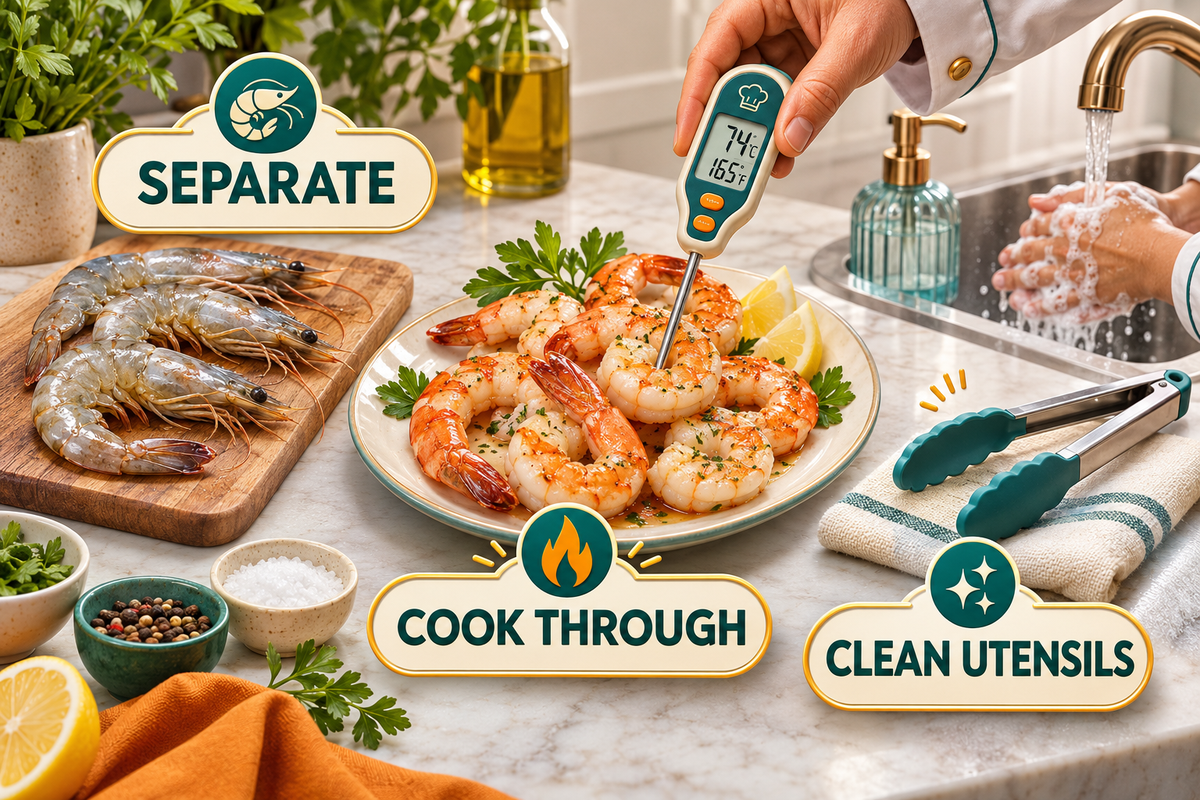
Cook until the thickest part turns pearly and opaque. Use a food thermometer when practical: FoodSafety.gov’s temperature chart gives 63°C or 145°F as the seafood benchmark.
In a skillet
Drain and dry the thawed prawns, then use a broad hot pan with enough room for a single layer. Turn the pieces so heat reaches each side. Large prawns need more attention to the thickest part; small ones finish sooner. Remove each batch as it finishes rather than leaving every piece in a crowded pan until the largest is ready. Use separate utensils for raw and cooked prawns.
In a sauce or soup
Start with a simmering dish and add prawns toward the end. Stir so the pieces are exposed to heat rather than trapped in a cold clump. Pull out the largest piece to check its centre before serving. A pink or orange shell can hide undercooked translucent flesh; examine the flesh itself. Do not use an unverified time copied from a different size or preparation state.
On a grill
Thaw shell-on or head-on prawns first unless the pack specifically instructs direct frozen grilling. Keep a clean finished-food plate separate from the raw tray. Turn carefully, and inspect the thickest flesh before serving. Do not infer doneness solely from grill marks or curled tails.
Read more: Shrimp Grading System: Counts, Sizes and Commercial Standards.
Which raw prawn format fits the dish?
Choose by eating experience and prep workload. A beautiful whole prawn is a poor fit for a sauce served over pasta when diners expect to eat with a fork.
| Dish | Practical raw form | Trade-off |
|---|---|---|
| Quick pasta or stir-fry | Peeled, deveined, similar-sized pieces | Easy eating, less whole-shell presentation |
| Grill platter | Head-on or shell-on, consistent count | Strong presentation, guests handle shells |
| Skewer | Peeled or tail-on, consistent size | Easy to turn, monitor thin exposed flesh |
| Broth or stock | Whole prawns or retained clean shells where appropriate | More preparation and stricter separation of raw and cooked steps |
A decision with conflicting priorities
Imagine a chef wants the dramatic appearance of head-on prawns, while a corporate lunch requires fork-only eating and fast table service. Choose peeled, deveined pieces for the lunch, then reserve whole prawns for a separate grill or platter. The right format meets the serving brief; the photograph of the largest prawn is not the specification.
Confirm species and count
Use the Types of Prawns guide for species and culinary use, and review the Vannamei Shrimp product page for a concrete export product. Ask for the same raw/cooked state, shell format and count on every quotation and sample.
When comparing two cartons, record whether the count is stated per kilogram or per pound and whether it describes whole product or peeled meat. A count without its unit is not a reproducible buying instruction. Then choose one cooking batch from a uniform size, rather than combining very large whole prawns with small peeled pieces and expecting one pan check to describe both. This step matters in a commercial kitchen as much as at home: a supplier’s attractive size photograph does not tell the cook what proportion of the product is shell or how many servings a carton yields. Write the product form next to the count every time you communicate an order.
Read more: Vannamei Shrimp: Market Demand, Supply and Buying Trends.
Which mistakes spoil texture or safety?
Keep heat, water and raw-contact surfaces under control. Do not solve an uncertain product label with a guess based on colour.
- Do not cook a block-frozen pack in a skillet as if every piece were individually frozen. Thaw until the pieces separate.
- Do not flood a small pan with wet prawns. Drain, dry and work in batches.
- Do not overcook a precooked product with raw-prawn instructions. Read the cooked state first.
- Do not return cooked prawns to a raw seafood tray or use the unwashed raw tongs for plating.
- Do not rely on tight curling as the only doneness test. Look at the thickest flesh and use a thermometer when practical.
- Do not serve raw seafood to someone expecting cooked prawns. Product identity is part of service safety.
If a package has lost its label, keep it out of a cold ready-to-eat preparation. Establish what the product is from reliable records before you cook or serve it. If you cannot confirm its handling history or whether it was sold as ready to eat, reject the assumption that a quick rinse or a brief warm-up will make it suitable. A clear receiving label is easier to preserve than a mystery batch is to reconstruct after the fact.
Frequently asked questions
These answers settle common handling decisions before a batch reaches the pan. Check your pack when the preparation state is unclear.
Do raw prawns always look grey?
No. Colour varies with species and shell. Follow the raw or cooked declaration on the label, not visual colour alone.
Is the dark line a blood vein?
No. It is the digestive tract. Remove a visible tract for clean presentation, especially on peeled product.
Should I wash raw prawns under the tap?
Avoid splashing raw seafood juices across the sink and surrounding worktops. Follow the pack’s prep guidance, drain in a controlled area, and clean the sink and utensils afterward.
Can I cook frozen raw prawns without thawing?
Only follow a pack with specific cook-from-frozen instructions. Otherwise thaw safely, drain and cook through.
How do I know when raw prawns are done?
The flesh turns pearly, opaque and firm, including at the thickest part. Use a thermometer for a thick piece when feasible; the published seafood benchmark is 63°C or 145°F.
Choose a shrimp specification with Iran Fish
Define raw or cooked state, species, count and shell format before placing a seafood order. Those details shape preparation, cooking and the final plate.
Explore Vannamei Shrimp and share the intended dish and portion format.
Contact Iran Fish to discuss the appropriate raw prawn product.