


Cooking Frozen Prawns: When to Thaw and When to Cook Directly

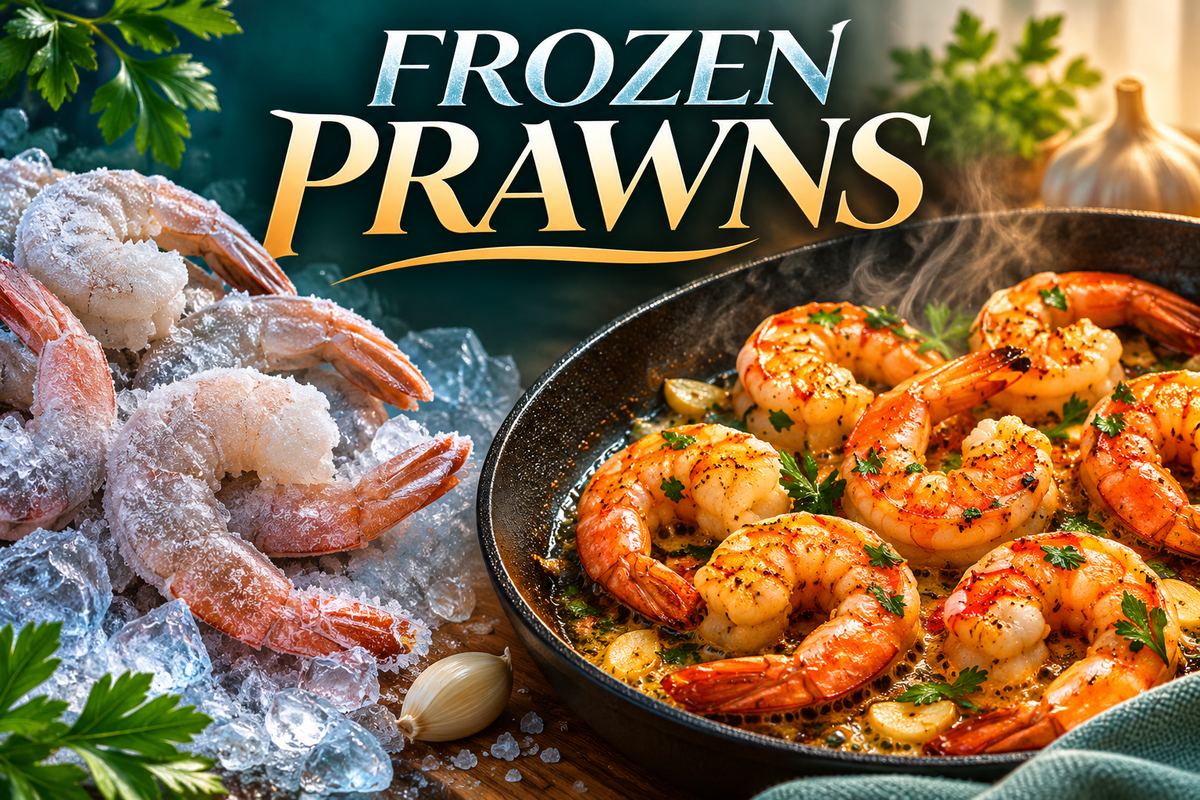
For cooking frozen prawns, read the pack first. Thaw ordinary raw prawns in the refrigerator before pan-frying, grilling or skewering; cook directly from frozen only when the package gives tested instructions for that method. Keep raw and precooked products separate in your plan, and cook raw prawns until the flesh is opaque and firm. For a consistent starting product, review Vannamei Shrimp and specify the cut, size and raw or cooked state before ordering.
| Your starting product | Best route | What to watch |
|---|---|---|
| Raw, individually frozen prawns without direct-cook instructions | Thaw safely, drain, then cook | Cold centre and watery pan if thrown into high heat frozen |
| Frozen pack marked cook from frozen with method and instructions | Follow the pack’s method through to fully cooked | Never substitute a shorter generic recipe |
| Raw prawns frozen together as one block | Thaw the block in the refrigerator until separable | Outer pieces heating while the middle stays frozen |
| Already cooked frozen prawns | Thaw safely or heat as the pack specifies | Tough texture from prolonged cooking |
| Prawns for a cold dish | Thaw safely and confirm the pack says cooked and ready to eat | Never serve raw prawns on appearance alone |
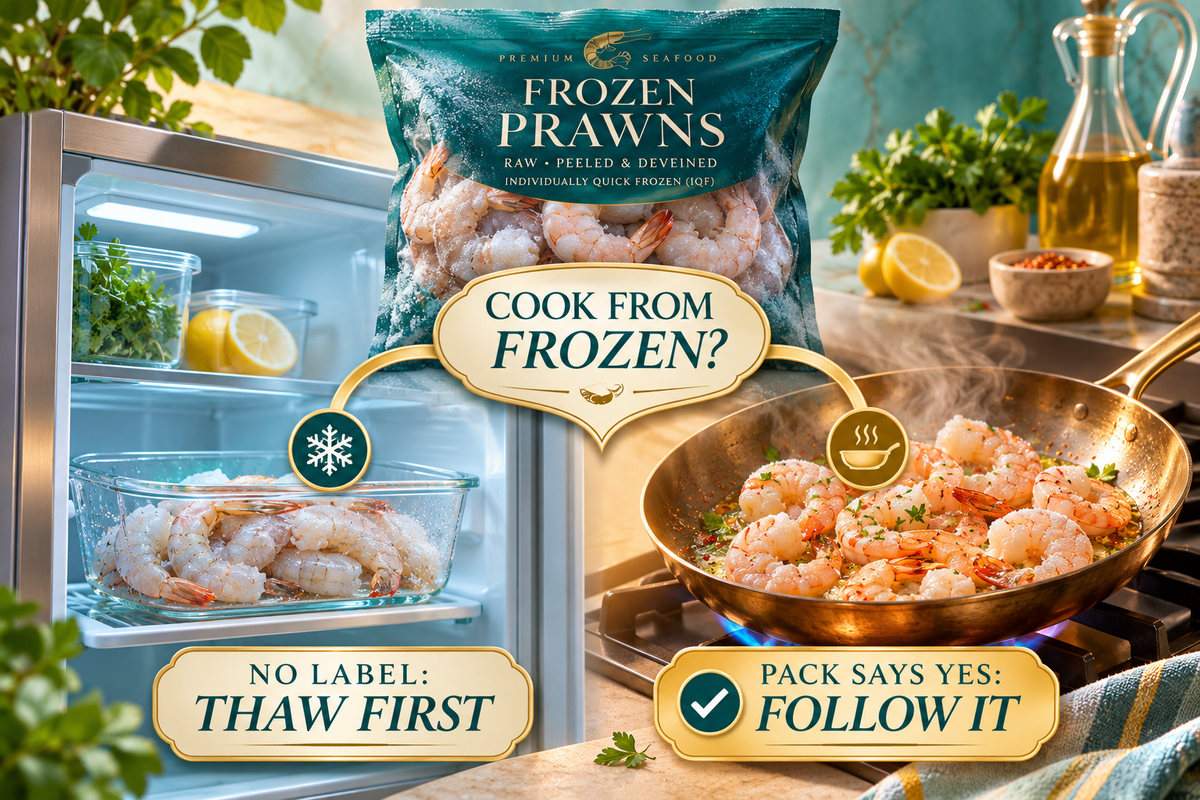
Cooking frozen prawns: thaw or cook directly?
Thaw ordinary frozen raw prawns before a fast, high-heat recipe. A frozen centre and an already browned exterior are a poor combination in a skillet. Food-safety guidance for frozen shellfish advises thorough defrosting in most cases and makes an exception for packs specifically prepared with instructions for cooking straight from frozen. The product label takes precedence over an internet cooking time.
| Question | Decision |
|---|---|
| Does the pack explicitly say cook from frozen? | Follow its tested method and complete the stated cooking process. |
| Is it a generic raw frozen pack? | Thaw under refrigeration; drain before high-heat cooking. |
| Is the pack a solid block? | Thaw until individual prawns separate before selecting a cooking method. |
| Is the product already cooked? | Treat it as a reheating or ready-to-eat question, never as raw prawns needing a full cook. |
| Has the package been discarded? | Do not guess whether it is cooked or ready to eat; obtain the product specification. |
A choice with competing priorities
Suppose dinner is soon and you want browned, garlicky prawns, but the only bag in your freezer is a solid block of raw shell-on product. Speed pushes toward the hot pan; even cooking pushes toward thawing. Thaw the block safely, separate and drain the prawns, then cook in manageable batches. If you need a true freezer-to-pan workflow next time, select a product with explicit cook-from-frozen directions rather than improvising with the wrong product form.
Read more: Types of Prawns: A Practical Guide to Species and Cooking Uses.
Are your frozen prawns raw or cooked?
Read the label before you choose a recipe. Raw and precooked prawns need different handling, and colour is not a dependable substitute for the product declaration. Some raw species already have pink tones; precooked prawns can be partly covered by glaze or seasoning. Check the stated product form and instructions.
Keep uncooked prawns away from ready-to-eat food and wash hands, utensils and surfaces after raw seafood contact. FDA guidance for selecting and serving seafood addresses safe thawing, separation and cooking. A bag marked cooked and ready to eat follows the label’s thawing directions for a cold salad. A bag marked raw goes through a complete cook, even if a pink shell makes it look attractive before heat is applied.
For a hot sauce, add already cooked thawed prawns near the end and heat them as the pack directs. Do not give them the full pan time meant for raw prawns. If a batch contains mixed sizes, check the thickest prawn rather than deciding that the smallest piece proves the whole pan is done. This small habit prevents both an underdone centre and a plate of rubbery smaller prawns.
Read more: Shrimp With Head On: 7 Checks Before Cooking or Serving.
How do you thaw frozen prawns safely?
Use the refrigerator for a planned meal. Keep the product covered and contained so thawing liquid cannot drip onto ready-to-eat foods.
- Set the frozen pack in a covered tray on the lowest refrigerator shelf and allow it to thaw fully before cooking. Keep the refrigerator cold and follow the pack’s timing and use-by guidance.
- For a quicker route, place prawns in a leakproof bag and submerge the bag in cold water. Follow the FDA seafood thawing guidance and cook promptly after rapid thawing.
- Use the microwave defrost function only when you will cook the seafood immediately afterward. Microwaves start heating some edges before the centre thaws.
- Do not leave prawns on the kitchen counter or soak unsealed raw product in warm water. Keep raw liquid away from salads and cooked food.
- Once thawed, open the bag, drain well and pat the prawns dry before sautéing. Dry surfaces contact the pan rather than steaming under a pool of meltwater.
- If a pack smells off after safe thawing or has been mishandled and left warm, do not try to fix it with more seasoning or heat. Discard questionable product.
A useful preparation sequence for an evening meal starts in the morning: move the sealed prawns into a contained tray in the fridge; at cooking time, check that each piece separates without a frozen centre; prepare the board for raw seafood; peel or devein according to the dish; drain and dry; then cook. The order matters because separating and trimming after the pan is hot adds pressure to rush a cold, wet batch onto the heat.
Read more: Frozen Shrimp Shelf Life: Storage Rules and Guide.
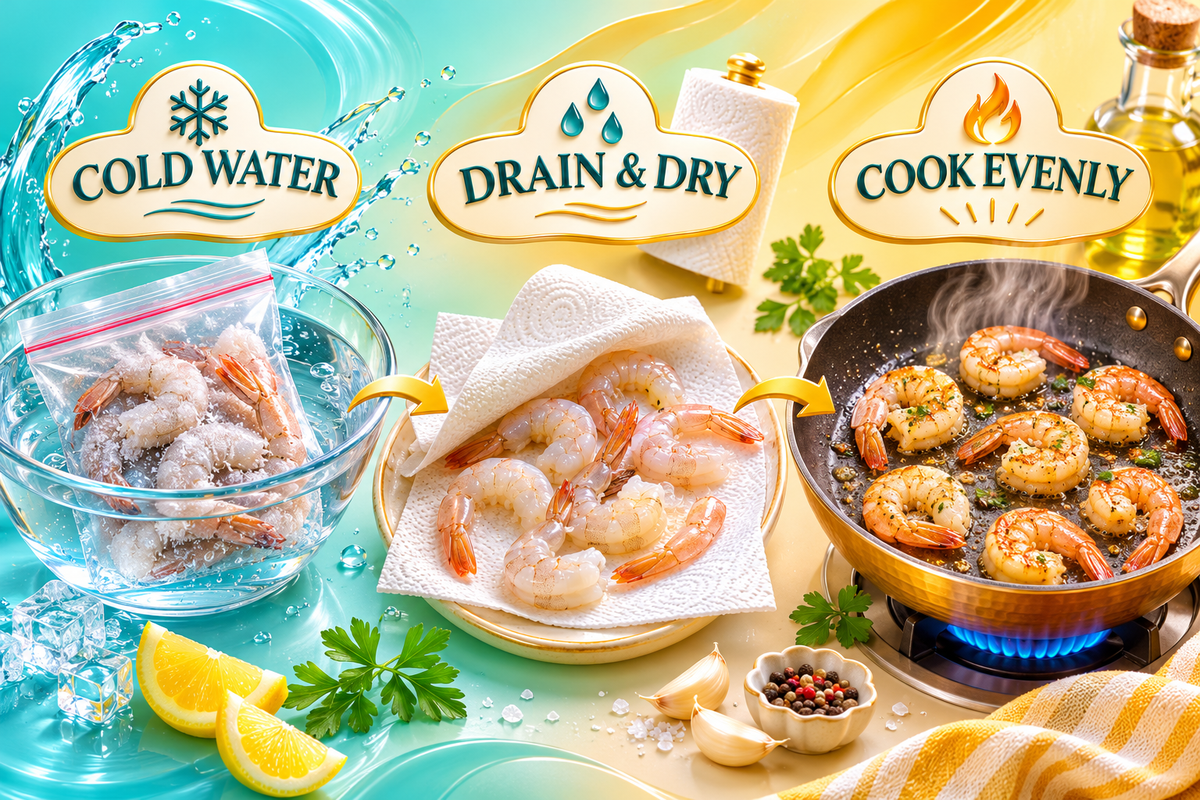
How do you cook thawed raw prawns?
Cook a small, dry batch over controlled heat and stop when the thickest flesh is opaque and firm. The pan should have enough open surface for water to evaporate without drowning the prawns.
Prepare one complete pan dinner
For an instructional example, start with thawed, raw, peeled and deveined prawns of a similar size. Drain and pat them dry. Put your cooked rice and ready-to-eat vegetables on a separate board before handling the raw seafood. Heat a broad skillet with cooking oil, add prawns in a single layer and leave space between them. Turn as needed until the thickest part has lost its translucent appearance and feels firm. Transfer the cooked prawns to a clean plate. Add garlic and flavouring without pouring raw prawn juices onto that plate. Return the cooked prawns briefly to the finished sauce and serve promptly.
Check doneness instead of following one universal minute count
Pan temperature, size, shell and starting temperature change cooking time. The FDA cooking guidance describes properly cooked shrimp flesh as pearly and opaque. A food thermometer is useful for thick pieces and mixed batches; the FoodSafety.gov seafood temperature chart specifies 145°F, or 63°C, for fish and shellfish. Measure in a thick part when practical, and follow any stricter instructions on the package.
Keep the finished dish safe
Do not put cooked prawns back on the board that held raw seafood without washing it. Use clean tongs and a clean serving dish. If you are adding prawns to pasta, cook the sauce first and add the seafood near the finish so you can check doneness before mixing it into the whole pan. A finished sauce cannot rescue a raw centre hidden in a large prawn.
Read more: Shrimp Grading System: Counts, Sizes and Commercial Standards.
When can you cook directly from frozen?
Yes, when the specific pack supplies a cook-from-frozen method and you follow it. That is a property of the product and its tested instructions, not a rule applying to every frozen prawn. Some individually frozen, peeled product works in a method designed for it; a compact block of large shell-on prawns behaves differently. Read the preparation state, batch size and cooking directions before heating the oven or pan.
Do not take a recipe for frozen peeled prawns as permission to skip thawing a head-on block. For example, A frozen-prawn pilaf is a particular microwave recipe, not a general method for all raw frozen seafood. When a method uses a frozen ingredient inside a dish, check that the final prawns are cooked right through before serving.
If the instructions are missing, choose the safe and controllable route: thaw in the refrigerator or in a leakproof bag under cold water, then cook the prawns as raw seafood. If the product is already cooked, follow its label for thawing or reheating. Frozen is a storage state; it does not tell you whether the contents were cooked before freezing.
Read more: Vannamei Shrimp: Market Demand, Supply and Buying Trends.
How do you avoid rubbery or watery prawns?
Thaw, drain and match batch size to pan space. Excess meltwater lowers surface heat and keeps the prawns cooking long after their flesh turns opaque.
- Dry the surface after safe thawing. A small amount of glaze or moisture can turn a shallow skillet into a steaming pot.
- Cook equal-sized pieces together. Pull the smaller pieces before they become tight and chewy if your pack mixes sizes.
- Leave open pan space. If the pan is crowded, use two batches and keep cooked food on a clean plate.
- Add cooked prawns near the end of a hot dish. Full raw-prawn cooking time overcooks a ready-cooked product.
- Stop at the doneness cue. A tight curl and shrinking flesh indicate that you have pushed the heat too far; do not aim for a particular curl as the sole safety test.
- Use the right method for the cut. A large shell-on prawn destined for grilling deserves a thaw and a direct doneness check; small peeled prawns can fit a quick sauce better.
The useful production detail is water management. At the prep bench, two bags marked the same count can behave differently when one has a heavy protective ice glaze and the other separates cleanly. Treat that as a planning question: weigh and portion according to the product specification, thaw without losing the cold chain, drain before high heat, and do not confuse icy water in the pan with a juicy finished prawn. This is a method example, not a claim about an inspected Iran Fish batch.
Which frozen prawn form belongs in your dish?
Choose the form before the cooking method. Size, shell and preparation state determine both the look on the plate and how readily you can check that the centre is cooked.
Peeled and deveined for speed
Use peeled, deveined prawns for a quick skillet dinner, pasta or curry where guests should eat without handling shells. Ask for the raw or cooked state explicitly. A count designation belongs with the product form; the same count on head-on and peeled product does not describe the same serving experience.
Head-on and shell-on for presentation
Choose whole prawns when the dish is meant to display them and the diners will handle shells. Plan a suitable thaw, trimming and a clear doneness check. Read the related guide to Shrimp With Head On before choosing a whole-prawn presentation.
Species and count for consistency
Do not substitute species and sizes by the word “prawn” alone. Types of Prawns explains why species, form and cooking use matter, while the Shrimp Grading System gives the count language used for commercial selection. Match the product specification to the dish you actually intend to cook.
Frequently asked questions
Use these answers after checking the pack and deciding whether your product is raw or cooked. If either fact is unknown, establish it before serving.
Can I put raw frozen prawns straight into a frying pan?
Follow the pack. If it has no cook-from-frozen instructions, thaw safely, drain and then fry. A generic minute count cannot account for a frozen centre.
Can I thaw prawns in warm water?
No. Use a refrigerator or a sealed, leakproof bag submerged in cold water. Cook promptly after the quick-thaw route.
Do pink frozen prawns mean they are precooked?
No. Read the product label. Species colour and processing vary, so the appearance alone does not establish a ready-to-eat product.
How do I know raw prawns are cooked?
Check the thickest flesh for a pearly, opaque and firm appearance, and use a thermometer where practical. The published shellfish temperature benchmark is 63°C or 145°F.
Should I thaw prawns for a cold salad?
Yes, and use only a product labelled cooked and ready to eat. Thaw as directed by the pack, keep it cold and protect it from contact with raw seafood.
Discuss your prawn specification with Iran Fish
Choose raw or cooked state, count, species and product form before deciding on a kitchen method. That decision makes thawing, prep and serving more predictable.
Explore Vannamei Shrimp and send the team your intended dish, portion format and packaging requirements.
Contact Iran Fish to discuss the appropriate frozen prawn specification.