

Deveined Prawns: What the Label Means and How to Check the Cut

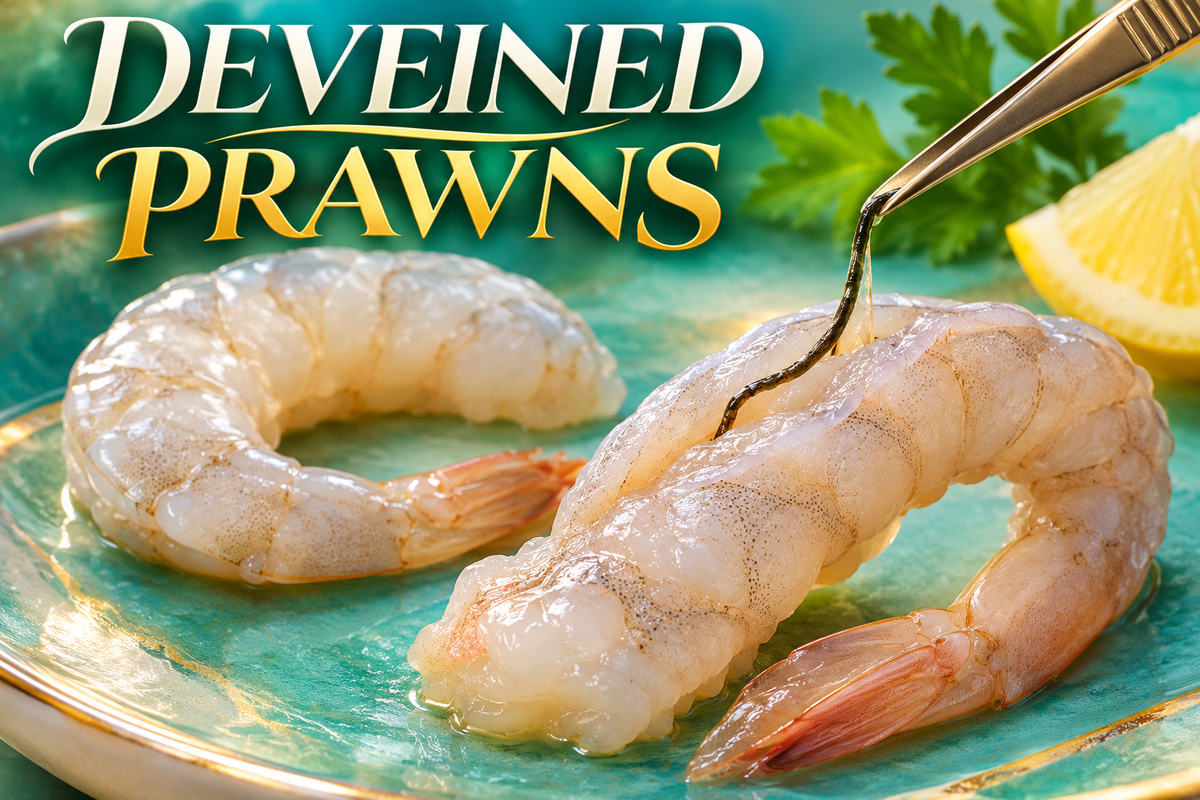
Deveined prawns have had the digestive tract along the back of the tail removed. The word does not tell you whether they are raw or cooked, peeled or shell-on, head-on or headless. Read every field on the pack, then inspect the dorsal cut on a thawed sample. For a reproducible purchase, specify species, count, peel, tail and cooking state when discussing Vannamei Shrimp.
| Label or visible feature | What it means | What to check next |
|---|---|---|
| Deveined | Dorsal intestinal tract has been removed | Verify the cut and any remaining dark material |
| Peeled and deveined, P&D | Shell removed and tract removed | Confirm tail-on/off, raw/cooked and frozen format |
| PUD | Peeled but undeveined | Plan tract removal if presentation calls for it |
| PDI | Peeled, deveined, individually frozen | Confirm the actual supplier specification and count |
| Easy peel | Shell split to ease peeling | Do not assume tract was removed |
| Cooked | Product has been cooked | Follow the pack’s ready-to-eat or reheating directions |
What does deveined prawns mean?
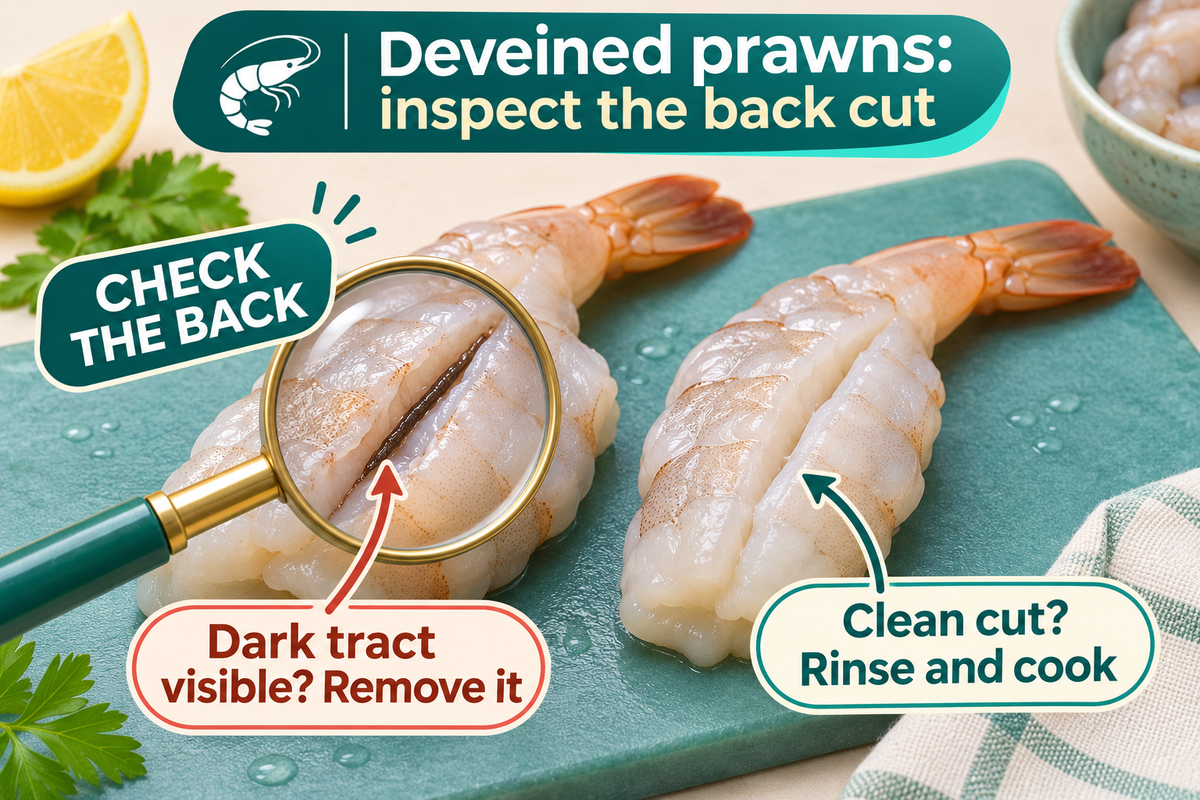
It means the processor removed the intestinal tract running along the back of the prawn’s tail. The dark line is commonly called a “vein,” but it is a digestive channel, not a blood vessel. A shallow dorsal cut, a slit through shell, or another suitable technique lets the processor lift it away. Industry product-form definitions distinguishes peeled-and-deveined product from peeled-and-undeveined and from merely cleaned product.
Deveined is a preparation claim, not a cooking claim. Raw deveined prawns still require safe raw-seafood handling and complete cooking. Cooked deveined prawns need the handling and reheating or ready-to-eat instructions on their own pack. Keep these fields separate on a buying sheet so a neat dorsal cut does not trick anyone into treating raw seafood as ready to eat.
The finish of a deveining cut varies. Some processors expose a narrow seam; others create a deeper butterfly cut for presentation. The label alone does not promise a particular visual style. If a buyer needs a nearly intact back for skewers or an open butterfly for coating, write that into the specification and inspect a sample. “Deveined” by itself cannot settle that choice.
Read more: Types of Prawns: A Practical Guide to Species and Cooking Uses.
Which labels describe the product form?
Read the full string of product terms rather than decoding one word. Peeled, deveined, individually frozen and cooked each answers a different question.
| Label term | Answer supplied | Answer it does not supply |
|---|---|---|
| Peeled | Shell removed | Whether tract removed |
| Deveined | Dorsal tract removed | Whether shell removed or prawn cooked |
| P&D | Peeled and deveined | Whether tail retained or prawn raw |
| PUD | Peeled, undeveined | Whether ready to eat |
| PDI | Peeled, deveined, individually frozen | Count, species, origin and glaze |
| Headless | Head removed | Whether shell or tract removed |
What “cleaned” does not settle
Do not treat “cleaned” as identical to fully deveined without the supplier’s definition. The Industry product-form glossaries distinguishes peeled and washed shrimp, which can lose some or all tract material, from a full peeled-and-deveined claim. Request explicit P&D when the finished dish needs a clean dorsal presentation.
Shell-on can still be deveined
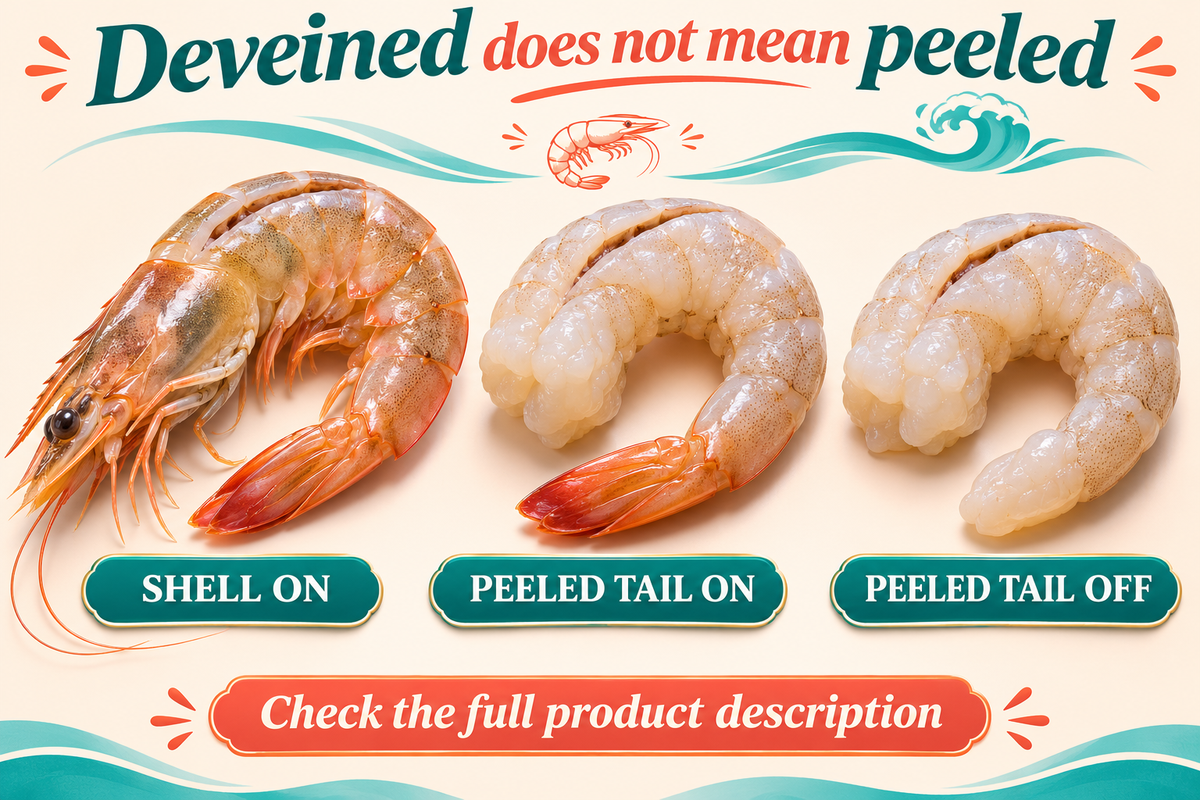
Yes. A processor can cut through the shell along the back and remove the tract while leaving the shell for grilling or presentation. Confirm whether the shell is split, whether the head remains attached and how the tail is finished. A photo of a peeled prawn is not adequate evidence for a shell-on order.
Count accompanies form
Size grade matters when you compare cuts. A count without its unit and whether it applies to whole or peeled product is incomplete. Read the Shrimp Grading System before comparing a P&D carton with head-on product. The same trade word “shrimp” does not mean equal prep work or edible yield.
Read more: Shrimp Grading System: Counts, Sizes and Commercial Standards.
How do you check a deveined pack?
Check the declaration first, then inspect a properly thawed sample. Do not judge the whole batch from a frozen, ice-glazed photograph.
- Confirm species, count unit, raw/cooked state, shell, head, tail and the exact deveining term on the pack or specification.
- Thaw a sample safely according to the pack, maintaining cold handling and a clean raw-seafood work area.
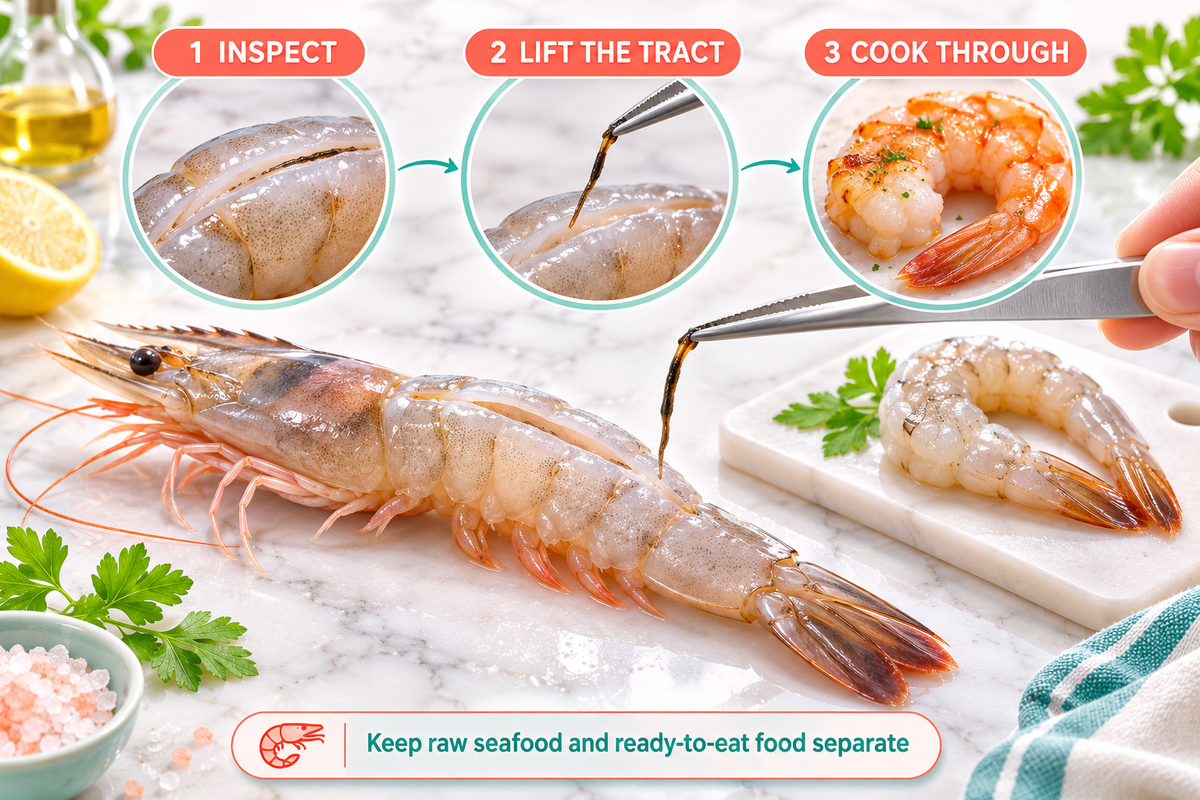
- Turn the prawn so the back faces upward. Look for the expected shallow seam or split shell and inspect for visible dark tract material.
- Check several pieces from the sample rather than assuming the first prawn reflects the entire pack. Keep the inspection tied to the lot.
- Record whether the cut meets the agreed presentation, especially for intact tails, butterfly cuts or shell-on product.
- Cook a raw sample all the way through before assessing eating quality. Do not taste raw seafood to decide whether the cleaning was adequate.
An effective receiving note reads: “raw P&D, tail-on, individually frozen, count unit stated; dorsal seam inspected on sample; no conspicuous tract remaining.” This is a model check, not an actual inspection report for Iran Fish. It gives the next buyer enough information to compare like with like instead of relying on a vague comment that the product “looks clean.”
Read more: Frozen Shrimp Shelf Life: Storage Rules and Guide.
How do you devein prawns yourself?
Keep raw prawns cold while you prepare a small batch. Peel first when the dish needs peeled pieces, then make a shallow cut along the back and lift the tract.
Set up the station
Place a clean seafood board, small knife or shears, a chilled container for bodies and a waste container within reach. Prepare your garnish and clean serving equipment before you open the raw seafood pack. This prevents a raw hand from moving between shells and ready-to-eat ingredients. Thaw frozen product in the refrigerator or in a leakproof bag in cold water as described in the FDA seafood guide.
Peel and expose the back
Twist off the head if the dish calls for a headless piece. Peel the shell segments and decide whether to keep the tail. Make a shallow incision along the back where the tract lies, then lift it out gently. Do not dig deep through the flesh to chase a faint line. A standard prawn preparation sequence shows the general shell-and-tract sequence; alternative tools and cut styles are described in the professional preparation guides.
Complete the cook
Transfer the prepared raw bodies to a clean, chilled container until the cooking pan is ready. Wash hands and clean the board, knife and surfaces after raw contact. Cook the prawns in manageable batches until the thickest flesh is pearly, opaque and firm, then plate with clean tongs. The tract-removal step changes presentation; it does not reduce the need to cook and prevent cross contamination.
A complete start-to-finish example
For an instructional pasta dish, take labelled raw headless prawns from the refrigerator, thaw if frozen, peel while retaining tails only if wanted, cut shallowly along the back, remove any visible tract and place cleaned bodies back in the cold. Finish the pasta sauce, cook the prawns through in a separate pan, then combine and serve with clean utensils. Inspect the thickest piece before mixing it into sauce. No part of this example is presented as a recorded Iran Fish customer or kitchen session.
Read more: Shrimp With Head On: 7 Checks Before Cooking or Serving.
Must every prawn be deveined?
No universal cooking rule says the dorsal tract must always be removed before a prawn can be cooked. For a peeled product with a prominent dark line, removal improves appearance and eating experience. For a whole shell-on presentation, the cook decides whether a split-shell deveining cut suits the dish. The safety requirements of cold handling, separation and proper cooking remain in either case.
Do not confuse an unseen tract with proof of processing. The tract can be pale or empty, so its absence in a quick glance does not verify a supplier’s deveined claim. Look at the process description, the cut and a representative sample. For a commercial order, acceptance should rest on the agreed product specification rather than a consumer myth about whether every shrimp must show a black line.
The practical decision is about the finished plate and the work left in the kitchen. A pasta service wants the obvious dark line removed before the chef cooks a batch; a rustic whole-grilled platter can prioritise shell and head presentation. Neither route excuses poor temperature control or uncertain label information. Be precise about what the diner will see and how the kitchen will prep it.
Which format fits the recipe?
Choose the cut for the eating experience, then specify the purchase. A label that saves prep time for one dish can remove the shell effect another dish relies on.
| Dish | Useful format | Trade-off |
|---|---|---|
| Pasta or rice bowl | Raw P&D, often tail-off | Easy to eat; less whole-prawn appearance |
| Skewer | Raw P&D, similar size, tail preference specified | Clean presentation; exposed flesh cooks quickly |
| Grilled whole platter | Raw head-on or shell-on with an agreed dorsal cut | Strong appearance; more handling at the table |
| Quick freezer-to-sauce workflow | PDI if available in the required count | Easy portioning; still check cooking instructions |
A choice with conflicting priorities
A chef asks for dramatic head-on prawns but wants every diner to finish a bowl of pasta with a fork. The priorities clash. Choose raw peeled and deveined product for the pasta, or change the service to a deliberate whole-prawn platter. Do not call a head-on pack equivalent to P&D on the basis that both were “cleaned.” A small difference in processing language becomes a large difference at service.
Confirm the final sample
Look at the agreed count and tail treatment in a thawed sample, then run the intended recipe. A narrow dorsal cut and a deep butterfly cut expose different surface areas and cook differently. Note the cut style on the product sheet if consistency matters across orders. A photograph cannot replace a written spec, but an inspected sample helps confirm that the words and the actual product match.
Read more: Vannamei Shrimp Market: Demand, Supply and Buying Trends.
What safe handling still applies?
Handle raw deveined prawns exactly as raw seafood. Removing the tract does not sterilise the product.
- Store covered and cold, with raw juices unable to drip onto ready-to-eat food.
- Thaw under refrigeration or in a leakproof bag in cold water; cook promptly after rapid thawing.
- Wash hands and sanitise surfaces, knives and tongs after raw contact.
- Cook the thickest flesh until opaque and firm. FoodSafety.gov’s shellfish temperature benchmark is 63°C or 145°F when a thermometer is practical.
- Check shellfish allergy and avoid cross contact in a kitchen that also prepares non-shellfish dishes.
- Reject seafood with an off odour or unsafe handling history rather than trusting a clean-looking dorsal cut.
Frequently asked questions
These answers separate processing words that are frequently compressed into one casual description. Read the pack for the actual product in your hand.
Is the vein a blood vessel?
No. The line along the back is the digestive tract, commonly called the sand vein.
Does deveined mean peeled?
No. Shell-on prawns can be deveined through a cut in the shell. P&D explicitly states both peeled and deveined.
Does deveined mean cooked?
No. A deveined prawn can be raw or cooked. Check that state independently.
Can I verify deveining while the prawns are frozen?
Use the supplier specification, then inspect a safely thawed sample. Ice glaze can hide the dorsal cut and remaining material.
What if I still see a dark line?
Inspect whether it is remaining tract material and compare the sample with the agreed specification. Remove visible material for the dish, and raise a repeatable discrepancy with the supplier.
Discuss your desired cut with Iran Fish
Describe the finished dish, species, count, raw or cooked state, peel, tail, head and dorsal cut before ordering. A precise description makes “deveined prawns” a repeatable specification.
Explore Vannamei Shrimp and the Shrimp Grading System.
Contact Iran Fish to discuss the product form you need.