


Smoked Steelhead Trout: Hot vs Cold Smoking and Serving Uses

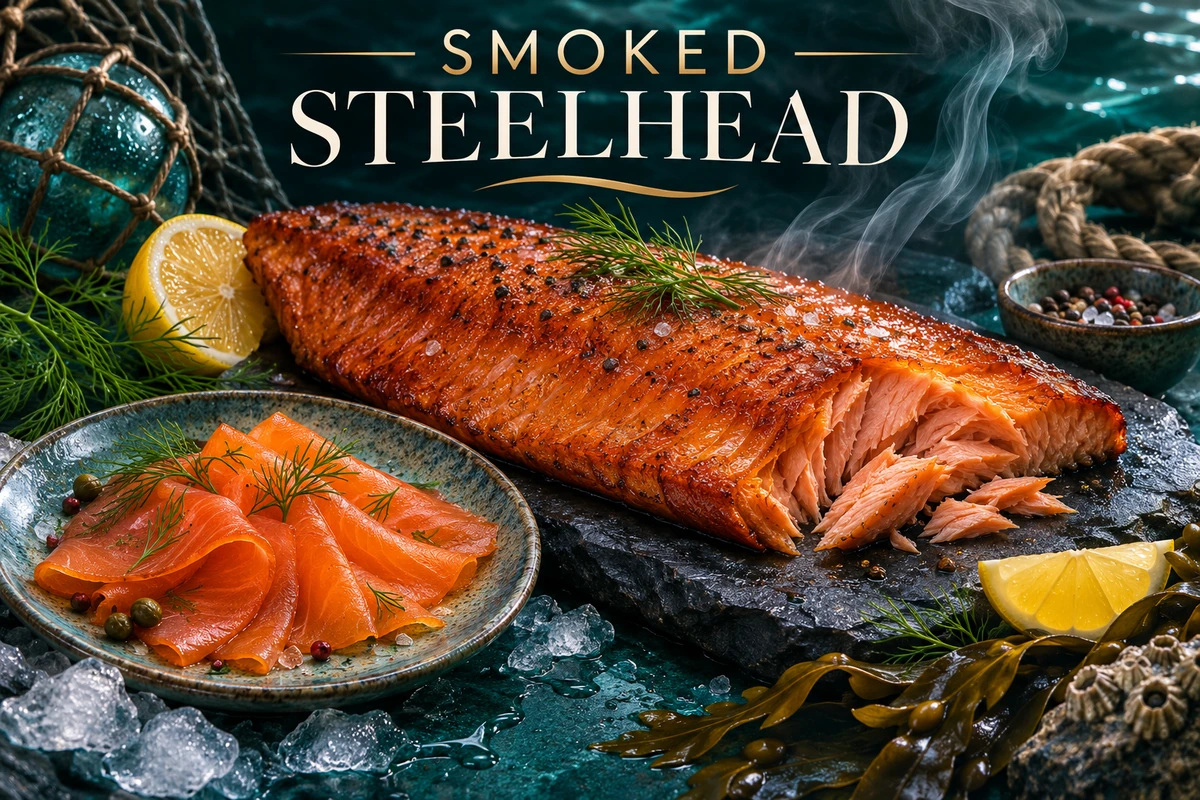
Smoked steelhead trout is Oncorhynchus mykiss prepared by curing and smoking. Choose hot-smoked fish for firm, flaky pieces in salads, spreads and finished warm dishes; choose cold-smoked fish for supple, thin slices on toast or canapés. Cold smoking does not fully cook the fish, so check the label and protect higher-risk diners. For a trout supply discussion, review Iran Fish’s Salmon Trout range and specify the species, form and intended processing before ordering.
| Decision | Direct answer | Practical action |
|---|---|---|
| What is steelhead? | A form of Oncorhynchus mykiss, the same species as rainbow trout | Confirm the scientific name instead of relying on pink flesh or a trade name |
| Hot or cold smoked? | Hot-smoked fish has been cooked during smoking and flakes; cold-smoked fish remains supple and is not fully cooked | Select by texture and the finished dish, then check the actual label |
| Pasta or warm potatoes? | Choose hot-smoked flakes and add them near the end | Keep the fish distinct; do not simmer it for the whole cooking time |
| Toast or delicate canapé? | Choose cold-smoked slices for a neat drape and smooth texture | Keep the plate chilled and assemble close to service |
| Higher-risk diner? | Avoid serving refrigerated ready-to-eat cold-smoked fish without a fully cooked step | Follow current public-health advice and the package instructions |
| Storage? | Refrigerate according to the product label; use its opening and use-by instructions | Keep cold during transport, inspect the seal and do not invent one shelf-life rule for all packs |
| Buying for a menu? | Specify species, process, cut, pack, label and traceable batch | Request the actual product specification and sample before approving service |
What exactly is smoked steelhead trout?
Start with the species: steelhead is a life-history form of Oncorhynchus mykiss. Resident rainbow trout belongs to the same species, while the name steelhead commonly describes the migratory form. The NOAA Fisheries account of steelhead identifies this relationship. A pink fillet does not make a fish Atlantic salmon; the scientific name on a commercial specification settles the identity more reliably than colour or a marketing term.
Read “salmon trout” just as carefully. It is a market description used for trout products and does not, by itself, certify a particular migration history or turn the fish into Salmo salar. Iran Fish lists Salmon Trout as a supply category. If your menu or import paperwork needs steelhead specifically, request the scientific name, production method, origin and approved product description. Do not relabel a generic trout pack as steelhead from its appearance alone.
Smoking describes the processing, not the species. A product can be hot smoked, cold smoked, whole, filleted, flaked or sliced. Cure, salt level, smoke source, moisture and pack format affect how it tastes and handles. The label and product sheet must tell the buyer what has actually been supplied. This distinction matters particularly in foodservice, where a cook may receive a beautiful orange fillet and assume it is interchangeable with sliced smoked salmon.
Read more: Salmon Trout vs Salmon: What Is the Difference?.
Hot vs cold smoked steelhead trout: what changes?
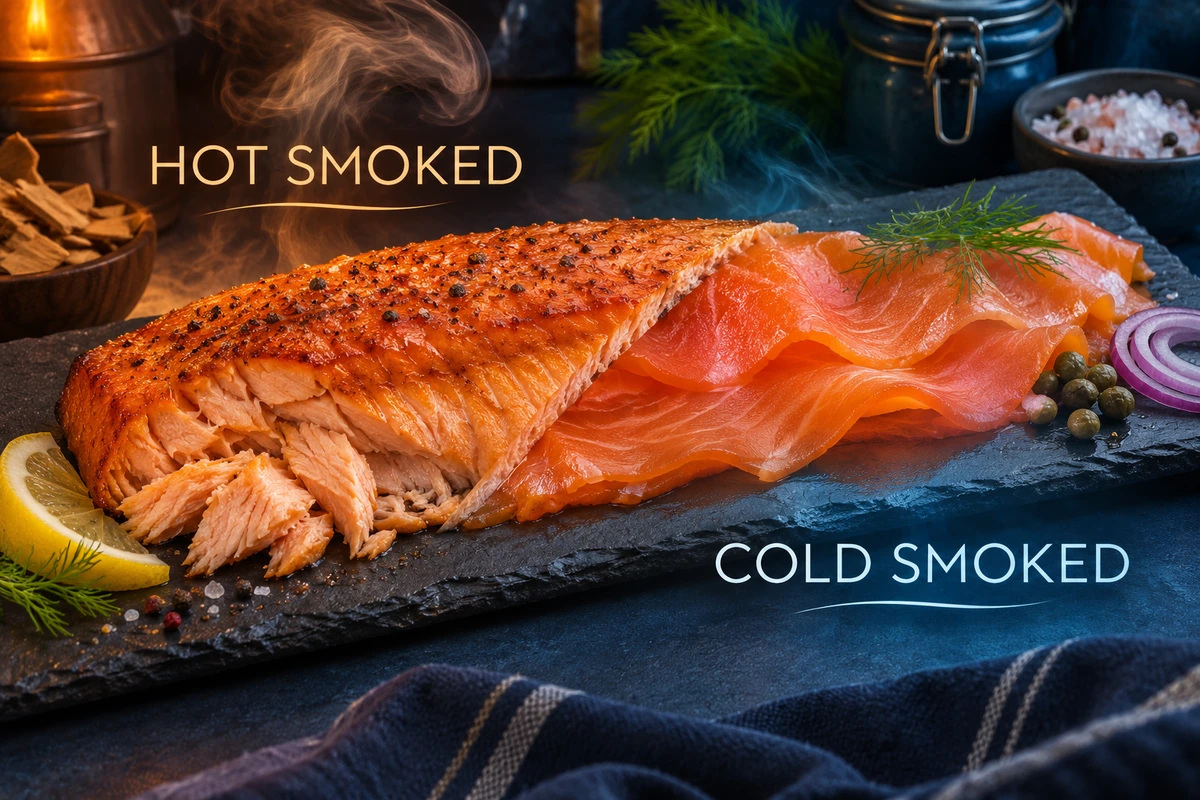
Choose by the effect of heat on the finished fish. Hot smoking cooks the flesh during processing, while cold smoking creates a cured, smoked product without fully cooking it; neither name tells you everything about a particular pack’s recipe, validation or storage rules.
Hot smoking produces flakes and a fuller bite
Hot-smoked steelhead has an opaque, cooked appearance and separates into flakes under a fork. Its texture suits a salad, fish spread, potato dish or pasta finished with pieces of fish. Some producers sell whole hot-smoked fish; others supply trimmed fillets or ready-to-use portions. Check the skin and pin-bone status before planning a dish that will be assembled quickly.
A firm flake gives the cook control: break a fillet into large pieces for visible protein on a salad, or work smaller pieces into a spread. Do not keep cooking a ready-to-eat hot-smoked fillet simply because the recipe contains a warm ingredient. Finish the base first and fold the fish in at the end. If the product label calls for reheating or another preparation step, follow that label instead of a general serving rule.
Cold smoking preserves a supple slice
Cold-smoked steelhead is cured and smoked at a process that does not fully cook the fish. Its translucent, flexible slices belong on a bagel, crisp potato, cucumber or canapé where their shape and delicate texture remain visible. It can be made as a thinly sliced pack or another presentation; inspect the actual form rather than assuming every cold-smoked product arrives pre-sliced.
Do not confuse a cold-smoked slice with raw, untreated fish. Curing and smoking change it, but they do not justify describing it as fully cooked. The distinction is important for pregnant people and others at increased risk from Listeria. It also changes kitchen handling: keep the pack under its stated refrigeration conditions, use clean utensils and minimise unnecessary display time.
Smoke, salt and species still vary
Compare the actual products before fixing a menu. “Hot” does not guarantee a stronger smoky flavour, and “cold” does not guarantee the same salt level across brands. Cure, wood, processing choices and fillet thickness all matter. Taste a representative sample without a sharp sauce first. Then try it with the intended bread, potato or dressing. A salty or intensely smoked sample calls for a quieter garnish, not more seasoning.
The practical decision can involve conflicting criteria. Imagine a brunch dish that must look elegant in photographs yet also tolerate a brief handoff from kitchen to table. Cold-smoked slices provide the neatest drape, but a warm potato and prolonged display work against their texture and handling requirements. Build the cold potato base and assemble immediately before service, or choose hot-smoked flakes if a warm plate and a less delicate finish are more important. Neither style is “better” without the service conditions.
Read more: Types of Salmon: A Guide to Commercial Species.
Which style belongs in which dish?
Choose the format before choosing the garnish. Decide whether the guest should see intact slices, generous flakes or a spread, then keep the accompanying flavours from obscuring the fish.
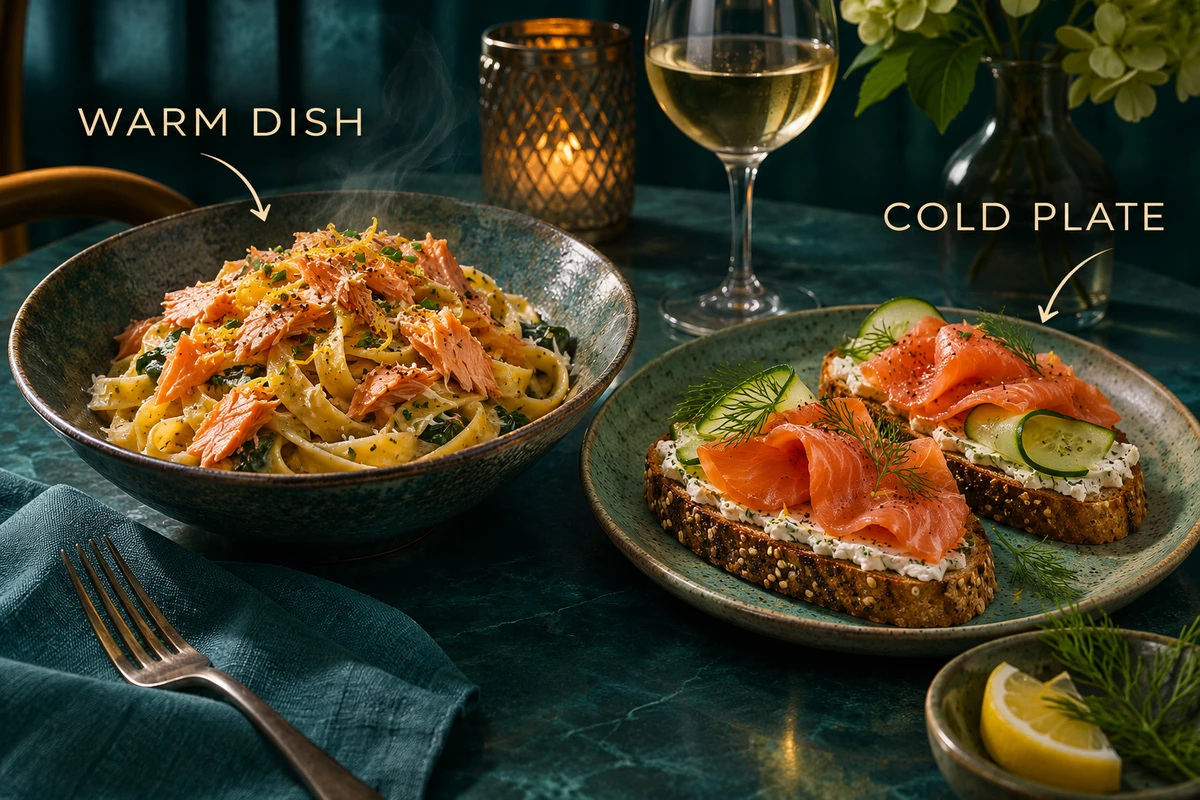
- For toast or a bagel, use cold-smoked slices. Spread a modest layer of cream cheese or a similar base, lay the fish loosely and finish with a little lemon and herb. Do not bury the slices under a large amount of onion or sauce.
- For an egg plate, finish the eggs first. Add cold-smoked slices to the plated eggs without holding them over heat, or use hot-smoked flakes if you want a warmer, sturdier fish element.
- For pasta, finish the sauce and turn off the heat before folding in hot-smoked flakes. Keep the pieces large enough to identify; extended simmering breaks them into the sauce and dulls the smoke.
- For a salad, use hot-smoked chunks when a substantial bite matters. Choose cold-smoked ribbons when the design needs a delicate top layer, then dress the vegetables separately so acid does not sit on the slices for an extended period.
- For canapés, select cold-smoked fish for a clean folded slice or hot-smoked fish for a small, textured mound. A dry, crisp base and a restrained creamy element prevent the fish from disappearing.
- For a spread, flake hot-smoked fish with a small amount of binder and taste before adding salt. Keep some visible pieces instead of processing the whole batch into a smooth paste.
- For warm potatoes, add hot-smoked trout after the potatoes are cooked and dressed. Add cold-smoked slices only after the plate has cooled to the serving style you intend.
A useful service test is to plate one full portion and leave it for the normal time between finishing and serving. Check whether slices curl, flakes crumble, a crisp base softens or dressing runs. This is a proposed kitchen test, not a story about a completed Iran Fish project. The insight is practical: the dish is only as good as it looks and eats at the guest’s table, not at the instant the chef sets it down.
Read more: Salmon Fillet Cuts: A Buyer’s Guide to Loins, Belly, Portions and Trim.
How should you serve smoked steelhead trout?
Start with the package instructions and a cold, clean work area. Choose the final texture before opening the pack, because hot-smoked flakes and cold-smoked slices require different handling.
Check and prepare the product
Confirm the product name, scientific species when supplied, hot- or cold-smoked description, storage direction, use-by date and seal condition. Reject damaged or leaking packaging and follow your operation’s receiving procedure. Keep refrigerated fish under the product’s stated conditions; do not use a generic number from a raw-fish article as the shelf life of a processed pack.
Open with clean tools. For hot-smoked fillets, check the manufacturer’s pin-bone and skin specification and inspect the portion as you separate it. For cold-smoked slices, lift each slice carefully rather than pulling a compressed stack apart in one motion. Keep the remaining fish refrigerated while assembling a small batch of plates.
Make one complete plate from start to finish
Here is an illustrative, repeatable service example: a hot-smoked steelhead and potato plate. Before service, check the fish label and chilled storage. Cook potatoes until tender, drain and dress them with a restrained lemon-and-herb mixture. Let excessive steam escape so the trout will not be cooked again in the bowl. Open the hot-smoked pack with clean utensils, check for skin and pin bones as specified, then break the flesh into generous flakes. Fold those flakes into the finished potatoes once, add a few fresh herbs and serve without a long hot hold.
The decision at each step has a purpose. Dressing the potatoes before adding trout prevents overmixing; letting steam escape protects the flaky texture; holding back salt until the fish has been tasted respects the cure. If the product’s instructions require reheating, adjust the recipe to meet them. If the guest belongs to a higher-risk group, follow the official guidance described below rather than assuming a ready-to-eat chilled fish is suitable as served.
Finish the plate without masking the fish
Use acid and herbs as accents. Lemon, dill, chives, cucumber and a modest creamy element complement smoked trout, but a heavily sweet or hot dressing can overwhelm its cure and smoke. Taste the fish on its own and then with the complete garnish. For buyer sampling, keep a plain sample beside the proposed final dish; that exposes differences between batches that a strong sauce would conceal.
Read more: Frozen Salmon Shelf Life and Storage Requirements.
How do you handle and store it safely?
Follow the exact pack label and maintain the specified cold chain. Smoking and vacuum packaging are not blanket permission to leave fish unrefrigerated or to apply a universal after-opening time.
Treat cold-smoked fish as a distinct risk choice
The UK Food Standards Agency’s advice on cold-smoked fish says pregnant people and those with weakened immune systems should avoid ready-to-eat cold-smoked or cured fish because it has not been fully cooked to kill Listeria. Follow the current local advice for older adults and other vulnerable diners as well. Use a thoroughly cooked alternative when preparing food for someone in a risk group. Do not call cold-smoked steelhead “cooked” just because it is sold ready to eat.
Hot smoking includes a cooking step, but a refrigerated ready-to-eat product still needs correct post-process handling. Do not claim that hot-smoked fish is free of Listeria risk or safe for indefinite display. The product label, production controls and subsequent storage determine the proper handling. For any raw fish cooked at home, the FoodSafety.gov minimum-temperature chart lists 63°C / 145°F for fish; that consumer cooking benchmark is not a substitute for a validated commercial smoked-fish process.
Control transport, opening and leftovers
Keep sealed packs at their labelled temperature through receiving, delivery and storage. Separate ready-to-eat smoked fish from raw seafood and use clean boards and utensils. The US FDA seafood-handling guidance explains refrigeration and cross-contamination precautions. Once a pack is opened, follow its specific use-within instructions and the food business’s applicable rules; no single number fits every smoke method and package.
If the product was supplied frozen, follow the manufacturer’s thawing directions, especially for vacuum packaging. Do not assume the storage instructions for a raw frozen fillet transfer to smoked ready-to-eat trout. If the seal is damaged, the use-by date has passed or the cold chain is uncertain, do not serve it. Do not use smell alone as a safety test.
Read more: Frozen Salmon Buying Guide for Importers and Distributors.
What should foodservice buyers verify?
Write the specification before comparing samples. A supplier’s attractive photograph cannot settle species identity, smoking process, handling requirements or whether a product suits your menu.
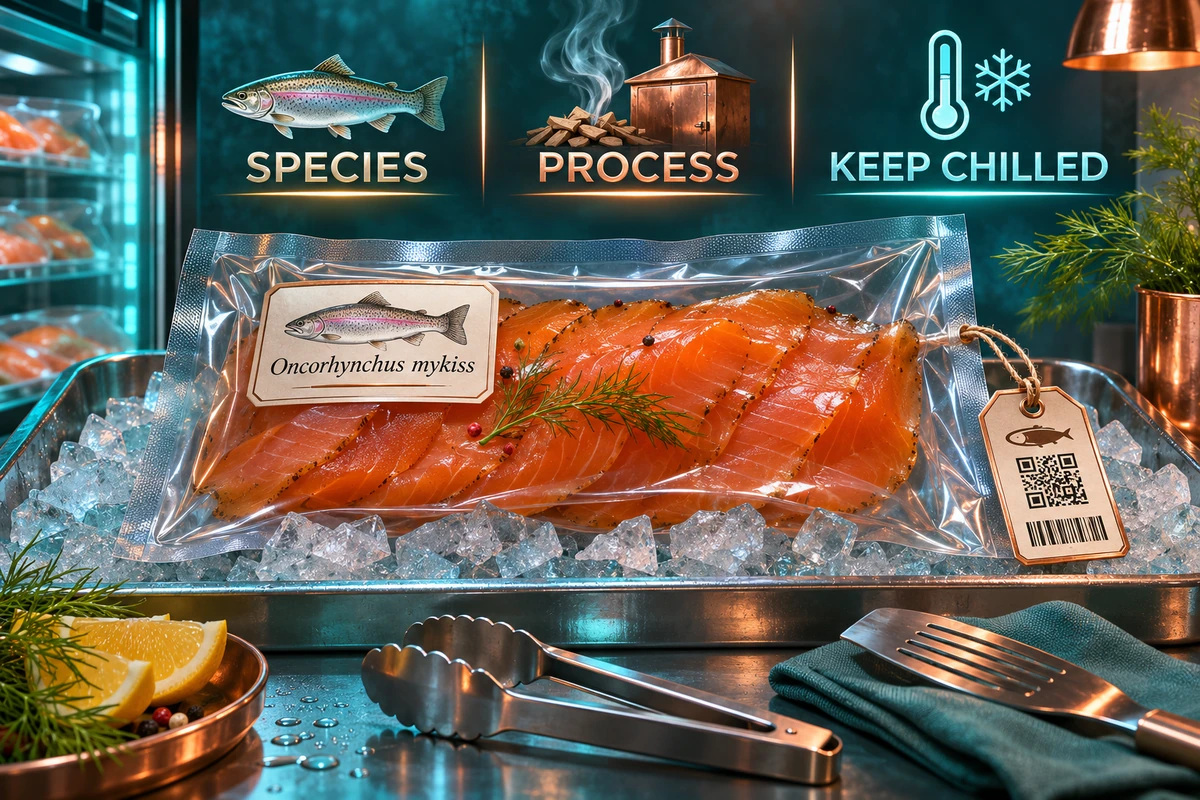
- Request the scientific species name, production origin and exact commercial product name. Confirm whether “steelhead” is genuinely the specified form of O. mykiss.
- State hot- or cold-smoked processing and ask for the product’s actual processing and food-safety documentation appropriate to the destination market.
- Specify the cut and presentation: whole fish, skin-on fillet, trimmed fillet, portions, flakes or slices. Confirm pin-bone status and thickness where plating depends on them.
- Compare cure, smoke profile and salt in representative samples. Taste plain before assessing the finished dish.
- Confirm pack type, net weight, storage temperature, use-by and after-opening instructions, and whether it is supplied chilled or frozen.
- Require batch identification and traceability through delivery. Check that the pack and documentation match the approved specification.
- For a restaurant, test the complete plate at the actual service interval; for retail, test whether the intended display and consumer instructions match the supplied pack.
Iran Fish publicly presents Salmon Trout as a product category and describes a salmon-trout processing operation on its Contact us page. Those pages do not establish an available hot- or cold-smoked steelhead SKU. Ask the team to confirm species, product form, processing capability and destination documentation before claiming that a smoked line is in stock.
What are common mistakes with smoked trout?
Do not choose by colour alone. Steelhead, resident rainbow trout, market-labelled salmon trout and Atlantic salmon can present similar pink flesh. A buyer who writes only “smoked salmon” on a purchase order can receive a product outside the intended species, texture or menu claim. Confirm the scientific name and final processed form before approving the label.
Do not destroy the texture at the pass. Stirring hot-smoked flakes into a boiling sauce until they disappear wastes their visible structure; leaving cold-smoked slices on a steaming dish sacrifices their delicate finish. Make the base first, then add the smoked fish according to its processing style and the product instructions.
Do not mistake a sealed vacuum pack for shelf stability. Read whether the product requires refrigeration or freezing before and after opening, maintain that condition, and keep it out of prolonged room-temperature service. The safest operational habit is to bring out only the amount the team can plate promptly, then return the remainder according to the pack instructions.
Frequently asked questions
Check the product label first. These answers distinguish species, processing and service without treating every smoked trout pack as identical.
Is cold-smoked steelhead trout cooked?
No. Cold smoking does not fully cook the fish. It is a cured, smoked product; follow its storage instructions and current guidance for higher-risk consumers.
Is hot-smoked steelhead trout ready to eat?
Read the label. Hot smoking cooks the fish during processing, but the pack’s handling and reheating instructions govern the specific product. Keep chilled products chilled and protect them from contamination after opening.
Is steelhead the same as salmon?
No. Steelhead is Oncorhynchus mykiss, a trout species; Atlantic salmon is Salmo salar. Ask for the scientific name when species identity matters.
Can you put cold-smoked trout in hot pasta?
Add it only after the pasta is plated and no longer steaming if you want intact, supple slices. Choose hot-smoked flakes for a warm dish that needs a firmer fish texture. Follow additional cooking advice when serving higher-risk diners.
How long does opened smoked trout last?
Follow the specific pack’s after-opening instructions and your food business’s rules. Do not transfer a raw-fish or another brand’s timeline to a smoked product with different processing and packaging. Discard a pack with an uncertain cold chain.
Discuss your trout specification with Iran Fish
Decide whether your application needs firm flakes, delicate slices, whole fillets or portions. Put the species name, process, packaging, cold-chain conditions and destination requirements into one written request.
Review Iran Fish’s Salmon Trout page and Contact us with that specification. Ask the team to confirm the actual trout product and processing options before building a smoked-steelhead menu or purchasing programme around them.